


Supply does not meet demand.
In Vietnam, residency training for physicians began in 1974. To date, 13 out of 34 universities in the medical and pharmaceutical fields nationwide are licensed to offer this specialized training. By the end of 2025, these institutions had trained 8,441 resident physicians, and an additional 1,276 are expected to graduate in 2026. Hanoi Medical University and Ho Chi Minh City University of Medicine and Pharmacy have a long tradition of training and account for the majority of their resident physicians.
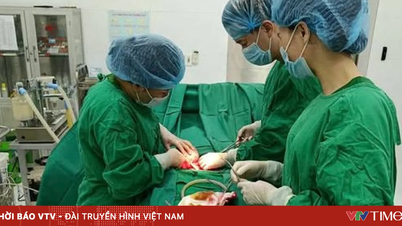
In hospitals, resident doctors are a high-quality human resource, playing a core role in medical examination and treatment, strengthening emergency and resuscitation services; participating in training and technology transfer to lower-level facilities; guiding students in practical training; conducting scientific research, etc.
The key to the success of the residency training model in Vietnam is the transparent, fair, and competitive admissions and specialization selection process.
The residency training process is very rigorous; the learning process does not take place in classrooms but largely at practical training facilities (hospitals). The instructors guide, mentor, supervise, support, and transfer knowledge, skills, and attitudes to the trainees. Due to the strict requirements and regulations in admissions, selection criteria, and training procedures, the number of resident doctors selected and trained each year accounts for only about 4 to 5% of the total number of graduating doctors.
As a highly qualified and limited workforce, almost all resident doctors work at central, tertiary hospitals after graduation. Currently, all hospitals, including tertiary hospitals, are still experiencing shortages and have a need to recruit resident doctors.
A survey recently conducted by the University of Medicine and Pharmacy (Vietnam National University, Hanoi) at more than 30 central and local hospitals (Bach Mai, E, Central Children's Hospital, Nghe An, Phu Tho, Thanh Hoa, etc.) shows that the need to recruit resident doctors in 2026 and 2027 will reach approximately 7,500 people, with some hospitals needing to recruit up to 400 resident doctors.
Based on local management practices, Dr. Le Van Cuong, Director of the Thanh Hoa Provincial Department of Health, believes that the goal should be to increase the percentage of resident doctors from the current 4-5% to 10% in the future to adequately meet the needs from the provincial level upwards. However, the prerequisite is to have a mechanism to support financial support for students and to address the issue of rational human resource allocation.
Besides the human resource needs of hospitals, in recent years, the Party and State, the National Assembly, and the Government have paid special attention to and directed the development of medical personnel, issuing many important documents assigning the health sector to focus on developing medical personnel to ensure a balanced quantity and quality, especially developing high-quality specialized medical personnel and developing medical personnel for commune-level health stations in accordance with the two-tiered local government model.
Comprehensive reform of residency training for physicians.
Vietnam is facing two challenges: increasing the number of specialist doctors to meet social needs and ensuring quality for international integration; therefore, the residency training model needs to be changed.
Regarding the "opportunity" for reforming residency training, leaders of hospitals such as the Central Obstetrics and Gynecology Hospital, the Central Dental and Maxillofacial Hospital, E Hospital, and the Central Dermatology Hospital all agree that this is the right time. However, a very detailed roadmap is needed, even spanning decades, encompassing increasing enrollment quotas, restructuring training programs, training methods and duration; regulations on entrance examinations and graduation exams; standards for lecturers, and conditions for practical training facilities. Although there is a need for more resident doctors, the most important factor is controlling the quality of incoming students.
Professor, Doctor, People's Physician Le Ngoc Thanh, Rector of the University of Medicine and Pharmacy (Vietnam National University, Hanoi), believes that it is time for comprehensive and synchronized reforms in medical personnel training to meet both societal needs and international integration.
Mr. Thanh stated that the training of resident doctors should be considered a crucial stage in developing specialized skills. Therefore, he proposed a roadmap: establishing a national examination to rank competence, serving as a basis for students to choose specialties and hospitals for practice. This would not only ensure transparency and fairness but also help allocate high-quality medical resources more rationally. Accordingly, the duration of undergraduate training would be six years, and postgraduate training would be 3 to 5 years (depending on the specialty).
Sharing the same viewpoint, Professor and Doctor Nguyen Huu Tu, Rector of Hanoi Medical University, believes that the training of resident physicians worldwide has undergone many changes. Resident physician training should be defined as in-depth specialized training, lasting 4 to 5 years, while also adjusting entrance criteria accordingly. Currently, the National Medical Council is preparing to organize a nationwide competency assessment exam from the end of 2027, and training institutions can integrate these two exams.
Professor, Dr. Nguyen Trung Kien, Rector of Can Tho University of Medicine and Pharmacy, believes that implementing reforms certainly requires a roadmap, but it cannot be prolonged any further if integration is desired. He proposes integrating the competency assessment exam, the entrance exam for specialist training, and the issuance of professional practice certificates to reduce pressure on students, save resources, and increase management efficiency.
Associate Professor, Dr. Nguyen Tri Thuc, Deputy Minister of Health, stated that the title of resident physician was included in the law for the first time when the 2025 Higher Education Law stipulated that: Advanced postgraduate training programs in the health sector, awarding resident physician and specialist physician degrees, are guided, organized, and managed by the Minister of Health. This creates an urgent need to amend Government Decree No. 111/2017/ND-CP regulating the organization of practical training in health sector education; and to promptly provide guidance on the organization and implementation of advanced postgraduate specialist training programs in the health sector awarding resident physician and specialist physician degrees... This will tighten quality control and prevent the proliferation of new training programs without ensuring quality.
Currently, the development of a legal framework for residency training is entering a crucial stage. The Ministry of Health will issue guidelines for organizing and managing the residency program, focusing on two pillars: standardized training programs for each specialty and standards for practice hospitals based on the capacity of each facility.
Professor, Dr. Nguyen Vu Quoc Huy, Rector of the University of Medicine and Pharmacy (Hue University), believes that the circular guiding specialist training needs to establish a common standard framework for competence, but still allow flexibility in implementation according to the specific characteristics of each specialty and each practice facility. Some specialties require longer training periods, similar to international models; therefore, Vietnam needs to approach training by stratifying training time instead of applying a rigid template.
Source: https://nhandan.vn/doi-moi-dao-tao-nhan-luc-chat-luong-cao-nganh-y-te-post959862.html


![[Photo] Ba Lang An Lighthouse - the "eye of the sea" amidst the "rock museum" of Quang Ngai province.](https://vphoto.vietnam.vn/thumb/1200x675/vietnam/resource/IMAGE/2026/05/29/1780038698840_anh-man-hinh-2026-05-29-luc-14-10-42.png)
![[Image] Pleasant weather helps students enter the 10th grade entrance exam with confidence.](https://vphoto.vietnam.vn/thumb/1200x675/vietnam/resource/IMAGE/2026/05/29/1780034401612_ngay-1-thi-lop-10-minh-duy-8-5009-jpg.webp)












































































Comment (0)