

Therefore, the number of accredited training programs and internationally published scientific papers has increased significantly, and some higher education institutions and training disciplines are highly ranked in the region and the world.
According to the Ministry of Education and Training, many higher education institutions have proactively taken advantage of the opportunity to mobilize resources from society, diversifying revenue sources to serve the development of the school through high-quality and integrated training services and programs.
According to Nguyen Thu Thuy, Director of Higher Education (Ministry of Education and Training), at the end of the 2023-2024 academic year, the scale of master's and doctoral training at higher education institutions showed a steady upward trend across all disciplines compared to the previous academic year. The scale of regular undergraduate training showed a slight increase, with a total of over 1.94 million students. The fields of mathematics and statistics, computer science and information technology, engineering technology, engineering, manufacturing and processing, architecture and construction, agriculture, forestry and fisheries, and veterinary medicine saw significant increases, indicating that training institutions have focused on sustainable development trends, especially in engineering and technology fields, to meet the country's development needs.
Notably, in education, autonomy in professional and academic matters continues to be promoted, and the number of newly opened training programs continues to increase over the past year, meeting the human resource training needs of the country and each locality.
Quality assurance is also emphasized, and the number of lecturers is constantly increasing. In 2022, there were over 86,000 lecturers, including more than 27,000 professors, associate professors, and doctors. By 2024, the whole country will have over 91,000 lecturers, including more than 30,000 professors, associate professors, and doctors.
In the 2023-2024 academic year, an additional 592 training programs and 12 training institutions were accredited using domestic and international standards. With the accreditation results achieved in 2023-2024, the entire higher education system now has 204 out of 239 higher education institutions that have received quality accreditation.
Along with improving the quality of training, scientific research activities and international publications tend to increase sustainably. Statistics from the Ministry of Education and Training show that in 2022, out of 18,441 Scopus articles nationwide, the 67 highest-publishing higher education institutions alone accounted for 15,186 articles (82.35%); in the first seven months of 2024, out of 12,567 Scopus articles nationwide, the 67 highest-publishing higher education institutions accounted for 10,613 articles (84.45%).
Ministry-level scientific research projects are regularly maintained by the Ministry of Education and Training. All approved projects have products published internationally in ISI, Scopus, and ACI journals, as well as domestic publications in scientific journals included in the State Council of Professors' scoring system...
Many educational institutions perform well in training and conducting effective scientific research. For example, at Da Nang University, to improve the quality of training and scientific research, since 2015, the "Science and Technology Development Fund" has been established to provide funding for projects at Da Nang University; support young lecturers; and reward lecturers who are authors of scientific articles published in prestigious international journals.
According to Associate Professor Dr. Le Thanh Bac, Vice Director of Da Nang University, in recent years, Da Nang University has had between 60 and 70 lecturers graduating with doctoral degrees each year, contributing to improving the quality of the faculty, with the percentage of lecturers with doctoral degrees accounting for nearly 47% of the unit's lecturers.
Although the quality of training has improved significantly, the reality shows that human resources, especially high-quality human resources, still do not meet the requirements of socio-economic development.
According to the Ministry of Education and Training, the scale of university-level training has increased, but it is concentrated in fields with high potential for social impact, such as economics, finance, or fields with high demand for human resources; while basic sciences, social sciences, arts and culture, agriculture, etc., have not yet attracted students.
Most higher education institutions focus primarily on undergraduate training, neglecting to invest adequately in postgraduate training linked to scientific research. Training is not closely and consistently aligned with labor market demands and societal needs.
Therefore, to further improve the quality of higher education, higher education institutions need to strongly innovate their curricula and training methods, coupled with strengthening management, improving training quality, enhancing scientific research capacity, and fostering innovation; mobilizing all resources to improve capacity and operational efficiency, creating a strong transformation in the quality of training and research throughout the system; and preparing well for the new phase of higher education development.
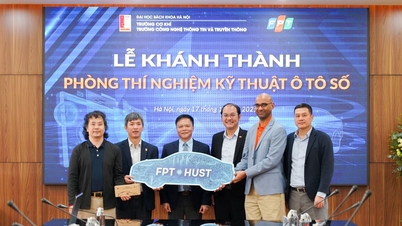
According to Huynh Quyet Thang, Director of Hanoi University of Science and Technology, the scale of university enrollment and training at most higher education institutions nationwide has been increasing quite rapidly recently. This reflects the growing demand for higher education among young people, linked to the urgent need for highly skilled human resources to serve the socio-economic development of the country. Therefore, training institutions need strong investment, improvement, and innovation solutions to ensure the maintenance and improvement of human resource quality; including promoting innovation in training programs, improving the quality of lectures and textbooks; innovating teaching methods, investing in digital transformation infrastructure and training laboratories, and closely cooperating with businesses to continuously improve the quality of training…
According to Deputy Minister of Education and Training Hoang Minh Son, to further improve the quality of training and scientific research, universities need to create optimal conditions for lecturers through supportive solutions. In particular, in international cooperation, strategic partnerships with some foreign educational institutions are necessary to facilitate the sending of lecturers for further studies, especially young lecturers. Developing lecturers is not only about attracting and competing domestically, but also about attracting highly qualified Vietnamese people from abroad to work, especially in fields that the country needs and key areas such as artificial intelligence, high technology, and semiconductor technology.
Source: https://nhandan.vn/doi-moi-dao-tao-nhan-luc-dap-ung-nhu-cau-xa-hoi-post825703.html


![[Photo] Prime Minister Pham Minh Chinh attends the Conference on the Implementation of Tasks for 2026 of the Industry and Trade Sector](/_next/image?url=https%3A%2F%2Fvphoto.vietnam.vn%2Fthumb%2F1200x675%2Fvietnam%2Fresource%2FIMAGE%2F2025%2F12%2F19%2F1766159500458_ndo_br_shared31-jpg.webp&w=3840&q=75)
















![[Photo] Prime Minister Pham Minh Chinh attends the Conference on the Implementation of Tasks for 2026 of the Industry and Trade Sector](https://vphoto.vietnam.vn/thumb/402x226/vietnam/resource/IMAGE/2025/12/19/1766159500458_ndo_br_shared31-jpg.webp)


























































Comment (0)