

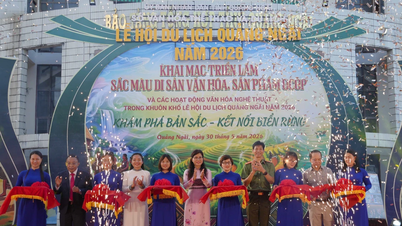
Beyond simply developing local products, the "One Commune, One Product" (OCOP) program is gradually asserting its role as a crucial driving force for the rural economy of Quang Ngai. From familiar agricultural products, the OCOP program has enabled many localities to create higher-value, branded goods, contributing to increased income for residents and promoting the image of the land and people of Quang Ngai.
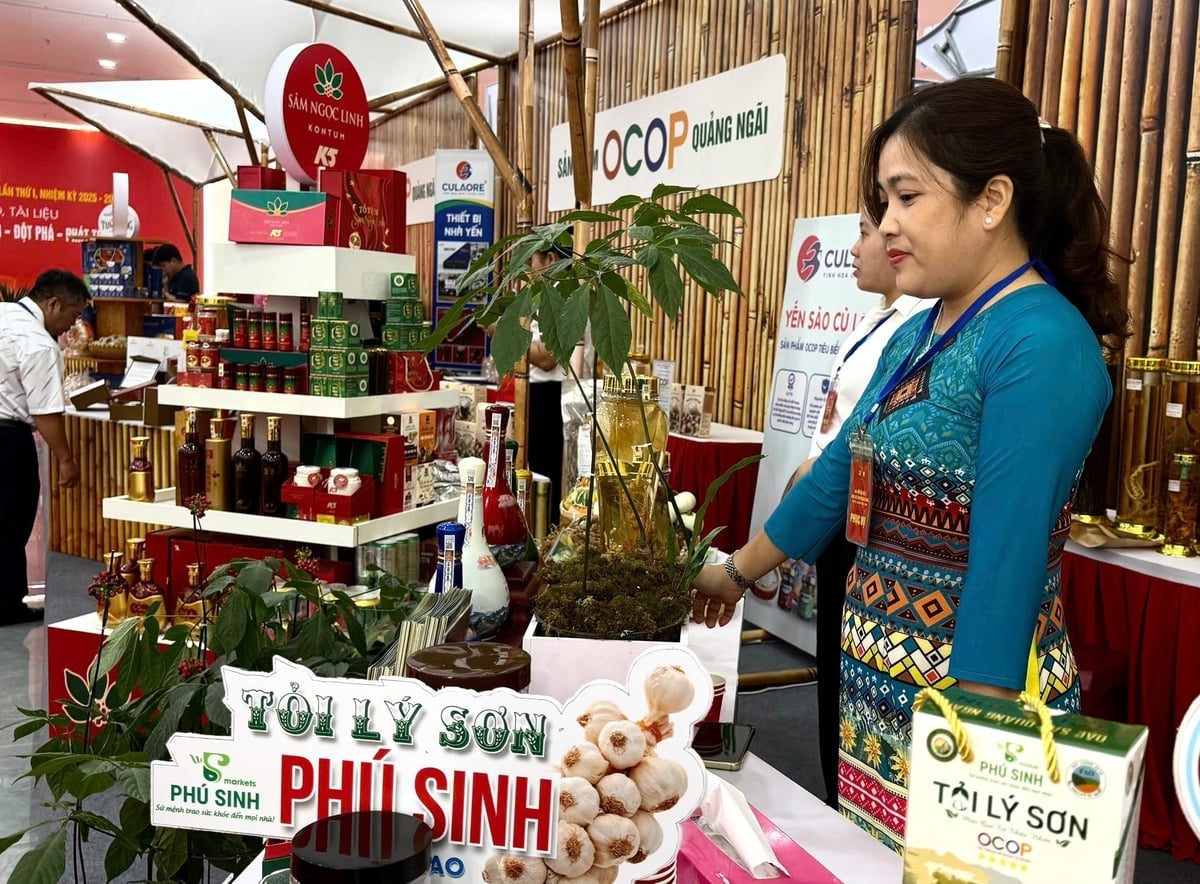
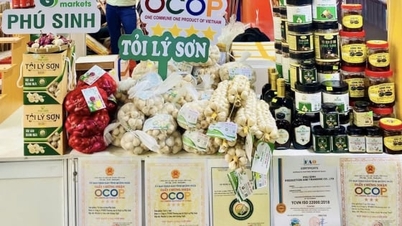
Ly Son garlic undergoes extensive processing and receives OCOP certification, facilitating market expansion. Photo: LK
In reality, the One Commune One Product (OCOP) program has opened a new direction for agriculture in Quang Ngai province by encouraging businesses to shift from small-scale production to a systematic approach linked to the market. Many OCOP products from Quang Ngai have established a strong foothold, not only domestically but also gradually accessing international markets. Ly Son garlic is a prime example of the program's effectiveness.
Phu Sinh Trading and Service Co., Ltd., located in the Ly Son Special Economic Zone, is currently one of the OCOP (One Commune One Product) companies whose products are receiving significant market attention. The Ly Son garlic produced by this company has been recognized as a 5-star national OCOP product and consistently faces a situation where supply cannot meet demand. Almost all of the products produced are sold, demonstrating their strong appeal as they simultaneously meet criteria for quality, food safety, and brand recognition.
According to Mr. Nguyen Van Nhat, Director of Phu Sinh Trading and Service Co., Ltd., the company currently collaborates with 85 households in garlic production across an area of approximately 40 hectares. Of this, 32 hectares are certified to VietGAP standards and 8 hectares meet HACCP standards (a widely applied food safety management system worldwide ). Establishing a standardized raw material area not only helps control input quality but also builds trust with partners and consumers.
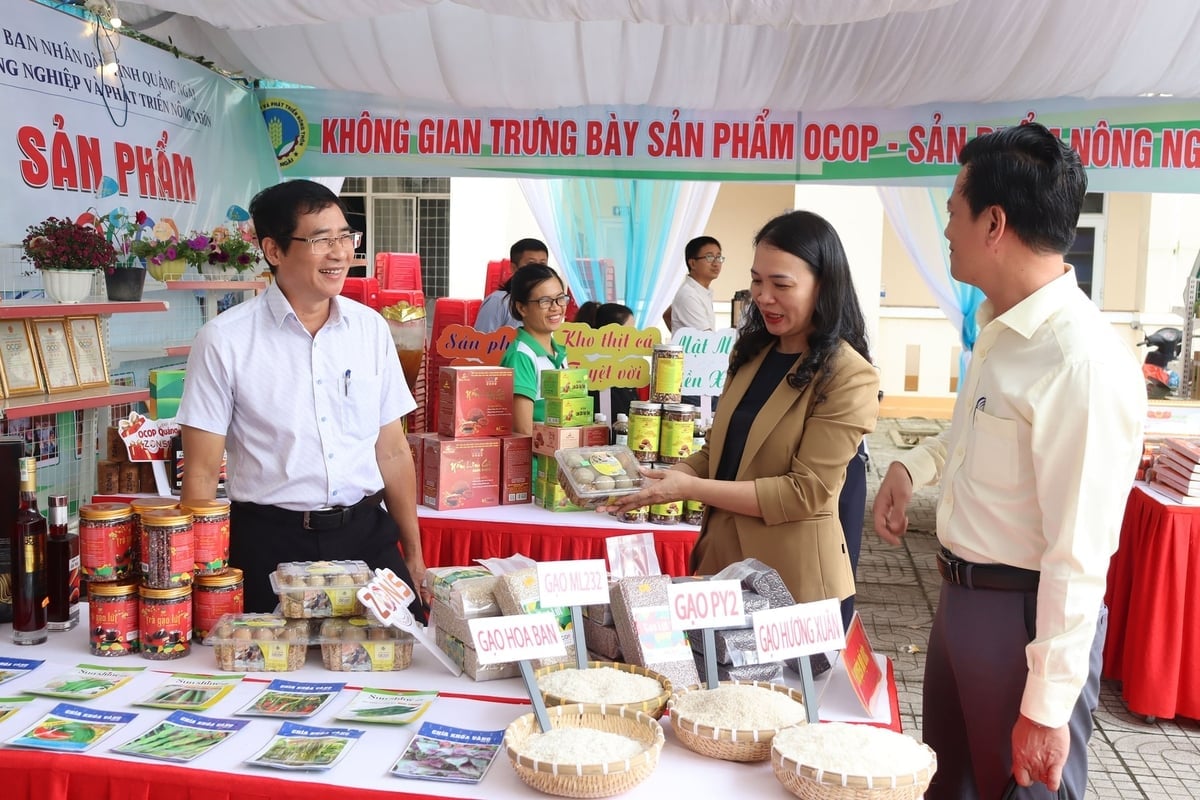
Quang Ngai's OCOP products not only contribute to increasing people's income but also promote the image of the local land and people. Photo: LK
Mr. Nhat stated that achieving the 5-star OCOP certification has become an important "passport" to help the company's products expand their market. Currently, the company is cooperating with nearly 10 processing and distribution units, with an output of over 200 tons of garlic per year. Simultaneously, the company is also negotiating with partners from Japan, South Korea, and several other potential markets. "The OCOP star rating is not only a recognition of quality, but also a launching pad for Ly Son garlic and processed garlic products to reach the world, contributing to promoting the image of Ly Son," Mr. Nhat shared.
According to the Quang Ngai Provincial Department of Agriculture and Environment, the initial success of the OCOP program in Quang Ngai stems not only from mechanisms and policies, but more importantly from the synchronized involvement of the entire political system. From the provincial level to the grassroots, various sectors and localities have proactively accompanied and supported businesses, cooperatives, and production households participating in the OCOP program. Through the program, many entities have changed their mindset, boldly invested in machinery, improved production processes, adopted modern management methods, and focused on building long-term brands.
However, despite the positive results, the OCOP program in Quang Ngai still faces many difficulties. One of the major limitations is the lack of uniformity in production processes and product quality. Many OCOP products have not met the requirements for stable production volume and the stringent standards of large distribution systems. This hinders market expansion, especially in export markets.
Furthermore, many OCOP (One Commune One Product) entities, including cooperatives and small businesses, have not yet paid sufficient attention to product design, packaging, labeling, and certifications related to food safety and traceability. These are increasingly important factors in a context where consumers prioritize product transparency and safety.
To address these "bottlenecks," local authorities and specialized agencies have implemented numerous support solutions in recent times. These include focusing on establishing points for introducing and selling OCOP products, while connecting all stages from production and raw material supply to processing and distribution, forming a closed value chain.
Mr. Nguyen Quang Hoa, Head of the Rural Development Sub-Department of Quang Ngai province, said that the unit not only reviews and selects products with potential for in-depth investment, but also supports entities participating in trade promotion and connecting supply and demand. Simultaneously, it focuses on organizing production linked to the development of characteristic raw material areas, linking supply chains in an organic and ecological direction, with registered planting areas, ensuring food safety and clear traceability.
From the perspective of OCOP (One Commune One Product) businesses, the requirement is to be more proactive in technological innovation, infrastructure investment, and improving production processes to adapt to the digital and green economies. This is considered key to increasing added value, extending product lifecycles, and enhancing competitiveness in the market.
Deputy Chairman of the Quang Ngai Provincial People's Committee, Do Tam Hien, emphasized that the State plays a facilitating, guiding, and supportive role, while the success of OCOP largely depends on the proactive efforts of the stakeholders. Businesses, cooperatives, and producers need to promptly grasp market demands, flexibly adjust processing and post-harvest preservation processes, and focus on improving product quality, design, and storytelling. In the context of increasingly fierce competition, OCOP products can only make an impact when they possess distinctiveness, are linked to regional cultural identity, and are built on a foundation of sustainable branding.
Source: https://nongnghiepmoitruong.vn/dong-luc-phat-trien-kinh-te-nong-thon-tu-san-pham-ocop-d793747.html










![When forestry is a 'weakness' for Nghe An?: [Part 3] Forest owners worry about the challenge of financial self-sufficiency](https://vphoto.vietnam.vn/thumb/402x226/vietnam/resource/IMAGE/2026/06/01/1780328200116_pu-hoat-014846_425-223223.jpeg)




![The Essence of Viet Bac Villages: [Part 3] The Precious Fragrance of Nghinh Tuong](https://vphoto.vietnam.vn/thumb/402x226/vietnam/resource/IMAGE/2026/05/29/1780020600366_5237-tinh-tuy-ban-lang-viet-bac-bai-3-chuyen-o-nghinh-tuong-050626_700.jpeg)
![The Quintessence of Northern Vietnam's Villages: [Part 2] The Famous Cassava Noodles of Kunming](https://vphoto.vietnam.vn/thumb/402x226/vietnam/resource/IMAGE/2026/05/28/1779937455892_3929-3144-mien-dong-15-nongnghiep-023138.jpeg)
![The Essence of the Village: [Part 1] Wine on the mountain, tea in the clouds - Bang Phuc](https://vphoto.vietnam.vn/thumb/402x226/vietnam/resource/IMAGE/2026/05/27/1779841729178_3821-1jpg-nongnghiep-103814.jpeg)
![[Photo] Reception to welcome General Secretary and President To Lam and his wife on their State visit to the Philippines](https://vphoto.vietnam.vn/thumb/1200x675/vietnam/resource/IMAGE/2026/06/01/1780295488620_vna-potal-chieu-dai-chao-mung-tong-bi-thu-chu-tich-nuoc-to-lam-va-phu-nhan-tham-cap-nha-nuoc-toi-philippines-8798060-7855-jpg.webp)























































Comment (0)