It's not a miracle.
"I cried for the entire 124 minutes of the movie, I'm so proud of Vietnam!" This short post on a fan page with 2.3 million followers immediately went viral, garnering over 35,000 likes, nearly 4,000 comments, and hundreds of shares.
Audience member Nguyen Thanh Truc left a comment: “There are films that are not just for watching, but for engraving in the heart. Red Rain is an epic of blood, where every drop of rain falling on Quang Tri Citadel seems to blend with the blood of young men in their late teens and early twenties.”
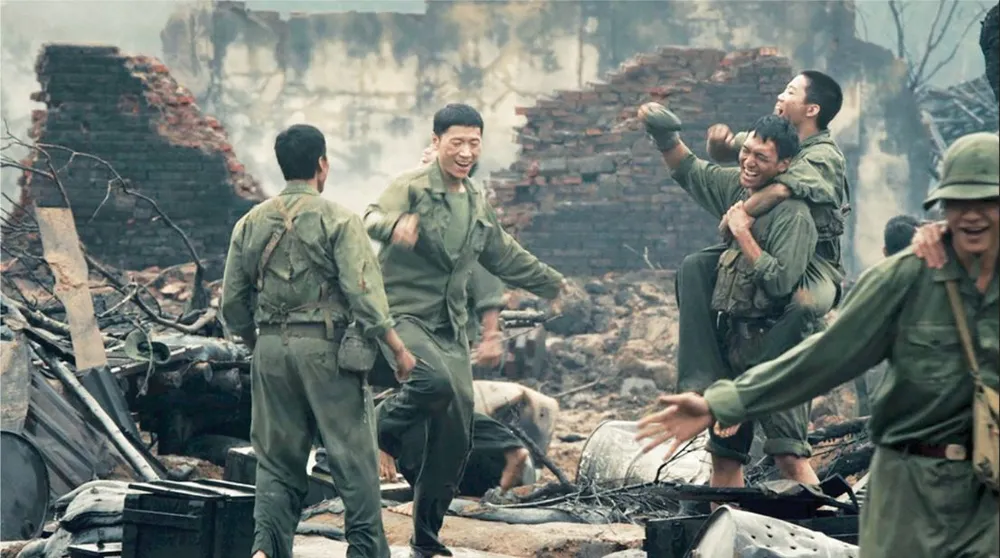
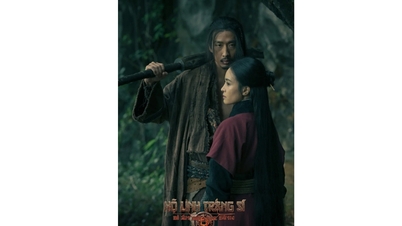
The film "Red Rain" realistically portrays the 81-day and 81-night battle to defend the Quang Tri Citadel.
Earlier, at the film's premiere in Hanoi , Colonel Nguyen Van Hoi, Head of the Liaison Committee of the K3 Tam Dao Battalion, one of those who returned from the battlefield that year, shared: "The film has brought back to life in me the 81 days and nights of fighting to defend the Quang Tri Citadel. I never thought that after 50 years, I would be able to watch a film about that war. We, who were there, couldn't hold back our tears."
Following the tearful posts on social media, the film truly became a box office sensation. It grossed 100 billion VND in its first three days of release and surpassed 200 billion VND by August 28th, achieving unprecedented figures in the revolutionary war film genre.
The success of "Red Rain" or "Tunnels: The Sun in the Darkness" is not a miracle, but stems primarily from inherent factors. Both works are the result of decades of gestation.
Underground tunnels: The sun in the shadows took 12 months to prepare and 12 months to film. The production of Red Rain lasted 3 years and involved filming for 81 days straight in rain and floods, at times seemingly impossible to continue.
The film boasts significant investment in everything from settings, costumes, and equipment to post-production, delivering a visual and emotional experience compelling enough to draw viewers to the theaters. The result is scenes that are not only visually stunning but also transport the audience back to the fierce battles of yesteryear, amidst falling bombs, gunfire, and an atmosphere thick with the smell of death, yet still imbued with a spirit of optimism.
The image of the soldier in "Red Rain," ready to be a "living torch," determined not to surrender, is a vivid testament to that spirit. Each historical story, each character, offers an experience to the audience. This emotional impact also comes from very vivid details: fear, a budding romance, hunger, the heart-wrenching pain of a mother on both sides of the conflict...
Resonance
The good news is that the success of historical, war, and revolutionary films in recent times has had a ripple effect. "Peach, Pho, and Piano" (Tet 2024) unexpectedly generated curiosity, causing many viewers to queue up to buy tickets. The revenue of over 20 billion VND is still quite modest, but it represents a significant leap forward.
From the Tunnels: The Sun in the Darkness to Red Rain , the quality has improved significantly, with professional investment and well-planned promotion… that success is certainly not just luck.
Another highlight that cannot be overlooked is the public-private partnership model. Red Rain is the result of a collaboration between the People's Army Film Studio and Galaxy Studio; Tunnel: The Sun in the Darkness received significant support from the Ministry of National Defense and relevant agencies.
Coming soon, "Battle in the Air" will continue the collaborative film series between the People's Police Film Studio and Galaxy Group. This collaboration balances important elements: sufficient investment resources, accuracy, and meeting high standards for a modern film.
But there was also a special resonance – the contribution of living witnesses. Colonel Kieu Thanh Thuy, the production director of the film "Red Rain ," said that the film crew came up with the bold idea of inviting war invalids to assist in filming. In a scene in a surgical bunker amidst bombs and bullets, the image of a war invalid with both legs amputated lying on a hospital bed was that of a real war invalid from the Quang Tri battlefield years ago.
In the film "Tunnels: The Sun in the Darkness ," the character of Tư Đạp was inspired by the Hero of the People's Armed Forces, Tô Văn Đực. He, along with the former Củ Chi guerrillas, served as a living witness, providing the crew and cast with ample material to authentically portray each scene.
In *Battle in the Air* , the captains, navigators, and flight attendants on the hijacked flight nearly 50 years ago also participated as consultants, providing documentation and images.
Vietnamese cinema currently needs more works to regain its position in the historical, war, and revolutionary film genre. But at least, after many years of dormancy, this genre has revived and integrated into the vibrant and promising market.
Whether this film genre continues to flourish depends greatly on the combined efforts of not only producers and filmmakers but, above all, the entire community, with audience support being paramount. Only then will Vietnamese cinema have more chapters told in a more engaging, profound, and vibrant way.
Major - Hero of the People's Armed Forces TRAN TRONG CAN:
"I believe that stories of war will never fade from the hearts of the younger generation. I hope that the younger generation will take them as role models to strive for in life and in all areas of work."
Lieutenant Colonel TRAN NAM CHUNG, Director of the People's Police Film Department:
“The People's Police Cinema chose the topic of hijackers because Vietnamese cinema has never explored this subject before. These are ordinary people who have become heroes, protecting the safety of citizens in an exceptionally dangerous situation. We hope this film will bring audiences a new spiritual flavor, a new emotion regarding the theme of protecting the peace of our nation's skies.”
VAN TUAN
Source: https://www.sggp.org.vn/dong-phim-lich-su-tinh-giac-post811321.html




























![[Photo] Reception to welcome General Secretary and President To Lam and his wife on their State visit to the Philippines](https://vphoto.vietnam.vn/thumb/1200x675/vietnam/resource/IMAGE/2026/06/01/1780295488620_vna-potal-chieu-dai-chao-mung-tong-bi-thu-chu-tich-nuoc-to-lam-va-phu-nhan-tham-cap-nha-nuoc-toi-philippines-8798060-7855-jpg.webp)
























































Comment (0)