


Many properties (houses and land) will be available for rent.
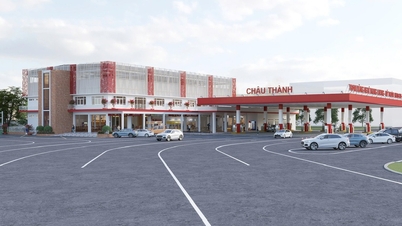
Following the provincial merger, the Department of Culture, Sports and Tourism of Dong Thap province relocated its headquarters to Dao Thanh ward; the old headquarters in Cao Lanh ward is now redundant. Meanwhile, this old headquarters, completed and put into use in 2017, still boasts relatively modern facilities; a spacious area of nearly 3,000 m2; and is located in a prime location in Cao Lanh ward, right at the corner of Pham Huu Lau and Thien Ho Duong streets. In the near future, it is planned that the old headquarters of the Department of Culture, Sports and Tourism of Dong Thap province will be leased through an auction to avoid waste.
In addition, the former headquarters of agencies in Dong Thap province, such as the Provincial Center for Trade, Tourism and Investment Promotion; the Provincial Inspectorate; the Department of Industry and Trade; the Department of Health; and the Provincial Population and Family Planning Sub-department, are also expected to be leased in the near future. Recently, the People's Committee of Dong Thap province approved the Plan for managing and exploiting land and buildings in 2026, which is managed and exploited by the Land Fund Development Center (under the Department of Agriculture and Environment). Accordingly, the province plans to lease a total land area of over 33,600 m2 and a usable floor area of nearly 32,000 m2 of 32 land and building properties, including the former headquarters of many agencies that became redundant after mergers.
According to the People's Committee of Dong Thap province, these properties are leased to organizations and individuals for the purpose of establishing headquarters and offices; business and service establishments in the fields of education and training, vocational training, healthcare, culture, sports, and environment (excluding those prohibited by law or not meeting the business requirements); warehouses, shops for buying, selling, displaying, and introducing products serving production and business activities (for cooperatives, cooperative unions, and cooperative groups); and public service establishments.
The leasing method is through auction and price listing; the maximum lease term is 5 years. In the case of leasing houses and land as stipulated in point b, clause 1, Article 1 of Decree No. 108/2024/ND-CP (public assets not used for residential purposes, subject to temporary management while awaiting the handling of houses and land according to the law), the maximum lease term is 3 years. The projected revenue from exploiting houses and land, from installing telecommunications facilities on houses and land, and the amount remitted to the state budget are based on the approved house rental price list. This aims to avoid wasting surplus public assets, ensure their proper use, and generate additional revenue for the state budget.
Furthermore, since the merger, many surplus land and buildings have been closed down pending resolution. Over time, infrastructure has deteriorated, overgrown with weeds, and neglected cleaning and maintenance, detracting from the aesthetic appeal, especially in urban areas. In response to this situation, the People's Committee of Dong Thap province has assigned the Department of Construction, the Provincial Land Fund Development Center, the Project Management Boards for Investment and Construction in Zones 1, 2, 3, and 4, and the People's Committees of communes and wards to carry out environmental landscaping improvements to create a green, clean, and beautiful environment on public land plots in urban areas throughout the province that have yet to be processed.
Tighten management of houses and land.

Following directives from higher authorities, after the administrative unit reorganization, the People's Committee of My Ngai Ward conducted a review and inventory of all facilities, equipment, and public assets in the area to develop a management and utilization plan suitable for the new organizational model. Currently, My Ngai manages 83 properties, including office buildings, educational facilities, cultural institutions, and other public works.
According to Nguyen Hoang Hon, Chairman of the People's Committee of My Ngai Ward, the locality has rearranged the working offices of agencies and units in a way that is centralized and convenient for directing, managing, and serving the people; at the same time, maximizing the use of existing facilities, limiting scattered investments, and avoiding waste. For surplus facilities after the rearrangement, the ward has developed plans for relocation, reallocation, or proposed that the competent authorities handle them according to regulations.
Cao Lanh ward was established by merging nine communes and wards of the former Cao Lanh city; this is where the administrative center of the former Dong Thap province was located, thus concentrating many state agencies. According to Bui Quoc Nam, Chairman of the People's Committee of Cao Lanh ward, the total number of properties and land allocated to the ward for management and use is 116. Of these, the ward retains 86 properties for continued use to serve the activities of agencies, units, and public service units; 22 properties are surplus properties from the nine former communes and wards and agencies and units of the former Cao Lanh city that were handed over; and 8 properties were transferred from the province to the locality for management and handling.
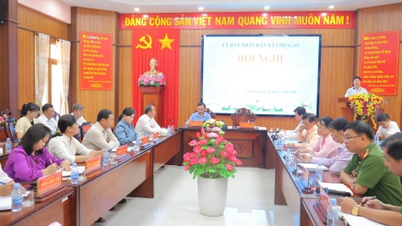
The Chairman of the People's Committee of Dong Thap province requested the heads of provincial departments, agencies, public service units under the Provincial People's Committee, the Chairmen of commune and ward People's Committees, the heads of enterprises where the Provincial People's Committee acts as the owner's representative; and relevant agencies and organizations to continue to thoroughly and seriously implement the legal regulations on the management and use of public assets, the rearrangement and handling of houses and land; and the directives of the Prime Minister, the Ministry of Finance, and the Provincial People's Committee related to the management and exploitation of public asset resources, ensuring that houses and land are used for the right purpose, according to standards and norms, economically, efficiently, and in accordance with the law.
The People's Committee of Dong Thap province is urging agencies, units, and localities to promptly review all buildings and land under their management and use; compare them with the assigned purposes, standards, and norms for the use of office buildings and facilities for public service activities, and relevant regulations, in order to promptly propose appropriate handling methods in accordance with the law on the management and use of public assets.
During the review process, special attention should be paid to properties and land that are being used improperly, for purposes other than intended, exceeding standards and quotas, left vacant, unused, not used continuously for more than 12 months, no longer needed, leased, borrowed, used in joint ventures or partnerships in violation of regulations, or used inefficiently, in order to propose their recovery, transfer, or reassignment to local authorities for management and handling, or to apply other forms of handling in accordance with regulations.

The stance of the People's Committee of Dong Thap province is that for properties and land used for purposes other than intended, left vacant, unused, leased, borrowed, or used in joint ventures or partnerships in violation of regulations, decisive action will be taken to stop the violations and ensure the management and use of public assets in accordance with the law. Agencies, units, and localities must fully and promptly submit reports on public assets; failure to do so or failure to do so within the specified timeframe will result in legal penalties.
According to the Office of the People's Committee of Dong Thap province, after a review, the province currently has 11,113 properties (houses and land), of which 511 are surplus. The province has completed the handling of 167 surplus properties, specifically: 26 properties have been temporarily allocated to agencies, organizations, and units; 2 properties have been converted into cultural, sports, and public facilities; 6 properties have been allocated as offices and operational facilities for public services; and 133 properties have been assigned to local housing management and business organizations for management and exploitation. The Provincial People's Committee has issued 4 decisions to transfer surplus equipment from 14 provincial-level units to 20 communes in need to avoid waste.
Source: https://baotintuc.vn/thoi-su/dong-thap-du-kien-cho-thue-hang-loat-tru-so-doi-du-20260525141011663.htm



![[Photo] Standing Committee member of the Party Central Committee Tran Cam Tu working with the Central Inspection Committee](https://vphoto.vietnam.vn/thumb/1200x675/vietnam/resource/IMAGE/2026/05/28/1779969579668_ndo_br_bnd-2495-jpg.webp)





























































Comment (0)