

On the evening of April 21st, the Vietnam Railway Corporation announced that the railway tunnel through Ca Pass had been reopened that same evening, and the tunnel collapse incident had been completely resolved.
According to information gathered by the Traffic Newspaper at the scene, at exactly 6:15 PM on April 21st, freight train number HH84, locomotive number 940, pulling 18 carriages with a total weight of 850 tons, safely passed through the Ca Pass tunnel.
This freight train, departing from Dai Lanh station (Khanh Hoa) to Giap Bat station ( Hanoi ), signals that the North-South railway line has been reopened.
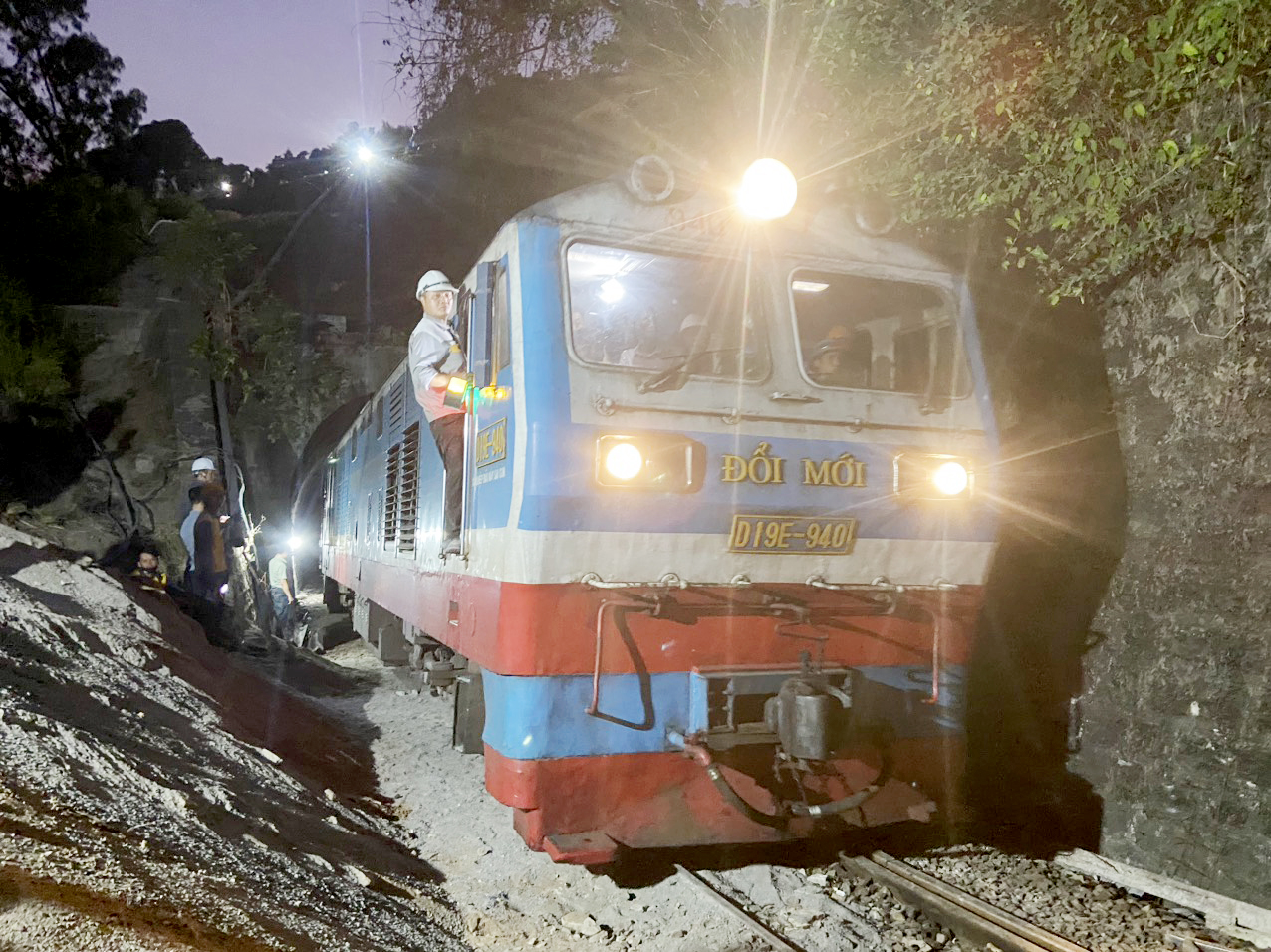
The first train has passed through the Ca Pass railway tunnel after construction units completed the repairs to the landslide.
According to Mr. Tran Thien Canh, Director of the Vietnam Railway Department, after the incident occurred, the railway industry coordinated with the Vietnam Railway Corporation and the two localities of Phu Yen and Khanh Hoa to organize the diversion of road traffic through Ca Pass.
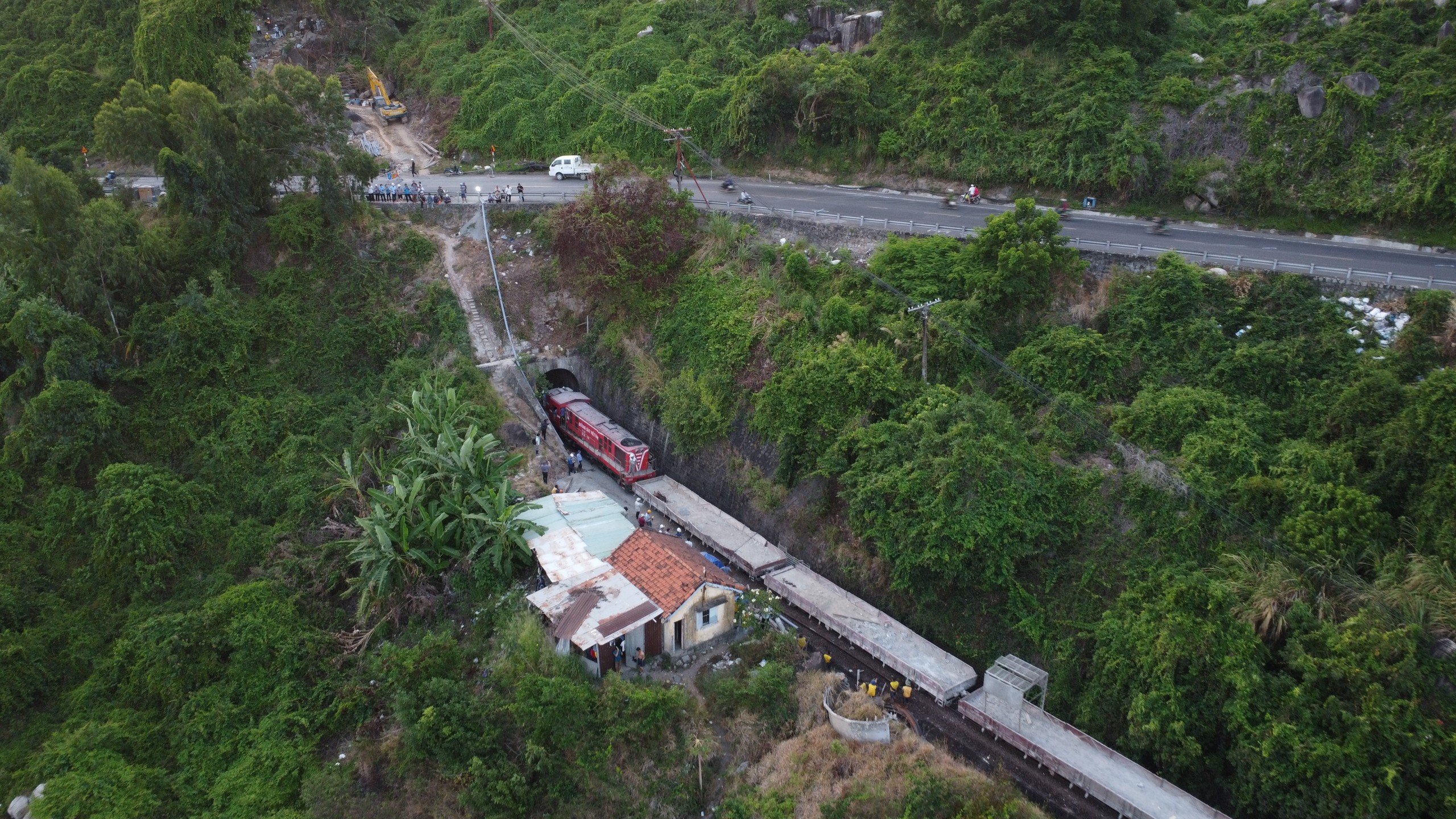
The Ca Pass railway tunnel has officially reopened after being blocked by a landslide for 9 days.
According to Mr. Canh, the railway industry has established a field task force, and the basic work has now been completed.
"Before the official handover, the railway sector will conduct trial runs of trains at different speeds, each time from 5 to 15 km/h. The tunnel is open, but cars are still prohibited from using the road as safety is being tested for vehicles traveling on the tunnel entrance. It is expected that the National Highway 1 pass will reopen on April 22nd," Mr. Canh added.
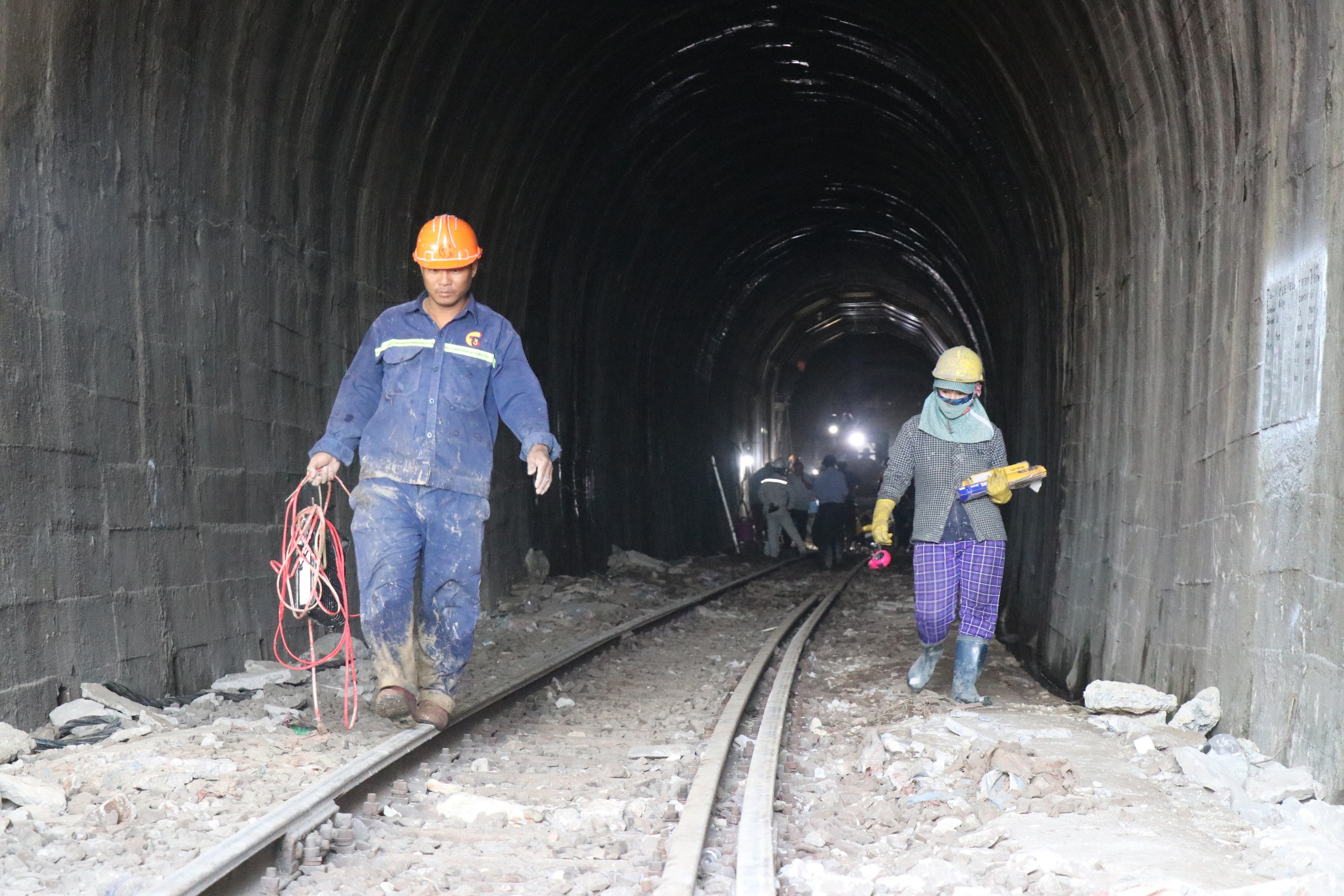
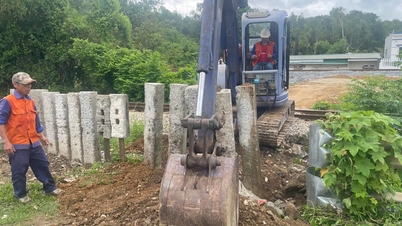
Workers clean up the construction site after the work is completed.
On the afternoon of April 21st, the construction units mobilized approximately 200 officials and engineers to actively carry out the work. Concrete was pumped to bond all the soil and rock that had collapsed behind the tunnel lining, spanning about 11 meters, as well as the landslide area inside the tunnel.
In total, there were 39 boreholes, including 2 boreholes drilled from the mountainside downwards, and 37 boreholes drilled inside the tunnel to pump high-pressure concrete, creating a stable bond.
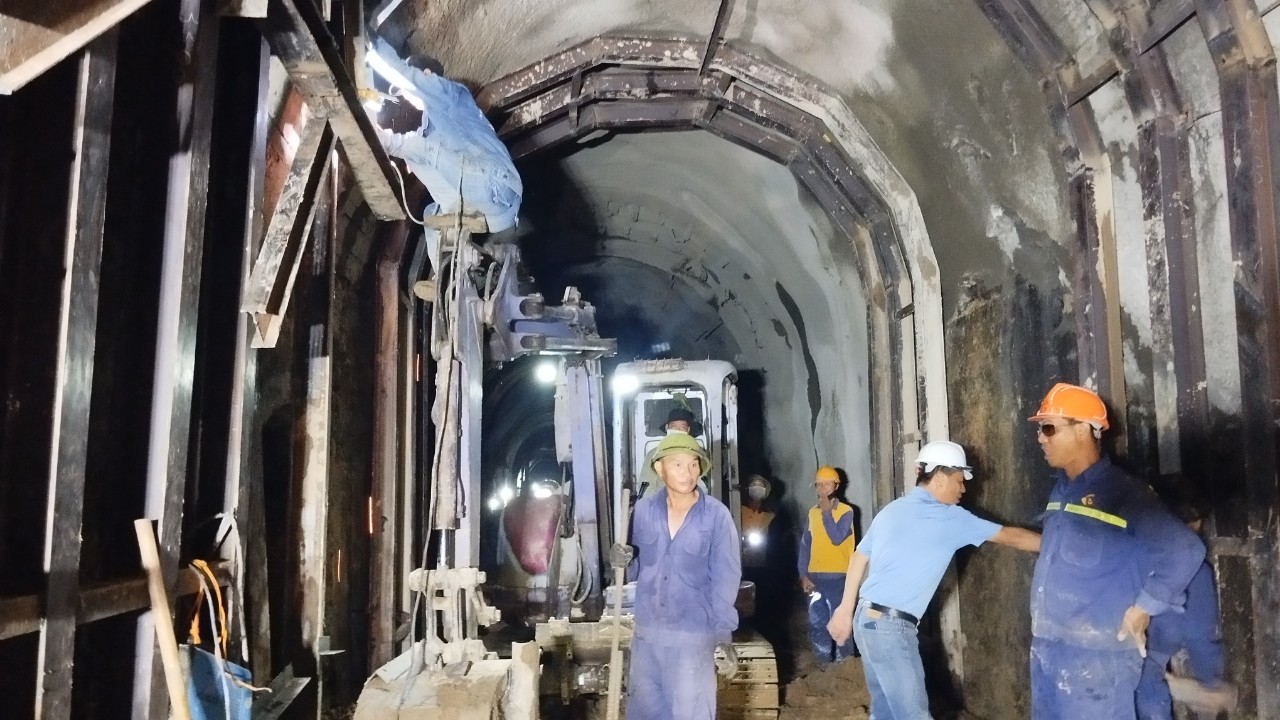
The tunnel roof support frame has been fully installed.
A worker from Construction Company No. 3 happily said: "After many days of working day and night, today we can see the fruits of our labor. It's so exciting, and I'm still anxiously waiting for the moment the train passes through."
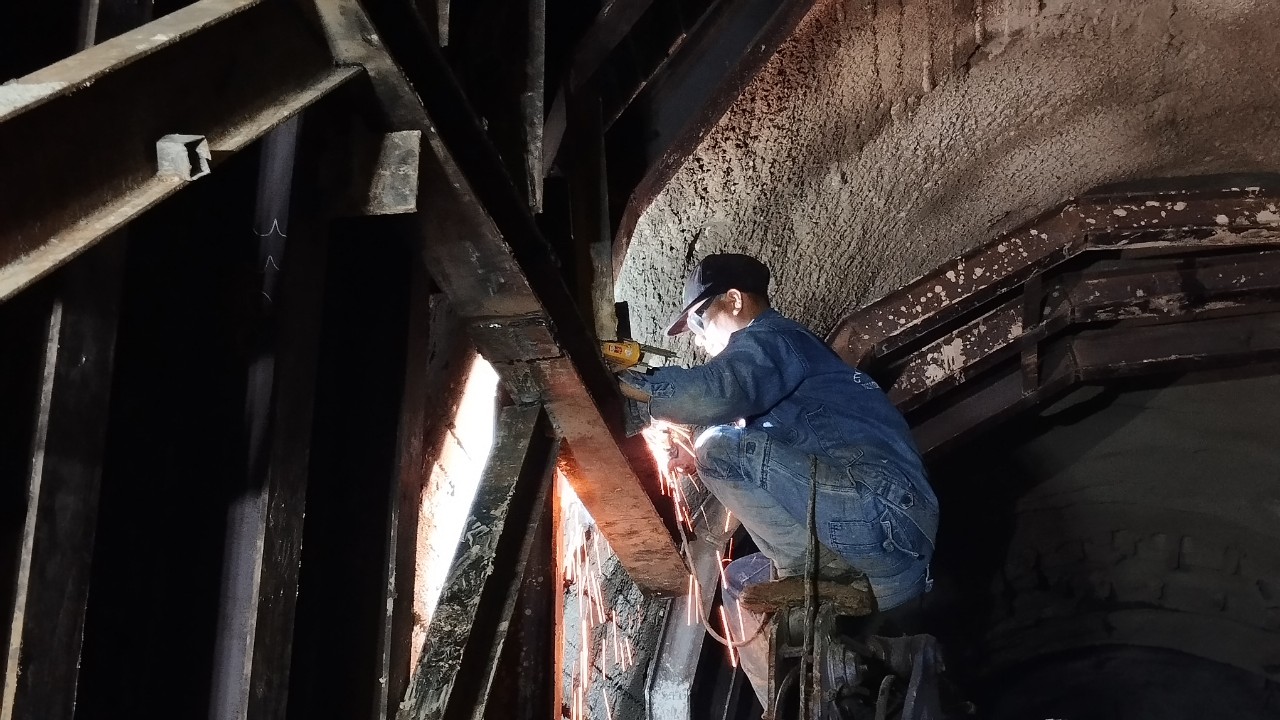
The final welds made by the construction unit ensure safety when trains pass through.
In response to the tunnel collapse incident, according to Mr. Tran Viet Tung, Director of the Nha Trang Railway Transport Branch, from April 12th to the present, the unit has transferred 110 passenger trains with more than 30,000 passengers from Tuy Hoa station (Phu Yen province) to Gia station (Van Ninh district, Khanh Hoa province) to continue their journeys between the South and North and vice versa.
The freight trains are also assembled at Hoa Huynh station (Ninh Hoa town, Khanh Hoa province) and Hoa Da station (Phu Yen province) for transshipment by trucks. The railway sector covers the transshipment costs.
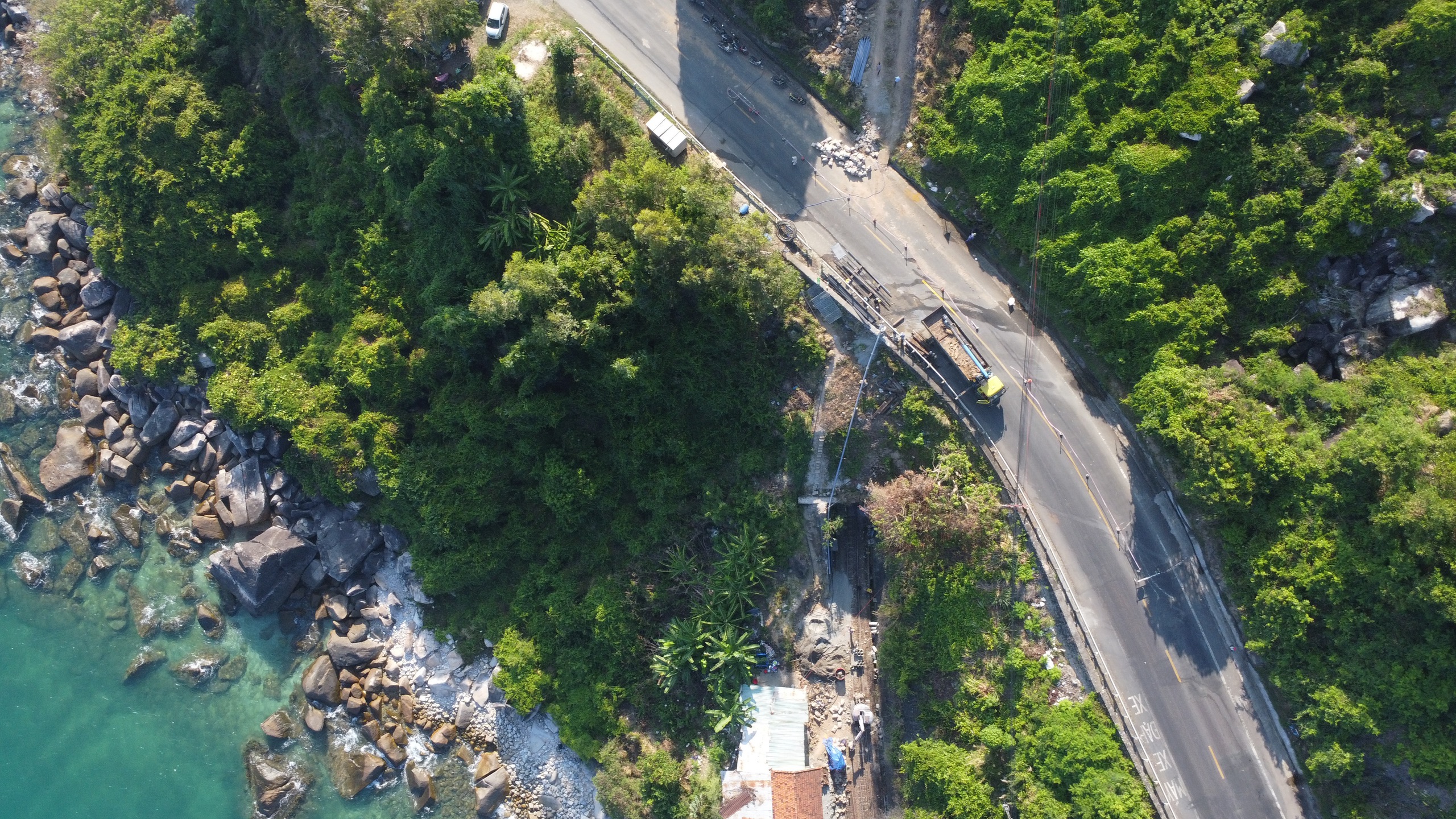
The southern entrance to the railway tunnel through Deo Ca Pass.
Earlier, at 12:45 PM on April 12th, a landslide occurred in the railway tunnel through Deo Ca Pass (Km 1231+100, in Dai Lan commune, Van Ninh district, Khanh Hoa province) on the North-South railway line, causing hundreds of cubic meters of soil and rocks to completely block the tunnel entrance.
The incident completely severed the North-South railway line through Deo Ca Pass.
The tunnel, nearly 400 meters long, is a Class II railway tunnel and is currently undergoing reinforcement work.
The funding comes from the medium-term public investment plan for the period 2016-2020. The project is managed by Project Management Board 85.
Source: https://www.baogiaothong.vn/ham-duong-sat-deo-ca-se-thong-vao-chieu-toi-21-4-192240421162204857.htm
![[Image] Hanoi's urban life under the challenge of a "scorching hot" environment](https://vphoto.vietnam.vn/thumb/1200x675/vietnam/resource/IMAGE/2026/05/25/1779706979265_nang-nong-t5-2026-minh-duy-7-4636-jpg.webp)


![[Image] Close-up view of the interchange connecting the two expressways and Long Thanh Airport.](https://vphoto.vietnam.vn/thumb/1200x675/vietnam/resource/IMAGE/2026/05/25/1779703378210_ndo_br_z7863716673926-224453a31600126cce10622af6290afd-4549-jpg.webp)















































































Comment (0)