Over the years, Nguyen Trai Street (Thanh Xuan Ward) has been repeatedly dug up for paving, underground infrastructure repairs, drainage construction, and traffic reorganization. Similarly, streets like Xuan Thuy, Cau Giay, and Tran Dang Ninh (Cau Giay Ward) have had their sidewalks dug up for underground electrical and drainage installations, then repaved with new stone, only to be cut up again for other construction projects. Or, on Dang Van Ngu Street (Kim Lien Ward), the sidewalks, completed less than a year ago, have already been dug up again for the installation of technical systems.
Ms. Le Thu Hong, a resident of Cau Giay ward, said that for many years, the Cau Giay road has been under continuous construction. One construction unit finishes work, and then another comes in to dig it up again, causing dust and traffic congestion. “Besides the dust, this situation also drives up investment costs. Each time the road is dug up and filled in, it means demolishing the old structure and rebuilding the road surface, which incurs additional costs for labor, materials, and construction time – a significant waste of budget,” Ms. Le Thu Hong said.
Furthermore, the practice of digging up roads and then carelessly restoring them is a major source of waste, as once clean and smooth roads become uneven and patched due to the irresponsibility of the construction unit. Recently, Huynh Thuc Khang street (Lang ward) has become bumpy and rough due to the construction unit digging up the road but then carelessly restoring it. This situation also occurs on Phung Hung street (Cua Nam ward). Previously, on Dao Tan street (Giang Vo ward), the section at the intersection of Lieu Giai - Dao Tan - Kim Ma was dug up and had underground cables installed, but the road surface in some sections has not been restored to its original condition, leaving temporary, uneven patches that pose a potential traffic safety hazard.



Regarding this issue, Ms. Do Thi Thanh Thuy, Deputy Director of Hanoi Transportation Construction Joint Stock Company, stated that according to regulations, after the construction of technical infrastructure projects (electricity, water, telecommunications, etc.), the construction unit must restore the road surface to a quality equivalent to or better than the original condition. However, in reality, many streets in Hanoi show that the restoration is still done superficially, just for the sake of appearances. Careless restoration not only affects aesthetics but also reduces the lifespan of transportation infrastructure. Substandard patches will quickly deteriorate, creating potholes and requiring further repairs, resulting in wasted budget and long-term impact on residents.
According to experts, the root cause lies in the lack of synchronized infrastructure development. Many streets have to be dug up to add drainage, electricity, and telecommunications systems because they were not fully implemented previously. In other words, while the plan may exist, its implementation is fragmented, inconsistent, and dependent on individual projects and funding sources, causing the same road to suffer multiple times. The consequences of this situation are not limited to budget costs but also include other quantifiable impacts. First, traffic congestion. Prolonged road closures narrow the road surface, putting pressure on adjacent routes and causing localized traffic jams. Next, environmental pollution occurs as dust from construction sites, soil, and building materials spreads, directly affecting people's health. Furthermore, the businesses of local residents are also severely affected. Many shops located in construction areas are blocked off, making them inaccessible to customers and leading to decreased revenue.
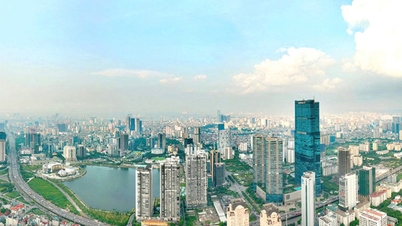
Experts also suggest that construction units should resolutely apply the principle of excavating roads in one go and simultaneously deploying the entire underground system of electricity, water, telecommunications, drainage, etc. In addition, there needs to be a unified coordinating body at the city level to control progress and avoid overlapping between units. Hanoi is undergoing rapid urbanization, and the need for infrastructure upgrades is inevitable. However, if investment is not accompanied by effective management, each project could become a lasting "scar" on the urban landscape, causing a waste of budget.


Source: https://hanoimoi.vn/nhung-vet-seo-lang-phi-748840.html