

The leading agricultural produce hub in the country.
As the province with the largest natural area in the country, Lam Dong currently possesses over 1 million hectares of agricultural land, spread across various ecological zones, from highlands to coastal plains. This is a huge advantage for developing a diverse, large-scale, and highly competitive agricultural sector. Currently, the province has over 100,000 hectares of vegetables and flowers; approximately 314,000 hectares of coffee; over 110,000 hectares of fruit trees; over 10,000 hectares of tea, along with tens of thousands of hectares of macadamia nuts, pepper, rubber, etc. Notably, Lam Dong currently has 107,456 hectares of high-tech agricultural production, playing a leading and influential role in building a smart and modern agricultural sector, contributing to optimizing the productivity, quality, and value of agricultural products.
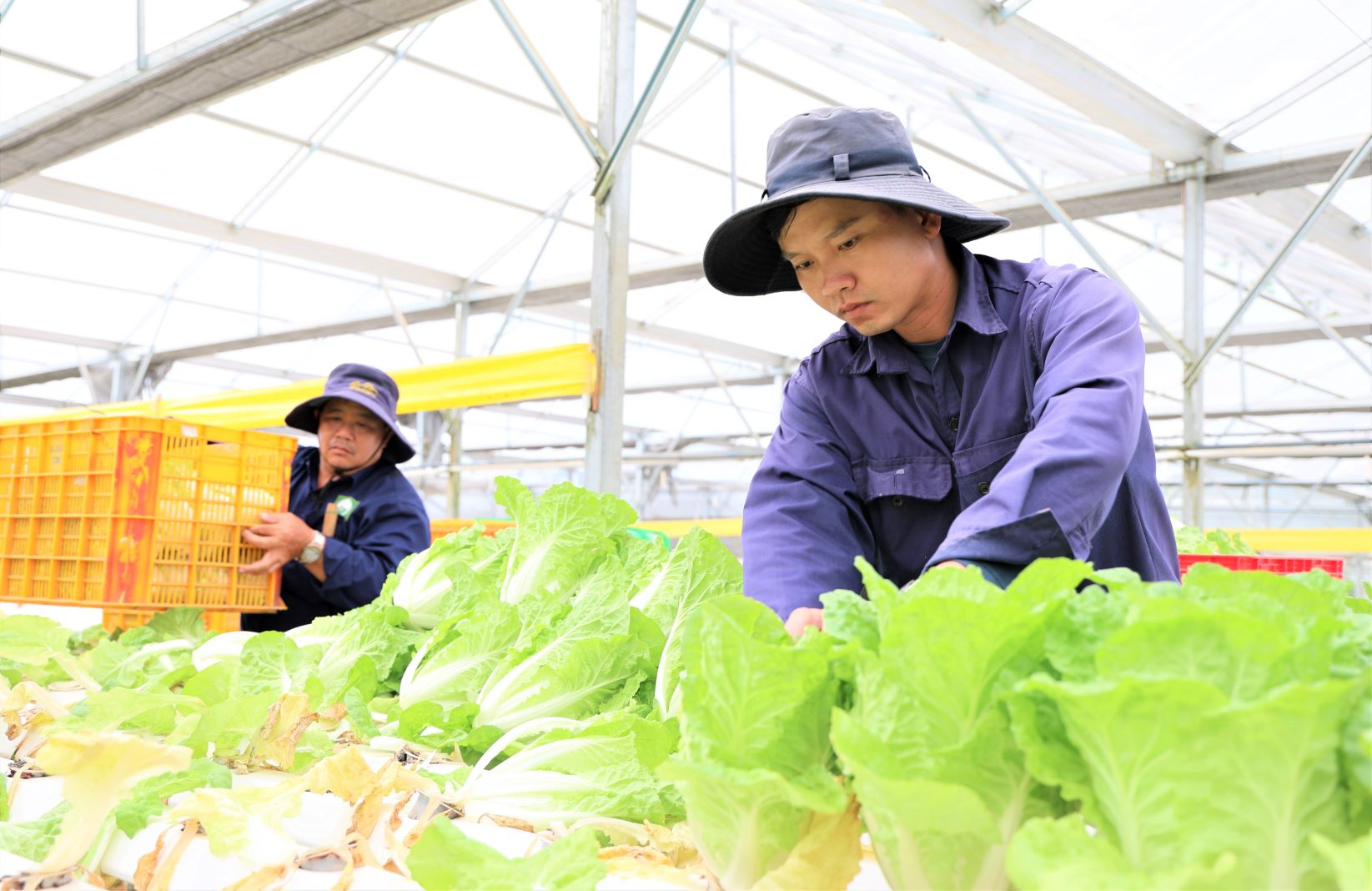 |
Hydroponic vegetable production for export at Dalat Gap Co., Ltd., Lam Vien Ward, Da Lat City, Lam Dong Province. |
Not only diverse in variety, Lam Dong's agricultural products are also renowned for their quality and established brands, such as: Da Lat vegetables and flowers, Da Huoai durian, Di Linh coffee, Cau Dat Arabica coffee, Bao Loc silk, Binh Thuan dragon fruit, Dak Nong avocado and pepper... In recent years, businesses and people have focused on investing in post-harvest technology, preservation, and deep processing, strengthening trade promotion, helping to continuously increase the value of agricultural products and build prestige and brand recognition in domestic and international markets.
According to statistics from the Department of Agriculture and Environment of Lam Dong province, the province currently has more than 1,200 planting area codes and more than 300 packaging facility codes serving export. Lam Dong agricultural products are being exported to many markets such as the EU, Japan, the US, South Korea, China, etc.; in the first five months of 2026, the export value of many agricultural products increased sharply, such as: green coffee beans reached US$353.72 million, an increase of 33.08%; vegetables, tubers, and fruits reached US$53.8 million, an increase of 25.7%; fresh flowers reached US$46.32 million, an increase of 31.97%; tea reached US$7.27 million, an increase of 21.17% compared to the same period in 2025...
Enhancing value and expanding the reach of agricultural products.
Despite the achievements, agricultural production and processing in Lam Dong are revealing many shortcomings, and the consumption and export of agricultural products face many difficulties and challenges. Mr. Bach Thanh Tuan, Vice Chairman of the Vietnam Coffee-Cocoa Association (VICOFA), cited an example: After the merger, Lam Dong has the largest coffee growing area in the country with approximately 314,000 hectares, yielding about 3.2 tons of coffee beans per hectare. However, the Lam Dong coffee industry is facing many challenges, including a high proportion of raw coffee bean exports, inadequate deep processing, limited international brand value, small-scale and fragmented production, lack of long-term linkages, difficulty in meeting synchronized global standards, and strong dependence on fluctuations in world coffee prices, logistics, exchange rates, and international trade policies.
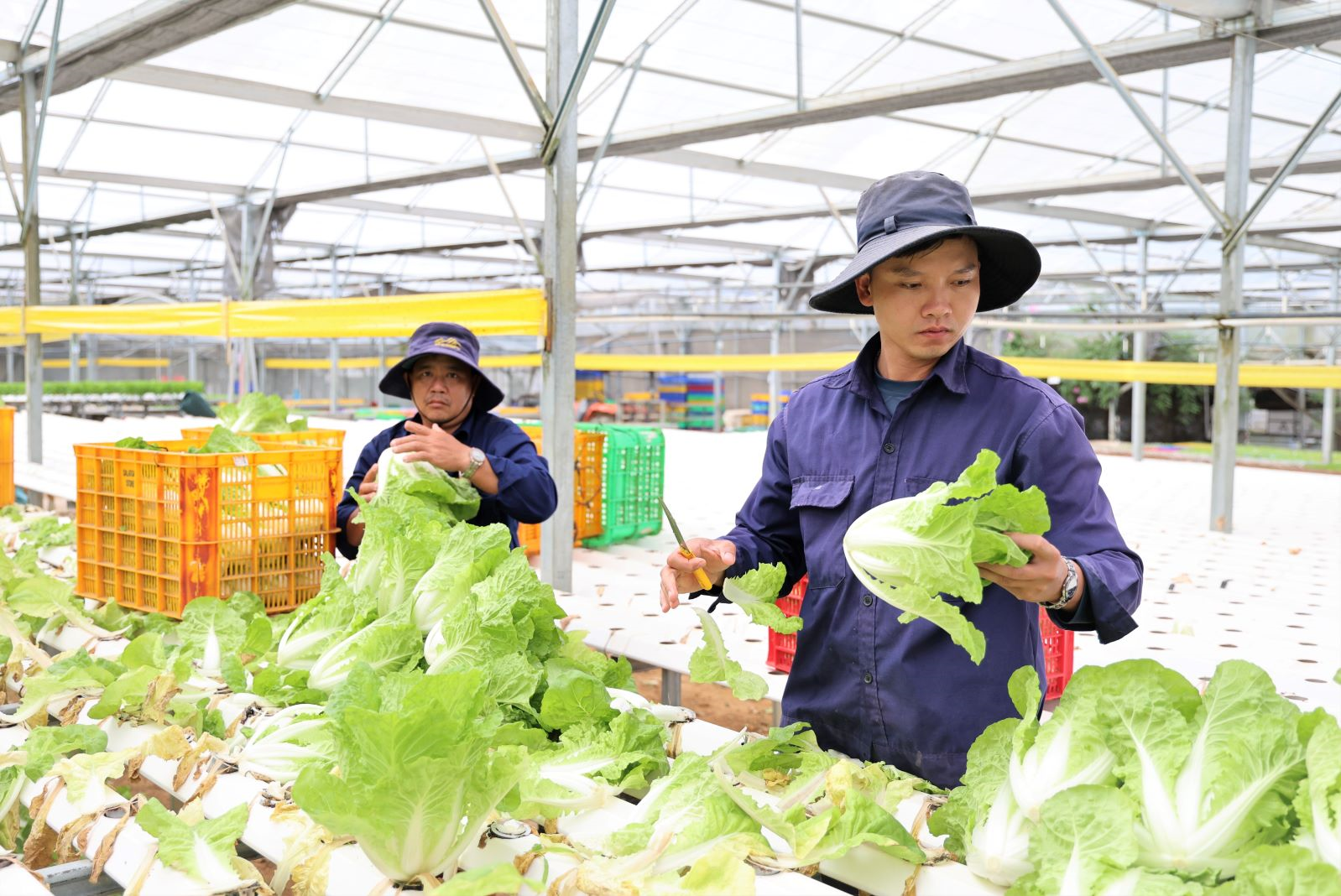 |
| Harvesting vegetables for export at Dalat GAP Co., Ltd., Lam Vien Ward, Dalat, Lam Dong Province. |
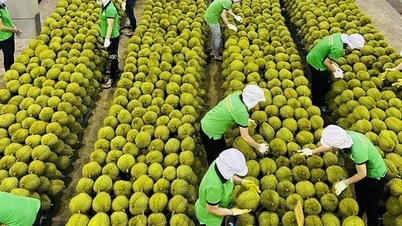
Not only coffee, but many other agricultural products from Lam Dong have also frequently faced the precarious situation of "bumper harvest, low prices" in recent times. The increasingly stringent regulations on quarantine and traceability imposed by importing markets have caused many shipments of Vietnamese agricultural products, including those from Lam Dong, to be held up and difficult to export, leading to sharp price drops. Recently, durian prices in many localities have fallen sharply due to China's stricter quarantine regulations on Yellow O and cadmium, making exports difficult. In the former Binh Thuan province, the "dragon fruit capital" of Vietnam, since the beginning of May, the price of this agricultural product has dropped to only half of what it was during the same period last year. Specifically, grade 1 white-fleshed dragon fruit is being bought by traders for about 8,000 VND/kg, while grade 2 fruit is only 3,000-6,000 VND/kg and is still difficult to sell, a decrease of about 50% compared to the same period in 2025. Many farmers have destroyed their dragon fruit orchards because the longer they maintain them, the more losses they incur.
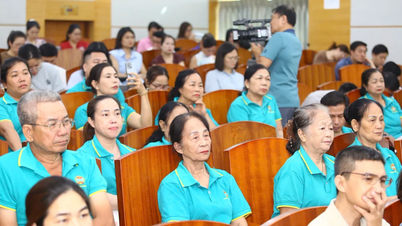
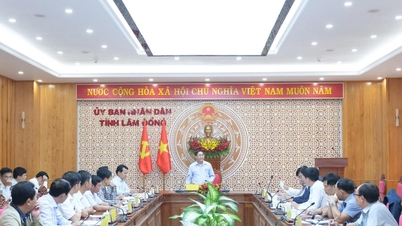
At a conference on assessing potential, promoting trade, and connecting agricultural product markets, recently organized by the Lam Dong Provincial People's Committee, experts and business representatives suggested that to enhance the value and boost agricultural exports, Lam Dong needs to urgently plan and restructure its agricultural sector. Accordingly, the province should promote the application of science and technology in production, research new varieties, manage nutrition, soil, irrigation water, and pests, and apply modern production standards to meet the increasingly high demands of the market.
Mr. Bach Thanh Tuan suggested that, for the coffee industry, Lam Dong needs to strengthen regional raw material linkages, develop cooperatives, apply digital technology in traceability and management of growing areas, promote deep processing, develop coffee tourism, and apply sustainable production standards to meet the requirements of the international market. Ms. Nguyen Thi Mai, Chairwoman and General Director of Quang Phu Organic Agricultural and Forestry Production Cooperative (Quang Phu commune, Lam Dong province), advised people to change their production habits, limit the overuse of chemical fertilizers and pesticides, and switch to high-tech, organic, circular, and emission-reducing agricultural production.
Many opinions also emphasized the urgency of digital transformation in agriculture. Building industry databases, traceability, managing planting area codes, and promoting products on digital platforms will help enhance the transparency and competitiveness of Lam Dong's agricultural products. Businesses and people must quickly adapt to green standards and international technical barriers. The European Union's Anti-Deforestation Regulations (EUDR), ESG standards (a set of standards for assessing the sustainable development of businesses), Net Zero (zero net emissions), and regulations on pesticide residues are major challenges for agricultural exports, requiring fundamental changes in production, packaging, and preservation practices.
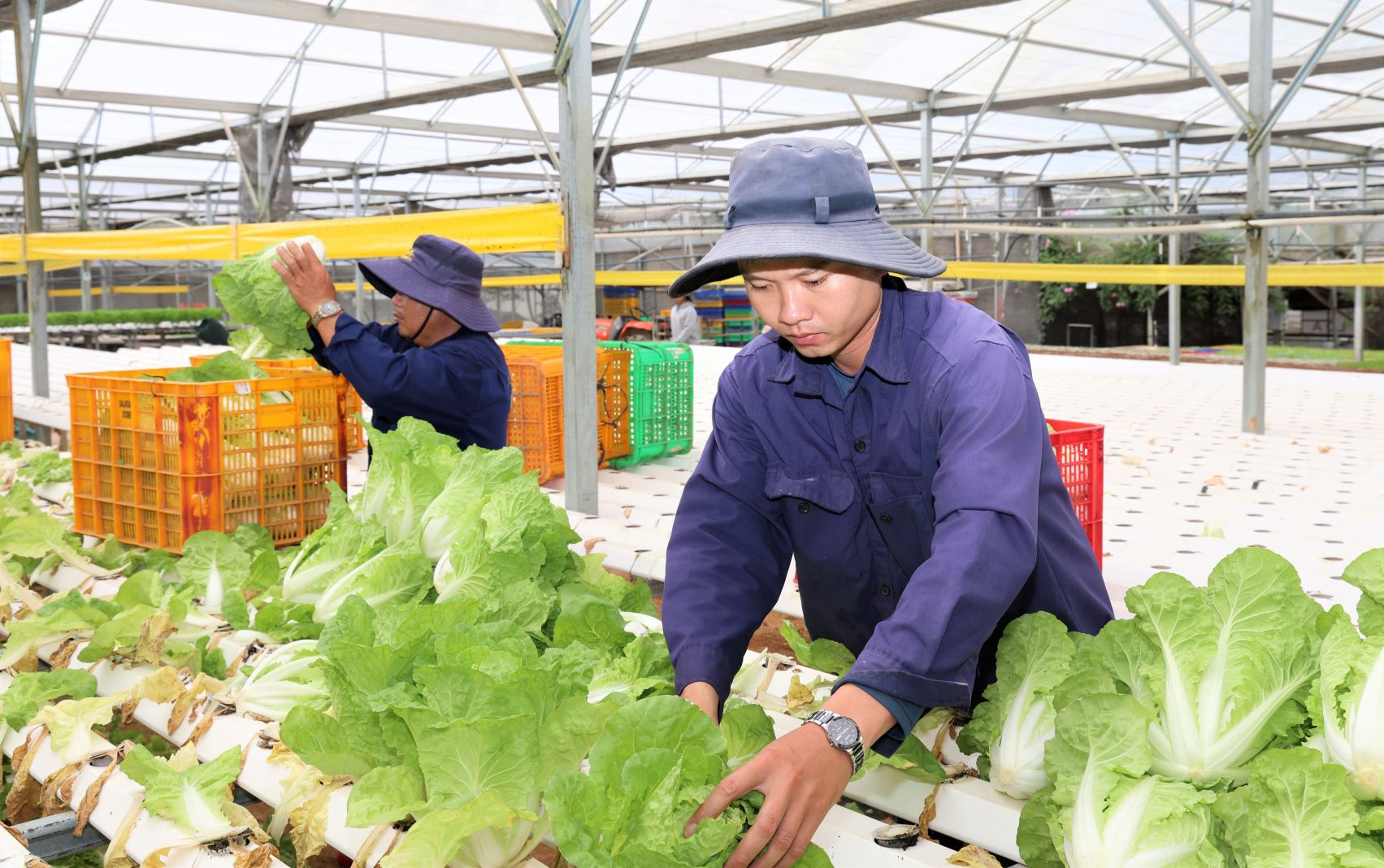 |
| Harvesting vegetables for export at Dalat GAP Co., Ltd., Lam Vien Ward, Dalat, Lam Dong Province. |
Lam Dong needs to develop a comprehensive promotion program for each product sector, linked to the actual needs of the market. In addition, strengthening connections with large distribution systems and bringing agricultural products onto e-commerce platforms is a crucial step in expanding market outlets for agricultural products.
"The potential of Lam Dong's agriculture lies not only in expanding acreage or increasing production but also in the ability to reorganize production methods. Only by comprehensively addressing the challenges of markets, technology, and international standards can Lam Dong's agricultural products reach further on the path of global integration." (Mr. Phan Nguyen Hoang Tan, Director of the Department of Agriculture and Environment of Lam Dong Province) |
Source: https://www.qdnd.vn/kinh-te/cac-van-de/dua-nong-san-lam-dong-vuon-xa-1041593


![[Photo] Life on both banks of the river returns to its bustling pace on the day the Long Bien Bridge opens to traffic.](https://vphoto.vietnam.vn/thumb/1200x675/vietnam/resource/IMAGE/2026/05/28/1779949763708_cau-long-bien-minh-duy-7-3610-jpg.webp)

![[Image] Checking the security conditions at the exam site, ready for the 10th grade exam.](https://vphoto.vietnam.vn/thumb/1200x675/vietnam/resource/IMAGE/2026/05/28/1779943458889_z7872507660648-d764421a26e8cd7b61d70d142a48a685-jpg.webp)

















![[Photo] Opening Ceremony of the National People's Council Conference on the Implementation of Directions and Tasks for the 2026-2031 Term](https://vphoto.vietnam.vn/thumb/1200x675/vietnam/resource/IMAGE/2026/05/28/1779939257690_ndo_br_bnd-1991-jpg.webp)














































Comment (0)