


As Tet (Vietnamese New Year) approaches, the weather is often rainy, and the chilly air makes the smoke seem unusually warm. My grandmother once showed my mother how to braise fish using rice husk ash. I remember the round earthenware pot (in my village, we call it a "tec bu") neatly placed in a bamboo trivet, next to a dark brown water jar covered with a layer of smooth, lush green moss. My grandmother sat there carefully removing the seaweed and debris from the small net. A mixed assortment of small fish, cleaned and drained, were hung on a three-pronged cassava-leaf drying rack. This was the special drying rack that every household used, placed near the small pond next to the well.
My grandmother asked me to help her dig up some galangal roots, but at the time I mistook them for arrowroot. It was the first time I'd observed galangal and arrowroot flowers up close, and I was surprised at how beautiful they were. They bloomed from August or September in the lunar calendar, and even after all this time, they still haven't withered...
 |
| Illustration: HH |
My grandmother lined the bottom of the pot with jackfruit leaves and galangal, then arranged the fish, marinated with sugar, pepper, MSG, chopped onions and garlic, caramel coloring, fish sauce, and crushed galangal. She layered the fish with a mixture of red taro, sour bamboo shoots, and thinly sliced figs. After about 30 minutes, she placed the pot over a large, burning wood fire until it boiled vigorously. She then gradually reduced the firewood, leaving only enough for the water to simmer gently. When the water started to evaporate and the fish firmed up, she used chopsticks to scrape all the ash from the stove, covering the entire clay pot. The warm ash would simmer the fish evenly without burning. She simmered the fish from early morning until dinner time before finally taking it out.
As soon as I pulled back the banana leaf covering the pot, a fragrant aroma wafted out, incredibly stimulating my hungry stomach. The fish was a deep golden color, its flesh firm and sweet, its bones soft and tender. Picking up a piece of pickled taro, sour bamboo shoots, a slice of fig... and a spoonful of rice, I closed my eyes and slowly savored the full flavor of this rustic dish from the countryside, nurtured by my grandmother's loving hands. Oh, it was so satisfying! Later, even if I ate all the delicious dishes I could find, nothing could compare to this warm, family-loving taste. After my grandmother passed away, every time she cooked this fish again, my mother's eyes would well up with tears. She would choke on her rice as she lifted the bowl. I learned a little from her cooking, but I couldn't fully capture the flavor of the past.
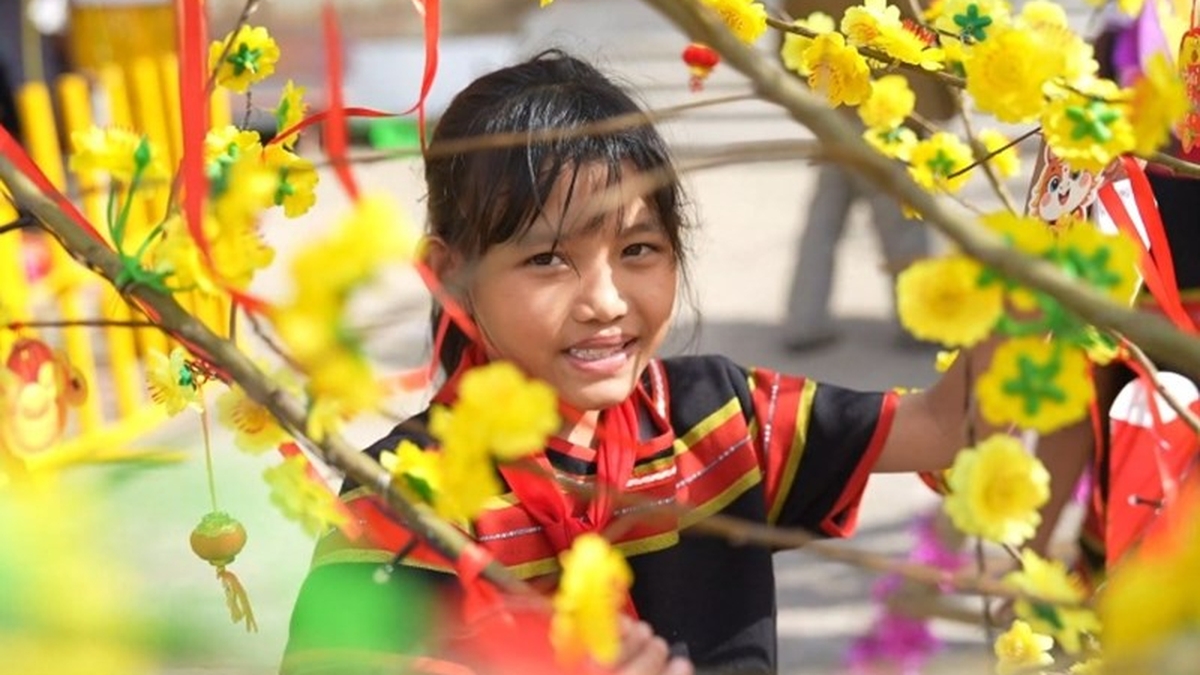
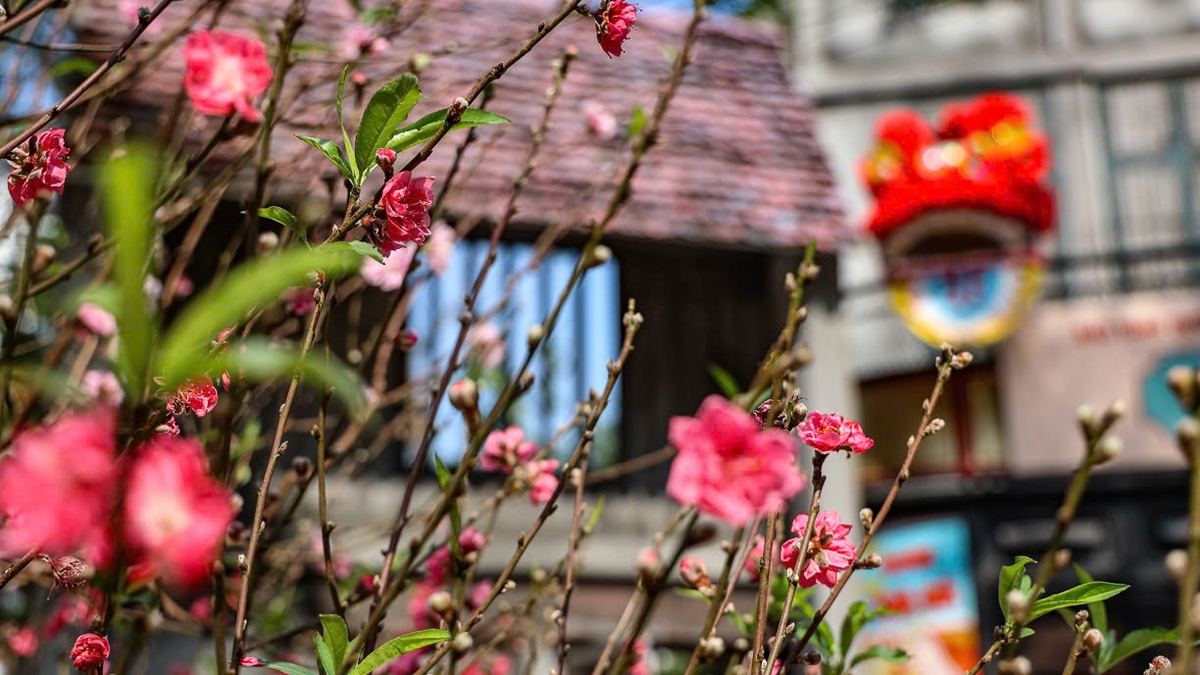
From the hilltop, I could clearly see the changes in the houses. Many houses had peach and apricot blossom trees in front of their gates, surprisingly well-suited to the climate and soil of this place. The apricot blossoms, in particular, were all wild varieties, so their vitality was remarkable, enduring all kinds of weather. Many houses had their peach and apricot trees pruned early, so the blossoms bloomed early, adding to the bustling atmosphere leading up to Tet. Every time I followed my mother and the other elderly women from the neighborhood back from the market, with our trousers rolled up to our calves, we would still linger for a few minutes chatting when we met. I was very impressed by the way the women greeted each other – it was both subtle and warm.
"How are your children and grandchildren doing these days? Are they doing well financially?"
"Thank you for your concern, Grandma. Thankfully, my children and grandchildren are all healthy, we have food to eat, and work to do."
"In our village, there's a traditional opera performance today. Are you going to see it, Grandma?"
"Oh dear, I have to go and see the elders playing their roles, the rice, corn, and potatoes are all planted and ready. Now I can relax and enjoy the Tet holiday!"
The sounds of voices and laughter echoed throughout the village lanes. People were gathering banana leaves, sharpening their knives and machetes, raising pigs and chickens, and buying new clothes, showing off the beautiful silk fabrics their children and grandchildren had brought back from afar... In my small village, every family had children or grandchildren serving in the army. Every time Tet (Lunar New Year) came around, the children would shout: "Ah, Anh Tu, Anh Chau, Anh Thai... are back!"
The children lined up neatly in the yard or at the end of the village lane to receive candy and snacks from the soldiers. On New Year's Eve, the village football field was like a whole company of soldiers, cheerful, lively, and friendly... The sounds of people calling each other over to share a bowl of porridge, share a few skewers of pork, and exchange pairs of sticky rice cakes... How could anyone forget that New Year's atmosphere...
Now the road is paved smoothly, lined on both sides with cosmos, roses, and hibiscus. The path up the hill is covered in a golden carpet of wild sunflowers...
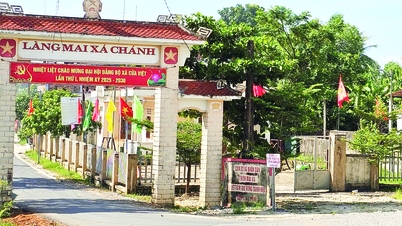
The projects undertaken by the village women have spread throughout the villages, creating a truly civilized, clean, and beautiful picture of the new rural landscape. The villages are shrouded in smoke; piles of dry leaves are set ablaze to soften the green leaves of the dong tree and banana trees; and bamboo and reed tubes are also heated over the fire before being sharpened into thin strips.
After a long night tending the fire, the pots of sticky rice cakes (bánh chưng and bánh tét) are taken out and soaked in cold water to remove the slime, then boiled again to soften the rice grains inside. No matter how many cakes are in a pot, there must be a few small ones, especially for the children, tied at both ends and looped around their necks as they run around the neighborhood. I remember clearly the eyes and smiles of those children... I long for the feeling of friends gathered together. I am silently grateful for the smoke from my hometown that warmed up those old memories…
Trac Diem
Source: https://baoquangtri.vn/van-hoa/202602/duong-ve-nha-02457a1/



![[Photo] General Secretary To Lam attends the opening session of the Peace Council on Gaza.](https://vphoto.vietnam.vn/thumb/1200x675/vietnam/resource/IMAGE/2026/02/19/1771516865192_tbttolam5-jpg.webp)



























































Comment (0)