

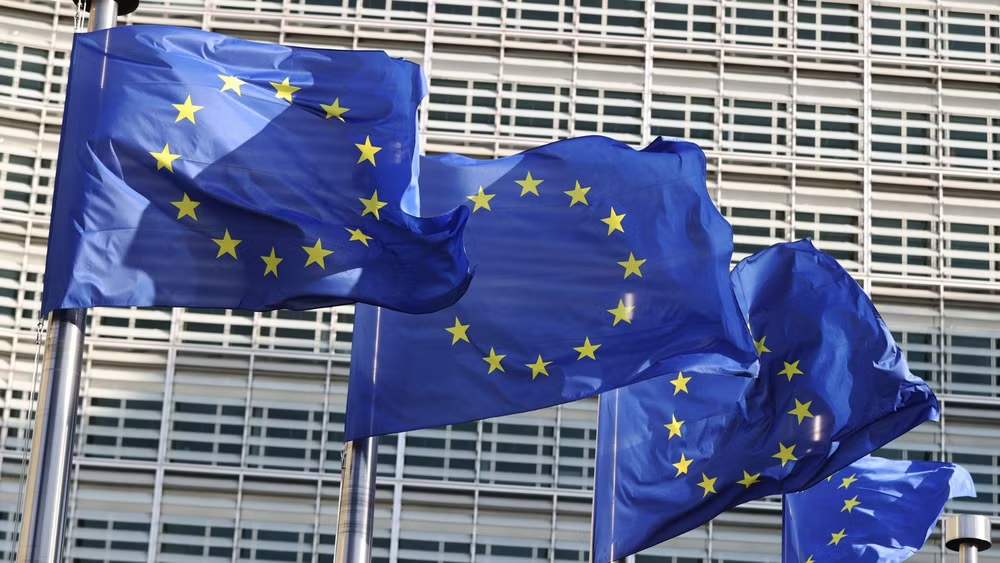
Previously, the EU officially set a legal framework in 2021, when it adopted the European Climate Law, aiming to reduce greenhouse gas emissions by at least 55% compared to pre-industrial levels by 2030, while also striving for carbon neutrality by 2050. The bloc also set an intermediate target of reducing emissions by 90% by 2040, but allowed the use of international carbon credits within certain limits, a factor that many experts warned could undermine substantive reduction efforts within the bloc.
In Germany, the EU's largest economy , despite implementing programs to expand wind energy, promote electric vehicles, and improve energy efficiency, the latest reports indicate that the country's emissions risk exceeding forecasts, with a potential surplus of up to 100 million tons of CO₂. Several sectors, such as transport, construction, and land-use change, continue to be major bottlenecks, making the 65% reduction target by 2030 difficult to achieve without more drastic measures.
France is also progressing slower than required. Despite being one of the EU countries with the highest proportion of clean electricity thanks to nuclear and renewable energy, the current rate of emissions reduction is only around 1.5-1.8% per year, much lower than what is needed to achieve the target of a 50% reduction by 2030. The transport sector remains the largest source of emissions, accounting for almost one-third of the country's total emissions.
In Italy, the energy transition faces significant obstacles as the country remains heavily reliant on fossil fuels. While renewable energy accounts for approximately 41% of electricity production, delaying the closure of coal-fired power plants until 2038 is considered a significant slowdown in emissions reduction. Reports warn that Italy is unlikely to achieve its greenhouse gas reduction targets by 2030 without stronger policy changes.
The Netherlands is also considered a "slow-progressing case," as despite having a high proportion of clean energy and leading Europe in per capita solar power, it remains heavily dependent on natural gas. Legal barriers related to nitrogen emissions and the stagnation of green infrastructure projects have slowed the transition. Many assessments suggest that the Netherlands will struggle to achieve its 55% reduction target by 2030 without more drastic measures.
Meanwhile, only Spain has emerged as a rare bright spot in the EU. Thanks to the promotion of wind and solar power, clean energy will account for up to 75% of electricity production by 2025, helping the country significantly reduce emissions in the power sector and move closer to, or possibly exceed, the 32% reduction target by 2030 if current momentum is maintained.
Source: https://nhandan.vn/eu-kho-but-toc-kip-thoi-han-giam-phat-thai-muc-tieu-post966213.html






















![[Photo] Reception to welcome General Secretary and President To Lam and his wife on their State visit to the Philippines](https://vphoto.vietnam.vn/thumb/1200x675/vietnam/resource/IMAGE/2026/06/01/1780295488620_vna-potal-chieu-dai-chao-mung-tong-bi-thu-chu-tich-nuoc-to-lam-va-phu-nhan-tham-cap-nha-nuoc-toi-philippines-8798060-7855-jpg.webp)



































































Comment (0)