

Due to a lack of legal documentation and delays in handover at the Celadon City project, Gamuda Land has led many customers to want to terminate their contracts and demand compensation.
Recently, many customers who purchased apartments in the A5 apartment complex, part of the Tan Thang Sports Complex and Residential Area project (commercial name: Celadon City, located on plot number 39, map sheet number 40, in Son Ky ward, Tan Phu district, Ho Chi Minh City), have complained to the Newspaper of Journalists and Public Opinion about the developer, Gamuda Land Joint Stock Company, failing to fulfill the terms of the sales contract and not providing sufficient legal documents to answer customers' questions.
According to some customers who purchased apartments in the Diamond Analta subdivision, they signed sales contracts with the developer between mid-2019 and nearly the end of 2020. The handover deadline stated in the contract was Q2/2022, and with a permitted delay of 90 days, Gamuda Land was responsible for handing over the apartments to customers by the beginning of Q4/2022.
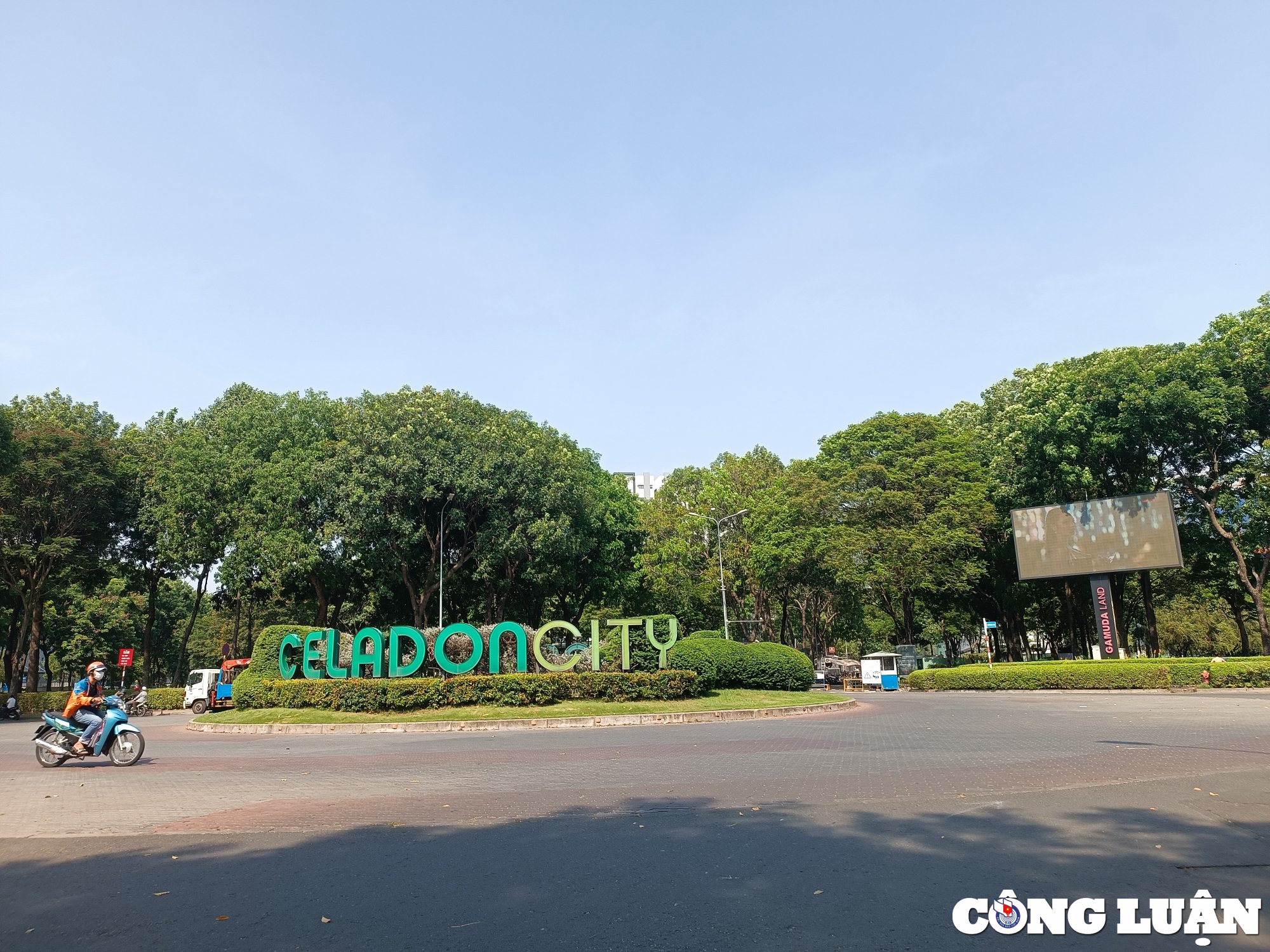
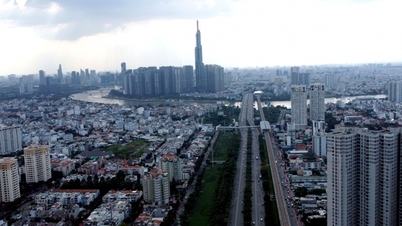
Tan Thang Sports Complex and Residential Area Project - Celadon City
However, at the time mentioned, Gamuda Land had not yet completed the construction. It wasn't until January 2023 that some customers received notices from Gamuda Land, requesting them to fulfill their financial obligations in order to proceed with the handover of their homes. Thus, the developer delayed the handover by approximately four months, and this led to further conflicts between customers and the developer regarding the terms of the sales contract.
Specifically, according to the sales contract signed between Gamuda Land and its customers, Article 11.7a, which stipulates "Penalties for delayed handover," states that if the buyer has fulfilled their payment obligations as stipulated but the seller fails to hand over the apartment, the seller will be liable to pay interest at 18% per year on the total value of the installments of the purchase price that the seller has actually received from the buyer for each day of delayed handover, calculated from the end of the permitted delay period until the date of the handover notice when the apartment is ready for handover as stipulated.
Furthermore, according to Clause 11.7b of the contract, if the seller continues to fail to hand over the apartment from the date the permitted delay period expires, the two parties may agree on another handover date, and the seller will continue to bear the late handover interest during this period. Alternatively, the buyer may unilaterally terminate the contract, and Clause 18.4 of the contract will apply.
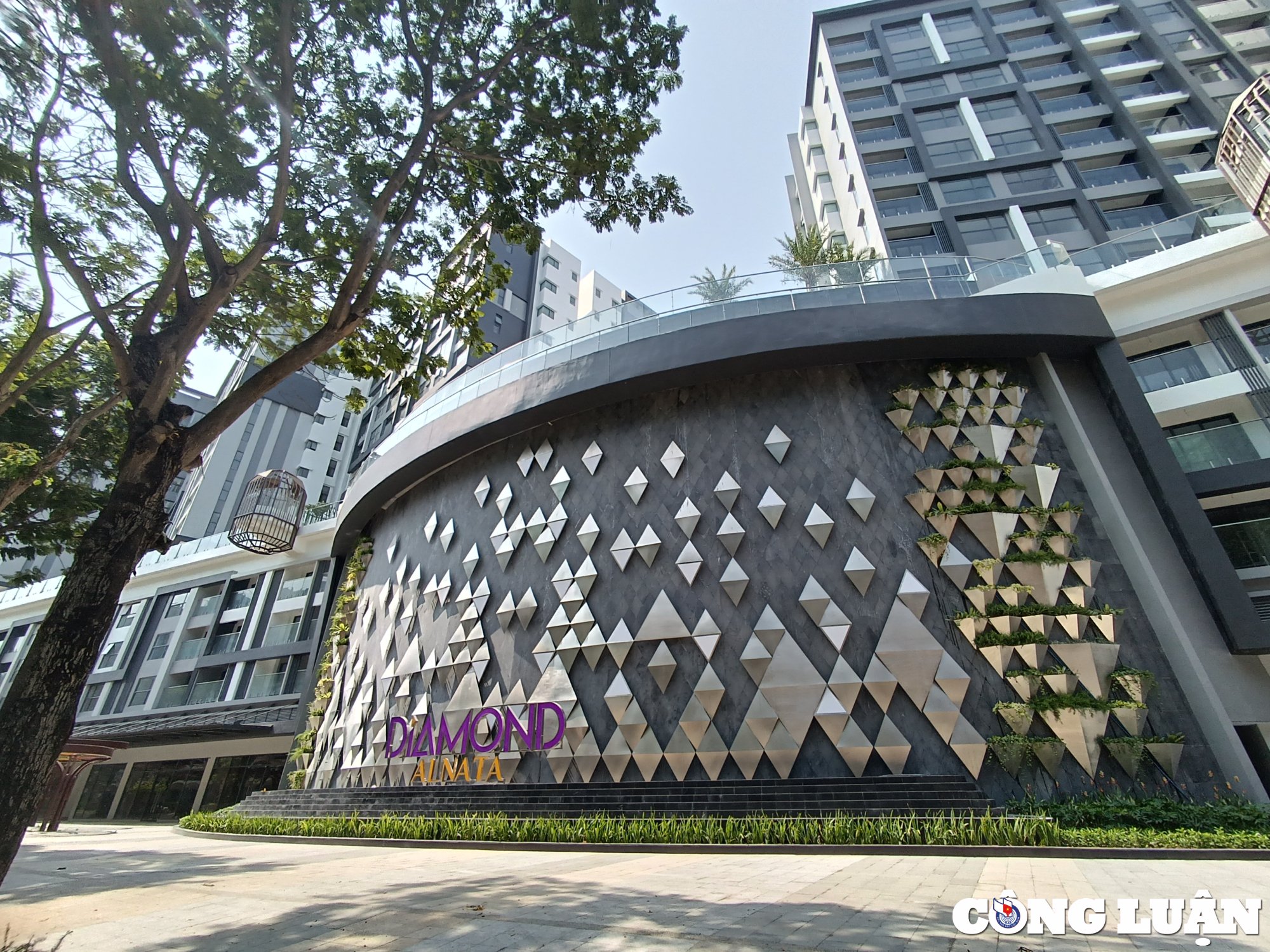
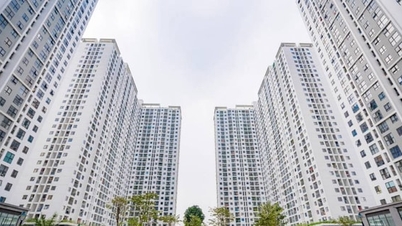
The buildings are located in the Diamond Alnata area - Apartment complex A5.
Article 18.4 of this sales contract also stipulates that Gamuda Land must refund the money received from the customer (excluding interest), and pay interest on the delayed handover calculated on the total amount received, from the time the permitted delay period ends until the date the contract termination notice takes effect.
In addition, Gamuda Land is also liable for a penalty equivalent to 30% of the purchase price for breach of contract and compensation for all actual damages incurred by the buyer due to the seller's breach of contract.
With the above clear terms, a group of customers did not accept the delayed handover and requested termination of the contract under Clause 11.7b and fulfillment of the developer's responsibilities under Clause 18.4. In addition, some customers only requested that Gamuda Land pay penalty interest of 18% per year on the amount already paid, as per the contract terms.
Gamuda Land was fined for raising capital improperly, causing customers to lose confidence and want to cancel their contracts.
To claim their legitimate rights, during meetings, some customers requested that Gamuda Land provide all legal documents related to the project, such as the certificate confirming eligibility for sale and lease of future housing units issued by the Ho Chi Minh City Department of Construction, the certificate confirming eligibility for acceptance testing, and the bank guarantee approval document, etc.
After numerous dialogues, these requests and demands for rights have still not been fully met. The content only goes as far as acknowledging the issues without providing a clear solution. Therefore, some people have expressed frustration at having to expend so much effort to claim their rights, which were clearly stated in the sales contract.
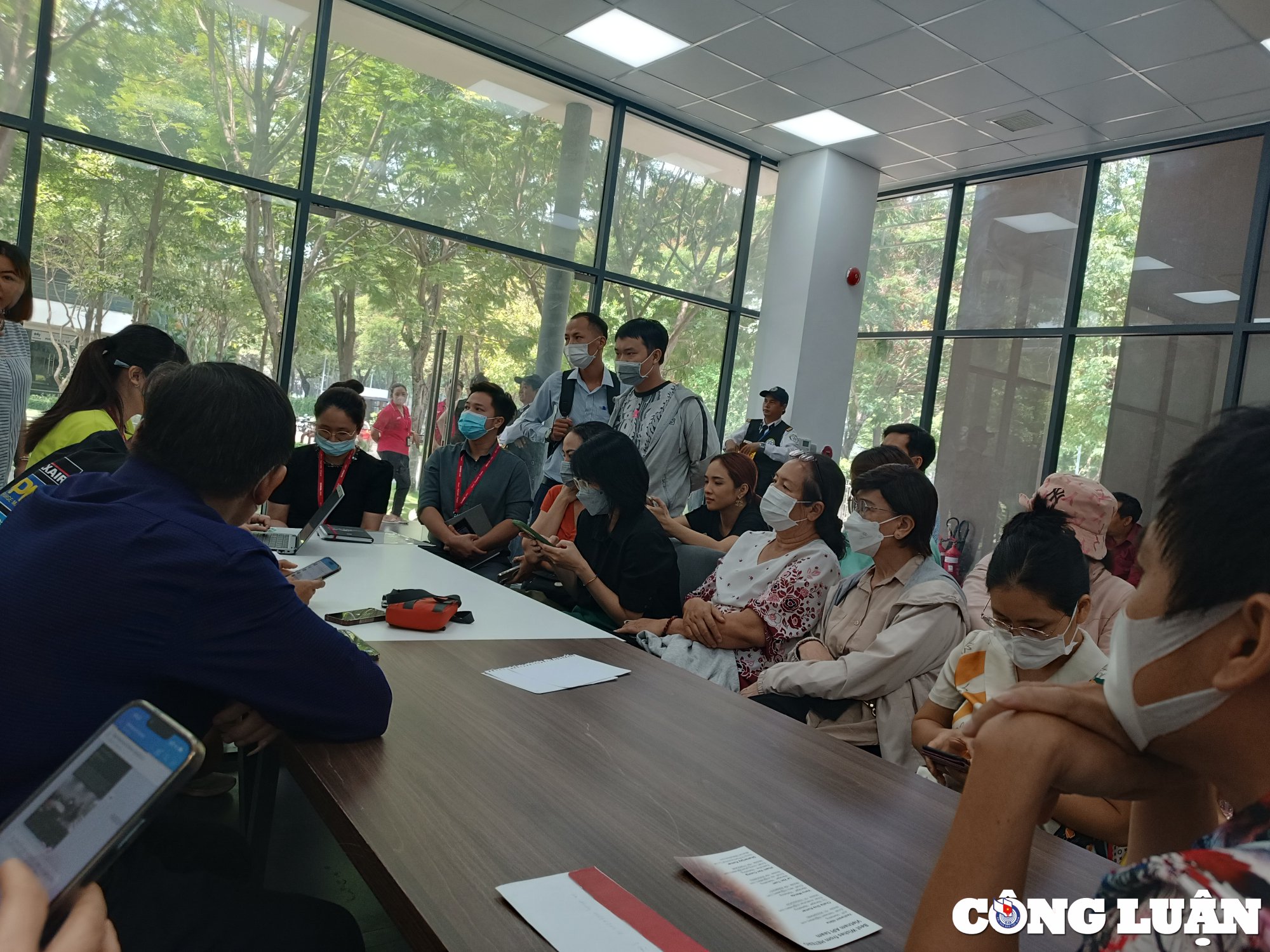
Customers who purchased apartments in the A5 and A6 apartment complexes have had numerous dialogues with the developer, but no final resolution has been reached.
For example, Mr. P.D.T, a customer who signed a contract with Gamuda Land to purchase an apartment in the P1 block of the Diamond Alnata (A5a) complex on September 4, 2020, stated that due to the developer's violation of the handover deadline, he no longer had faith in the project and decided to terminate the purchase agreement as per the terms of the contract.
On November 9, 2022, Mr. T. sent a notice of contract termination to Gamuda Land, requesting the developer to activate the terms agreed upon in the sales contract. On November 18, 2022, Mr. T. continued to send a payment request to the developer, demanding that Gamuda Land make full payment.
Instead of fulfilling the customer's rights as stipulated in the terms, on December 5, 2022, Gamuda Land invited Mr. T. to a meeting regarding the delayed handover and offered to send him promotions and service fee reductions. However, Mr. T. did not agree to the promotions offered.
“They can’t offer those promotions to shirk responsibility for the delayed handover. I also requested the developer to provide legal documents and a copy of the guarantee contract signed, but they failed to do so. Because of these problems with the project and the developer’s behavior, I no longer want to keep this apartment,” Mr. T. said angrily.
As a last resort, after numerous unsuccessful attempts to claim his rights, Mr. T. recently filed a civil lawsuit against the developer Gamuda Land at the Tan Phu District People's Court to demand his legitimate rights.
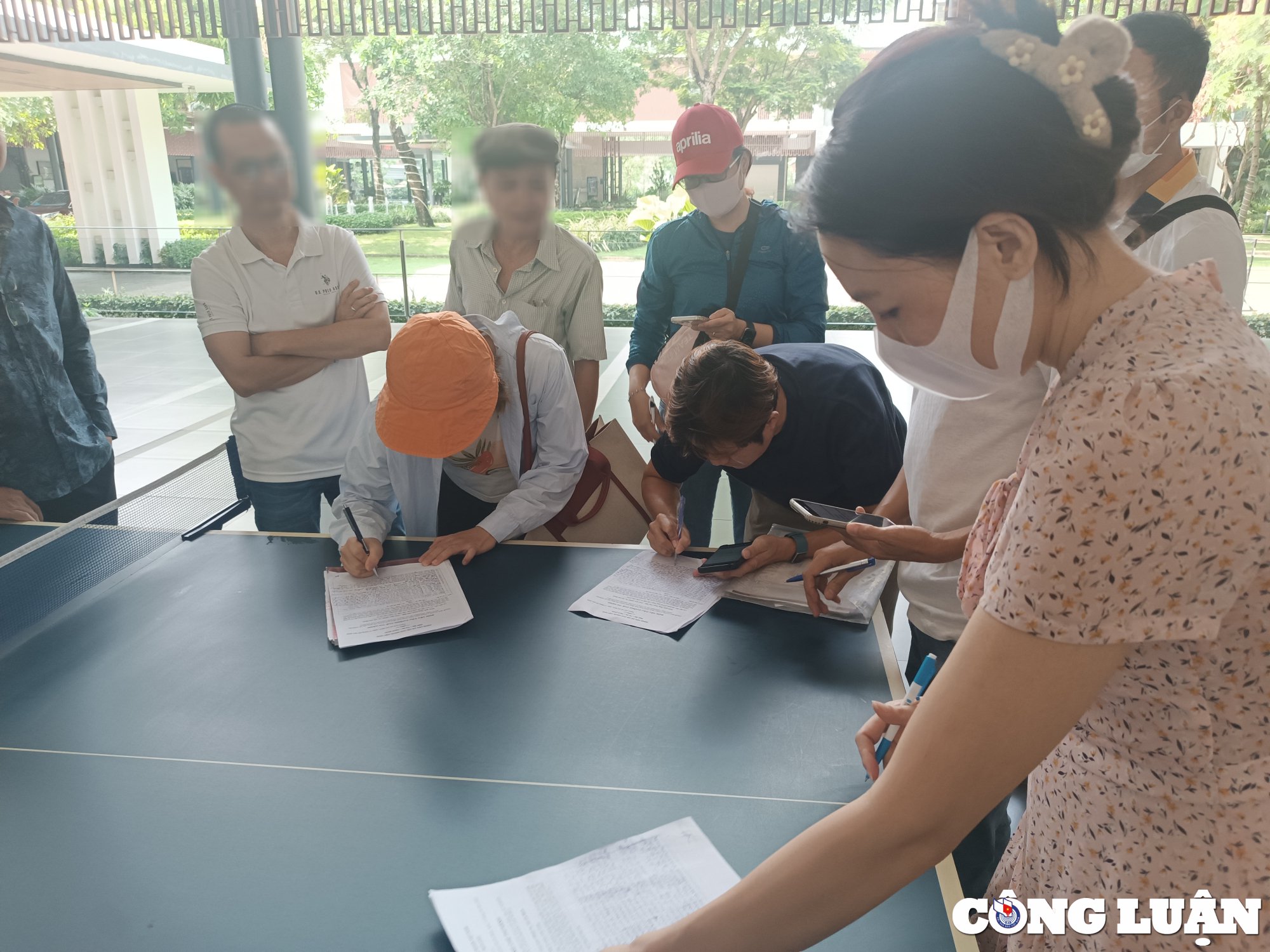
Many customers gathered at Gamuda Land's office to sign a petition to the authorities, hoping that the developer would refund their money for the houses they purchased, in accordance with the penalty decision of the Ho Chi Minh City People's Committee. They also demanded that the developer fulfill the terms of their contracts.
It is known that although the apartment purchase contracts in Blocks A5 and A6 of the Tan Thang Sports Complex and Residential Area - Celadon City project were signed a long time ago, it was only recently, on May 8th, that the Ho Chi Minh City Department of Construction issued a document allowing Gamuda Land to sell housing units under construction.
According to this document, the project is permitted to sell off-plan housing units for 160 apartments in building A5 and 1,153 apartments in building A6.
Regarding this project, on April 13th, the Ho Chi Minh City People's Committee also issued a decision to impose administrative penalties on Gamuda Land for violating regulations on "Illegal fundraising" at the aforementioned A5 apartment complex project. Gamuda Land was fined 900 million VND and ordered to return the illegally raised capital.
Does this constitute the crime of "Deceiving customers"?
Viewing the case from a legal perspective, lawyer Diep Nang Binh - Head of Tinh Thong Law Office - believes that, in order to conduct business in housing under construction, the investor must meet the conditions for real estate under construction to be put into business as stipulated in Article 55 of the 2014 Law on Real Estate Business before offering it for sale.
Specifically, the investor must have the following documents: Land use rights certificate, project dossier, construction design drawings approved by the competent authority, construction permit (if required), and documents certifying the completion of the corresponding technical infrastructure construction according to the project schedule; In the case of apartment buildings or mixed-use buildings intended for residential purposes under construction, there must be a completion certificate for the building's foundation.
Before selling or leasing housing units under construction, the developer must notify the provincial housing management agency in writing that the housing units meet the conditions for sale or lease.
"Therefore, when a construction permit has not been obtained and the conditions for selling houses under construction have not been met, the investor entering into sales contracts with customers is against the law. This act may be subject to criminal prosecution for the crime of deceiving customers if, after investigation, the investigating agency verifies that there are sufficient elements to constitute the crime."
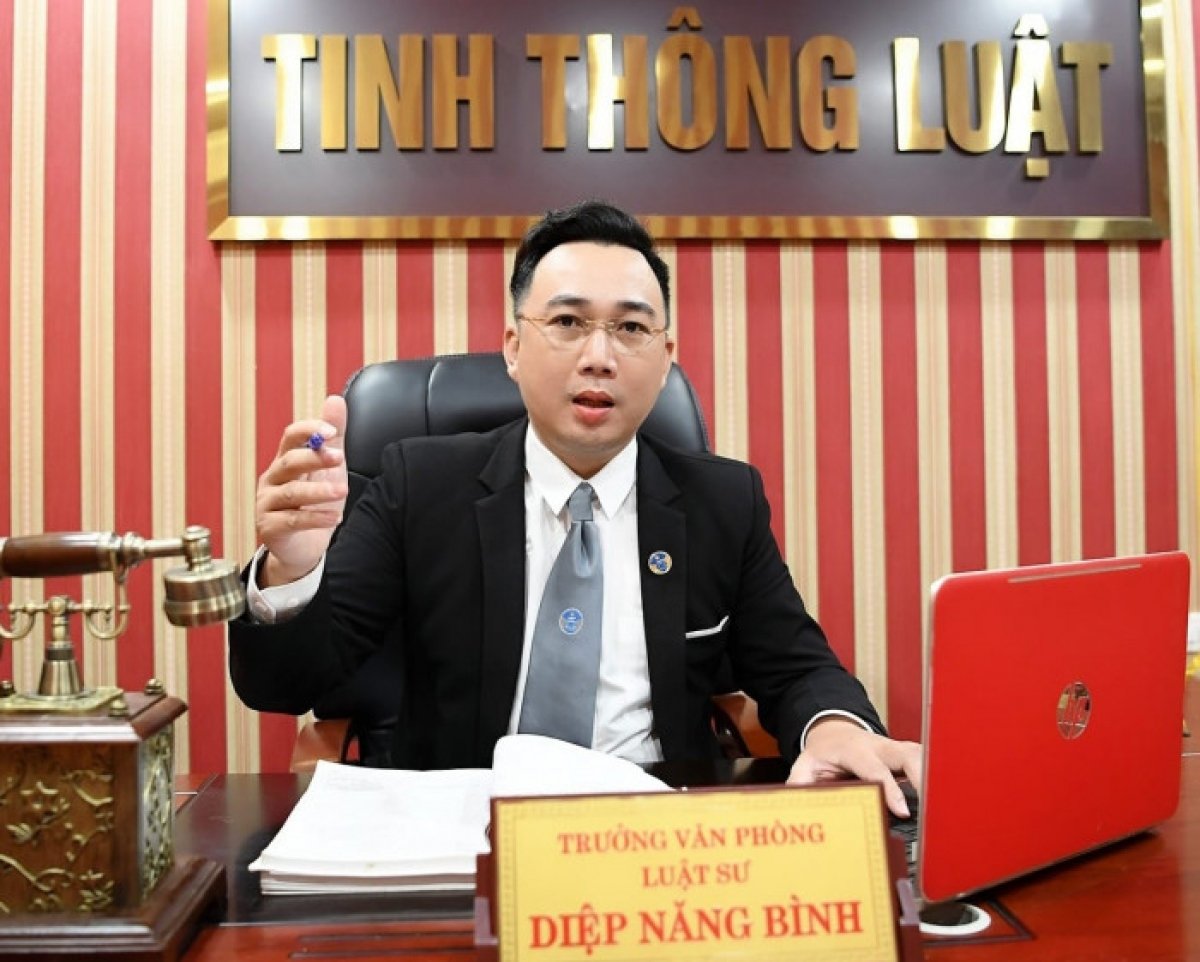
Lawyer Diep Nang Binh - Head of Tinh Thong Law Firm.
Based on the provisions of Clause 1, Article 198 of the 2015 Penal Code, amended and supplemented in 2017, deceiving customers can be understood as the buying and selling of goods or providing services where the weighing, measuring, counting, or calculation of goods or services is fraudulent, or other deceptive methods are used in the buying and selling process to gain illicit profits,” lawyer Diep Nang Binh analyzed.
Conversely, if the act of deceiving customers does not meet the elements constituting the crime of deceiving customers as stipulated in the 2015 Penal Code, the offender will be subject to administrative penalties as prescribed in Article 61 of Decree 98/2020/ND-CP with a maximum fine of VND 20,000,000.
Furthermore, the offender may have their business license, business eligibility certificate, or professional certificate revoked for a period of 1 to 3 months, or their operations suspended for a period of 1 to 3 months for violations of the regulations in Clauses 4 and 5 of this Article in cases of repeated violations or recidivism.
Furthermore, many customers have also expressed concerns about whether their sales contracts with Gamuda Land will be invalidated because the developer signed the contracts before meeting the conditions for sale, and whether their rights will be protected under these contracts.
Regarding this matter, Lawyer Diep Nang Binh stated that, based on Articles 123 to 129, Article 407, and Article 408 of the 2015 Civil Code, civil contracts are invalid in eight cases: Contracts invalid due to violation of legal prohibitions or social morality; contracts invalid due to falsification; contracts invalid due to establishment and execution by minors, persons lacking legal capacity, persons with difficulties in understanding and controlling their actions, or persons with limited legal capacity; contracts invalid due to mistake; contracts invalid due to deception, threats, or coercion; contracts invalid due to the establishor's lack of understanding and control over their actions; contracts invalid due to non-compliance with formal requirements; and contracts invalid due to the object of the contract being impossible to perform.
Therefore, if any of the above conditions are met, the contract may be void. However, there are two types of void contracts: wholly void contracts and partially void contracts.
"In the case of a contract being wholly void, the parties shall restore the original state and return to each other what they have received. If it is not possible to return the goods in kind, they must be returned in money, except in cases where the assets, fruits, or profits obtained are confiscated according to the provisions of the law. In the case of a contract being partially void, the remaining valid part will continue to be performed by the parties."
"If the terms in the contract for this project, such as: Penalty for the seller for late handover of 18% per year; the seller must compensate 30% if the buyer wants to terminate the contract due to late handover, are still valid parts of the contract, then the parties need to carry out the transaction exactly as committed," lawyer Diep Nang Binh analyzed.
In response to readers' concerns, the Newspaper of Journalists and Public Opinion also sent questions to the investor, Gamuda Land, to clarify the reported information and to inquire about the measures the investor will take to resolve customer rights in accordance with the signed contract in the future. However, after sending the information and questions several days ago, Gamuda Land has still not responded to these issues.
Gia Nguyen - Le Phong
According to information on Gamuda Land's website, this is the real estate development division of Gamuda Berhad, a leading Malaysian construction and infrastructure development group. With over 25 years of experience in urban and high-rise development, Gamuda Land has built 12 urban developments and 9 large-scale integrated high-rise projects in Malaysia, Singapore, Vietnam, and Australia, with a total Gross Domestic Value (GDV) exceeding US$5.5 billion.
Having entered the Vietnamese market in 2007, Gamuda Land is currently investing in two urban areas: Gamuda City, a 274-hectare development in Hoang Mai District, Hanoi , and Celadon City, an 82-hectare development in Tan Phu District, Ho Chi Minh City.
Furthermore, Gamuda Land recently promoted the Elysian project at 170 Lo Lu Street (Truong Thanh Ward, District 9, Thu Duc District, Ho Chi Minh City) as its second project in Ho Chi Minh City. This is a condominium project developed to capitalize on the area's developing transportation infrastructure, covering 3 hectares and comprising nearly 1,400 apartments.
Source

![[Photo] Secretary of the National Assembly Party Committee, Chairman of the National Assembly presides over the meeting of the Standing Committee and Executive Committee of the National Assembly Party Committee.](https://vphoto.vietnam.vn/thumb/1200x675/vietnam/resource/IMAGE/2026/06/03/1780480353201_ndo_br_bnd-2585-jpg.webp)
![[Photo] First session of the 14th Congress of the Vietnam Trade Union](https://vphoto.vietnam.vn/thumb/1200x675/vietnam/resource/IMAGE/2026/06/03/1780465947883_ndo_br_img-3852-jpg.webp)

![[Photo] General Secretary and President To Lam presides over a meeting with the Central Organizing Committee.](https://vphoto.vietnam.vn/thumb/1200x675/vietnam/resource/IMAGE/2026/06/03/1780482764658_a1-bnd-4741-3342-jpg.webp)
















































![[Video] Sunset at Lap An Lagoon – Where the sun sets over the fishing nets](https://vphoto.vietnam.vn/thumb/1200x675/vietnam/resource/IMAGE/2026/05/31/1780192137701_beach-landscape-sea-water-nature-grass-745871-pxhere-com.jpeg)





































Comment (0)