

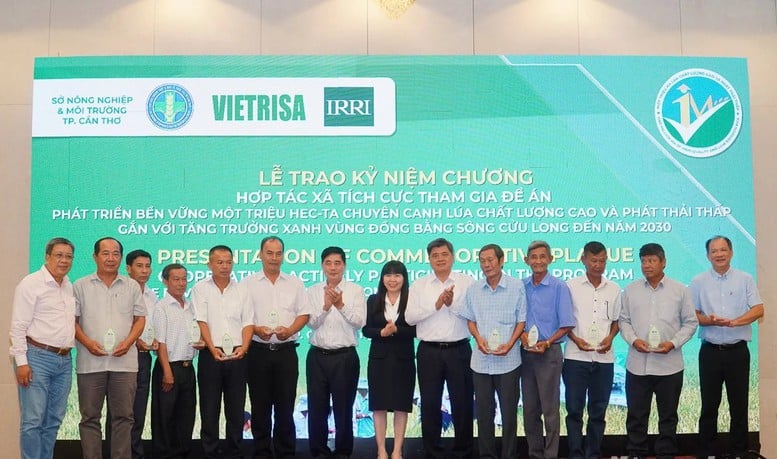
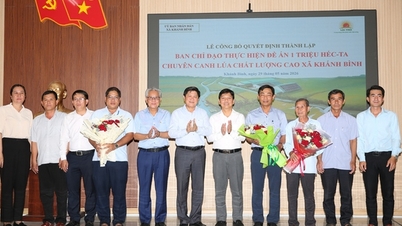
The ceremony awarded commemorative medals to cooperatives that have made positive contributions to the implementation of the Project on 1 million hectares of high-quality, low-emission rice associated with green growth.
On the afternoon of May 13th, the Vietnam Rice Industry Association (VIETRISA), in collaboration with the Department of Agriculture and Environment of Can Tho City and the International Rice Research Institute (IRRI), organized a workshop titled "Preliminary Review of Compliance Assessment Results for 1 Million Hectare of Rice Cultivation, Towards Granting the 'Green Vietnamese Rice' Label with Low Emissions" using the ViRiCert tool.
The event was attended by Dr. Cao Duc Phat, former Minister of Agriculture and Rural Development; Mr. Bui Ba Bong, Chairman of VIETRISA; and nearly 100 delegates from units under the Ministry of Agriculture and Environment , research institutes, universities, businesses, industry associations, 23 commune People's Committees, and 30 cooperatives participating in the Project in Can Tho City.
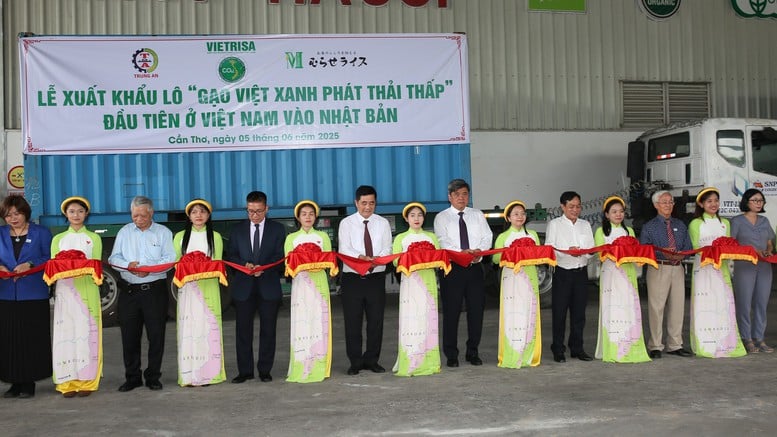
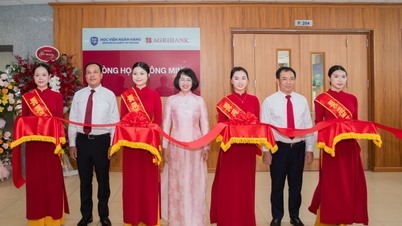
Cutting the ribbon to mark the export of a shipment of rice branded "Green Vietnamese Rice, Low Emission" to Japan by Trung An High-Tech Agriculture Company - Photo: VGP/LS
Farming data becomes the 'passport' for green rice.
During the 2024-2025 period, localities in the Mekong Delta region implemented the "Technical process for cultivating high-quality, low-emission rice in the Mekong Delta" according to Decision No. 4043/QD-BNN-TT of the Department of Crop Production and Plant Protection, Ministry of Agriculture and Environment.
In Can Tho City, the assessment of compliance with farming practices was piloted in 11 cooperatives with the coordination of VIETRISA, the Crop Production and Plant Protection Sub-Department, the Department of Agriculture and Environment of Can Tho City, and technical support from IRRI. The assessment was conducted using the ViRiCert digital tool to record, monitor, and compare the level of compliance with technical requirements in rice production.
Through ViRiCert, farming data from households and cooperatives is updated, managed, and verified according to the technical criteria of the 1 million hectare high-quality, low-emission rice project. The digitization of this data not only serves monitoring purposes but also lays the foundation for traceability, assigning planting area codes, and establishing a future certification mechanism for "Green, Low-Emission Vietnamese Rice."
These initial results are contributing to the completion of a database for adjusting farming practices, proposing appropriate investment projects, and working towards building a system of criteria and a roadmap for granting the "Green Vietnamese Rice with Low Emissions" label. This will enhance transparency in the value chain and expand market opportunities for low-emission rice from Vietnam.
Speaking at the workshop, Mr. Le Thanh Tung, Vice President and General Secretary of VIETRISA, emphasized: “Green, low-emission Vietnamese rice” is not just a brand, but also a commitment to quality, transparency, and environmental responsibility of the Vietnamese rice industry in the context of a market that increasingly demands high standards for sustainable development.
Associate Professor Dr. Nguyen Van Hung, representing IRRI, stated that the application of digital tools in compliance assessment helps enhance the transparency and reliability of production data, while also supporting management agencies and cooperatives in monitoring the implementation of farming processes more effectively and consistently.
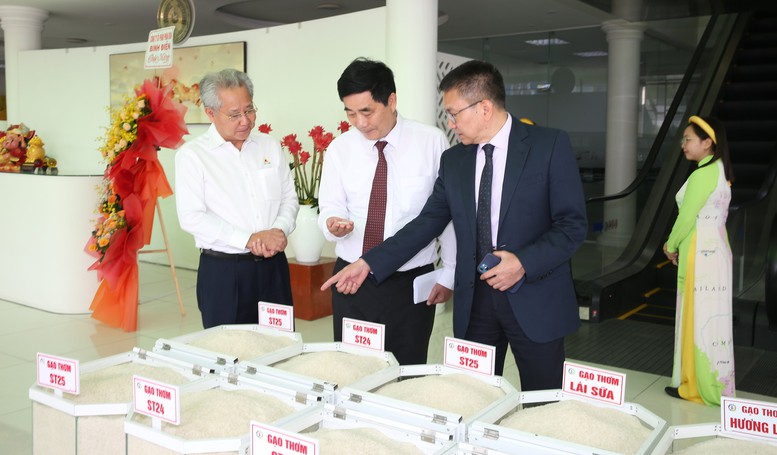
Former Minister of Agriculture and Rural Development Cao Duc Phat, representatives from the World Bank, and Chairman of Loc Troi Group Huynh Van Thon discuss famous Vietnamese rice brands - Photo: VGP/LS
Paving the way for a low-emission rice identification system.
According to the organizers, the workshop is a forum for management agencies, experts, businesses, and cooperatives to exchange ideas on the potential for widespread application of the compliance assessment system, aiming towards granting the "Green, Low-Emission Vietnamese Rice" label in production practice.
The discussions focused on improving evaluation criteria, standardizing farming data, guiding the issuance of rice-growing area codes based on the ViRiCert database, and the role of cooperatives in organizing high-quality, low-emission rice production.
Within the framework of the program, the Organizing Committee awarded certificates of compliance with the 1 million-hectare rice cultivation process to cooperatives that met the requirements in Can Tho City. This is considered the first step in the process of forming an identification system for low-emission rice in Vietnam.
Ms. Nguyen Thi Giang, Deputy Director of the Department of Agriculture and Environment of Can Tho City, shared: Can Tho City was selected to pilot the implementation of the ViRiCert tool in assessing compliance with rice cultivation processes. Through the implementation process, cooperatives have gradually approached data-driven production management methods, and at the same time, it has helped the locality gain more practical basis to improve and replicate high-quality, low-emission rice production models in the future.
Through this workshop, participating units expect to further refine assessment methods and expand the application of digital tools in rice production management under the Project for 1 million hectares of high-quality, low-emission rice cultivation, contributing to promoting the development of the rice industry towards transparency, increased value, and green growth in the Mekong Delta.
Le Son
Source: https://baochinhphu.vn/gan-ho-chieu-xanh-cho-thuong-hieu-gao-viet-phat-thai-thap-102260514073823422.htm



![[Photo] Ba Lang An Lighthouse - the "eye of the sea" amidst the "rock museum" of Quang Ngai province.](https://vphoto.vietnam.vn/thumb/1200x675/vietnam/resource/IMAGE/2026/05/29/1780038698840_anh-man-hinh-2026-05-29-luc-14-10-42.png)
![[Image] Pleasant weather helps students enter the 10th grade entrance exam with confidence.](https://vphoto.vietnam.vn/thumb/1200x675/vietnam/resource/IMAGE/2026/05/29/1780034401612_ngay-1-thi-lop-10-minh-duy-8-5009-jpg.webp)











































































Comment (0)