

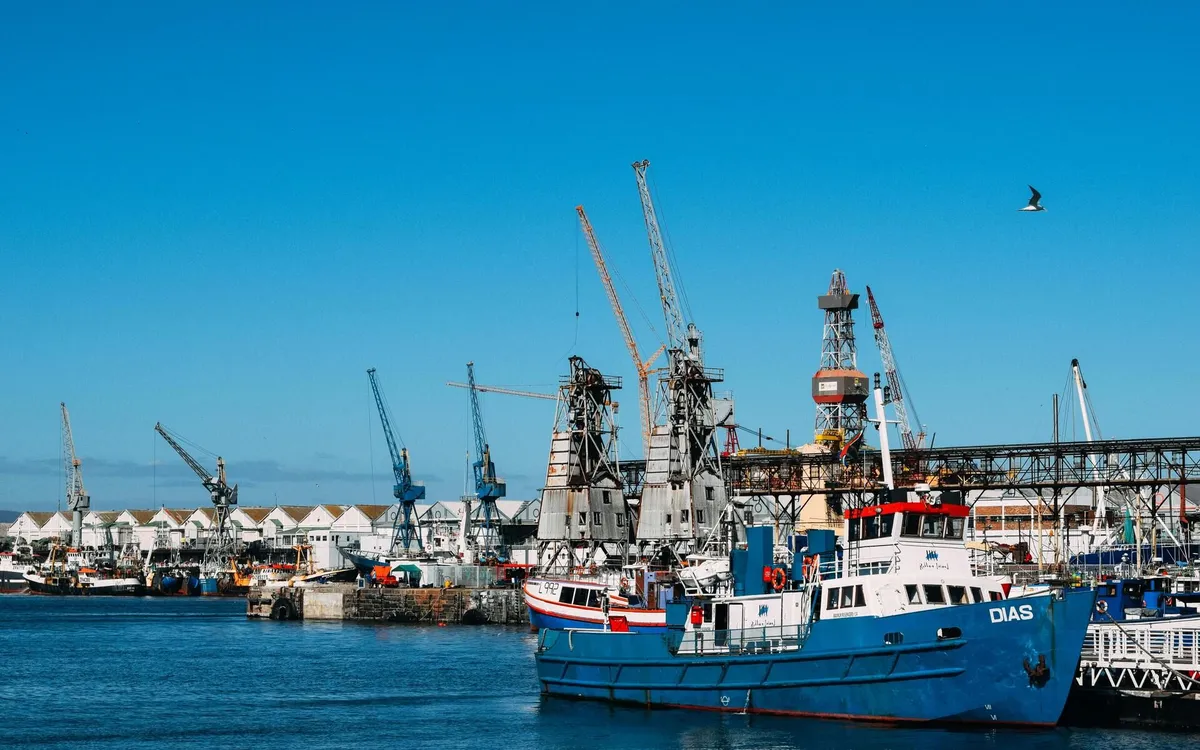
Global shipping rates have fallen sharply.
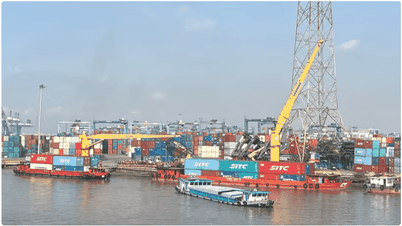
The latest figures show that global shipping rates continued to fall for the 15th consecutive week, reaching their lowest level since October 2023, when Houthi forces in Yemen began attacking commercial ships in the Red Sea.
The World Container Index shows that average freight rates fell 8% last week to $1,761 per 40-foot container, with rates on major routes from Shanghai to the US and Europe all experiencing sharp declines. The main reasons are weak demand and shipping lines cutting capacity ahead of China's Golden Week holiday.
The consulting firm Drewry forecasts that freight rates will continue to fall in the near future, stemming from the pressure exerted on the market by US tariffs and port fees, which have reduced demand.
According to the 2025 Maritime Transport Assessment Report published on September 24 by the United Nations Conference on Trade and Development (UNCTAD), global shipping is entering a fragile growth phase, with rising costs and increasing uncertainty. UNCTAD stated that after growing by 2.2% in 2024, global maritime trade is expected to slow to 0.5% in 2025.
UNCTAD notes that political tensions, changing trade patterns, and restructured shipping routes are reshaping the map of maritime trade. Policy measures announced by the U.S. and some trading partners, including new tariffs and port fees in the U.S. for certain foreign-built or operated vessels, are adding to costs and uncertainty.
UNCTAD warns that the goal of reducing carbon emissions in shipping will entail significant costs, including fleet modernization, port modifications, and alternative fuel infrastructure.
As of January 2025, the global commercial shipping fleet will comprise 112,500 vessels with a total tonnage of 2.44 billion tons. Of this, Greece, China, and Japan will control more than 40% of the world's total tonnage, according to UNCTAD.
Source: https://vtv.vn/gia-cuoc-van-tai-bien-toan-cau-giam-manh-100250929095900085.htm
![[Photo] First session of the 14th Congress of the Vietnam Trade Union](https://vphoto.vietnam.vn/thumb/1200x675/vietnam/resource/IMAGE/2026/06/03/1780465947883_ndo_br_img-3852-jpg.webp)
![[Photo] Secretary of the National Assembly Party Committee, Chairman of the National Assembly presides over the meeting of the Standing Committee and Executive Committee of the National Assembly Party Committee.](https://vphoto.vietnam.vn/thumb/1200x675/vietnam/resource/IMAGE/2026/06/03/1780480353201_ndo_br_bnd-2585-jpg.webp)



![[Photo] General Secretary and President To Lam presides over a meeting with the Central Organizing Committee.](https://vphoto.vietnam.vn/thumb/1200x675/vietnam/resource/IMAGE/2026/06/03/1780482764658_a1-bnd-4741-3342-jpg.webp)






















































![[Video] Sunset at Lap An Lagoon – Where the sun sets over the fishing nets](https://vphoto.vietnam.vn/thumb/1200x675/vietnam/resource/IMAGE/2026/05/31/1780192137701_beach-landscape-sea-water-nature-grass-745871-pxhere-com.jpeg)








































Comment (0)