

Malaysian palm oil futures recorded their second consecutive day of gains on March 12. This trend was driven by positive performance of other comparable vegetable oils on the Dalian exchange, the weakening of the Malaysian ringgit, and the upward momentum in global crude oil prices.
Palm oil price movements on the Bursa Malaysia exchange.
The FCPOc3 palm oil contract for May 2026 delivery on the Bursa Malaysia exchange recorded a gain of 92 ringgit, equivalent to 2.04%, closing at 4,591 ringgit (US$1,169.38) per ton. During the trading session, the price briefly touched a high of 4,628 ringgit per ton. By the midday break, the contract had maintained a gain of 1.84%, reaching 4,582 ringgit (US$1,166.5) per ton.

Correlation with the international market and biofuels
The upward trend in palm oil prices was directly influenced by major commodity exchanges. On the Dalian Commodity Exchange, soybean oil prices (DBYcv1) rose 2.21%, while palm oil prices (DCPcv1) surged 3.55%. On the Chicago Commodity Exchange, soybean oil prices (BOcv1) also recorded a 1.18% increase.
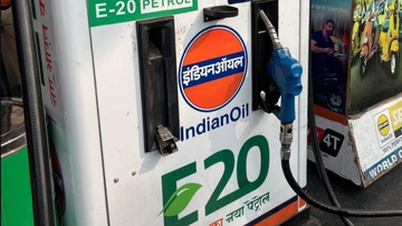
Furthermore, the demand for biofuels is becoming a significant driving force. The Indonesian Deputy Minister of Energy stated that the country is accelerating road trials of B50 biofuel (a blend of 50% palm oil). This move aims to address the tightening of crude oil supply and rising logistics costs.
- Exchange rate: The ringgit depreciated by 0.38% against the US dollar, making Malaysian palm oil more attractive to foreign importers.
- Energy: The ongoing conflict in the Middle East has driven up crude oil prices, boosting demand for palm oil as a feedstock for biodiesel production.
Pressure from transportation costs and adjustments to export taxes.
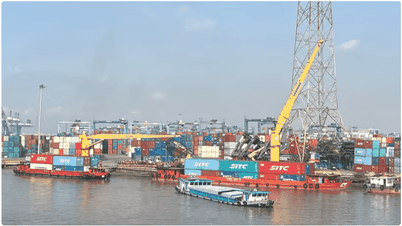
Despite rising prices, the market still faces challenges from logistics costs. Eddy Martono, Chairman of GAPKI, said that shipping and insurance fees have increased by 50% due to ships having to change routes to avoid conflicts. This has led to a slowdown in new export orders, potentially putting pressure on inventories in Indonesia.
| Reference Index (April) | Price (Ringgit/ton) | Tax rate |
|---|---|---|
| April 2026 | 3,935.19 | 9.5% |
| March 2026 | 3,896.09 | 9% |
The Malaysian Palm Oil Board announced it has raised its benchmark crude palm oil price for April to 3,935.19 ringgit (US$1,002) per ton, resulting in an export duty increase to 9.5%. Under regulations, a maximum duty rate of 10% will be applied when the price exceeds 4,050 ringgit per ton.
From a technical perspective, Reuters analyst Wang Tao predicts that palm oil prices may experience a slight correction to the 4,494-4,514 ringgit/tonne range before retesting the 4,616 ringgit/tonne resistance level.
Source: https://baonghean.vn/gia-dau-co-malaysia-tang-phien-thu-hai-lien-tiep-dat-muc-4591-ringgit-moi-tan-10328427.html
![[Photo] Secretary of the National Assembly Party Committee, Chairman of the National Assembly presides over the meeting of the Standing Committee and Executive Committee of the National Assembly Party Committee.](https://vphoto.vietnam.vn/thumb/1200x675/vietnam/resource/IMAGE/2026/06/03/1780480353201_ndo_br_bnd-2585-jpg.webp)

![[Photo] General Secretary and President To Lam presides over a meeting with the Central Organizing Committee.](https://vphoto.vietnam.vn/thumb/1200x675/vietnam/resource/IMAGE/2026/06/03/1780482764658_a1-bnd-4741-3342-jpg.webp)


![[Photo] First session of the 14th Congress of the Vietnam Trade Union](https://vphoto.vietnam.vn/thumb/1200x675/vietnam/resource/IMAGE/2026/06/03/1780465947883_ndo_br_img-3852-jpg.webp)

























































![[Video] Sunset at Lap An Lagoon – Where the sun sets over the fishing nets](https://vphoto.vietnam.vn/thumb/1200x675/vietnam/resource/IMAGE/2026/05/31/1780192137701_beach-landscape-sea-water-nature-grass-745871-pxhere-com.jpeg)
































Comment (0)