

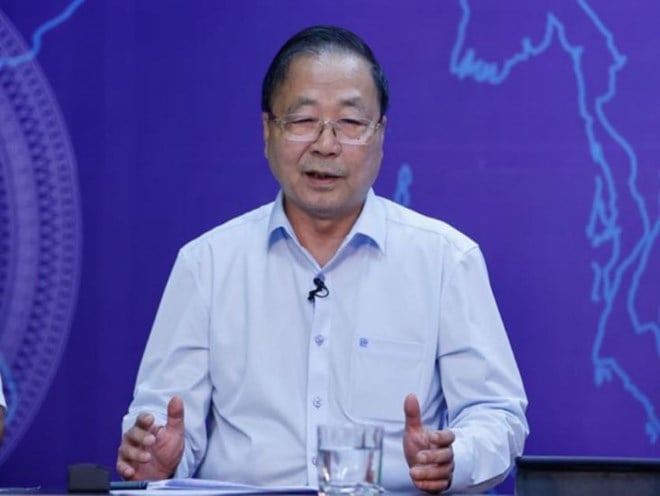
Amending the Electricity Law requires fundamental reforms regarding pricing.
Mr. Nguyen Tien Thoa, former Director of the Price Management Department (Ministry of Finance), believes that electricity prices currently have four major shortcomings. The first and most overarching shortcoming is that electricity prices have not yet been implemented according to market mechanisms.
"All input costs for electricity production, such as coal, gas, oil, exchange rates, etc., are market-driven, but the output price does not reflect the fluctuations of those costs. Sometimes adjustments take too long, and sometimes adjustments are not calculated correctly or fully, failing to cover all the costs incurred in electricity production and business," said Mr. Nguyen Tien Thoa, adding that this leads to many difficulties in electricity production and business.
According to experts, the latest figures for the years 2022-2023 show that this management style has resulted in losses of approximately 47,500 billion VND for the electricity sector. This poses a significant challenge to improving the electricity sector's cash flow for investment and development of power sources and grids.
He cited examples of electricity pricing that involve cross-subsidization not only between groups of residential electricity consumers – higher consumption subsidizes lower consumption, and cross-subsidization between residential and industrial electricity prices – but also between different regions. "Electricity prices in island communes and districts are usually 7,000-9,000 VND/kWh, but we still sell it at 1,000-2,000 VND/kWh, meaning we're using low-income areas to subsidize high-income areas..." Mr. Thoa explained.
According to him, electricity prices must be calculated accurately and comprehensively according to market principles, but especially transparently. This is what the Politburo , the Government, and the National Assembly have also demanded. Electricity prices must be transparent, and all barriers must be removed. Of course, it shouldn't be a free-floating market; the market must be regulated by the State, and there must still be a state monopoly, as private companies cannot participate 100%. Here, consumers are primarily concerned with having enough electricity to use. He agreed that the Electricity Law should be amended and that there must be fundamental reforms to pricing.
"A 10% increase is needed, but if each increase is only 1-2%, even after five increases, there will still be losses. This is a subjective view, yet it influences public opinion. Therefore, issues concerning the structure of pricing and the price management mechanism should be codified into law at a higher level," the expert suggested.
Promoting market principles and increasing competition.

Meanwhile, Associate Professor Bui Xuan Hoi, an energy economics expert, stated that while Vietnam's electricity pricing system still operates on a multi-purpose basis, other countries around the world have relatively clear separations. Typically, the pricing structure comprises two components: firstly, the calculation of capacity costs, which we call the capacity price (subscription price); and secondly, the cost of electricity, where subscriptions are completed and users pay for what they consume. This is the common approach used in other countries.
Looking back at Vietnam's pricing system, which currently calculates electricity prices based on average retail prices, he believes that while there are limitations, this is not the core of the current difficulties facing the electricity sector. The most crucial issue remains price management. "If we cannot manage electricity prices according to market mechanisms immediately, then all regulatory aspects must gradually move towards a market-oriented approach," the expert noted.
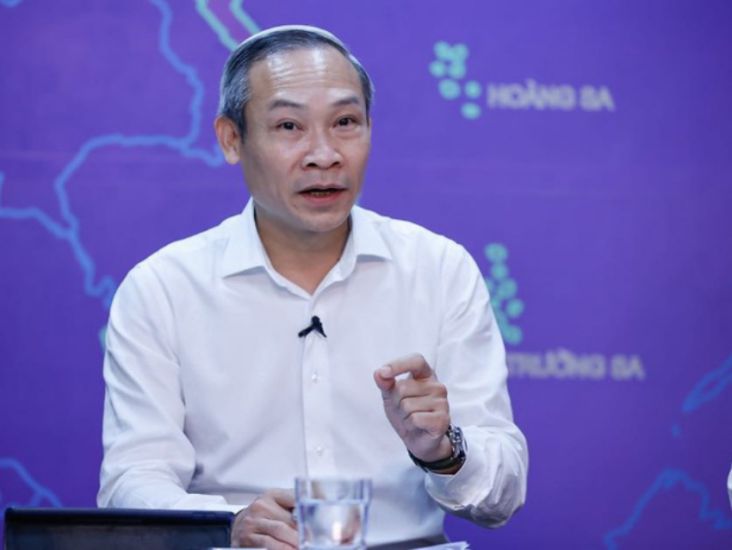
According to National Assembly representative Phan Duc Hieu, a Standing Member of the National Assembly's Economic Committee, the goal is to promote market-oriented practices and increase competition in all aspects of the electricity sector. In electricity sales and pricing, competitiveness and market principles must be enhanced. Market principles encompass various factors, such as adjusting output prices when input costs fluctuate. If fluctuations are not controlled and are left unchecked for six months or a year before intervention, that is not a market-based approach. Management must be more market-oriented.
Source: https://laodong.vn/kinh-doanh/gia-dien-phai-minh-bach-thao-go-tat-ca-cac-rao-can-1382555.ldo


![[Photo] Ba Lang An Lighthouse - the "eye of the sea" amidst the "rock museum" of Quang Ngai province.](https://vphoto.vietnam.vn/thumb/1200x675/vietnam/resource/IMAGE/2026/05/29/1780038698840_anh-man-hinh-2026-05-29-luc-14-10-42.png)
![[Image] Pleasant weather helps students enter the 10th grade entrance exam with confidence.](https://vphoto.vietnam.vn/thumb/1200x675/vietnam/resource/IMAGE/2026/05/29/1780034401612_ngay-1-thi-lop-10-minh-duy-8-5009-jpg.webp)

























































































Comment (0)