

Choose to rent instead of struggling to buy a house.
One weekend evening in their 60m² apartment in An Khánh ward ( Ho Chi Minh City), Nhật Minh and his wife lived like many other young families, the only difference being that the apartment was not theirs.
With an income of around 45 million VND per month, if they bought a house, the couple's monthly mortgage payments could reach 20-25 million VND, not including interest payments. Meanwhile, the cost of renting their current apartment is only about 14 million VND, leaving the rest for investment and savings.

Rising housing prices are leading many young people to choose renting instead of taking out a mortgage. Photo: LE VU
This story is becoming more common in Ho Chi Minh City, where housing prices are constantly escalating and increasingly outpacing income growth.
According to a report by the Ministry of Construction , in the first quarter of 2026, the average apartment price in Ho Chi Minh City was approximately 112 million VND/m², a price mainly driven up by the high-end and luxury segments. In reality, in the mid-range segment, suitable for real buyers such as young couples, the common price ranges from 85-120 million VND/m² and may be higher in some projects.
At this price point, a 60m² apartment could cost between 5 and 7 billion VND, meaning monthly installments could reach 20-30 million VND if using financial leverage.
Meanwhile, the rental market also saw an upward trend in prices as demand recovered, along with increased renovation and operating costs. However, the rate of increase in rental prices remained significantly lower than that of home sales.
The gap between home prices and income is widening, pushing the cost of ownership far beyond the reach of most people.
Conversely, although rental costs have increased, they remain more manageable in the short term. With common rents of 10-15 million VND per month, many people can flexibly manage their finances without the pressure of long-term debt.
Renting is not just about cost; it also offers flexibility, a factor increasingly valued by young people as the need to move for work and lifestyle increases.
This trend reflects a shift in mindset: from "owning at all costs" to prioritizing quality of life and optimizing cash flow.
According to the Vietnam Institute for Real Estate Market Research and Evaluation (VARS IRE), in the last three years, house prices in major cities have increased sharply, while rental prices have increased more slowly and have shown signs of leveling off in 2025. This "mismatch" is creating a relative advantage for renters in the short and medium term.
"Rental housing is a strategic pillar."
Recently, in his concluding remarks on the implementation of Directive 34-CT/TW, General Secretary To Lam emphasized that by 2030, rental housing should be identified as a strategic pillar, especially in large cities, industrial zones, and areas where housing prices far exceed people's incomes.
This direction reflects a shift in policy thinking, placing rental housing on par with the ownership model, moving towards a diverse ecosystem encompassing renting, lease-to-own, and ownership.
Many experts believe this is a realistic step, given the shrinking ability of most people to buy homes. According to Dr. Dang Viet Dung, President of the Vietnam Construction Association, most low- and middle-income groups currently find it difficult to accumulate savings or obtain long-term loans to buy a house, while previous policies have been more focused on ownership and not aligned with actual needs.
Therefore, developing social housing for rent should be considered a fundamental solution, helping people access stable housing at affordable costs, while reducing the pressure of long-term debt.
Sharing the same view, lawyer Nguyen Van Dinh, a legal expert in real estate investment and business, believes that social housing should prioritize renting, because if it continues to focus on selling, the policy could easily become "out of sync," increasing the risk of profiteering and making it difficult for those who truly need it to access.
However, the biggest obstacles lie in both market sentiment and the business side. The notion of "owning a home" remains prevalent, while the rental model is not yet financially attractive enough.
According to many real estate businesses, developing rental housing requires a large investment but the return is usually only around 4-7% per year. Meanwhile, the long payback period means that cash flow is "tied up" for many years.
Furthermore, the market still lacks preferential long-term capital sources or specialized investment funds for rental housing, making businesses hesitant to participate. Therefore, despite increasing rental demand, the supply of large-scale, well-invested rental housing remains quite limited.
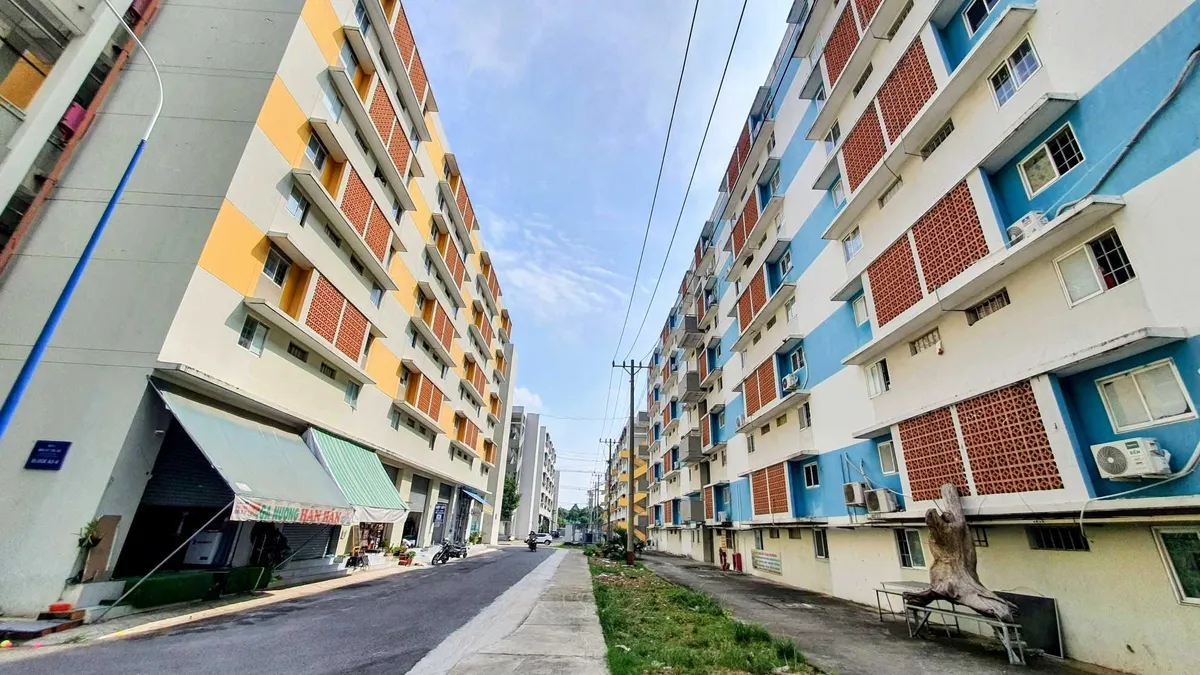
Long-term rentals are gradually becoming a new housing trend in major cities. Photo: Hong Phong
From temporary accommodation to long-term residence
No longer a temporary option, renting is gradually becoming a new trend in the housing market.
According to VARS IRE, the cost of home ownership is increasingly beyond the reach of the majority of the population. Even those with an income of around 30 million VND per month find it difficult to access housing if they follow conventional financial principles.
In this context, renting is not just a temporary housing solution, but also helps workers maintain their quality of life, optimize cash flow, and reduce long-term financial pressure.
Nevertheless, the rental market can develop sustainably by ensuring a sufficient supply at reasonable prices, having a legal framework to protect tenants, and a sufficiently developed public transportation system so that people can live further from the city center but still have convenient access to work.
Currently, these factors in Vietnam are still in the process of being developed, meaning the rental housing market mainly serves as a flexible solution rather than a foundation for long-term residence.
Although the mindset of "settling down and establishing a career" remains closely tied to home ownership, the market is showing a clear shift. Renting is no longer simply a stepping stone before buying, but is gradually becoming a long-term option, especially for young workers who prioritize flexibility and financial balance.
With the gap between housing prices and income showing no signs of narrowing, and policies beginning to shift to reflect market realities, the concept of "settling down" may also be changing, no longer necessarily tied to home ownership.
Source: https://money.vtv.vn/gia-nha-leo-thang-thue-nha-co-thanh-lua-chon-dai-han-10926052818201951.htm



![[Photo] Standing Committee member of the Party Central Committee Tran Cam Tu working with the Central Inspection Committee](https://vphoto.vietnam.vn/thumb/1200x675/vietnam/resource/IMAGE/2026/05/28/1779969579668_ndo_br_bnd-2495-jpg.webp)































































































Comment (0)