

As of today (noon, May 22nd), the price of gold in the domestic market is listed as follows:
SJC gold at Bao Tin Manh Hai: 159 million VND/ounce for buying, 162 million VND/ounce for selling (down 400,000 VND/ounce compared to this morning in both directions).
SJC gold in Hanoi and SJC gold in Da Nang: 159 million VND/ounce for buying, 162 million VND/ounce for selling (down 400,000 VND/ounce compared to this morning in both directions).
Phu Quy SJC gold: 159 million VND/ounce for buying, 162 million VND/ounce for selling (down 400,000 VND/ounce compared to this morning in both directions).
DOJI gold in Hanoi and DOJI gold in Ho Chi Minh City: 159 million VND/ounce for buying, 162 million VND/ounce for selling (down 400,000 VND/ounce compared to this morning in both directions).
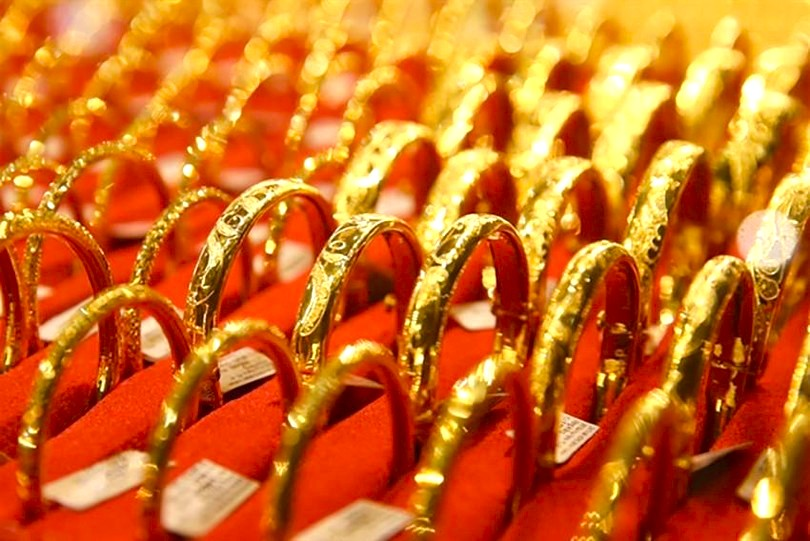 |
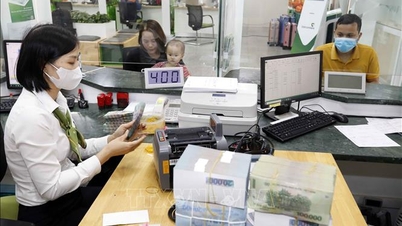
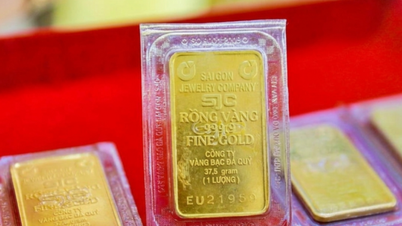
Gold prices today (noon, May 22): Prices of gold bars and gold rings have both decreased. (Illustration image: baohatinh.vn) |
PNJ gold rings in Ho Chi Minh City and Hanoi: 159 million VND/ounce for buying, 162 million VND/ounce for selling (down 400,000 VND/ounce compared to this morning in both directions).
999.9 gold rings at Bao Tin Manh Hai are trading at 157.5 million VND/ounce for buying (down 400,000 VND/ounce compared to this morning).
Thus, this afternoon (May 22), the domestic market saw a simultaneous decrease in the price of gold bars and gold rings across most brands, with the highest selling price at 162 million VND/ounce for both gold bars and gold rings.
On the world market, at noon today (May 22), the spot price of gold was 4,527.3 USD/ounce.
Commenting on the trend of gold prices, David Meger, Director of Metals Trading at High Ridge Futures, said that the market has seen bond yields cool down after a period of continuous increases, thereby allowing gold prices to recover from recent lows.
The yield on 10-year US Treasury bonds edged lower after hitting its highest level since January 2025 in the previous session. Rising bond yields typically increase the opportunity cost of holding gold – a non-interest-bearing asset. According to Meger, any development that ends the conflict or reopens the Strait of Hormuz would benefit the gold market, as it could push interest rates down and support demand for the precious metal.
Minutes from the US Federal Reserve's April 2026 meeting show that central bank officials warned that a conflict with Iran could fuel inflation, thus reinforcing the likelihood that the Fed will have to raise interest rates if inflation continues above its 2% target.
Although often seen as a safe haven against inflation, gold – a non-interest-bearing asset – is less attractive in a high-interest-rate environment. Investors are betting on a 48.6% chance that the Fed will raise interest rates in December and an 89.6% chance that the central bank will keep interest rates unchanged at its June 2026 meeting.
Source: https://www.qdnd.vn/kinh-te/tin-tuc/gia-vang-hom-nay-trua-22-5-dao-chieu-giam-1040753



![[Photo] First session of the 14th Congress of the Vietnam Trade Union](https://vphoto.vietnam.vn/thumb/1200x675/vietnam/resource/IMAGE/2026/06/03/1780465947883_ndo_br_img-3852-jpg.webp)























































































Comment (0)