

The migration to the "sky"
After Typhoon No. 10 swept through, cracks appeared on the hillside, directly threatening the lives of the local people. Statistics show that 100 households with 537 people in the commune were affected, with 51 households requiring urgent relocation. Given this situation, San Tra – a high hilltop with stable geological foundations – was chosen as the site for a resettlement area for approximately 18 to 20 households.
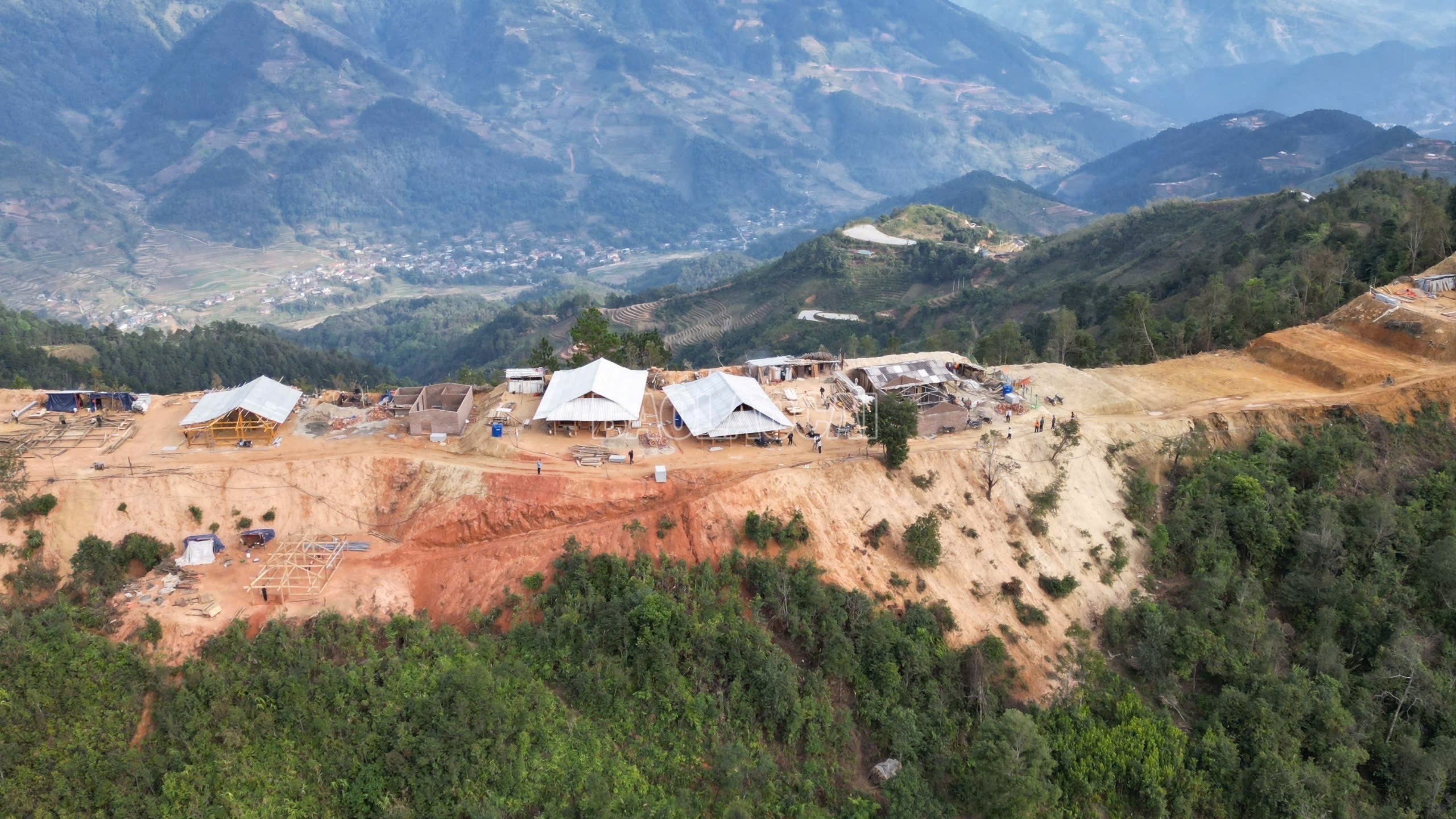
Seen from afar, the new residential area stands out amidst the vast green of the Northwest mountains like a warm strip of color against the clouds. On the newly leveled red basalt soil, the light-colored wooden frames and gleaming corrugated iron roofs gleam in the sunlight, heralding a new life taking shape.
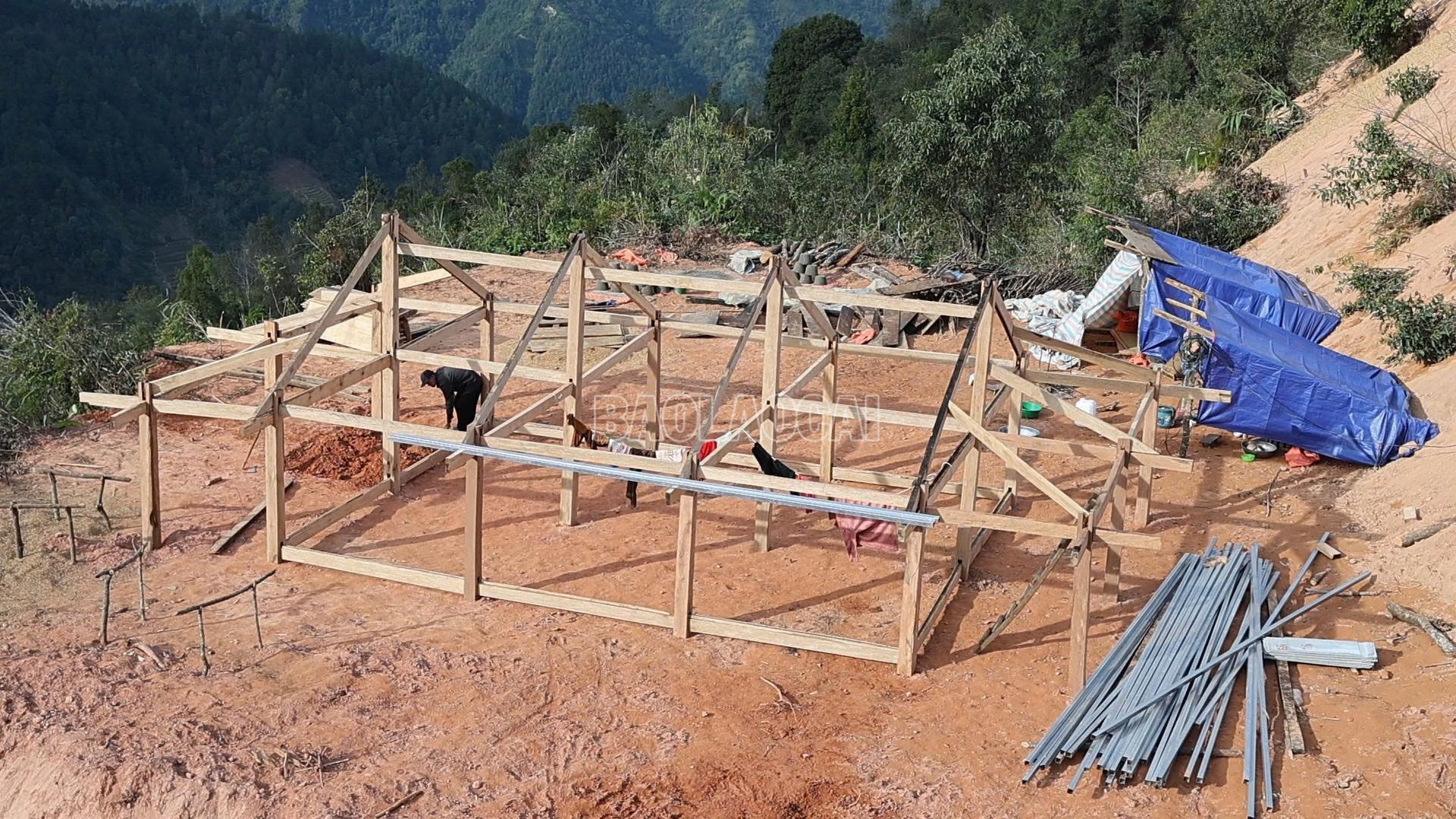
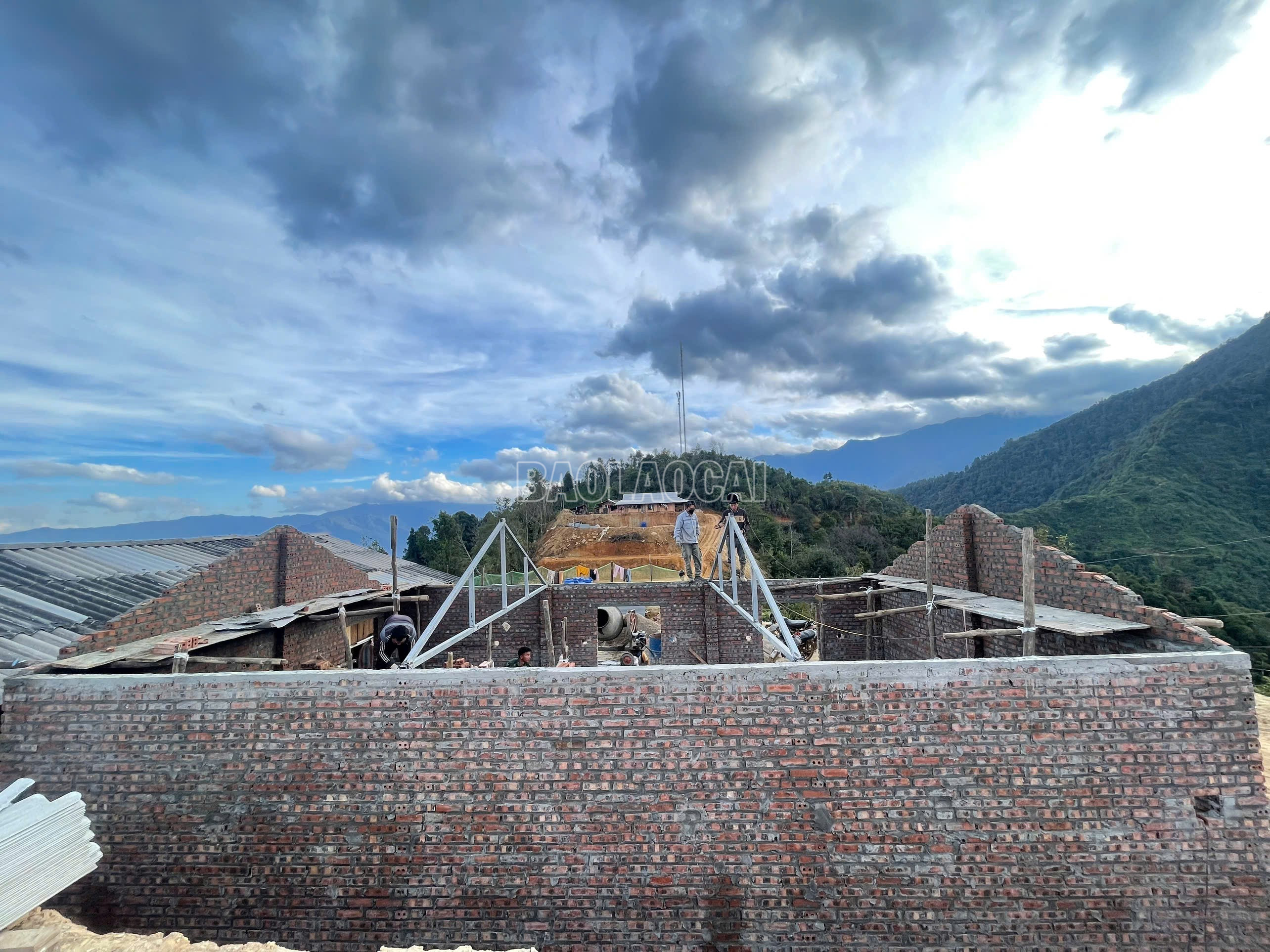
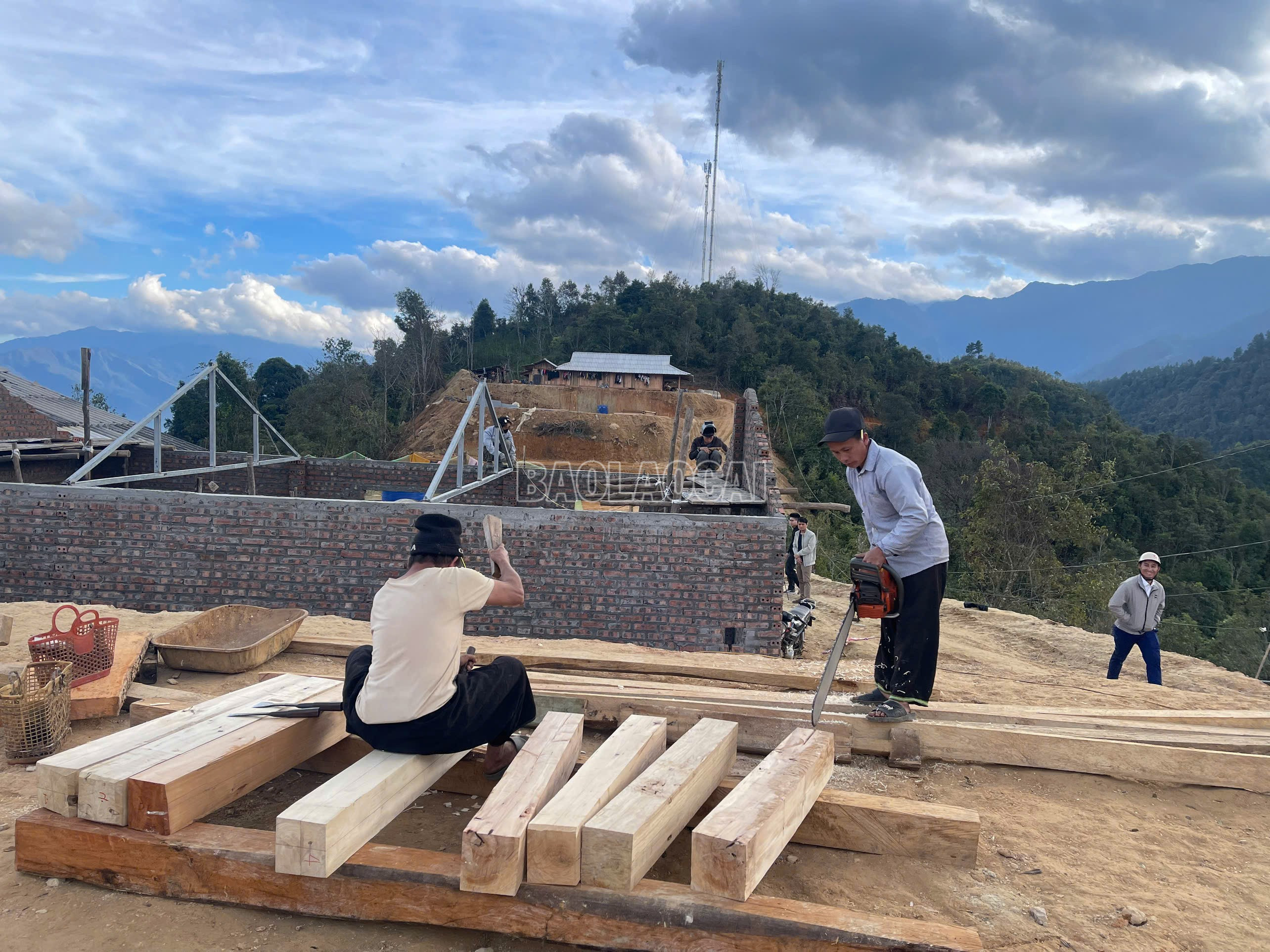
The atmosphere here is always bustling with the sounds of saws and hammers echoing across the mountainside. Mr. Hoang Van Tai, Chairman of the Vietnam Fatherland Front Committee of Hanh Phuc commune, who has been working alongside the local people throughout this period, shared that the ultimate goal is "settling down and making a living." According to the local authorities, the houses are expected to be completed before mid-January 2026 so that people can celebrate Tet (Lunar New Year) in their new homes.
Relocating people from their old homes was not easy. Mr. Tai recalled that in the early days of campaigning, the biggest difficulty was the mindset of the people. Most people wanted to stay in their old homes, the land their ancestors had cultivated. Commune officials had to patiently explain each case to the people so they understood the risks and long-term benefits of relocation.
"In the case of the Kitchen God in San Tra village, initially, when the team came to persuade them, the family absolutely refused to move. But we persevered, following the principle of 'slow and steady wins the race'... Finally, the family understood and agreed to submit an application for relocation," Mr. Tai recounted.
Besides ideological difficulties, the financial challenge was also a major obstacle as the support funds had not arrived in time. In this urgent situation, commune officials had to flexibly use their personal money to help people dismantle and transport their houses. To date, 36 out of 51 houses in the commune have been completed, and for the remaining houses, 30-40% of the work has been disbursed.
Joy in new homes and a path of hope.
Unlike the chaotic situation of other households still constructing their houses, the family of Mr. Thào A Tình in Sán Trá village is one of the first to have settled into their new residence. According to the plan, each household moving here is allocated 200 square meters of land, spacious enough to build both a main house and auxiliary structures.
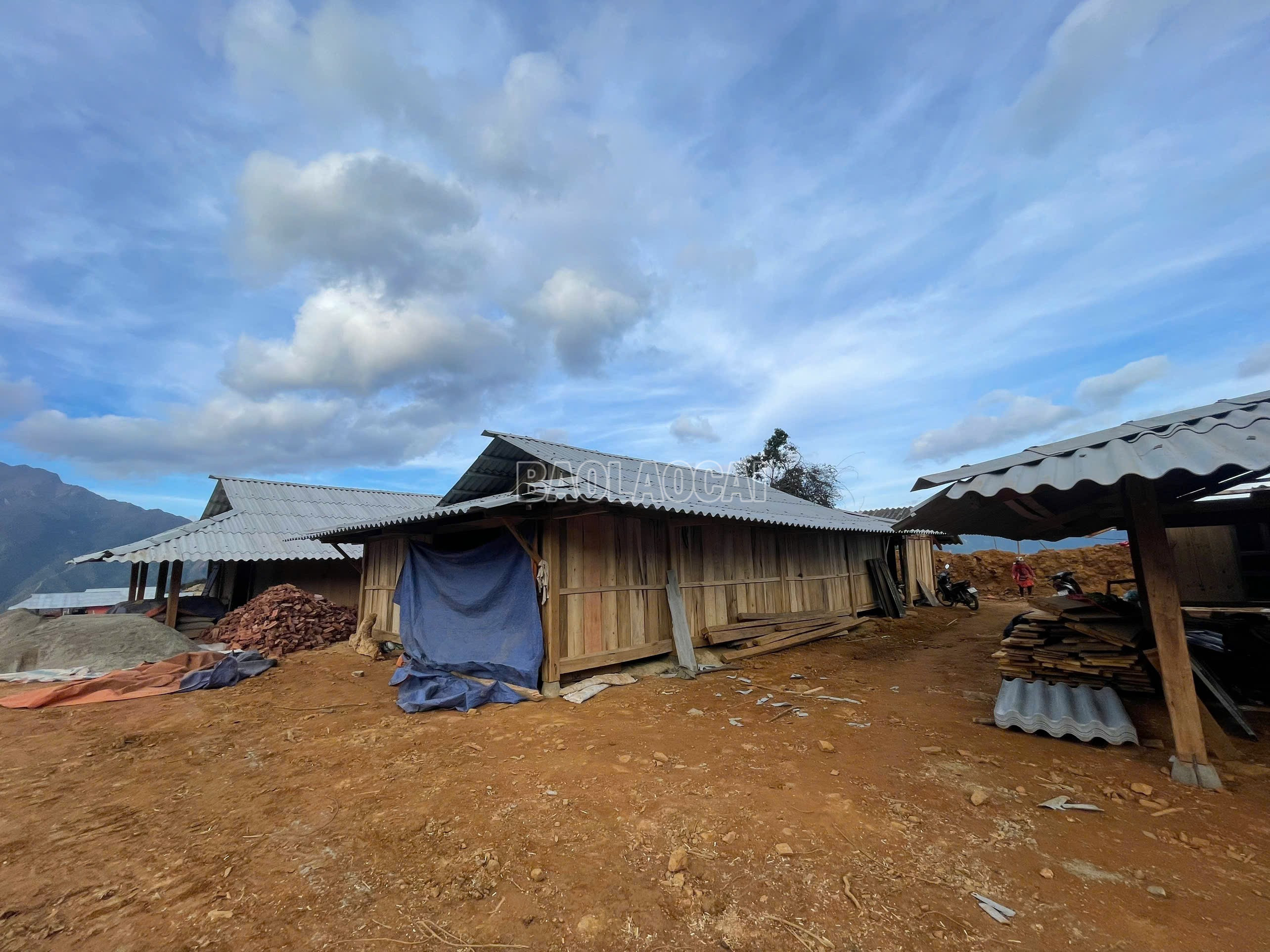
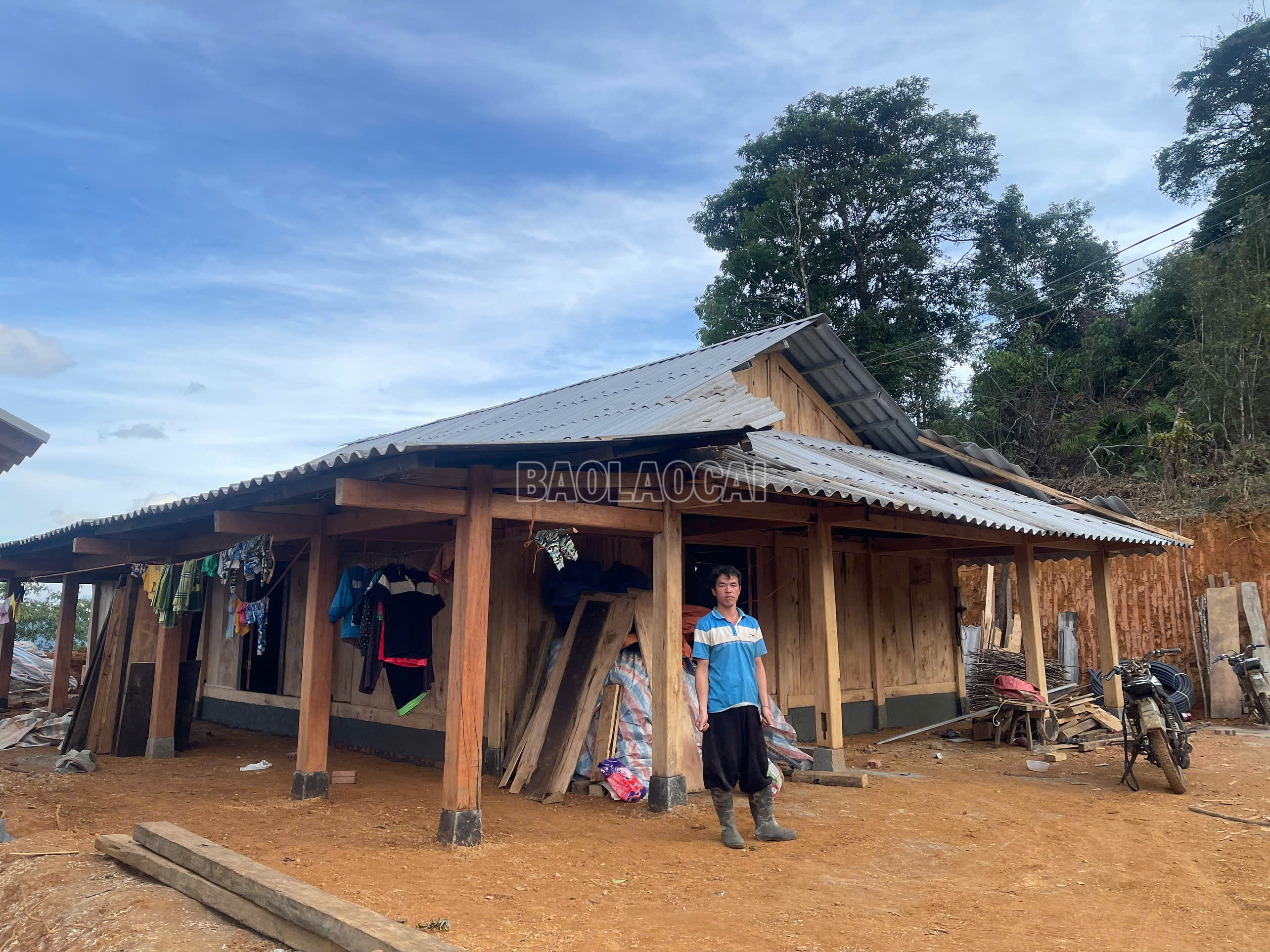
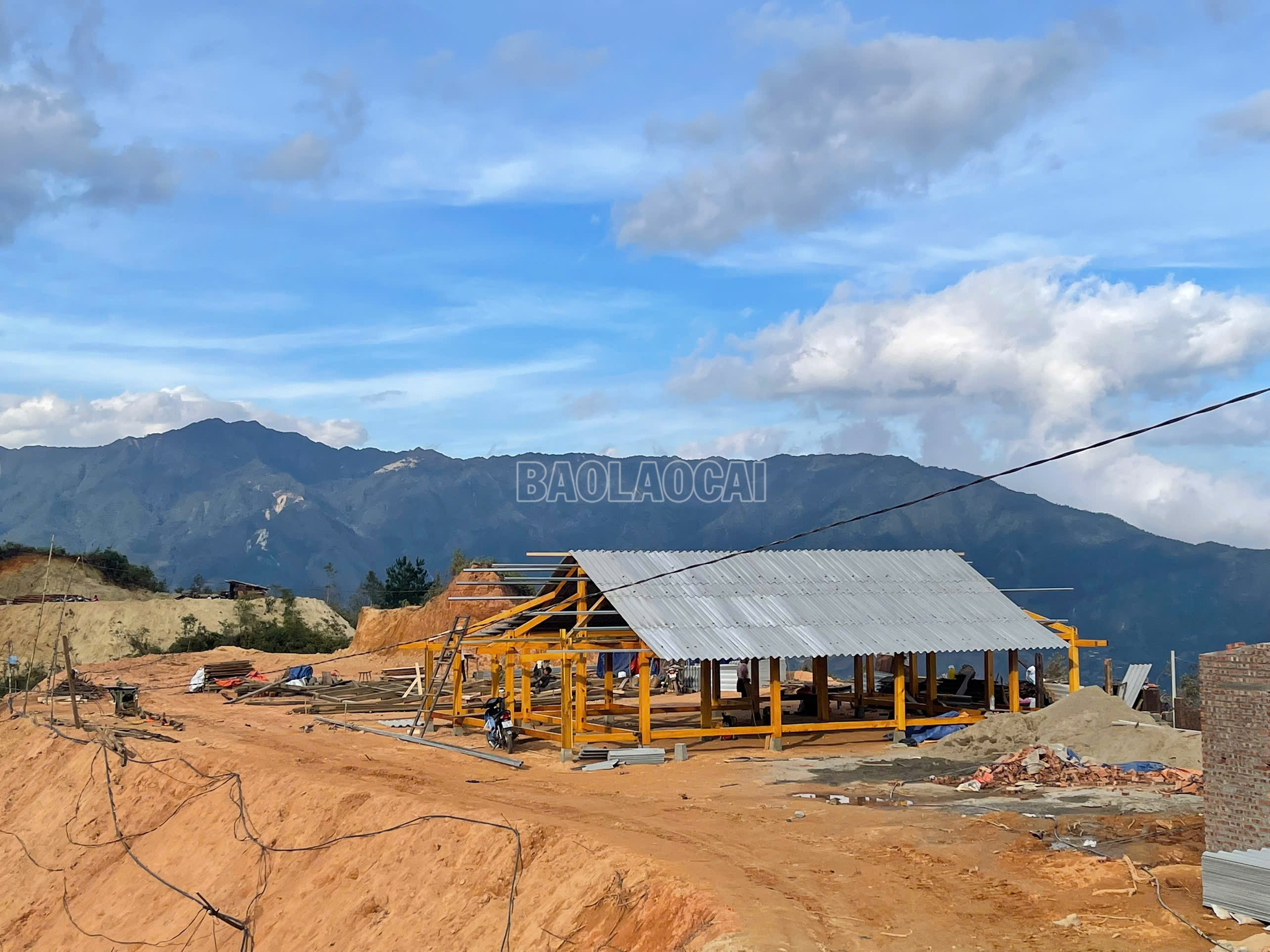
Taking advantage of the sunny days to level the remaining land beside his house, Mr. Tinh happily shared: "There are five of us in my family, and we've been living here for almost a month. The main house is finished and sturdy, and now I'm leveling more land to build a more spacious kitchen. We're so happy that the government has allocated us 200 square meters of flat land. It's higher and drier here, so we no longer have to worry about landslides into our house whenever it rains heavily."
Sharing the joy with Mr. Tinh, Mr. Giang A Sia, who moved from Ban Cong village, is busy completing his new house. His old house was located on a steep slope, posing many dangers; while the new house, built over 20 days ago, is now complete, opening up a safer and more stable life for his family.
"Moving to the new place is very lively and exciting. Currently, the road to fetch water and for transportation is a bit far and difficult when it rains, but everything will be fine once there's a concrete road," - Mr. Giàng A Sỉa happily shared.
Mr. Sỉa's aspirations are entirely justified. In reality, the road leading to the resettlement area is still a dirt road, winding around the mountain slopes; the Sán Trá resettlement area is more than 10 km from the commune center, a considerable distance for mountainous terrain. However, this vital transportation route is gradually being improved: many critical sections have been reinforced, and the remaining sections are being urgently widened and leveled by the local authorities, aiming for the soon-to-be concrete paving of the entire route, ensuring safer and more convenient travel for the people.
The infrastructure and sturdy houses we see today are the result of the collective efforts of the entire community.
Unlocking the tourism potential at the cloud-covered peaks .
More than just a resettlement area for sheltering from storms and floods, San Tra is planned with a long-term vision. Situated on a high hilltop, the resettlement area boasts an open space, offering panoramic views down to the valley and the terraced rice fields below.
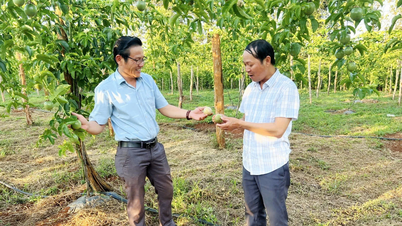
According to the leaders of Hanh Phuc commune, in parallel with stabilizing housing, the locality is implementing a pilot project to plant high -economic- value trees such as star anise, mahogany, and chestnut.
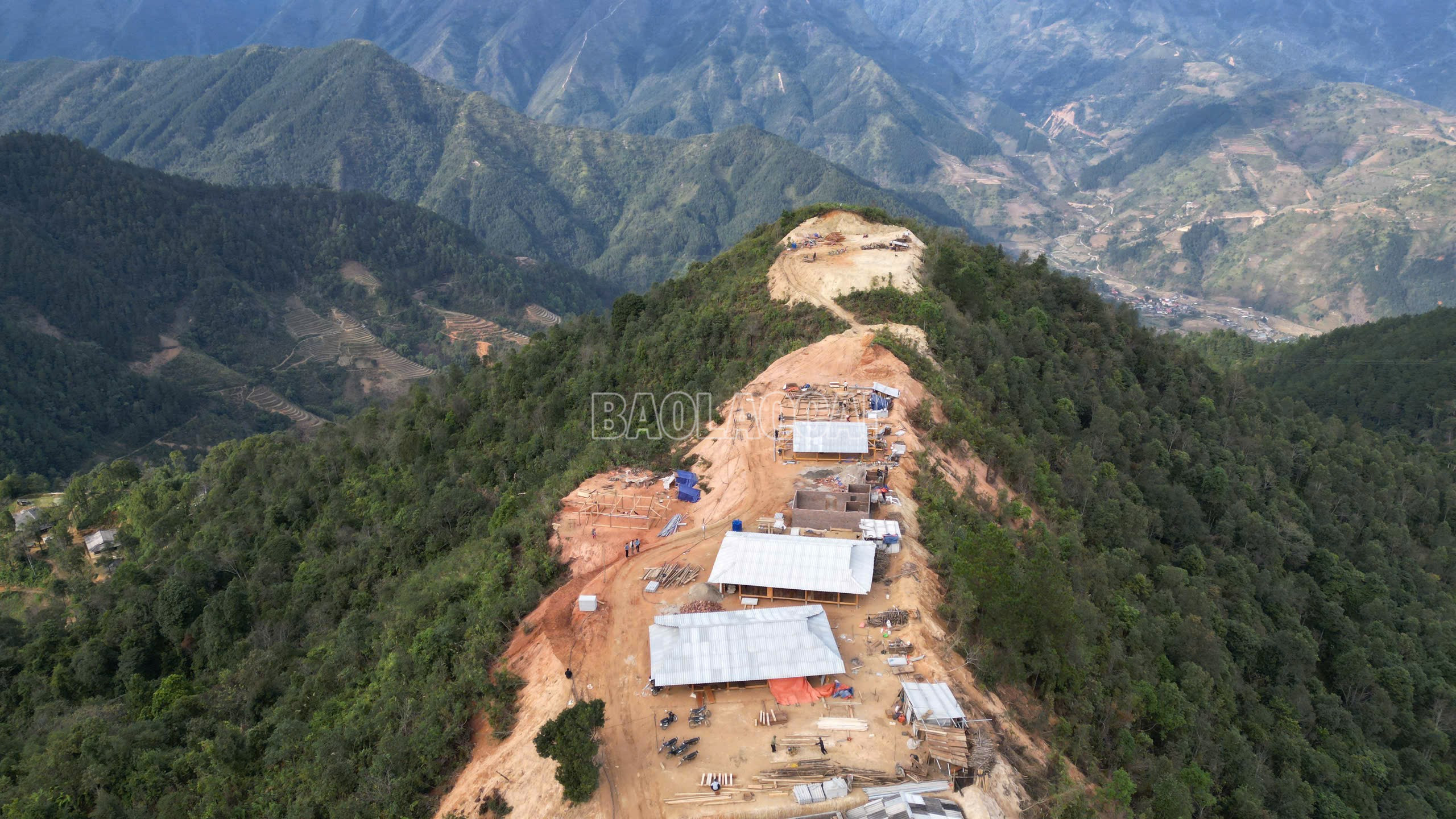
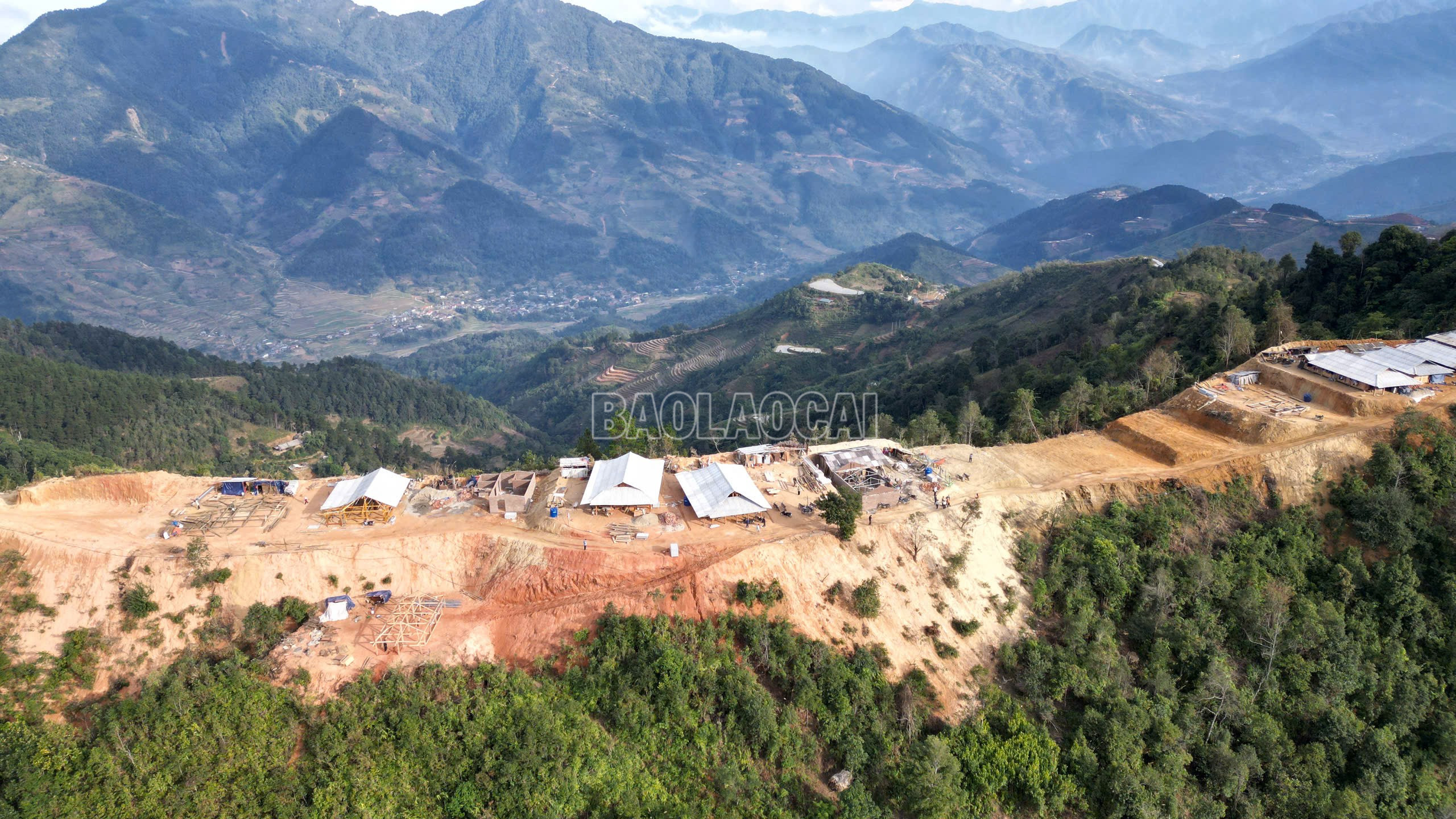
To date, approximately 80% of the resettlement work has been completed; by January 15, 2026 at the latest, all households will have new homes. Spring is arriving on the peak of San Tra Mountain – amidst the clouds, concrete roads are gradually extending, and new houses are appearing one after another, bringing with them the hope for a stable life and a better future for the people of the Happy Highlands.
Source: https://baolaocai.vn/giac-mo-an-cu-giua-lung-chung-may-post890904.html






















![[Photo] Reception to welcome General Secretary and President To Lam and his wife on their State visit to the Philippines](https://vphoto.vietnam.vn/thumb/1200x675/vietnam/resource/IMAGE/2026/06/01/1780295488620_vna-potal-chieu-dai-chao-mung-tong-bi-thu-chu-tich-nuoc-to-lam-va-phu-nhan-tham-cap-nha-nuoc-toi-philippines-8798060-7855-jpg.webp)


















































Comment (0)