

At the recent first meeting of the Hai Duong Provincial People's Committee in November, chaired by Mr. Le Ngoc Chau, Chairman of the Hai Duong Provincial People's Committee, the Provincial People's Committee considered the proposal from the Department of Health requesting approval for the development of a Resolution stipulating policies to support, train, attract, and reward medical personnel at public agencies and units in the province for the period 2025-2030.
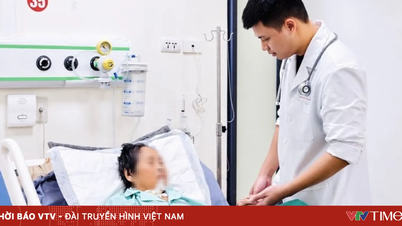
According to the Department of Health, from 2020 to 2023, the entire health sector in Hai Duong province saw 215 civil servants and public employees resign, including 61 doctors. Meanwhile, the number of doctors recruited annually is relatively low, with only 29 doctors recruited in 2023. The number of doctors working at the commune level has been decreasing year by year due to retirement, transfers to higher-level facilities, resignations, etc.
Compared to the minimum required standard, Hai Duong currently lacks 388 doctors. According to the set target of having 19 doctors per 10,000 people by 2030, the province needs 3,713 doctors, meaning a projected shortage of 1,505 doctors.
The Hai Duong Department of Health assessed that the province's medical workforce is lacking due to lower salaries compared to non-public units, heavy workload, inadequate facilities for medical staff to develop their abilities, high training and skill-enhancement costs, and the need for self-funding...
Furthermore, the province's policies on supporting training and attracting human resources in general, and medical personnel in particular, are not suitable or attractive enough for the specialized fields of the medical sector.
Accordingly, the Hai Duong Department of Health proposed a resolution stipulating policies to support, train, attract, and reward healthcare personnel at public agencies and units, comprising three policies: training policies, policies to attract doctors and pharmacists, and policies to reward doctors working at commune-level health stations. It also proposed the highest support levels for research and study costs after graduation: 100 million VND/person/course for PhD graduates; 50 million VND/person/course for Specialist Doctor II and resident doctors; and 30 million VND/person/course for Master's and Specialist Doctor I graduates.
Regarding the policy to attract human resources, the highest support level is 500 million VND per person for individuals with a PhD or Specialist Doctor II degree working in specialized fields such as psychiatry, pathology, forensic medicine, forensic psychiatry, infectious diseases, and intensive care.
The policy for doctors working at health stations is expected to provide monthly or daily allowances equivalent to 20% of their current salary if working in a commune, and 15% of their current salary if working in a ward or town.
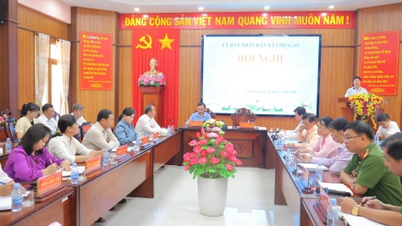
After hearing the report from the Department of Health and the opinions of the delegates attending the meeting, the leaders of the Hai Duong Provincial People's Committee basically agreed with the Department of Health's proposal to develop a support policy to attract medical personnel.
At the same time, it was emphasized that currently, financial support for healthcare personnel is insufficient; it must be combined with improved facilities, working conditions, and environment. This is a unique profession that requires support mechanisms to ensure that doctors, nurses, and other healthcare workers feel secure and committed to their workplaces.
The Chairman of the People's Committee of Hai Duong province requested the Department of Health to promptly incorporate the opinions of the delegates attending the meeting, adjust and finalize the resolution, and advise the Provincial People's Committee to submit it to the Provincial People's Council for consideration at the year-end session. The committees of the Provincial People's Council will work together and coordinate with the advisory agencies of the Provincial People's Committee in the process of drafting the resolution to ensure consensus on viewpoints and policies.
Source: https://kinhtedothi.vn/hai-duong-giai-bai-toan-thieu-bac-si-nhu-the-nao.html
![[Photo] Standing Committee member of the Party Central Committee Tran Cam Tu working with the Central Inspection Committee](https://vphoto.vietnam.vn/thumb/1200x675/vietnam/resource/IMAGE/2026/05/28/1779969579668_ndo_br_bnd-2495-jpg.webp)




















































































Comment (0)