

One field, many management models
According to Associate Professor Dr. Nguyen Duy Thinh, former lecturer at Hanoi University of Science and Technology and expert in the field of food safety technology, in Vietnam, the responsibility for managing food safety is assigned to the Ministries of Health , Industry and Trade, and Agriculture and Environment, throughout the entire process from production, preliminary processing, processing, preservation, transportation to market consumption. At the local level, provinces and cities are currently applying different food safety management models.
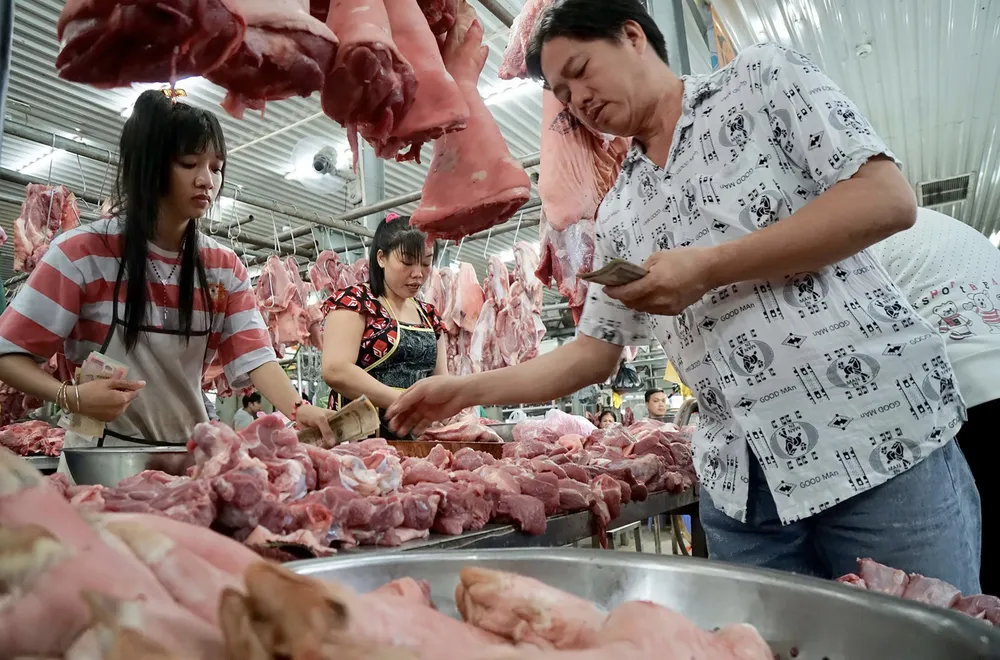
Of these, Ho Chi Minh City is the first and only locality to have a Department of Food Safety (operating from January 1, 2024, previously a Food Safety Management Board), Da Nang City implements the Food Safety Management Board model, while other localities organize Food Safety and Hygiene Sub-departments. “Before the establishment of the Department of Food Safety, Ho Chi Minh City piloted the Food Safety Management Board model. After a long period of piloting, we haven't had an accurate and scientific assessment of its practical effectiveness, nor have we determined the suitability of this model, its feasibility for application in other localities, or what specific adjustments and lessons learned are needed. These questions remain unanswered, so determining which model is suitable for food safety management in a locality is not easy,” commented Associate Professor Dr. Nguyen Duy Thinh.
According to Deputy Minister of Health Do Xuan Tuyen, localities are applying different food safety management models, leading to a lack of uniformity and difficulties in coordination, causing overlapping responsibilities. Deputy Minister Do Xuan Tuyen said that the Ministry of Health is finalizing two draft decrees to be submitted to the Government specifying the decentralization of management authority according to administrative levels and providing clear guidance on the organizational structure of specialized agencies at the provincial level.
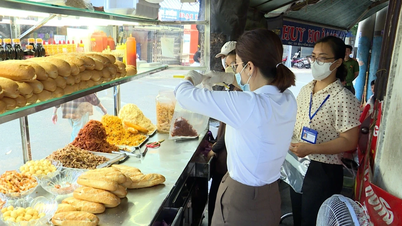
According to Dr. Nguyen Hoai Nam, Deputy Director of the Ho Chi Minh City Department of Health, regarding the implementation of policies and laws on preventing and combating counterfeit drugs and food, the current coordination mechanism between units such as the Department of Health, the Department of Food Safety, Market Management, Police, Customs, Border Guard, etc., is sometimes not tight enough, lacking a unified coordinating body, leading to fragmented handling or overlapping and duplication of functions. In addition, information sharing between agencies is sometimes slow and outdated, affecting management effectiveness.
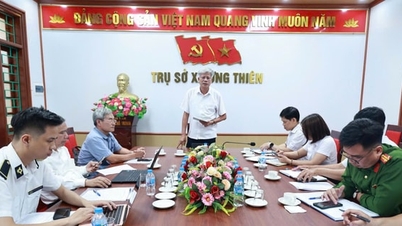
“Unifying the food safety management model is a difficult issue. Currently, the Ministry of Health is seeking opinions from ministries, sectors, and localities on this matter. The Ministry of Health is currently leading the drafting of the revised Food Safety Law. Accordingly, the organization of state management of food safety in the draft law is structured so that the Ministry of Health is the focal point responsible for assisting the Government in unifying state management of food safety nationwide,” Deputy Minister Do Xuan Tuyen emphasized at a recent meeting of the Central Inter-Ministerial Steering Committee on Food Safety.
Avoid leaving any "legal loopholes".
According to lawyer Tran Minh Hung of the Ho Chi Minh City Bar Association, unifying the management of food safety is an urgent requirement. “In reality, there is overlapping authority and difficulty in assigning responsibility when violations occur due to the fragmented jurisdiction among various sectors and localities. For example, a product involves many stages from production to processing and distribution, making it complicated to determine which agency has the authority to handle violations. This not only reduces management efficiency but also creates a ‘legal vacuum’ that prevents some violations from being dealt with promptly,” lawyer Tran Minh Hung explained.
According to experts, international experience shows that many countries such as Singapore and South Korea have established unified food safety management agencies under the government, which both reduce administrative procedures and enhance accountability. At the same time, the law specifically stipulates mechanisms for coordinated surprise inspections and handling of violations, with increased administrative and criminal penalties for acts that seriously endanger public health.
By the end of September 2025, the Food Safety and Hygiene Sub-departments of several localities ceased operations and transferred their functions and responsibilities to the Food Safety Department under the Provincial Department of Health. Speaking to the Saigon Giai Phong newspaper, the head of the Food Safety Department of a southern province stated that the transfer was not uniform across provinces and cities, as the authority of the sub-department and the department were completely different.
This difference makes it difficult for those in the industry to carry out food safety management tasks at the local level. “For effective and smooth food safety management, I hope for a unified model across all 34 provinces and cities. This uniformity and consistency will help localities have a common voice when making recommendations and proposals to the Food Safety Department, and from there, advise the Ministry of Health on issuing relevant legal documents,” this person shared.
According to Associate Professor Dr. Nguyen Duy Thinh, the food safety standards regulations developed by the Ministry of Health and the system of legal documents on food safety are relatively complete. Over time, legal regulations on food safety have been improved to create a more favorable environment for businesses while also increasing their responsibility, based on the principles of simplifying administrative procedures, strong decentralization and delegation of authority, and increased accountability for local governments.
Specifically, Decree No. 15/2018/ND-CP dated February 2, 2018, providing detailed guidance on the implementation of several articles of the Food Safety Law, has fundamentally changed the method of food safety management, adopting risk-based management, minimizing pre-inspection, and increasing post-inspection… “The main issue lies in implementation; post-inspection of food safety needs to be carried out in a substantive and effective manner. At the same time, investment in resources and human resources for post-inspection at the local level is needed, and the capacity of the testing system from the central to local levels must be strengthened to create overall strength,” proposed Associate Professor Dr. Nguyen Duy Thinh.
Source: https://www.sggp.org.vn/giai-ma-mot-dau-moi-quan-ly-an-toan-thuc-pham-post815481.html
![[Photo] General Secretary and President To Lam presides over a meeting with the Central Organizing Committee.](https://vphoto.vietnam.vn/thumb/1200x675/vietnam/resource/IMAGE/2026/06/03/1780482764658_a1-bnd-4741-3342-jpg.webp)

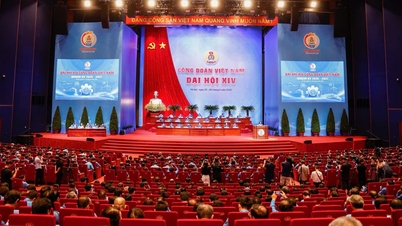
![[Photo] First session of the 14th Congress of the Vietnam Trade Union](https://vphoto.vietnam.vn/thumb/1200x675/vietnam/resource/IMAGE/2026/06/03/1780465947883_ndo_br_img-3852-jpg.webp)
![[Photo] Secretary of the National Assembly Party Committee, Chairman of the National Assembly presides over the meeting of the Standing Committee and Executive Committee of the National Assembly Party Committee.](https://vphoto.vietnam.vn/thumb/1200x675/vietnam/resource/IMAGE/2026/06/03/1780480353201_ndo_br_bnd-2585-jpg.webp)











































![[Video] Sunset at Lap An Lagoon – Where the sun sets over the fishing nets](https://vphoto.vietnam.vn/thumb/1200x675/vietnam/resource/IMAGE/2026/05/31/1780192137701_beach-landscape-sea-water-nature-grass-745871-pxhere-com.jpeg)
























Comment (0)