

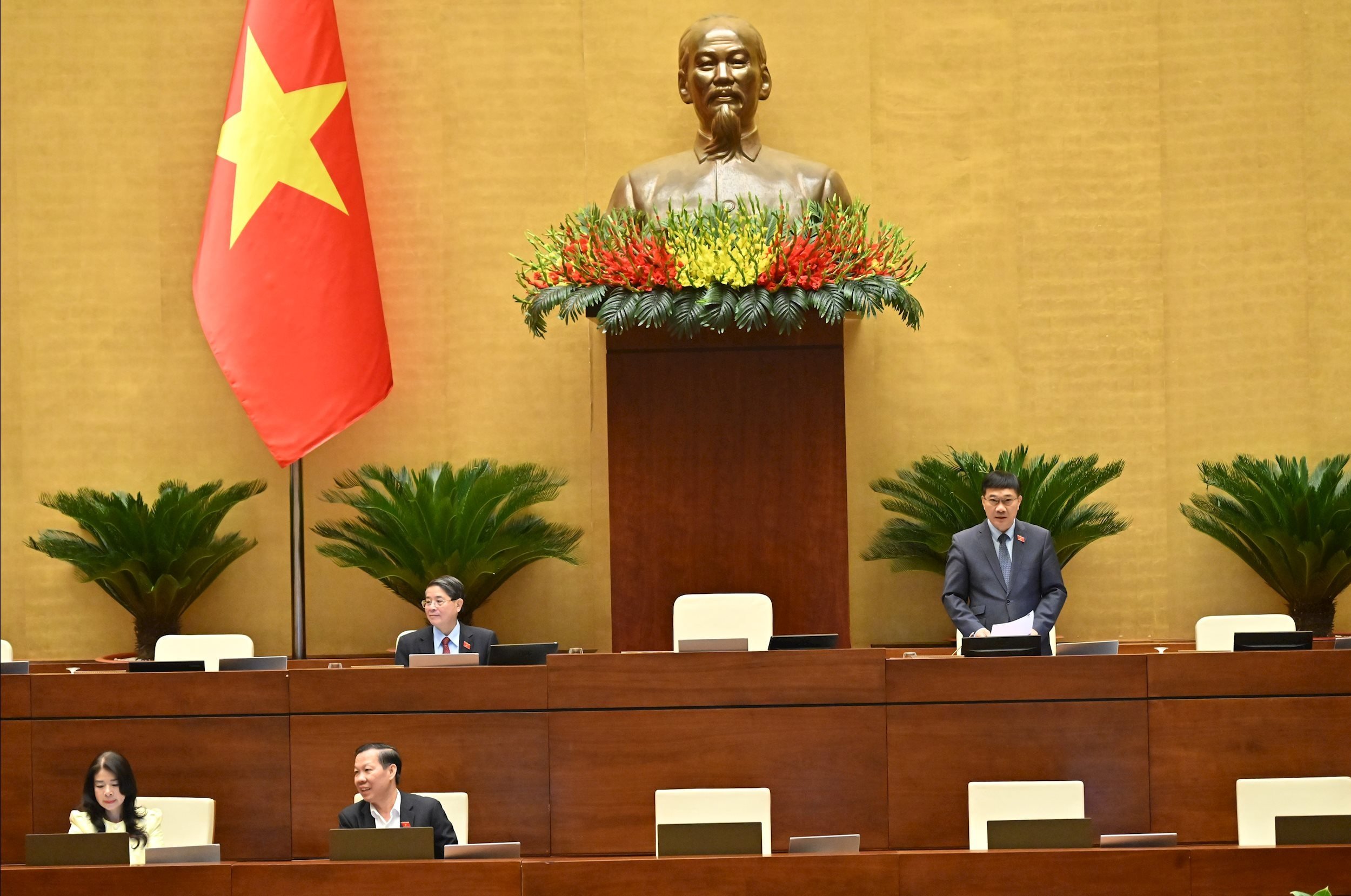
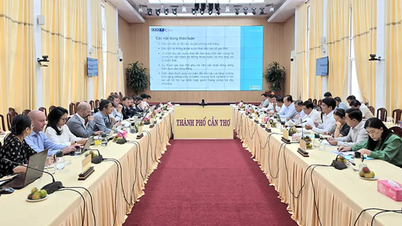
On the morning of November 7th, under the chairmanship of Deputy Speaker of the National Assembly Vu Hong Thanh, the National Assembly heard the presentation and the verification report on the draft Law on Planning (amended).
Reduce intermediate steps to speed up the process.
Minister of Finance Nguyen Van Thang presented the draft Law on Planning (amended). Accordingly, the draft Law consists of 6 Chapters, 57 Articles and 1 Appendix.
The new points of the draft Law include: perfecting regulations on the planning system, the relationship between different types of plans and resolving conflicts between plans; strengthening decentralization and delegation of power in planning activities; simplifying processes and procedures in planning activities; perfecting regulations on planning content; and removing difficulties and obstacles related to assessing the conformity of investment projects with planning.
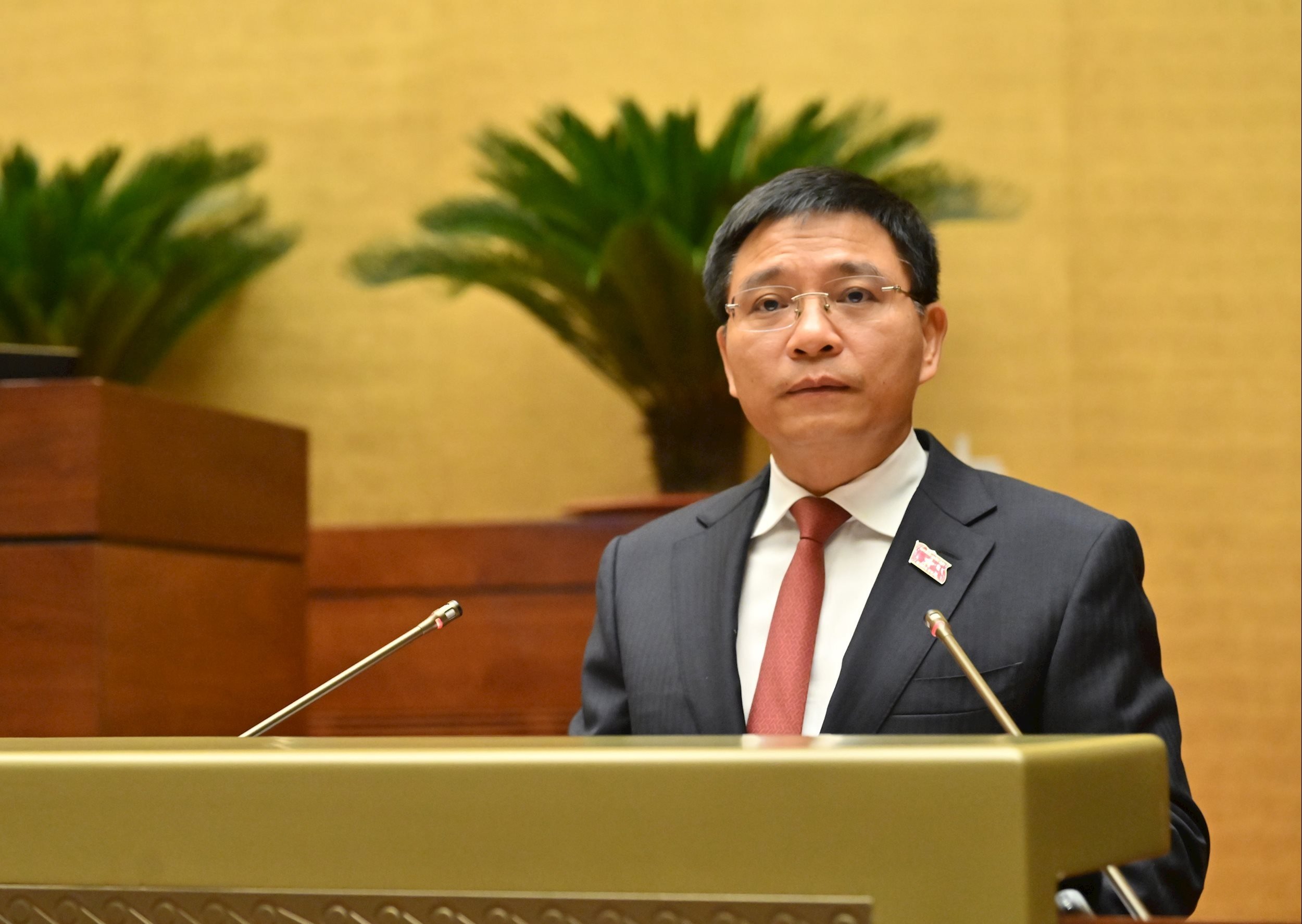
Minister of Finance Nguyen Van Thang stated that, regarding the simplification of processes and procedures in planning activities, the draft Law has added provisions allowing plans to be developed simultaneously and specifying the order of plan approval; it also stipulates special cases where lower-level plans are approved first to implement urgent projects and tasks.
The draft law removes the provision on "planning tasks" and switches to a "planning outline" format with simpler content.
At the same time, reduce intermediate steps to speed up progress; the Government is tasked with specifying the details of the Appraisal Council to increase flexibility in implementation.
Allow for simultaneous adjustments to plans, either through normal procedures or simplified procedures, with specific principles and criteria.
For planning adjustments following the normal procedure, the Chairman of the Appraisal Council decides on the form of operation of the planning appraisal council, which may involve council meetings or soliciting written appraisal opinions.

For planning adjustments under simplified procedures: There is no need to go through the procedure of requesting approval for planning adjustments; appraisal of planning adjustments and preparation of environmental impact assessment reports; the authority to approve sectoral planning adjustments under simplified procedures is delegated to the Minister.
The draft law also amends regulations on the basis for adjusting planning to ensure feasibility, and more clearly distinguishes between the basis for adjusting planning according to the normal procedure and adjusting planning according to the simplified procedure to ensure rigor when the authority to approve planning has been thoroughly decentralized…
Continue to streamline integrated planning.
The report on the draft Law on Planning (amended), presented by the Chairman of the Economic and Finance Committee, Phan Van Mai, stated that the Economic and Finance Committee proposed improving the regulations in the draft Law on Planning (amended) and in related laws concerning planning according to the directions concluded by the Standing Committee of the National Assembly.
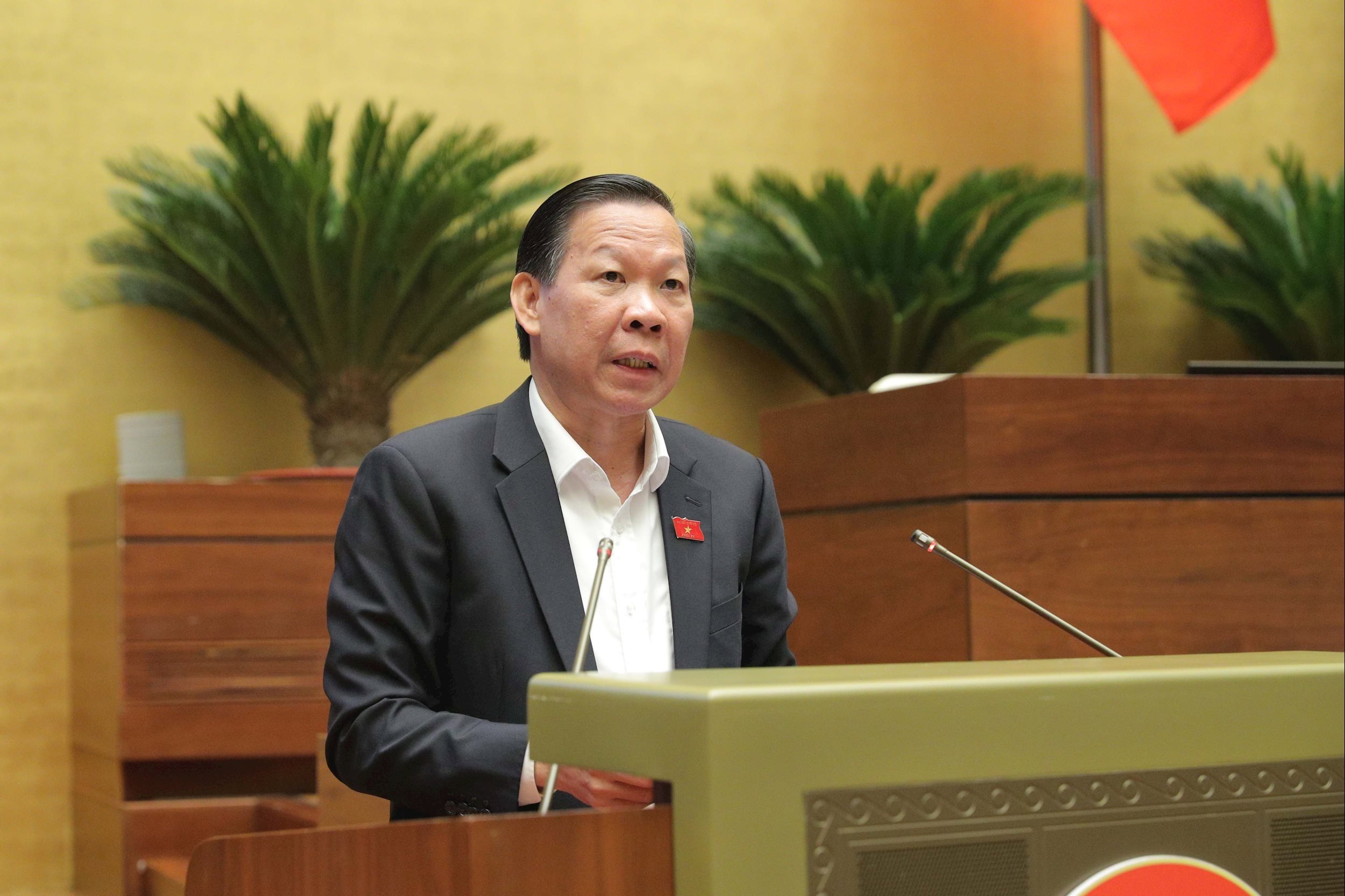
Specifically: “ Clearly define the roles of planning documents, finalize the list of planning documents within the planning system to ensure consistency, linkage, feasibility, and stability; each type of planning document should clearly state its meaning, purpose, scope, content, orientation, management, and necessity for issuance, avoiding duplication of planning content; clearly distinguish between planning documents as tools for managing development orientation and planning documents as tools for specific administrative management ; simplify planning documents that can be integrated into the national master plan, regional plan, and provincial plan, retaining only those necessary to be prepared separately. Review and refine the content of orientation planning documents to ensure generality, avoiding the identification of specific project lists; the content and level of detail of specific administrative management planning documents should be clearly linked to specific management requirements, primarily focusing on objectives, standards, and norms, and only requiring state management for important and necessary content, avoiding the inclusion of overly detailed regulations.” Specifically, the details lack flexibility and do not meet the demands of practical development; diagrams and drawings should only be required when absolutely necessary, while ensuring feasibility.

Based on the classification and refinement of plans as mentioned, if the subjects of the directional plans have already been expressed in the National Master Plan, Regional Plan, and Provincial Plan, and ensure the requirements of state management, then consideration can be given to further simplifying the integrated plans. In addition, it is proposed to continue reviewing and simplifying plans that are specific administrative management tools, replacing management with strategies, projects, or standards and conditions for investment and business, in order to thoroughly overcome difficulties and obstacles.
Source: https://daibieunhandan.vn/gian-luoc-cac-quy-hoach-la-cong-cu-quan-ly-hanh-chinh-10394789.html









































































































Comment (0)