


The patient, BAK, a one-day-old full-term baby weighing 2.7 kg, was admitted to the hospital in critical condition. Immediately after birth, the baby was not crying, had cyanosis throughout the body, and suffered severe respiratory distress. Upon admission, the blood oxygen saturation (SpO2) was only 45%, blood pressure was almost unmeasurable, and there was massive pulmonary hemorrhage through the airways.
Given the critical condition, doctors immediately intubated the child, put him on a ventilator, and provided intensive resuscitation. Test results revealed severe metabolic acidosis, acute heart failure, and serious electrolyte imbalance. Echocardiography revealed a congenital heart defect: a very large patent ductus arteriosus, causing severe pulmonary hypertension and leading to life-threatening pulmonary hemorrhage.
According to doctors, the ductus arteriosus usually closes on its own after birth. However, in this case, the abnormally large ductus arteriosus caused blood to flow incorrectly between the aorta and the pulmonary artery, leading to acute heart failure, pulmonary congestion, and many dangerous complications.
The infant was diagnosed with multiple critical conditions simultaneously, including respiratory failure, pulmonary hypertension, heart failure, suspected sepsis, and a coagulation disorder. Immediately, a multidisciplinary team comprising Neonatal Intensive Care, Anesthesia and Resuscitation, and Cardiothoracic specialists held an emergency consultation.
Doctors determined that waiting for the child's condition to stabilize before surgery would significantly increase the risk of death. Therefore, an emergency ligation of the ductus arteriosus was decided upon, even though the patient weighed only 2.7 kg and had unstable hemodynamics.

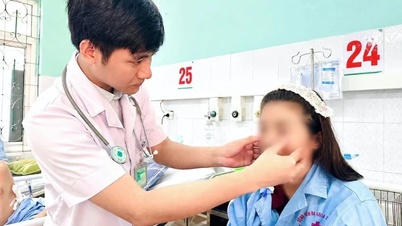
The doctors held a consultation to determine the optimal treatment plan for the child.
While preparing for transfer to the operating room, a critical situation arose when the child's lungs suddenly filled with blood, and the SpO2 level dropped to 40%. The medical team simultaneously performed resuscitation and urgently moved the child to the operating room in a race against time to save the child's life.
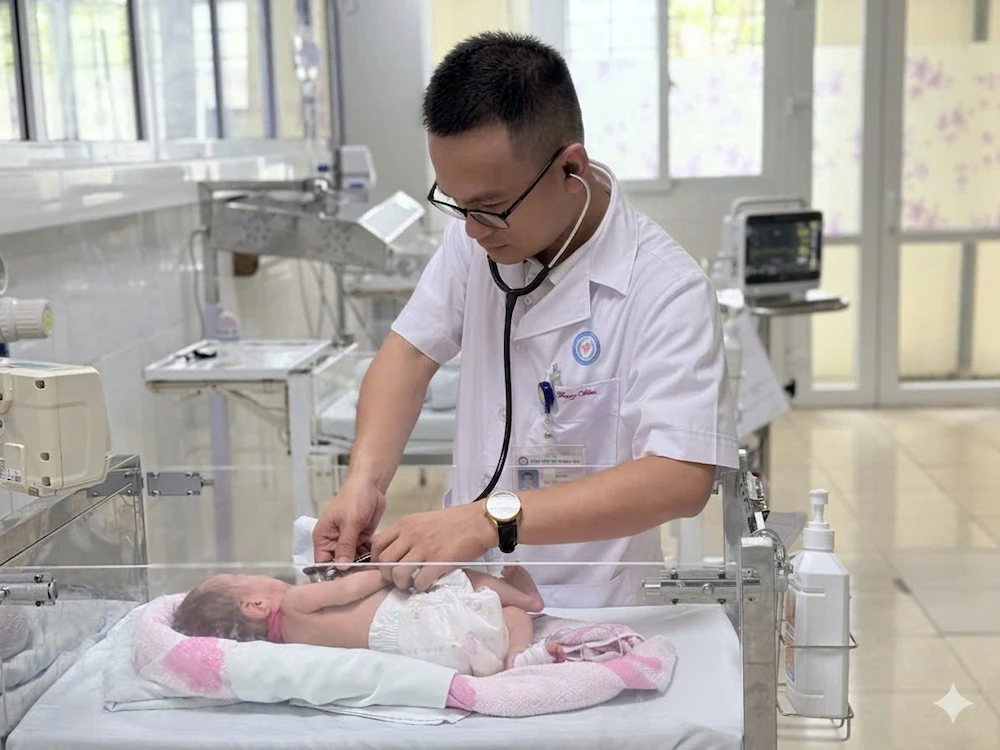
The doctor is monitoring the child's progress after surgery.
Dr. Nguyen Trung Nam, who directly performed the surgery, said that the child's ductus arteriosus was abnormally large, the lung tissue was edematous and very prone to bleeding, making the surgical process very difficult. Throughout the operation, the anesthesia and resuscitation team had to continuously adjust vasopressor medications, support respiration, and closely monitor vital signs to maintain the patient's heart rate. After the ductus arteriosus was successfully ligated, the child's hemodynamic status gradually improved, and blood oxygen levels increased - the first sign that life had been restored.
The post-operative period continued to be challenging. The child received intensive care, including high doses of vasopressors, and was closely monitored for the risk of sepsis and coagulation disorders. By the third day post-surgery, blood oxygen levels improved significantly; on the seventh day, the child was weaned off the ventilator, their skin regained its healthy color, and they opened their eyes to look at their mother for the first time after many days in a coma.
To Ha
Source: https://baothanhhoa.vn/gianh-su-song-cho-tre-so-sinh-mac-tim-bam-sinh-nguy-kich-288212.htm
![[Photo] Delegation attending the 14th Congress of the Vietnam Trade Union visits the Mausoleum of President Ho Chi Minh.](https://vphoto.vietnam.vn/thumb/1200x675/vietnam/resource/IMAGE/2026/06/03/1780451842301_ndo_br_img-3824-jpg.webp)
























































































Comment (0)