

Dr. Pham Thi Huong, a principal lecturer in the Athletics and Gymnastics Department at Hanoi University of Physical Education and Sports, believes that this policy is closely related to current vocational education and has positive impacts.
5 positive impacts
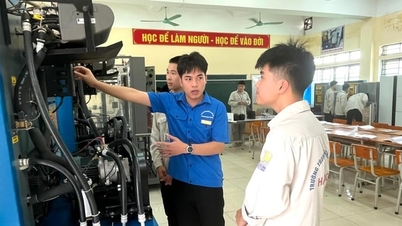
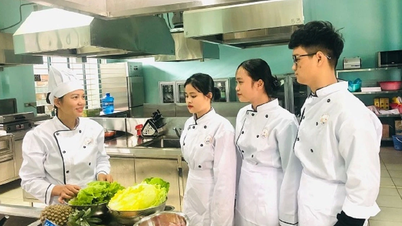
Firstly: The "veteran" model, where senior teachers act as mentors to help younger lecturers become more proficient in their skills, emphasizes that preserving the "secrets of life" of elite professions doesn't lie in textbooks. For specialized fields such as arts, crafts, and high technology, skills lie in the "hands" and "professional sensitivity."
Preventing knowledge transfer disruptions and ensuring a smooth transition creates a buffer period for the next generation to mature before their predecessors officially retire. According to Dr. Pham Thi Huong, extending their service time allows these masters more time to systematize and document complex techniques before transferring knowledge and retiring.
Secondly: Narrowing the "generational" gap in the direct transmission mechanism: Creating conditions for a continuous "hands-on" training model. Young people not only learn technical skills but also learn ethics and professional conduct from experienced and respected figures in the field.
Thirdly: Maintaining tradition or "passing on the torch of the profession." In specialized fields, the presence of experienced mentors serves as a source of inspiration, helping the younger generation feel more confident in their choices.
Fourth: Improve the quality of human resources through evidence-based training: Lessons learned from the hard-won experiences of seasoned experts are more valuable than any abstract theory.
Fifth: Strategic consulting. These educators act as "senior advisors" in evaluating training programs, ensuring that the school remains aligned with business practices.
Based on the issues mentioned above, Dr. Pham Thi Huong believes that the key point of Decree 93/2026/ND-CP is to shift from "retirement based on age" to "contribution based on ability," which is especially significant for industries where professional maturity often comes later. It's not simply about retaining people, but about "maximizing intellectual value" at the most mature stage of a professional's life.

4 key groups of mechanisms and conditions
To gain a deeper understanding, Dr. Pham Thi Huong emphasized the need to consider the challenges of implementing this policy in schools. Which specific sectors will benefit the most? How can we create a work environment that allows experts to maximize their strengths while staying? How can we balance retaining existing staff with creating opportunities for young educators?
However, extending the length of service also places demands on maintaining professional performance and the ability to adapt to educational innovations.
According to Dr. Pham Thi Huong, for the policy of extending the working time of highly qualified lecturers to be truly effective and practical, it is not only necessary to "retain people" but also to "utilize people" correctly.
Dr. Pham Thi Huong suggested four key mechanisms and conditions for maximizing the effectiveness of this policy in practice.
Group 1: Comprehensive periodic screening and evaluation mechanisms. Extension should not be the default but should be based on the actual competence and health of highly qualified lecturers.
Strict (mandatory) standards: Establish a set of KPIs for research (international publications) and training (supervising doctoral/master's students).
Health check: Ensure that instructors are physically fit to teach classes and conduct field trips and research.
Assessing adaptability: Measuring the ability to use digital technology and modern teaching methods.
Group 2: Innovating the work environment and resources.
Excellent lecturers need opportunities and tools to maintain their performance.
Key laboratories: Prioritize funding for research projects led by senior faculty members.
Research Assistants: Assigning a team of young faculty members to support administrative or technical tasks allows professors to focus on their specialized areas.
Reduce administrative workload: Minimize unnecessary meetings and prioritize time for strategic consulting and writing books and professional publications.
Group 3: Appropriate compensation and recognition.
Policies need to create clear moral and material incentives.
Salary and allowances: Ensure that income earned during extended service is higher than or at least equal to the level before retirement.
Permanent academic titles: Honorary titles such as "Honorary Professor" or "Senior Expert" to affirm social status.
Supplementary retirement fund: There are additional premium health insurance packages specifically for this group.
Group 4: Knowledge Transfer Mechanisms (Mentoring).
This is necessary to avoid the practice of "holding onto the best teachers," which hinders the development of the younger generation.
Mentoring criteria: Regulations stipulate that faculty members whose terms of service are extended must be responsible for training successors (Succession planning).
Advisory role: Instead of holding management positions, they should transition to roles such as expert advisors, scientific council members, etc.
The key to this policy's effectiveness lies in its ability to create synergy between the experience of those who came before and the youthful energy of the younger generation, rather than creating stagnation.
With 30 years of professional experience, including 20 years of direct classroom teaching and 10 years in management, Dr. Pham Thi Huong believes from a professional perspective that Decree 93/2026/ND-CP is not just an administrative document, but a crucial "anchor" to preserve the core values of the profession.
However, we also need to take the following issues into account:
1. What are the specific criteria for evaluating faculty members to be retained?
2. How should the budget be allocated for research by senior faculty members?
3. How can we avoid jeopardizing the career advancement opportunities of young lecturers?
4. Extending the length of service should not be implemented on a large scale, but should be based on the "voluntary" participation of teachers and the "actual needs" of educational institutions.
Source: https://giaoducthoidai.vn/giu-chan-doi-ngu-thay-nghe-nganh-dac-thu-post778673.html





























































































Comment (0)