

The soul of the village in memory and community
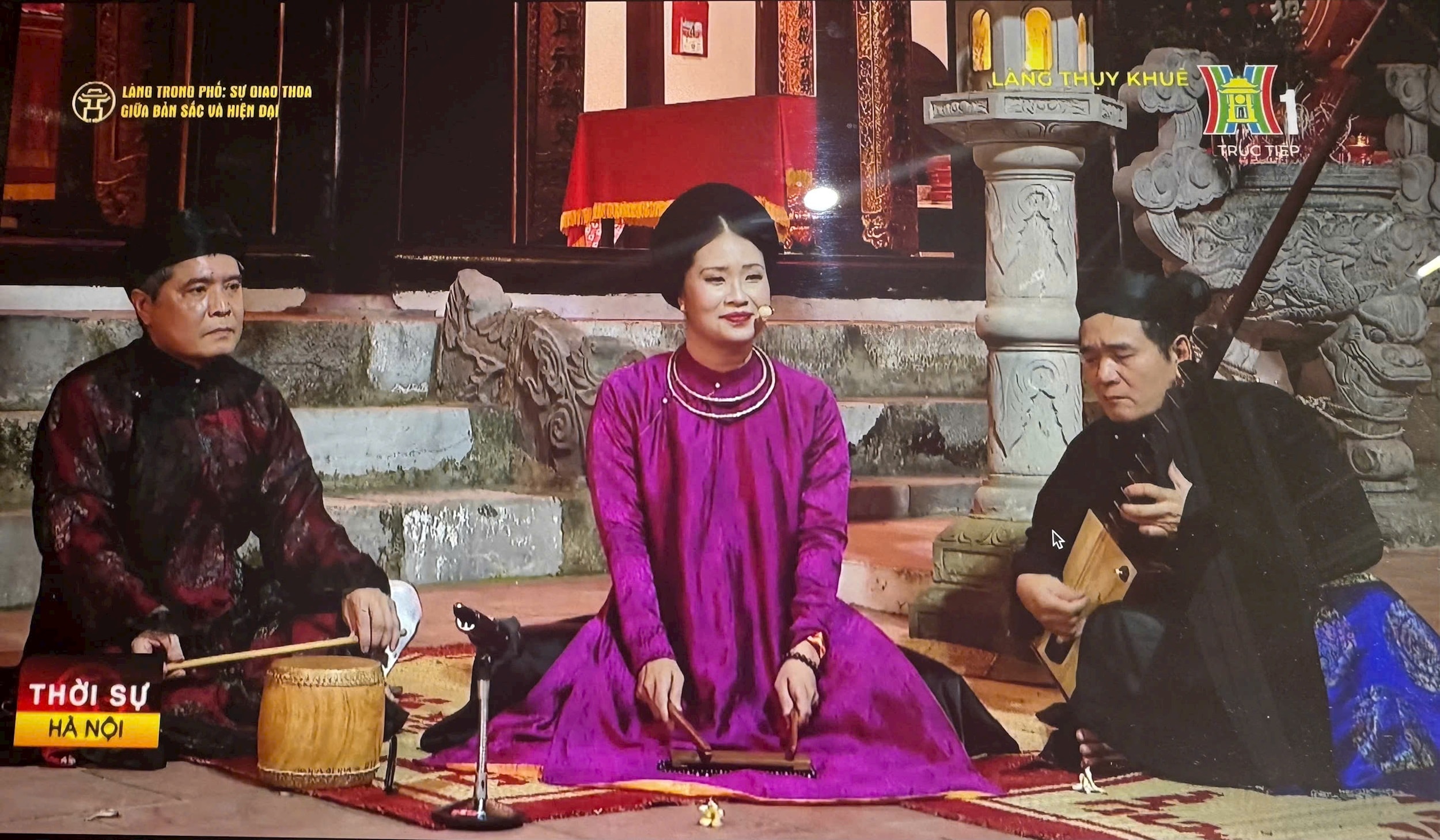
The evocative power of "village in the city" lies not only in the village gates, narrow alleys, or remnants of old spaces, but also in the profound sense of belonging felt by those living within that very space. At the Thuy Khue location of the special news program broadcast by the Hanoi Press and Broadcasting Agency on the evening of April 11th, themed "Village in the City: The Intersection of Identity and Modernity," this was evident through the ancient temple, the traditional folk singing performances, and the presence of the community today. In that space, memories of the old village were awakened not only through the songs, but also through the stories of the villagers.
For Meritorious Artist Nguyen Thuy Hoa, singing in the ancient communal house of her own village is a very different feeling compared to performing elsewhere. In that emotion, there are images of her grandmother, her parents, relatives, and neighbors; there are also smiles and hugs before the performance – simple things that evoke familiar memories of her village in the heart of the city.
From the perspective of grassroots cultural management, the Head of the Culture and Social Affairs Department of Tay Ho Ward, Chu Phung Le Giang, stated that the ward still has nearly 10 ancient villages, including familiar names such as Quang Ba, Yen Phu, Thuy Khue, and Ho Khau. Many village gates and small alleys remain on Thuy Khue Street. However, what is noteworthy is not just the physical form, but the soul of the village, preserved through neighborly affection, the close ties between residents, and the community.
Therefore, the "village within the city" in Hanoi is not just a nostalgic image. It is a cultural entity that still lives on in the memories and lifestyles of the community; it encompasses what is visible, such as village gates, narrow alleys, communal houses, and ancient temples, but more profoundly, it is the way of behaving, sharing, and sense of belonging among people living in the same area.
However, the pressures of urbanization are also posing clear challenges. Distinguished artisan Nguyen Thuy Hoa recalls childhood memories of the To Lich River and the clanging of trams as an unforgettable part of her old life. But what worries her more is the risk of community spirit fading as urbanization accelerates, new residential areas are formed, and more people move in from other places. In that case, the gap between the old and new residents can easily widen if there are no shared spaces for meeting and sharing.
Preserving the village through its living culture.

In practice, preserving "villages within the city" today cannot simply stop at preserving a few architectural relics or recalling old memories. More importantly, it is about ensuring that the values of the village continue to be present in contemporary life, becoming a connecting thread between people in a rapidly changing urban space.
In Thuy Khue, the Ca Tru performances are a vivid example. According to Meritorious Artist Nguyen Thuy Hoa, the Ca Tru performances that she and her colleagues preserve are not only venues for artistic performances, but also spaces for interaction, cultural bridges that help people get closer to each other, and foster neighborly feelings. The goal is not just for the public to come and listen and enjoy, but also to help people understand the heritage, love it more, and thereby feel more responsible for the cultural values of the place where they live.
Along with traditional folk singing (ca trù), village festivals and community cultural activities are also important pillars for keeping the spirit of the village alive amidst urbanization. As long as the community has common spaces to meet, participate, and share, the "village" will not only exist in name or memory, but will continue to live on in present life. It's also a way for those who have left their hometown to return, for old and new generations to connect more closely, and for the values that have nurtured the souls of many generations to remain uninterrupted.
Based on the experience in West Lake, this approach also opens up the possibility of promoting cultural values associated with sustainable tourism development. According to Ms. Chu Phung Le Giang, the area around West Lake still preserves many distinctive values of ancient villages, from the village gates and alleyways to the community lifestyle. Tourists come here not only to visit but also to experience traditional cultural values in a very unique space, such as enjoying traditional folk singing in the heart of the city or feeling the culture of West Lake lotus flowers - a part of Hanoi's cultural life, cuisine, and memories. In the future, the locality also plans to restore some distinctive cultural spaces, including the idea of restoring the "Eight Scenic Views of West Lake". However, along with promotion, the goal remains to preserve the core cultural "essence" of the ancient villages to create lasting appeal.
Hanoi needs to develop, but this cannot come at the cost of losing its identity. The "soul of the village" does not lie dormant in the past. As long as there are still vibrant cultural spaces in Hanoi's streets, as long as there are communities that preserve shared memories and reconnect with neighborly bonds through familiar practices, then the "village within the city" will remain – as a unique part of the capital's character.
Source: https://hanoimoi.vn/giu-hon-lang-trong-pho-744438.html
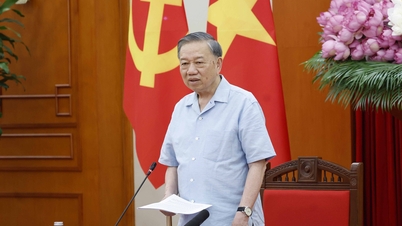
![[Photo] General Secretary and President To Lam presides over a meeting on preparations for the review of one year of operation of the three-tiered government system.](https://vphoto.vietnam.vn/thumb/1200x675/vietnam/resource/IMAGE/2026/06/02/1780391821195_a1-bnd-4595-9717-jpg.webp)























































Comment (0)