

In recent years, many villages in Lai Chau have begun to change thanks to the development of community tourism. From areas primarily focused on agriculture , many localities have gradually exploited their scenic advantages, culture, and local way of life to attract tourists. However, what creates Lai Chau's unique appeal lies not only in its mountains and highland climate but also in its cultural identity, which is still preserved quite intact in the lives of its communities.
Lai Chau is home to many ethnic groups such as the Mong, Dao, Thai, Ha Nhi, Lu, and Giay… Each community has its own language, clothing, festivals, and customs. According to information from the tourism sector, the locality currently has many intangible cultural heritage sites included in the national cultural heritage list, such as the Thai Xoe dance art, the Gau Tao festival of the Mong people, and the brocade weaving craft of the Lu ethnic group.
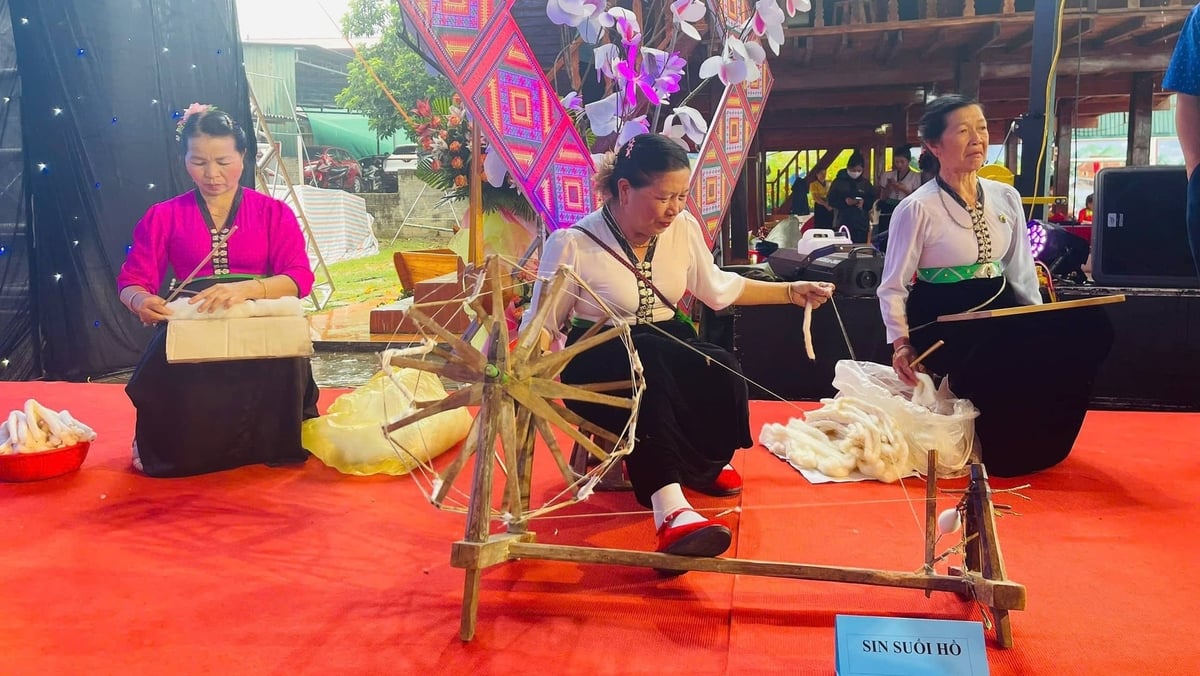
Artisans and villagers of Sin Suoi Ho demonstrate traditional spinning and weaving skills for tourists. Photo: TH
In many community-based tourism villages, people still maintain traditional houses, preserve weaving, make traditional musical instruments, and organize cultural activities on weekends or during festivals. These cultural spaces not only serve tourists but also remain closely connected to the daily lives of the highland people.
In Sin Suoi Ho village, many households participate in community tourism but still maintain the traditional architecture, customs, and hospitality of the Hmong people. According to locals, what tourists are most interested in today is not modern services but an authentic experience of local life.
Along with cultural preservation, many localities in Lai Chau also focus on preserving the environment and ecological landscape. Village roads and alleys are regularly cleaned. People reduce littering, plant more flowers, and improve their living spaces in a greener and cleaner way to serve tourism.
Ms. Do Thi Tuyen, Head of the Tourism Management Department of the Lai Chau Provincial Department of Culture, Sports and Tourism, said: “Linking cultural preservation with community tourism development is creating more livelihoods for people in the highlands. Many traditional crafts that were once at risk of disappearing are gradually being restored. Some localities have also incorporated the content of preserving ethnic culture into village regulations and community agreements to raise awareness of preserving local identity.”
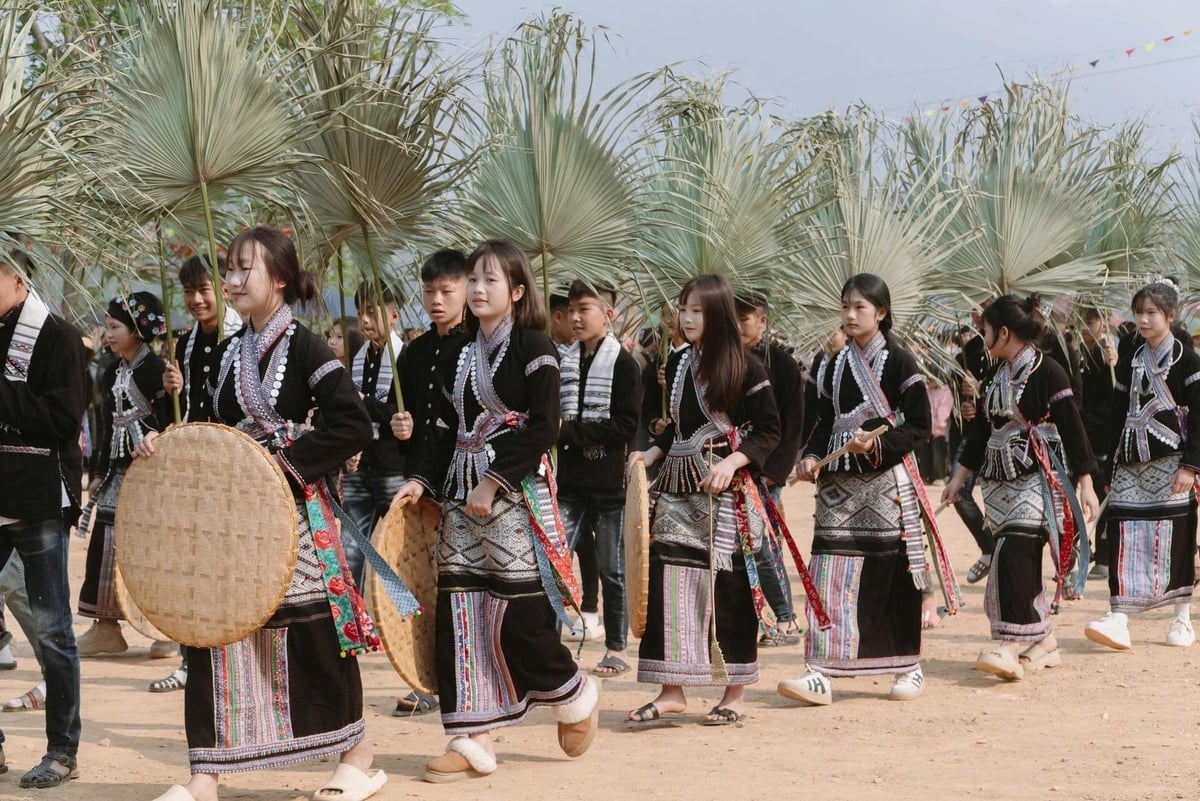
Young people in traditional costumes participate in cultural activities at the Bun Vốc Nặm festival in Lai Châu. Photo: TH
However, the development of community-based tourism still faces many challenges. Some areas lack tourism-related skills. Cultural preservation is uneven in some localities. Young people leaving for work elsewhere disrupts many community activities. Furthermore, the risk of commercialization of culture necessitates sustainable tourism development, avoiding a focus on superficial trends.
According to many opinions, in order to maintain its long-term appeal, community-based tourism in Lai Chau needs to place the local people at the center. The people are not only involved in tourism but also are the custodians of the culture. When the community truly sees the economic and spiritual value of their ethnic identity, preservation will become more sustainable.
Amidst the hustle and bustle of modern life, many villages in Lai Chau still preserve their traditional way of life, from the sound of the khene flute and the dances to the vibrant highland markets. This is not only a cultural asset of the ethnic people but also a foundation for the locality to develop green, accessible, and sustainable tourism in the future.
Source: https://nongnghiepmoitruong.vn/giu-hon-van-hoa-giua-dai-ngan-lai-chau-d811489.html
![[Photo] The heat at the fireworks display site on the opening night of the Da Nang International Fireworks Festival 2026](https://vphoto.vietnam.vn/thumb/1200x675/vietnam/resource/IMAGE/2026/05/27/1779889741485_ndo_br_z7872039145157-fecaba5112f39e8352544099d7ef4738-5140-jpg.webp)

![[Photo] The courage of new recruits of Brigade 144 on the training ground.](https://vphoto.vietnam.vn/thumb/1200x675/vietnam/resource/IMAGE/2026/05/27/1779881651341_anh-man-hinh-2026-05-27-luc-18-32-52.png)
















































![[Photo] The courage of new recruits of Brigade 144 on the training ground.](https://vphoto.vietnam.vn/thumb/402x226/vietnam/resource/IMAGE/2026/05/27/1779881651341_anh-man-hinh-2026-05-27-luc-18-32-52.png)






















Comment (0)