

In response to the need to repopulate livestock to serve the 2026 Lunar New Year market amidst the potential risk of disease outbreaks, reporters from Gia Lai Newspaper and Radio & Television had a discussion with Mr. Huynh Ngoc Diep, Head of the Livestock and Veterinary Sub-Department (Department of Agriculture and Environment), on this issue.
▪ Sir, the recent outbreak left devastating consequences. What is the most important lesson learned in the current fight against infectious diseases?
- The biggest lesson is that livestock farms must proactively implement comprehensive biosecurity measures, from selecting breeds, feed, drinking water, vaccination, sanitation and disinfection of barns, to controlling vehicles, people entering and exiting, and intermediate hosts such as flies, mosquitoes, cockroaches, dogs, and cats.
Livestock farmers need to proactively report outbreaks when they detect them so that the veterinary sector can promptly collect samples, isolate affected areas, and control the spread of disease. Along with this, it is necessary to strengthen communication and provide technical guidance to each household, raising awareness and ensuring compliance with the Livestock Law regarding livestock declarations. This is the basis for effective overall herd management and sustainable development.
▪ The demand for pork during the 2026 Lunar New Year is projected to increase significantly, but disease outbreaks remain a potential threat. How should restocking be carried out safely, sir?
- From the beginning of 2025 until now, African swine fever has occurred in all 34 provinces and cities; currently, 32 out of 34 provinces have not yet gone 21 days without a new outbreak. In Gia Lai , the disease broke out in 22 communes, resulting in the culling of over 1,100 pigs. Although most communes have basically brought the disease under control, the risk of recurrence remains very high.
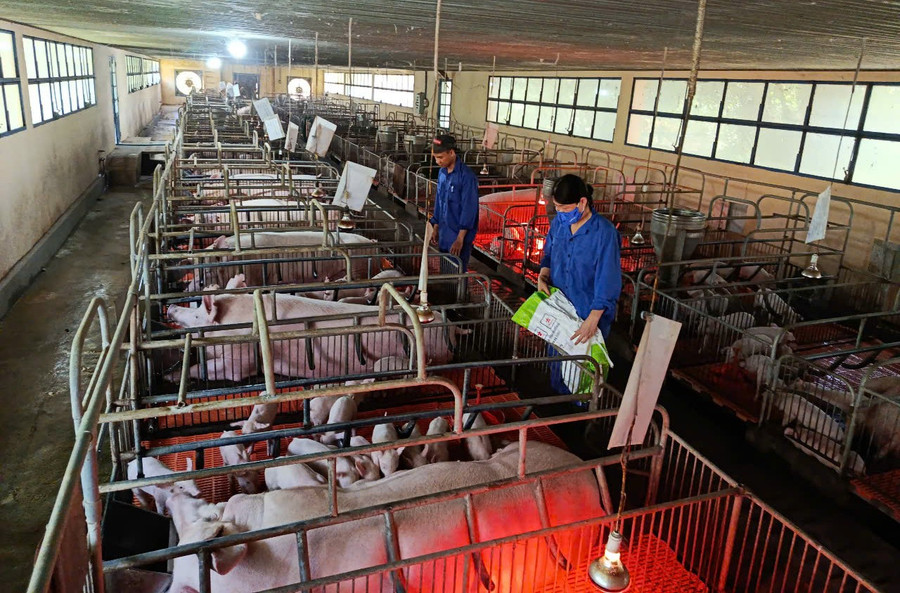
We advise farmers to exercise caution when restocking. In areas affected by the disease, barns must be left empty for at least 30 days, after which approximately 10% of the total herd should be raised on a trial basis.
If the herd remains healthy and tests negative after 30 days, then the entire herd can be restocked. Even in areas without outbreaks, farmers must still thoroughly clean their barns, import breeding stock from reputable, quarantined facilities, and ensure full vaccination against swine fever, foot-and-mouth disease, and porcine reproductive and respiratory syndrome (PRRS), etc. The pig herd must be monitored regularly, and any unusual signs must be reported immediately to the veterinary authorities.
In addition, the "all in, all out" principle should be applied, new flocks should be isolated for at least 21 days, separate equipment should be used for each flock, density should be managed appropriately, and nutrition should be supplemented to increase resistance.
▪ Sir, what policies does the relevant government agency or province have in place to support people in restoring production after the pandemic?
- We have advised the Department of Agriculture and Environment to submit a proposal to the Provincial People's Committee for support under Decree No. 116/2025/ND-CP on overcoming damage caused by animal diseases. At the same time, we have guided localities to complete the necessary documents so that people can receive support when the Provincial People's Council approves the resolution.
The sector is also stepping up propaganda and technical training on disease prevention and livestock restocking management in a biosafety-oriented manner, helping farmers feel secure in long-term production.
▪ To achieve the goal of sustainable livestock development, what key solutions does the province need, sir?
- The province focuses its development on three key livestock species: cattle, pigs, and chickens, aiming to increase production while ensuring food safety and protecting the environment. It encourages high-tech, environmentally friendly livestock farming, linking the value chain from production to consumption.
One new direction is to develop small-scale organic feed processing models for households and medium-sized farms, especially for local pigs and free-range chickens. At the same time, it is important to promote the application of waste treatment technology to produce organic fertilizers, fostering circular agriculture.
Disease surveillance has been strengthened, from developing epidemiological maps to controlling antibiotic use, ensuring full vaccination, and establishing disease-free zones. In addition, the province is developing a chain of distinctive products such as An Lao black pigs, Hoai An pigs, herbal chickens, and hill chickens to create brands and increase the value of the livestock industry.
▪ Given the prevalence of small-scale livestock farming, what precautions should people take to minimize the risk of disease outbreaks, especially during peak seasons?
- Small-scale livestock farming poses risks if not properly controlled. Farmers need to set up separate livestock areas from their living quarters, with fences and multiple layers of netting. Breeding stock must be purchased from reputable sources; barns must be cleaned and disinfected regularly, and access to outsiders should be restricted.
Feed must be of good quality, and leftover food must be cooked thoroughly. A "all in, all out" model should be applied, new animals should be isolated, vaccinations should be complete, and the condition of the herd should be closely monitored. When animals show abnormal symptoms such as fever, loss of appetite, or diarrhea, they should be immediately isolated and a veterinarian notified.
Small changes in awareness and daily actions will help livestock farmers, especially pig farmers, not only overcome disease outbreaks but also move towards sustainable, modern, and efficient livestock farming.
Thank you, sir!
Source: https://baogialai.com.vn/giu-nhip-tai-dan-heo-gan-voi-kiem-soat-dich-benh-post568057.html

![[Photo] Ba Lang An Lighthouse - the "eye of the sea" amidst the "rock museum" of Quang Ngai province.](https://vphoto.vietnam.vn/thumb/1200x675/vietnam/resource/IMAGE/2026/05/29/1780038698840_anh-man-hinh-2026-05-29-luc-14-10-42.png)
![[Image] Pleasant weather helps students enter the 10th grade entrance exam with confidence.](https://vphoto.vietnam.vn/thumb/1200x675/vietnam/resource/IMAGE/2026/05/29/1780034401612_ngay-1-thi-lop-10-minh-duy-8-5009-jpg.webp)
















































































Comment (0)