

Each bank has its own "green standards".

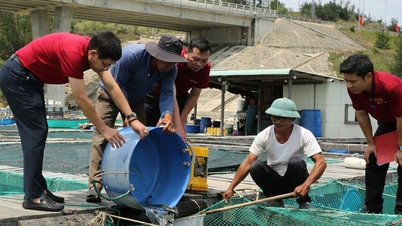
According to expert Nguyen Quang Huy, the biggest obstacle is the traditional approach to credit assessment. Most credit institutions still rely on real estate as collateral. Meanwhile, the agricultural sector is characterized by factories and land leased on an annual basis, a type of asset that banks are often hesitant to use compared to land leased for 30-50 years.
In addition, the scale of credit is still small and fragmented. Farmers and cooperatives in remote and rural areas still have an "invisible fear" of digital transformation (reluctance to embrace technology, reluctance to change).
Experts believe that, in the context of climate change and global supply chain disruptions due to geopolitical conflicts, green agriculture and digital agriculture are vital for Vietnam to assert its position as a global hub for sustainable agricultural product supply.
In terms of policy, the Government has issued Decision No. 21/2025/QD-TTg stipulating environmental criteria and the certification of investment projects classified as green, but the implementation of green credit in agriculture still lacks uniformity because each bank has different "green standards," causing difficulties in accessing capital for businesses.
Notably, expert Nguyen Quang Huy argues that Vietnam lacks a synchronized ecosystem and is still "patchwork." Specifically, there is a lack of standardized data and transparency, undermining the foundation for smart credit; endogenous capacity remains weak, with businesses lacking standards in environmental, social, and governance (ESG), cooperatives lacking management capacity, and farmers lacking digital skills, hindering access to credit in general, and green credit in particular.
By the end of 2025, the total outstanding debt of the entire economy is expected to reach over 18 trillion VND, of which the agricultural sector will account for more than 4 trillion VND. However, the proportion of green credit remains low. The total green credit in 2025 is projected to be 780,000 - 850,000 billion VND, with the agricultural sector accounting for only about 4 - 5% of that amount.
Applying funding based on cash flow and data.
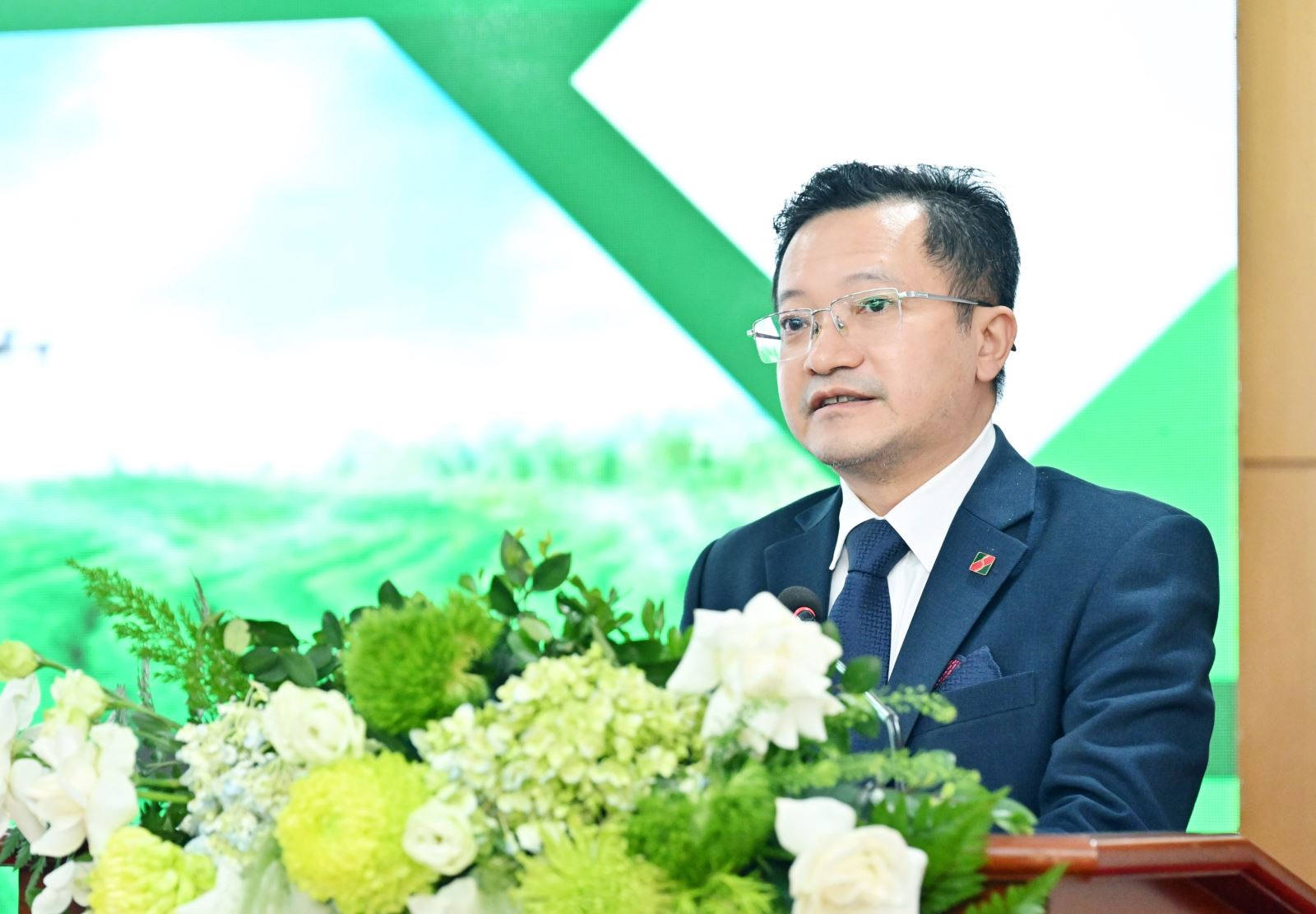
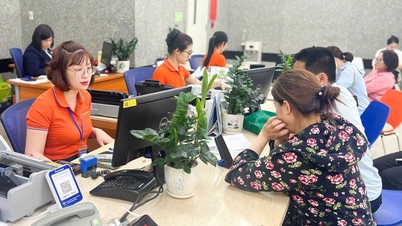
From a banking perspective, Nguyen Quang Ngoc, Deputy Head of the Credit Policy Department of Agribank, shared that Agribank's current outstanding loans to agriculture and rural areas amount to 1.26 trillion VND, accounting for approximately 64% of its total outstanding loans.
“Agribank is currently serving approximately 2.7 million loan customers, of which over 90% are individual customers in rural areas. Green credit has been implemented, but there is currently no sufficiently strong mechanism to encourage the transition. People still prioritize low-cost, short-term options, and sustainable production models have not yet been widely adopted,” said Mr. Nguyen Quang Ngoc.

Based on practical experience in mobilizing green capital, Nguyen Anh Tuan, Chief Financial Officer of PAN Group Joint Stock Company, confirmed that this is "not simple at all." This is because the requirements of credit institutions and financial organizations in the market are "relatively numerous," such as requiring businesses to meet ESG standards; and requiring periodic reporting, assessment, and measurement of the impact of green capital.
This requires businesses receiving the funding to have a well-structured information management system and sufficient capacity to provide reliable data. Meanwhile, the cost of accessing green funding is often higher than conventional funding.
Some experts argue that credit must be one step ahead, directing capital flows into new farming models instead of traditional methods. To promote credit for digital and green agriculture, financial expert Nguyen Quang Huy proposes a comprehensive restructuring of the agricultural ecosystem, shifting from individual funding to directing capital flows along the value chain. In this process, the linkages between the State, banks, businesses, cooperatives, and farmers must be strengthened based on digital data infrastructure. Specifically, smart credit should be implemented, providing funding based on cash flow and data.
"Although it is very difficult, we must act decisively, avoiding the traditional mindset of relying on collateral," Mr. Nguyen Quang Huy proposed. Next, we need to build a digital ecosystem, coordinating comprehensively to build agricultural and environmental data, and traceability systems (big data); establish strategic transformation funds: a green agriculture fund and a digital transformation fund, entrusting commercial banks to implement them in order to optimize resources.
Furthermore, restructuring in production is necessary through land consolidation and large-scale model farms, thereby attracting major players in agriculture. Banks must be partners with businesses and cooperatives, deeply involved in the development of business strategies, management, and trade promotion; becoming advisors and companions to their clients. This is one of the proactive approaches to credit and proactive risk prevention; at the same time, it is necessary to mobilize international resources to participate in providing green finance and green credit for agriculture.
The State Bank of Vietnam needs to establish unified green standards; apply preferential policies on interest rates, refinancing, and credit limits for banks actively operating in this sector. Furthermore, according to Mr. Nguyen Quang Huy, it is necessary to research and develop a system of guarantee funds for green credit as well as insurance for green credit, because this is a very risky area for agriculture.

One of the biggest "bottlenecks" reported by businesses is the excessive reliance on real estate as collateral. According to Mr. Nguyen Van Long, Chairman of the Board of Directors and General Director of Nhat Long Joint Stock Company, most businesses operating in the agricultural sector are small-scale, fragmented production enterprises. When transitioning to an industrial scale, these businesses face legal challenges regarding land ownership.
A current reality is that most agricultural land is leased on an annual payment basis, rather than a lump-sum payment. This creates significant difficulties for banks during the appraisal process. "For large-scale investment projects, worth hundreds of billions of dong, but implemented on land leased on an annual payment basis, obtaining credit approval is extremely difficult," shared Mr. Nguyen Van Long.
To overcome this bottleneck, Mr. Nguyen Van Long suggested that banks need to boldly shift their mindset from "lending based on collateral" to "lending based on cash flow and the effectiveness of production plans." Accordingly, when the supply chain is transparent and technology is applied to trace the origin, this becomes the type of collateral with the highest level of trust.
Sharing the view that lending procedures need to be reformed to accelerate capital flow into the agricultural sector, Mr. Nguyen Quang Ngoc said that his unit is pioneering the flow of green capital with preferential credit packages worth 50,000 billion VND and the Project for 1 million hectares of high-quality rice in the Mekong Delta. Agribank currently holds the largest market share in agricultural credit with outstanding loans of 1.26 million billion VND.
However, according to Agribank, developing inclusive finance cannot be solely the responsibility of the banking sector. It requires the participation of the entire political system and businesses so that farmers are no longer excluded from the market and can proactively respond to market fluctuations. "The question should shift from how to enable people to borrow capital to how to enable them to use capital effectively, escape poverty, and achieve sustainable wealth," an Agribank representative emphasized.
According to Le Dinh Huy, Deputy General Director of Agribank Insurance Company (ABIC), to promote digital and green agriculture, credit policies need to clearly define the role of insurance as a "filter" and "support" with specific functions. For farmers, insurance is a "lifeline" helping them avoid debt traps after natural disasters and epidemics. For banks, insurance contracts can be seen as a form of "collateral based on trust," giving banks confidence in disbursing loans even when people lack traditional collateral.
More importantly, participating in insurance forces producers to comply with strict technical procedures, creating a foundation for green, clean, and sustainable production. However, the current agricultural insurance market is still limited. Mr. Le Dinh Huy suggested that Vietnam needs clearer guidance on the Law on Credit Institutions 2024, and instead of rigidly prohibiting it, it should encourage the integration of insurance into credit packages as a technical condition for capital safety.
The Deputy General Director of ABIC proposed that the State support 70-80% of insurance premiums for the first 5 years to build a habit among the people. Agreeing with this view, Mr. Nguyen Quang Ngoc stated that the agricultural sector is fraught with risks; without insurance, these risks would shift to both businesses and banks. Therefore, it is necessary to develop the habit and demand for purchasing insurance for agricultural assets.
In this overall context, agriculture, farmers, and rural areas continue to be identified as the backbone of the economy; at the same time, the transition to digital agriculture and green agriculture is an essential requirement to increase added value, ensure sustainable development, and adapt to climate change.
Source: https://baotintuc.vn/kinh-te/go-nut-that-cho-nong-nghiep-khat-von-xanh-20260430172122061.htm

![[Image] Hanoi's urban life under the challenge of a "scorching hot" environment](https://vphoto.vietnam.vn/thumb/1200x675/vietnam/resource/IMAGE/2026/05/25/1779706979265_nang-nong-t5-2026-minh-duy-7-4636-jpg.webp)

![[Image] Close-up view of the interchange connecting the two expressways and Long Thanh Airport.](https://vphoto.vietnam.vn/thumb/1200x675/vietnam/resource/IMAGE/2026/05/25/1779703378210_ndo_br_z7863716673926-224453a31600126cce10622af6290afd-4549-jpg.webp)
















































































Comment (0)