

Known as "naked clams" because they lack shells, these marine creatures grow faster than mussels and oysters, and have a short harvesting period.
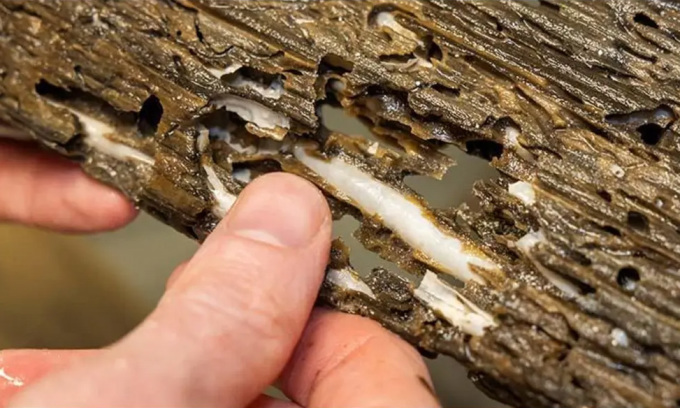
The barnacle is nestled inside a wooden plank. Photo: Plymouth University
A team of scientists at the University of Cambridge and Plymouth University in England are cultivating barnacles as an alternative food source to shrimp and fish, Interesting Engineering reported on April 9.
Barnacles, or wood-boring worms, are highly destructive. In their early stages, they are small, free-swimming organisms. Once they find a suitable habitat on wood, they develop into a new form and burrow themselves into the wood. Barnacles once caused problems for the explorer Christopher Columbus. During his voyage to the Caribbean, they weakened the ship's hull, threatening the safety of the crew.
Oysters have no shells. Therefore, researcher David Willer from the University of Cambridge and his colleague Reuben Shipway of the University of Plymouth likened them to "naked clams." Oysters don't expend energy developing shells. This allows them to grow faster than mussels and oysters – creatures that can take up to two years to reach harvestable size.
Cod, black cod, salmon, tuna, and shrimp account for 80% of seafood consumed in the UK. They are frequently caught using a harmful and unsustainable method called trawling. Scientists hope that barnacles will provide humans with benefits equivalent to a fish-rich diet, but in a more sustainable way.
Seabed trawling is a widely used industrial fishing method in which fishermen drag heavy nets along the seabed to catch fish. This method destroys the natural habitat on the seabed by churning it up and impacting all the plants and animals that live there.
"The great thing about barnacles is that they eat wood. Compared to animals like tuna, the natural environment isn't impacted by fishing," Willer said. The key to barnacle success is the symbiotic bacteria and fungi in their stomachs. These bacteria and fungi help metabolize the wood into various compounds including proteins, vitamin B12, and other essential micronutrients.
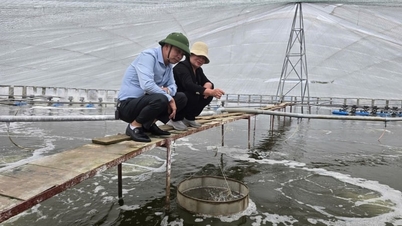
In 2023, the research team built the world's first oyster farming system in Plymouth, England. Upon receiving a patent for their invention, they will launch plans to scale up the operation in May.
Thu Thao (According to Interesting Engineering )
Source link































![[Photo] Reception to welcome General Secretary and President To Lam and his wife on their State visit to the Philippines](https://vphoto.vietnam.vn/thumb/1200x675/vietnam/resource/IMAGE/2026/06/01/1780295488620_vna-potal-chieu-dai-chao-mung-tong-bi-thu-chu-tich-nuoc-to-lam-va-phu-nhan-tham-cap-nha-nuoc-toi-philippines-8798060-7855-jpg.webp)



































































Comment (0)