

According to the Centennial Capital City Planning, underground space will no longer be developed as isolated structures but will become a continuous, integrated structure with existing urban centers, transport-oriented development (TOD) areas, and the urban rail network. The goal is to create an urban structure that operates vertically rather than just expanding horizontally, while forming major underground centers connected by a strategic tunnel system.
Underground space utilization is planned according to depth levels to ensure scientific accuracy and safety. Levels from 0-15 meters primarily serve the needs of the population and urban infrastructure such as pedestrian walkways, underground parking lots, technical pipeline systems, and supporting facilities for urban rail transit.
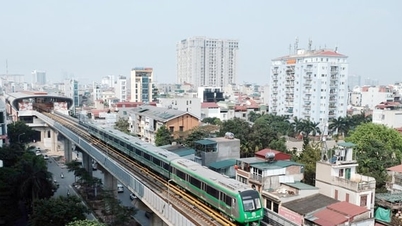
At depths of 15-30 meters, underground space is allocated for engineering and strategic structures such as deep-level urban railway lines, disaster prevention systems, energy and strategic material storage facilities, integrated technical trenches, and structures with special requirements for environmental and climate control.
Areas at depths of 30-50 meters are prioritized for core infrastructure, including large-scale groundwater reservoir systems, key technical infrastructure axes, and defense and security facilities. Areas deeper than 50 meters are designated as strictly protected resource reserves, not to be exploited within the current planning period.
Besides stratifying by depth, Hanoi also zones underground space development according to the characteristics of each area. Historical centers and areas with high building density are identified as the top priority areas for development due to space demands exceeding the capacity of surface areas. Meanwhile, new urban areas and expansion zones will have integrated underground space planning from the outset. Land is reserved for future urban rail systems and tunnels along transportation corridors.
Conversely, underground construction activities will be restricted or prohibited in historical sites, heritage areas, geologically weak regions, and areas protected for national defense and security purposes, in order to ensure the safety of the structures and preserve cultural values.
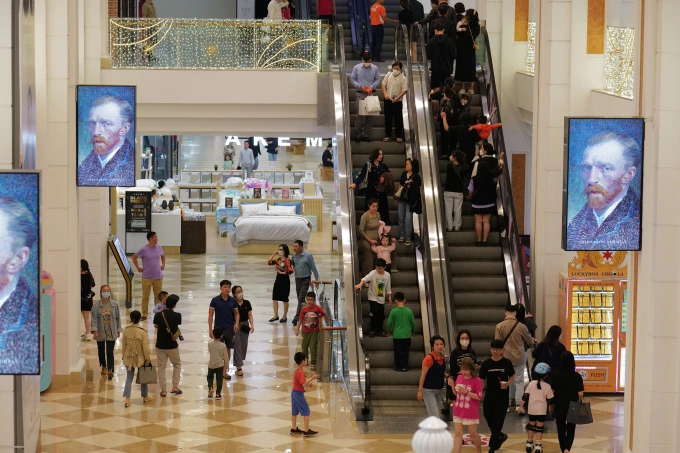
According to the development plan, the area south of the Red River focuses on developing underground transportation and large-scale parking lots, connecting functional areas with a system of technical tunnels. The area north of the Red River prioritizes the construction of underground transfer halls, underground commercial streets, and reserves space for cross-river tunnels to enhance inter-regional connectivity.
Long Biên and Gia Lâm are being developed with a smart underground space model, integrating technical infrastructure with data centers and urban management systems. This model is also being applied in sports and cultural urban areas. Meanwhile, in satellite cities such as Sơn Tây, Hòa Lạc, Xuân Mai, and Phú Xuyên, underground infrastructure focuses on serving parking lots, technical networks for high-tech zones, and high-performance computing facilities.
The implementation roadmap is divided into four phases. From 2026 to 2035, Hanoi will focus on completing the legal framework, management mechanisms, and overall planning for underground space development. In the 2035-2045 period, the city aims for the proportion of underground space construction in the central area to reach 20% or more of the urban built-up area, while strengthening connectivity between different levels of space both horizontally and vertically.
By 2045-2065, this rate is expected to increase to 35-40%, accompanied by the strong development of commercial, service, logistics functions and large-scale underground parking. After 2065, the focus will shift to managing, operating, and optimizing the system using digital technology, aiming to form a complete "second urban layer" underground, efficiently managed through modern technological platforms.
According to vnexpress.net
Source: https://baodongthap.vn/ha-noi-se-hinh-thanh-lop-do-thi-duoi-long-dat-a241395.html

![[Photo] Standing Committee member of the Party Central Committee Tran Cam Tu working with the Central Inspection Committee](https://vphoto.vietnam.vn/thumb/1200x675/vietnam/resource/IMAGE/2026/05/28/1779969579668_ndo_br_bnd-2495-jpg.webp)









































































Comment (0)