

"We've lived together but been like strangers for the past two years. Every time my husband initiates intimacy, it's always after he's drunk." The star recounts the story of a 34-year-old woman who confided in a psychologist about sleeping separately from her husband for two years, a situation that wasn't just about "lack of sex." What hurt her more was perhaps the feeling that she was no longer desired, no longer touched by true love.
Many marriage psychologists believe that prolonged physical distance doesn't naturally occur in a healthy relationship. It's often a manifestation of a pre-existing, underlying emotional distance.

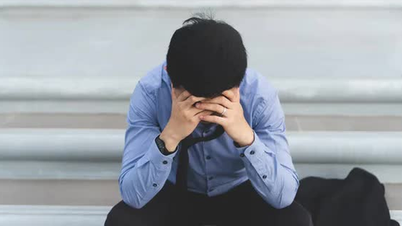
Illustrative image
When silence is more dangerous than arguing.
What's noteworthy about this story is that the husband didn't cheat, wasn't violent, and wasn't completely indifferent. He fulfilled his role as a "responsible" husband. But it's precisely this kind of "problematic" marriage that causes more pain for many women, because they don't know how to name that loneliness.
Many couples think that as long as there's no infidelity, no physical abuse, and they still live together, their marriage is fine. But in reality, intimacy isn't just about sex. It's also about caring glances, hugs, proactive closeness, and the feeling of being desired and connected.
When all of that disappears for too long, those involved can easily fall into the feeling that they are "just existing alongside each other" rather than truly being husband and wife.
A marriage therapist once said, "What makes a person the loneliest is not being alone, but lying next to someone and no longer feeling loved."
Why do many men avoid intimacy?
Avoiding intimacy doesn't always mean you've fallen out of love or are seeing someone else. Many men, especially introverted types who don't express their emotions much, tend to withdraw when faced with prolonged psychological pressure. Work stress, financial pressure, low self-esteem, hormonal issues, or even mild depression can all lead to decreased libido.
However, the worrying aspect in this case is that the husband only takes the initiative when drunk. Alcohol sometimes weakens psychological defenses, allowing temporarily repressed needs to surface. This suggests that he may not have completely lost his needs, but rather has some kind of emotional or psychological barrier when sober.
The problem is that if both remain silent, that gap will only widen.
Women often begin to doubt themselves.
What is noticeable in many women in this situation is that they begin to blame themselves.
"Am I no longer attractive?"
"What did I do wrong?"
"Or maybe you don't love me anymore?"
The less intimacy a woman experiences, the more likely she is to lose her sense of being loved and her feminine value. This directly impacts her self-esteem, mood, and mental health.
A woman who had experienced sleeping separately from her husband for many years shared: "The most painful feeling isn't the lack of sex, but the feeling that you're no longer needed by your man."
What's most needed right now is not to endure any more suffering.
Many people advise "trying to be patient," but prolonged tolerance often only makes both parties accustomed to distance.
What's important right now is a genuinely serious conversation, but one that isn't accusatory.
Instead of asking, "Do you still love me?" , perhaps it's better to be direct about your feelings of loneliness and hurt: "I miss the feeling of being close to you"; "I feel like we're drifting too far apart"; "I want to understand what's happening to you."
Many men remain silent not because they don't care, but because they don't know how to talk about their feelings or where to begin.
If the husband continues to avoid any conversation or this situation persists, the couple may need to consult a marriage counselor or urologist to assess both their psychological and physiological health.
Source: https://giadinh.suckhoedoisong.vn/hai-nam-ngu-rieng-chong-chi-gan-gui-khi-say-172260523153529109.htm

![[Video] Sunset at Lap An Lagoon – Where the sun sets over the fishing nets](https://vphoto.vietnam.vn/thumb/1200x675/vietnam/resource/IMAGE/2026/05/31/1780192137701_beach-landscape-sea-water-nature-grass-745871-pxhere-com.jpeg)

![[Image] A brilliant symphony and explosive power in the skies of Da Nang.](https://vphoto.vietnam.vn/thumb/1200x675/vietnam/resource/IMAGE/2026/05/31/1780193150738_anh-bia-copy-jpg.webp)











![[Video] Sunset at Lap An Lagoon – Where the sun sets over the fishing nets](https://vphoto.vietnam.vn/thumb/800x450/vietnam/resource/IMAGE/2026/05/31/1780192137701_beach-landscape-sea-water-nature-grass-745871-pxhere-com.jpeg)










































![[Video] Sunset at Lap An Lagoon – Where the sun sets over the fishing nets](https://vphoto.vietnam.vn/thumb/402x226/vietnam/resource/IMAGE/2026/05/31/1780192137701_beach-landscape-sea-water-nature-grass-745871-pxhere-com.jpeg)




























Comment (0)