

 |
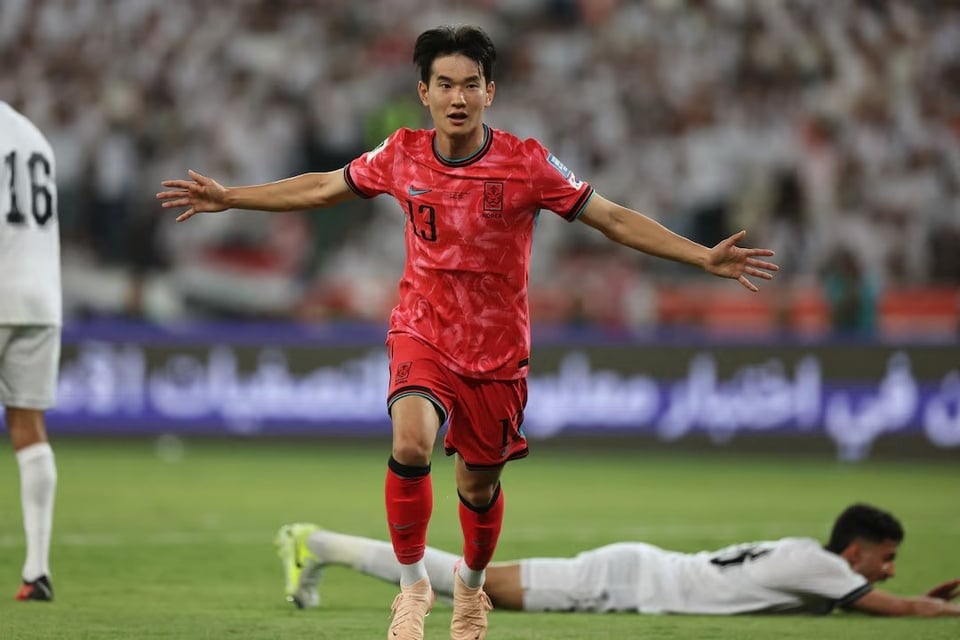
South Korea defeated Iraq in the World Cup qualifiers. |
More than two decades have passed, and the South Korean national team continues to be a regular presence on the world's biggest stage, producing many world-class stars and occasionally creating memorable upsets. However, the question remains: Has South Korea truly grown stronger after the 2002 World Cup, or is it still unable to escape the shadow of that infamous tournament?
From controversial phenomenon to top team in Asia
After the 2002 World Cup, the most positive achievement for South Korea was maintaining a stable position at the highest level of Asian football. Unlike many "one-season wonder teams," this team consistently participated in subsequent World Cups and regularly competed on equal footing with stronger opponents.
At the 2006 World Cup in Germany, South Korea were eliminated in the group stage, but they still left an impression of a physically strong and well-organized team. Four years later in South Africa, the Asian representatives reached the round of 16 before losing to Uruguay. That was the first time South Korea had advanced beyond the World Cup group stage without home advantage, thus partly proving that their 2002 success was not entirely based on home advantage or controversial decisions.
The 2014 World Cup in Brazil was a setback for South Korea, with their early elimination. However, they created one of the most memorable moments in Asian football history at the 2018 World Cup. In their final group stage match, South Korea defeated defending champions Germany 2-0 with disciplined play and sharp counter-attacks. Although still eliminated, that victory showed they were capable of making a difference against top teams.
At the 2022 World Cup in Qatar, South Korea continued their winning streak, advancing from the group stage after a dramatic victory against Portugal. Under the leadership of star player Son Heung-min, the South Korean team displayed a more modern style: speed, strong pressing, and a high fighting spirit. Despite losing to Brazil in the round of 16, reaching the knockout stage twice in five World Cups since 2002 is an achievement few Asian teams have accomplished.
More importantly, South Korea is no longer just known as the "controversial host nation." They boast many players who play in Europe, have a well-structured training system, and a sustainably developed professional football scene. Compared to 2002, the image of South Korean football has clearly matured significantly.
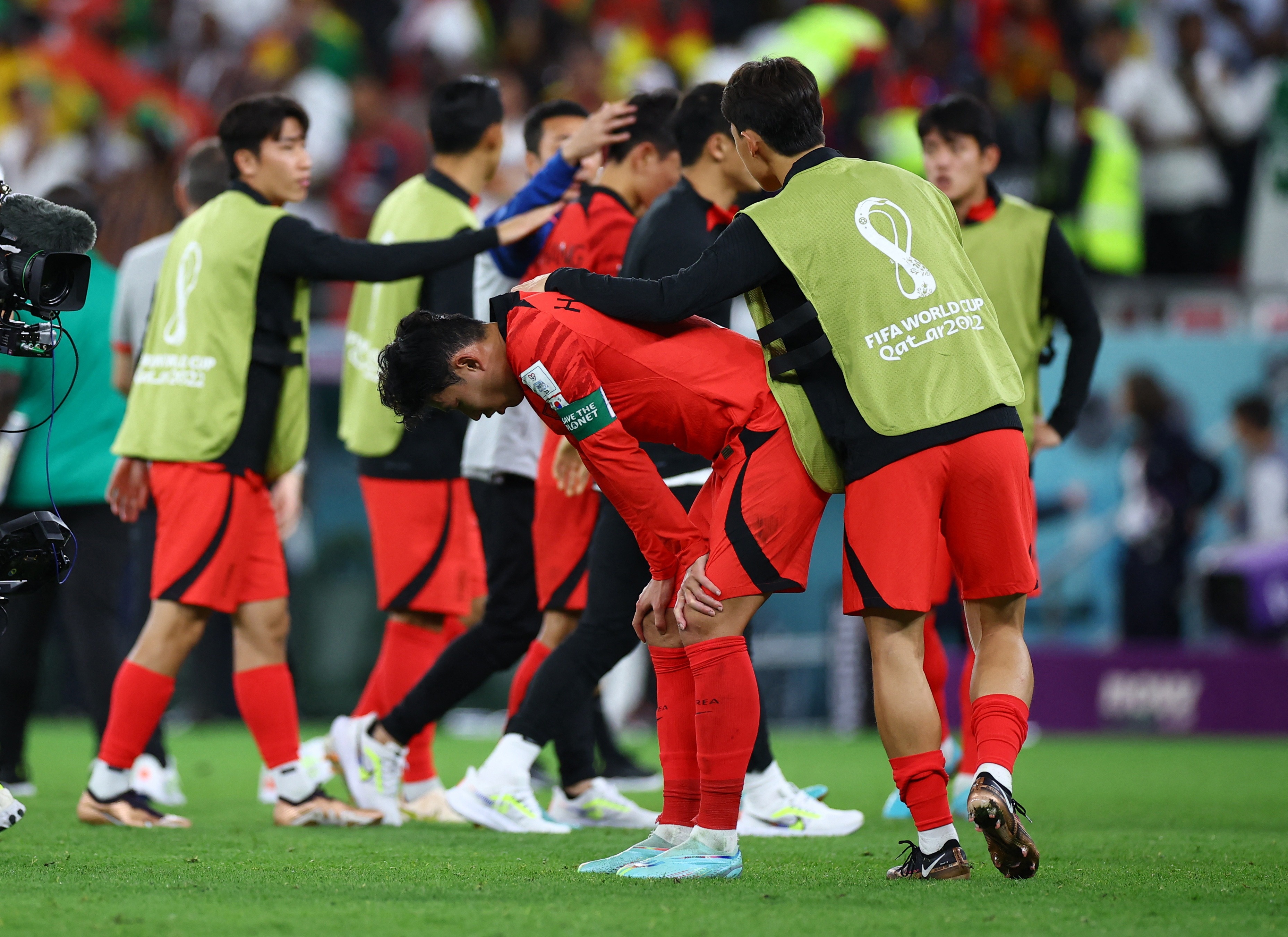 |
South Korea defeated Portugal at the 2022 World Cup. |
But the shadow of 2002 has not yet disappeared.
However, South Korea has yet to completely escape the painful memories of the 2002 World Cup. The biggest reason is that they have yet to repeat the semi-final feat in over 20 years.
In reality, the gap between South Korea and the football powerhouses remains quite large. Whenever they face top teams in the knockout rounds, the Asian representatives often reveal limitations in technical skill and squad depth. The 1-4 defeat to Brazil in 2022 is a clear example of this difference.
Furthermore, the 2002 World Cup remains a very difficult "blemish" to erase in the eyes of international fans. The controversial decisions in the matches against Italy and Spain are frequently brought up whenever South Korea creates surprises in major tournaments. For many, the journey to the semi-finals that year still feels unconvincing, despite the real progress that South Korean football has achieved since.
A paradox emerges: the 2002 World Cup is both the greatest source of pride and the biggest shadow cast over South Korean football. It propelled them into the spotlight, but also cast doubt on all subsequent successes.
However, to be fair, South Korea has proven they are not a passing phenomenon. Maintaining competitiveness throughout multiple World Cups, producing world-class stars, and consistently ranking among the strongest teams in Asia shows they have truly grown since 2002.
However, to be fully recognized, South Korea probably still needs another World Cup that is both successful and free of controversy, so that the world remembers them for their football, rather than for the refereeing controversies of the past. If they advance from the group stage against Mexico, South Africa, and the Czech Republic, the South Korean team will have qualified twice in a row. Only then will South Korea truly demonstrate their growing strength.
Source: https://znews.vn/han-quoc-co-thuc-su-lon-hon-sau-world-cup-2002-tai-tieng-post1652066.html


![[Photo] Secretary of the National Assembly Party Committee, Chairman of the National Assembly presides over the meeting of the Standing Committee and Executive Committee of the National Assembly Party Committee.](https://vphoto.vietnam.vn/thumb/1200x675/vietnam/resource/IMAGE/2026/06/03/1780480353201_ndo_br_bnd-2585-jpg.webp)

![[Photo] First session of the 14th Congress of the Vietnam Trade Union](https://vphoto.vietnam.vn/thumb/1200x675/vietnam/resource/IMAGE/2026/06/03/1780465947883_ndo_br_img-3852-jpg.webp)
![[Photo] General Secretary and President To Lam presides over a meeting with the Central Organizing Committee.](https://vphoto.vietnam.vn/thumb/1200x675/vietnam/resource/IMAGE/2026/06/03/1780482764658_a1-bnd-4741-3342-jpg.webp)





































![[Video] Sunset at Lap An Lagoon – Where the sun sets over the fishing nets](https://vphoto.vietnam.vn/thumb/1200x675/vietnam/resource/IMAGE/2026/05/31/1780192137701_beach-landscape-sea-water-nature-grass-745871-pxhere-com.jpeg)





































Comment (0)