

Fountains connected to shallow pools and channels that draw water from springs or underground aquifers provide an abundant water supply for the people of Nepal.
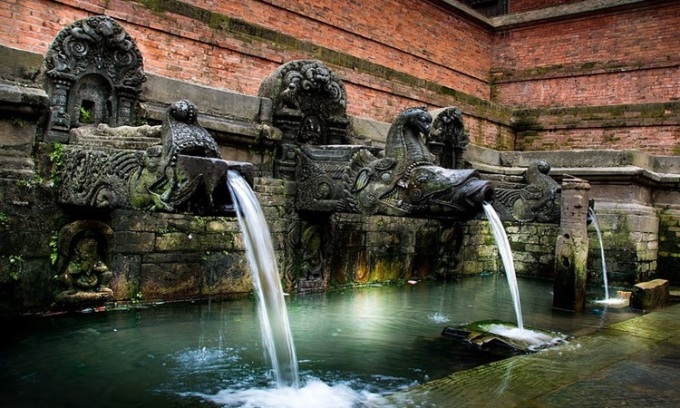
The fountains at Manga Hiti, Patan. Photo: Wikimedia
Nepal, situated between India and Tibet, boasts an abundant drinking water supply system dating back at least to the 5th century. One of its most impressive features is its elaborate stone fountains called dhunge dhara or hiti, which resemble the sea monster makara from Hindu mythology. While dhunge dhara may not be as grand as the aqueducts of ancient Rome, the ingenious technology used to deliver water to the fountains is equally impressive, according to Interesting Engineering .
Dhunge dhara first appeared during the Licchavi kingdom (400-750 AD). Some scholars suggest that a similar system may have existed earlier, and the Licchavi people simply organized and gave aesthetic form to the existing structures. In Nepalese culture, offering water to the gods is considered a commendable act. Therefore, both kings and communities in the past built dhunge dhara in the region.
The Manga Hiti fountain in Patan, built in 570 AD, is believed to be the oldest functioning dhunge dhara. Over time, more and more similar fountains began to spring up throughout the Kathmandu Valley. The Malla period (1201–1779) saw the development of fountain systems.
The primary water source for dhunge dhara is a network of channels drawing water from mountain streams. Others draw from underground aquifers. Dhunge dhara that utilize underground sources are typically built on shallow basins, their depth determined by the groundwater level. These basins are constructed of stone and brick with spouts protruding from the walls. While most basins have only one spout, many fountains have two, three, five, nine, or even more, such as the Muktidhara in Mustang district with 108 spouts. A small shrine dedicated to a particular deity sits atop each spout. Excess water is collected in ponds or channeled to cultivated fields for irrigation.
In the late 17th century, before the widespread use of water pipes, fountains were an important source of drinking water. Although their importance has gradually diminished since then, dhunge dhara remain operational, serving approximately 10% of the population in the Kathmandu Valley. Even today, dhunge dhara are an integral part of daily life for many residents. They use them for bathing and washing clothes. They are also used for religious rituals such as cleaning statues of deities.
An Khang (According to Amusing Planet )
Source link
![[Image] National Assembly discusses the implementation of the socio-economic development plan.](https://vphoto.vietnam.vn/thumb/1200x675/vietnam/resource/IMAGE/2026/04/20/1776696707422_ndo_br_img-20260420-185419-jpg.webp)
![[Photo] General Secretary and President To Lam meets with National Assembly delegates from ethnic minorities.](https://vphoto.vietnam.vn/thumb/1200x675/vietnam/resource/IMAGE/2026/04/20/1776696701056_a1-bnd-8331-3342-jpg.webp)














































































Comment (0)