

The Cai Rang floating market has seen a significant decrease in the number of traders (Photo: Bao Tran).
During a visit to the Cai Rang floating market, billionaire Joe Lewis, owner of Tottenham Hotspur Football Club, expressed interest in the unique characteristics of the waterways in the Southwestern region of Vietnam and raised several questions about the embankment system protecting the Can Tho riverbanks from erosion.
As the tour guide for the British billionaire, Mr. Nguyen Hong Hieu - CEO of Hieutour International Travel Company (Can Tho) - recounted: "The British billionaire asked if there was a way to make the concrete embankments more ecological. If the path from Ninh Kieu Wharf to the floating market were lined with rows of waterlogged trees characteristic of the Mekong Delta, the scenery would be amazing."
"That image will give visitors a clearer picture of Can Tho as an eco-city, with a very special traditional floating market in the heart of a developing city. This will delight tourists and make them want to return more often."
The desire to see the unique characteristics of the Mekong Delta's waterways at Cai Rang floating market is not only shared by the British billionaire, but by most tourists visiting the area.
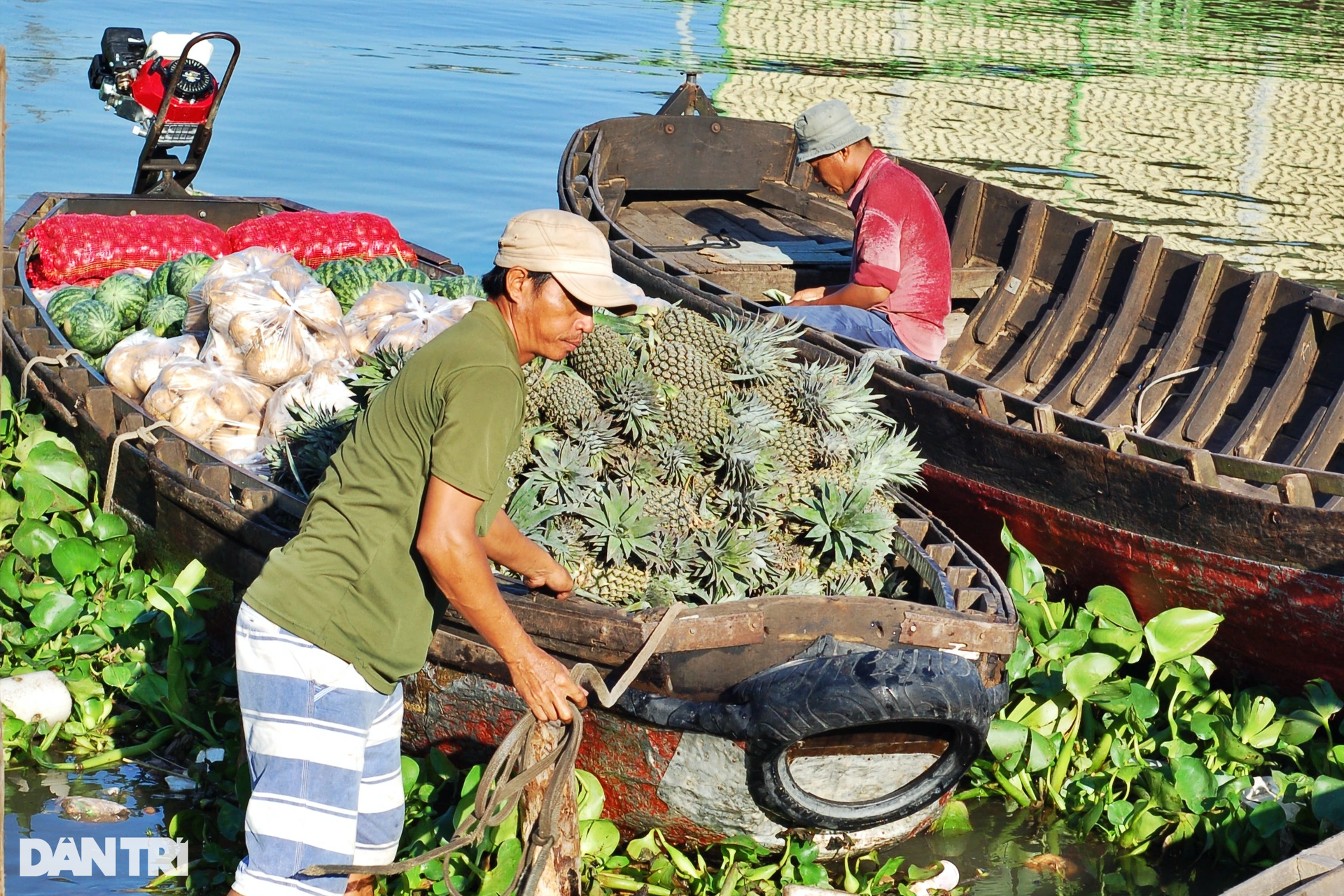
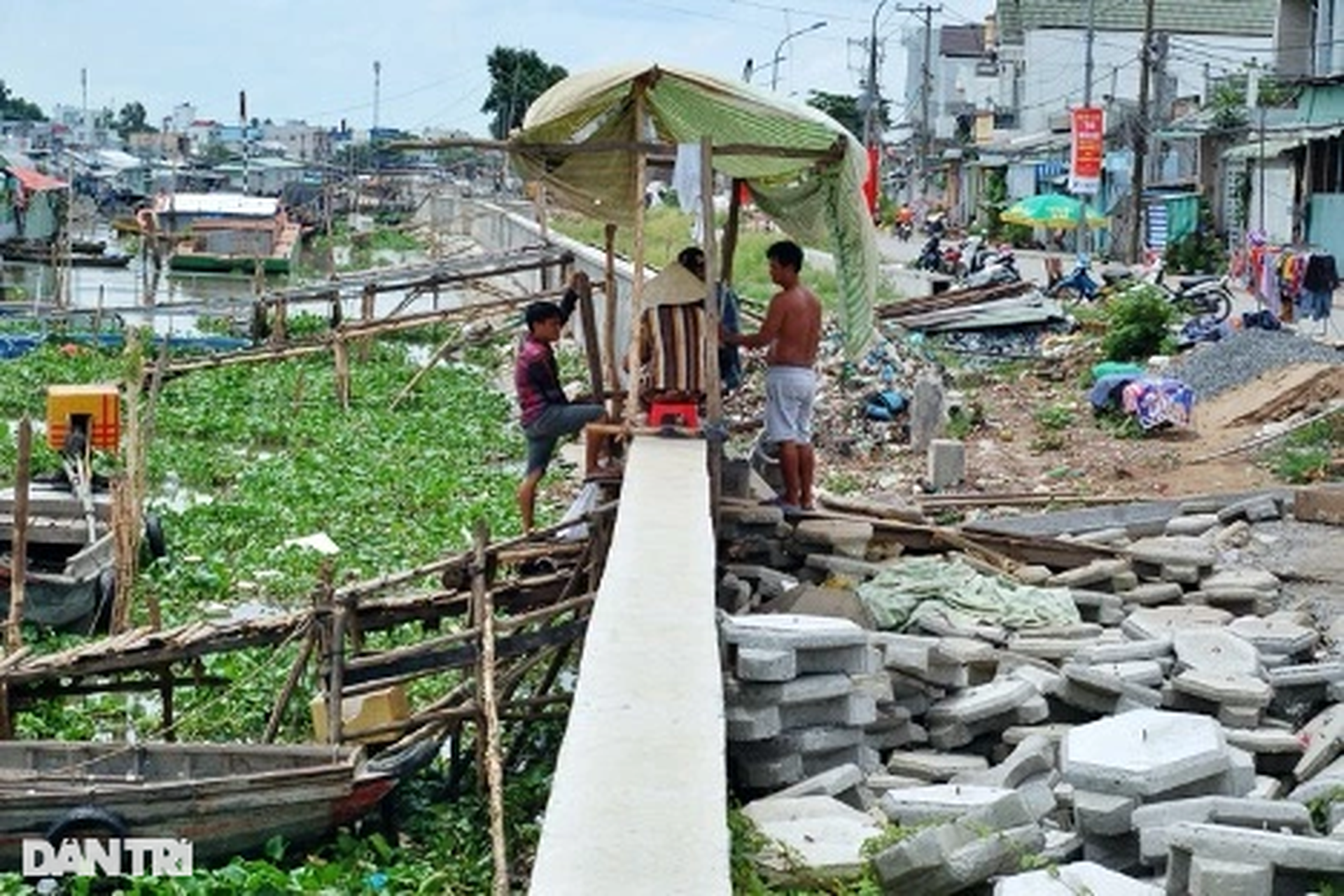
At Cai Rang floating market, one no longer sees the scene of boats and berths on the docks, but instead the sight of merchants struggling to load their goods onto concrete structures (Photo: Bao Tran).
As the number of tourists increases, more and more traders are leaving the floating market!
According to statistics from the local Department of Culture, Sports and Tourism, the number of visitors to Cai Rang floating market increases by 12-15% annually. On average, during peak periods, there are over 200 boat trips transporting tourists each day.
In contrast to the increasing number of tourists, the number of boats and ships used by traders on the floating market has been steadily decreasing. From 500-600 boats and ships decades ago with bustling trading activities, the floating market now only has 250-300 boats, a decrease of 50%-60%.
According to a report by the People's Committee of Cai Rang District, the primary reason for the decline in the attractiveness of the floating market is the lack of infrastructure that facilitates road trade, leading traders to move ashore to earn a living.
Furthermore, the impact of the Can Tho river embankment project has disrupted the original "on the dock, under the boat" structure of the floating market, causing traders to disperse. In this context, the "Conservation and Development of Cai Rang Floating Market" project is considered an urgent and important undertaking.
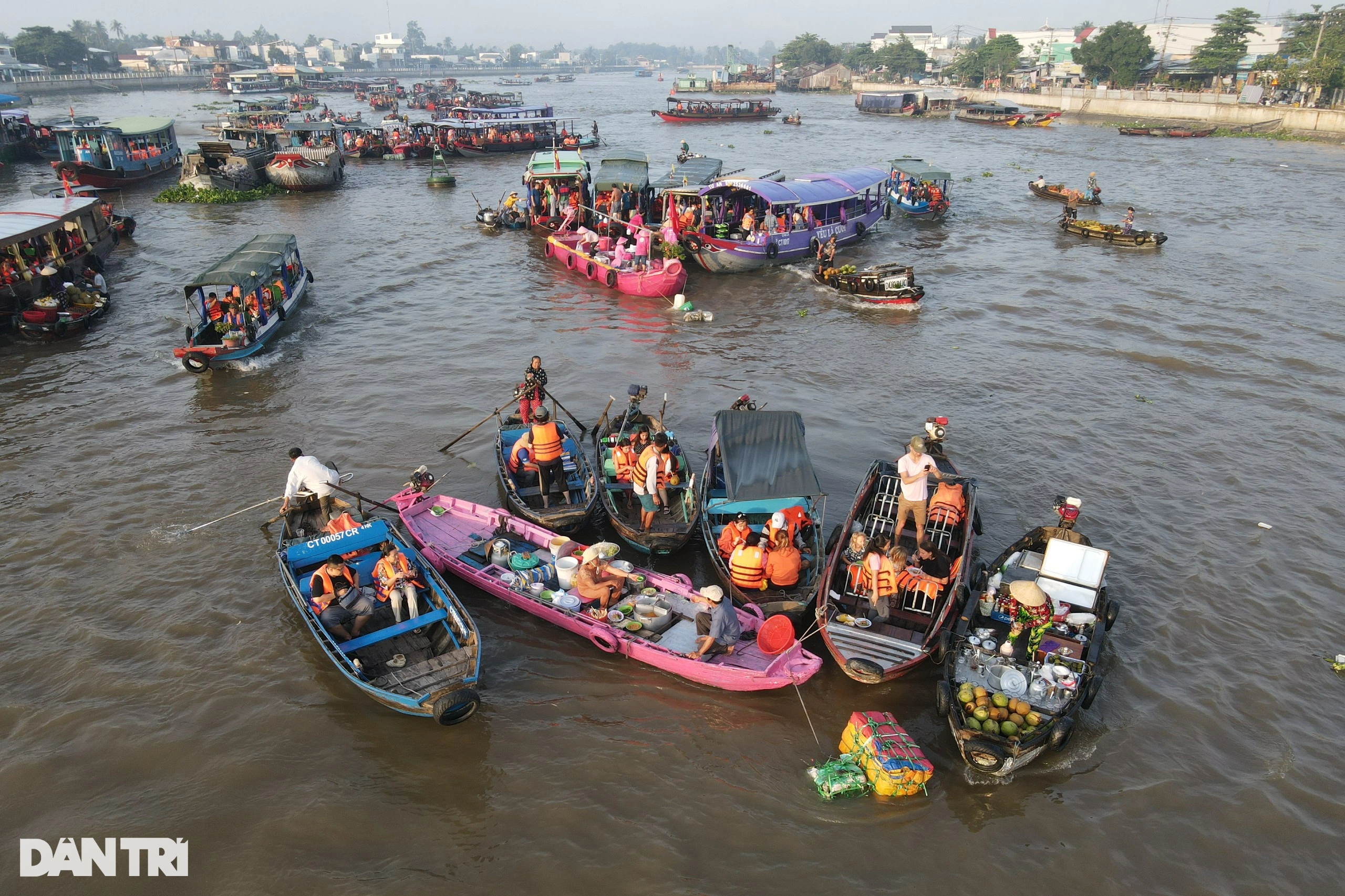
Boats and tourist vessels make up the majority of the vehicles operating on Cai Rang floating market (Photo: Bao Tran).
Over the course of its five-year implementation, the project has largely completed the preservation of the cultural values of Cai Rang floating market combined with tourism development. Specifically, this includes: providing loans to nearly 500 households for tourism development; investing over 35 billion VND in constructing floating market piers; relocating many floating rafts to safe mooring areas; arranging traffic flow to ensure safe waterway transportation; and conducting awareness campaigns to educate people about hygiene and safety at the floating market.
In addition, the People's Committee of Cai Rang district has recently invested in building some supporting infrastructure such as: renovating the electricity system on the river, calling on businesses to invest in rest stops and investing in boats selling souvenirs and local specialties.
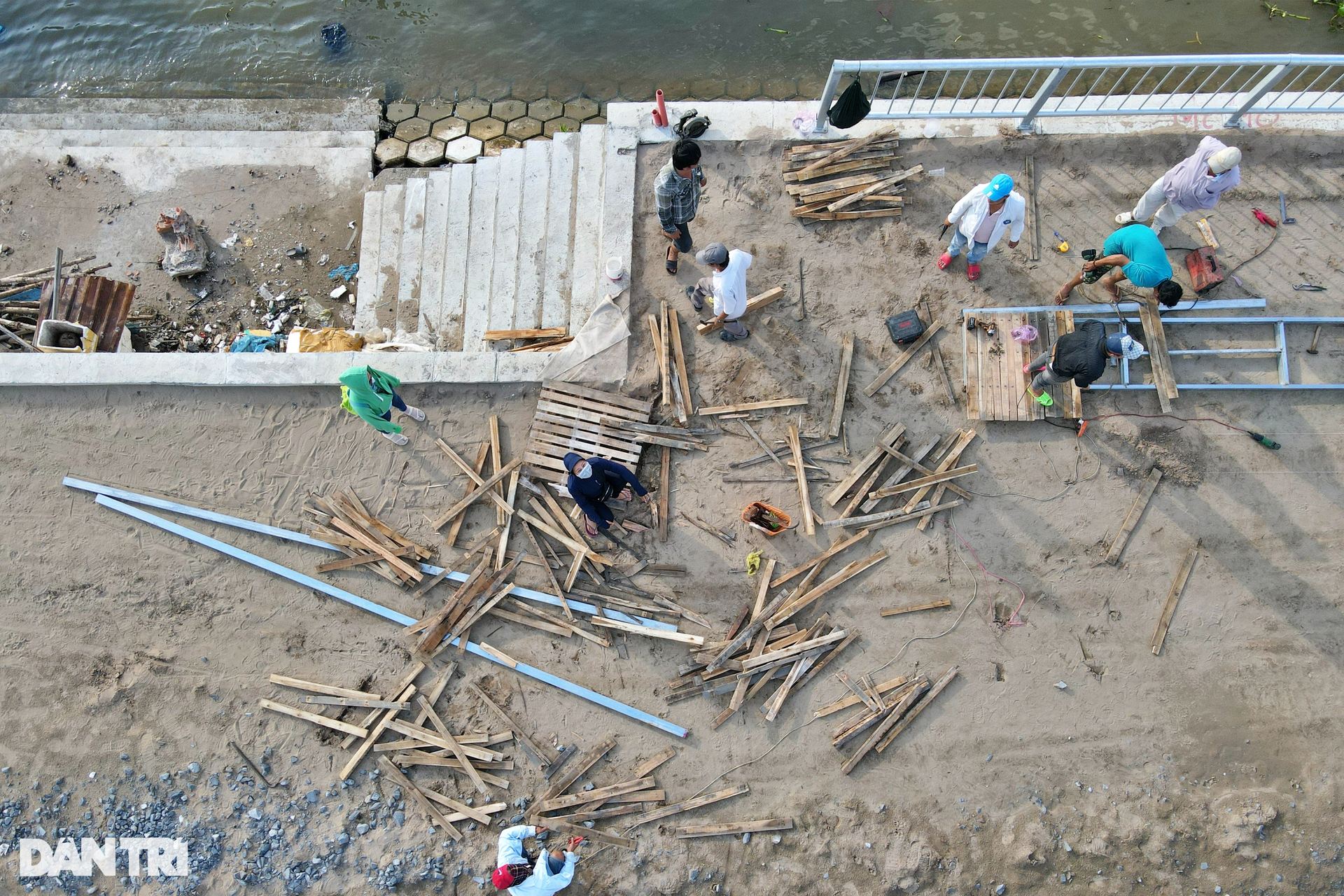
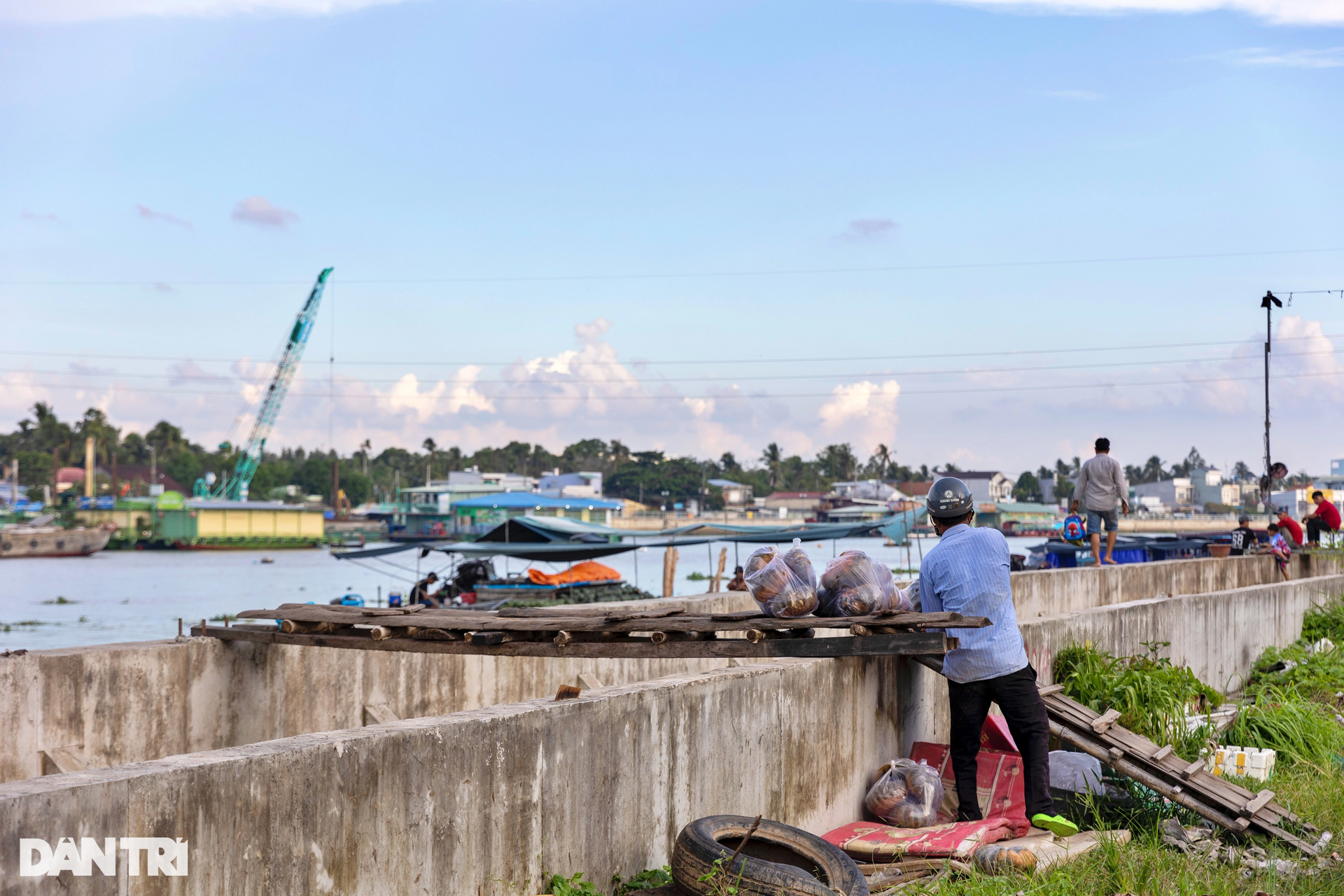
Merchants struggled to transport goods; the scene of "boats and docks everywhere" is no more (Photo: Bao Tran).
We need to shift from natural floating markets to artificially created floating markets.
Despite the modernized image of the floating market, the preservation of its cultural significance still faces many limitations. For example, there is a lack of authentic scenes of boats and ships on the docks, and the number of merchant boats is decreasing. Furthermore, locals have not yet developed the awareness to retain tourists for the long term.
According to our research, the majority of tourists visiting the floating market come from the tourist boat terminal in Ninh Kieu (Ninh Kieu district), while the rest come from unofficial terminals, tourist boat companies, and other sources, lacking strict management and control. This factor has led to a decline in the quality of tourism at the floating market.
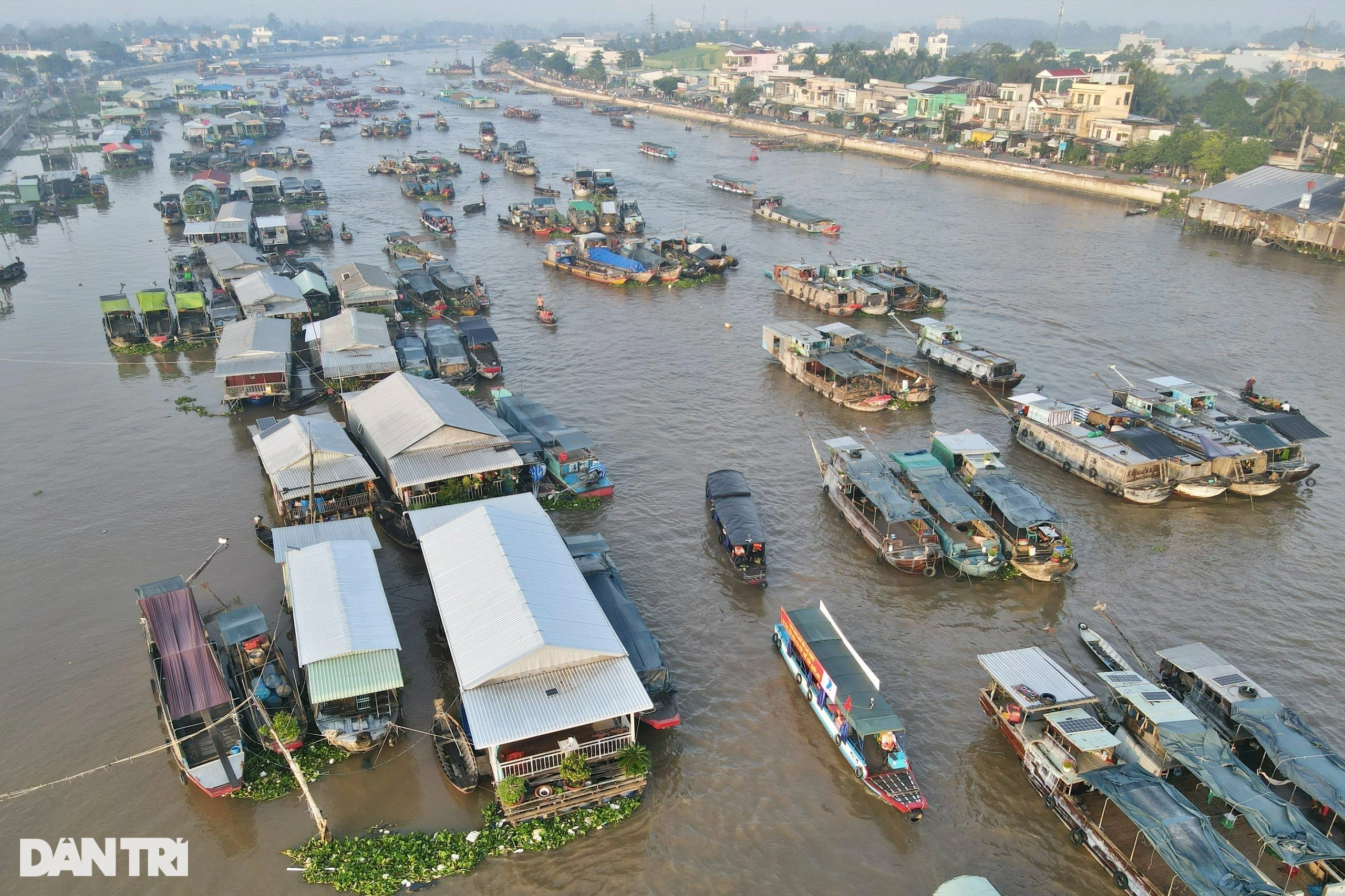
The current trading activities on the floating market are mostly geared towards tourists (Photo: Bao Tran).
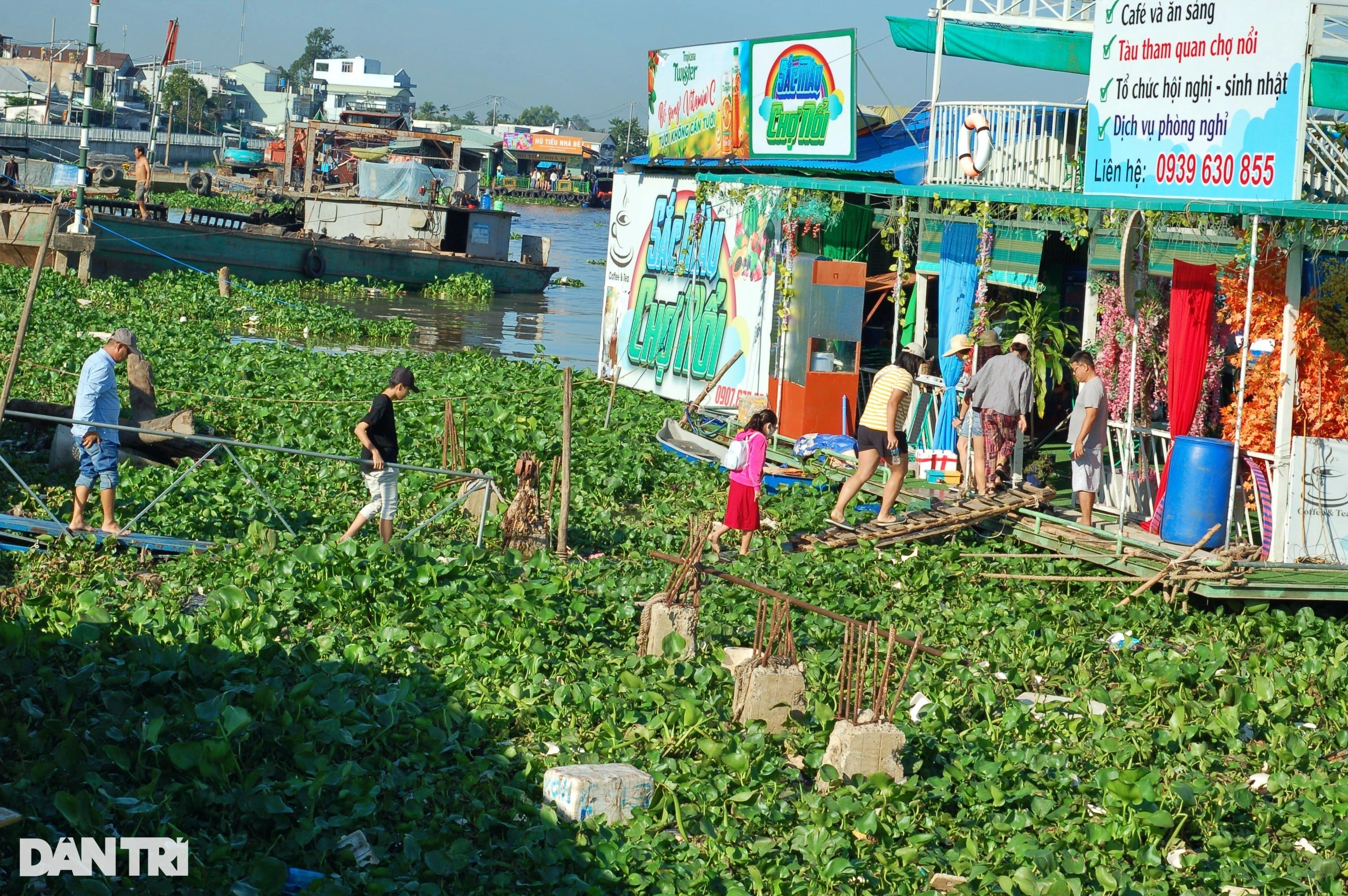
Tourists walk across a makeshift bridge to a floating raft (Photo: Bao Tran).
Ms. Dang Thi Kieu Trang (45 years old, residing in Ninh Thuan), a tourist visiting the floating market, said: "I saw reviews (guides) that said to go from the pier, but because I woke up late, a local recommended a private boat, saying they would take me wherever I wanted to go. However, the price of 200,000 VND per person per trip was quite high, so I haggled for a long time before finally getting it down to 150,000 VND per person."
According to Ms. Trang, Cai Rang floating market has changed a lot since her last visit in 2019. Currently, the floating market attracts more tourists, but the quality of tourism services is not well controlled.
"I'm still impressed with the floating market, even though it's different from many years ago. I think it would be more interesting if the market had more boats selling fruit like in the picture."
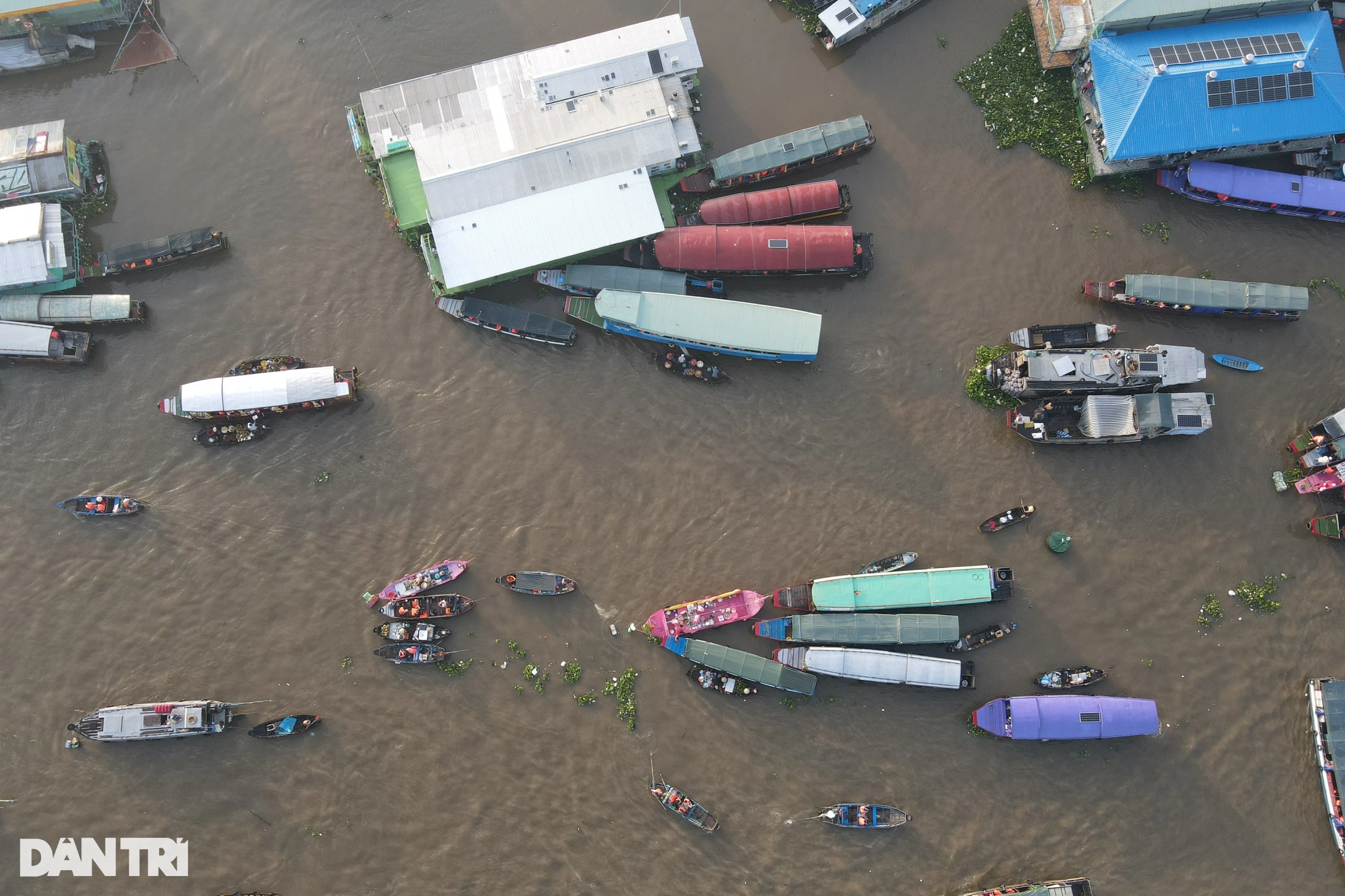
It's not just Ms. Trang; many tourists also believe that the floating market lacks merchant boats. Instead of seeing the bustling scene of buying and selling vegetables and fruits, tourists now see more boats and canoes selling food to tourists.
"It wasn't just about the culinary experience; I wanted to see how the people on the river wholesale their goods and agricultural products, whether they sold them cheaply, and if the food was good... But I didn't have many opportunities to experience those things because most of the boats here are food boats. I only saw a few boats selling watermelons and sweet potatoes, which is quite different from what I saw in pictures," shared Ms. Kim Lien (48 years old, residing in Thai Binh).
Cultural researcher Nham Hung observes that the original culture of Cai Rang floating market has faded. The image of merchants trading on the river, which created one of the characteristic riverine cultures of the area, with boats and docks everywhere, is no longer seen.
"Developing tourism doesn't mean losing existing cultural elements, but rather preserving the constituent elements of the old floating market culture, for example, maintaining the relationships between merchants. Merchants are the main actors in the floating market culture, and we need to create conditions for them to stay at the market to keep the scene of boats and docks vibrant."
According to researcher Nham Hung, many activities on the floating market need to be reformed. The immediate priority is to satisfy tourists, and the next step is to retain traders. Most importantly, the erosion control embankment should be transformed into an embankment serving the floating market.
Mr. Hung shared that conservationists need to understand the relationships within the floating market. First, there are the relationships between traders, and then between service providers and tourists.
"Previously, the structure of a floating market consisted of merchants and farmers; farmers brought their products to sell, and merchants bought them and then resold them elsewhere. The demand for agricultural products came first, and gradually other services emerged. Those who sold goods and food in the past mainly served the merchants," researcher Nham Hung explained.

Cultural researcher Nham Hung (Photo: Bao Tran).
We need "social intervention".
Researcher Nham Hung also pointed out many advantages proving that Cai Rang is one of the largest and most conveniently located floating markets in the Mekong Delta region.
"The advantage of Vietnamese floating markets is that they operate on natural rivers and feature natural scenery, while Thai floating markets operate on canals and have a staged element. Their floating markets are located about 50km from the city center, while Cai Rang floating market is right in the heart of the city, amidst orchards," Mr. Hung analyzed the advantages of Cai Rang floating market.
According to Mr. Nham Hung, Cai Rang floating market already has a prominent position on the world tourism map. However, for the product to develop to a national level in the long term, it needs the participation and investment of "social hands." During the preservation process, the culture of the floating market will become a tourism product.
"It's time for the government to encourage large businesses to participate and invest, alongside commitments to develop floating markets. The interests of all parties must be harmonized, with tourists being the primary beneficiaries."
"Those providing services on the floating market are already resourceful, but they still need a well-established mechanism. This mechanism involves the participation of five synergistic components: the management agency, investors, traders, service providers, and tourists, all sharing harmoniously," Mr. Nham Hung emphasized.
Source link
![[Photo] Standing Committee member of the Party Central Committee Tran Cam Tu working with the Central Inspection Committee](https://vphoto.vietnam.vn/thumb/1200x675/vietnam/resource/IMAGE/2026/05/28/1779969579668_ndo_br_bnd-2495-jpg.webp)






















































































Comment (0)