

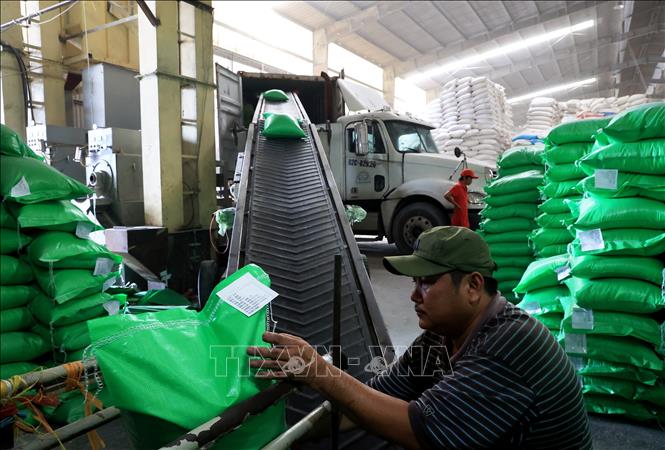
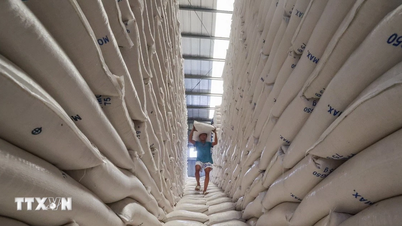
This is Singapore's first Memorandum of Cooperation (MOC) on rice trade, and Vietnam has become its first partner amidst many other promising rice markets. According to Mr. Cao Xuan Thang, Vietnam's Commercial Counselor in Singapore, several factors led Singapore to choose Vietnam. Firstly, Singapore imports approximately 350,000-400,000 tons of rice annually. Vietnam is one of the three largest rice exporters to Singapore, with a fairly stable annual rice production and increasingly high-quality rice, gaining recognition and trust from Singaporean consumers. Therefore, signing the first rice MOC with Vietnam will help Singapore secure a sustainable supply, stabilize prices, and reduce supply chain risks.
Secondly, the comprehensive strategic partnership between Vietnam and Singapore allows for very close cooperation in many areas such as trade, investment, logistics, energy, and green technology. Vietnam's political trust and policy stability reassure Singapore, leading them to confidently choose Vietnam as their first partner in the sensitive area of food security.
Thirdly, Vietnam and Singapore share a close geographical proximity, with rapidly developing logistics and port infrastructure, particularly the convenient Vietnam-Singapore maritime connection, which shortens shipping times and reduces costs, creating a competitive advantage for Vietnam.
Fourth, both countries have strategies aimed at a green, clean, and transparent agricultural supply chain. Vietnam is shifting towards high-quality rice production, reducing carbon emissions, in line with Singapore's food security policy; therefore, the rice MOC also has strategic significance for sustainable development and regional food security.
Ultimately, Singapore typically selects potential partners to build model examples, so the rice MOC with Vietnam could be the first step for Singapore to demonstrate its role in building an ASEAN food security network, in which Vietnam would serve as a production and supply hub.
The need for cooperation in the rice trade was emphasized by the leaders of both countries during a crucial meeting held in Tianjin, China, in June, coinciding with their participation in the annual World Economic Forum (WEF) conference. At the meeting with Prime Minister Pham Minh Chinh, Singaporean Prime Minister Lawrence Wong expressed his desire for active cooperation with Vietnam on rice imports. Commenting on the newly reached agreement, Desmond Choo, Minister of State for Defence and Member of Parliament of Singapore, stated that the agreement signed between the two governments on rice trade is a significant one. Singapore has always aimed to diversify its agricultural imports, including rice imports. This agreement will promote better food security, and Singapore is pleased that the Government and people of Vietnam have joined hands to help them achieve this.
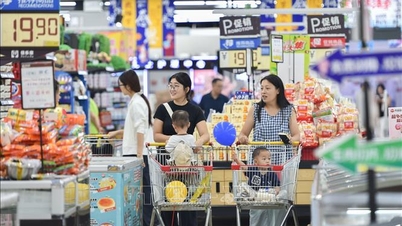
In fact, the steadily improving quality, coupled with a competitive price advantage, helps Vietnamese rice meet the stringent standards of this island nation. It's not uncommon to see people buying Vietnamese rice at large supermarkets in Singapore. When quickly asked at the checkout counter why they chose Vietnamese rice, one female customer shared that she really likes Vietnamese rice because it's delicious, sticky, and fragrant.
Singapore is a regional and global transit hub, so accessing the Singapore market is not only about accessing a market with a population of 6 million and approximately 15 million tourists annually, but also a gateway for exporting to other markets around the world. Mr. Cao Xuan Thang emphasized that to leverage the cooperation between Vietnam and Singapore, Vietnamese businesses need to focus on continuously improving the productivity and quality of rice products, from seed selection to cultivation technology, processing, building product and corporate brands, improving packaging designs, and developing supply chains to ensure stable productivity and quality, reduce production costs, and increase competitiveness in the international market. In addition, shifting production towards a green, clean, and transparent approach is also a plus point that will help businesses meet future consumer trends.
Source: https://baotintuc.vn/kinh-te/hinh-mau-xay-dung-mang-luoi-an-ninh-luong-thuc-asean-20251101123926694.htm

![[Photo] General Secretary and President To Lam presides over a meeting on preparations for the review of one year of operation of the three-tiered government system.](https://vphoto.vietnam.vn/thumb/1200x675/vietnam/resource/IMAGE/2026/06/02/1780391821195_a1-bnd-4595-9717-jpg.webp)













































Comment (0)