

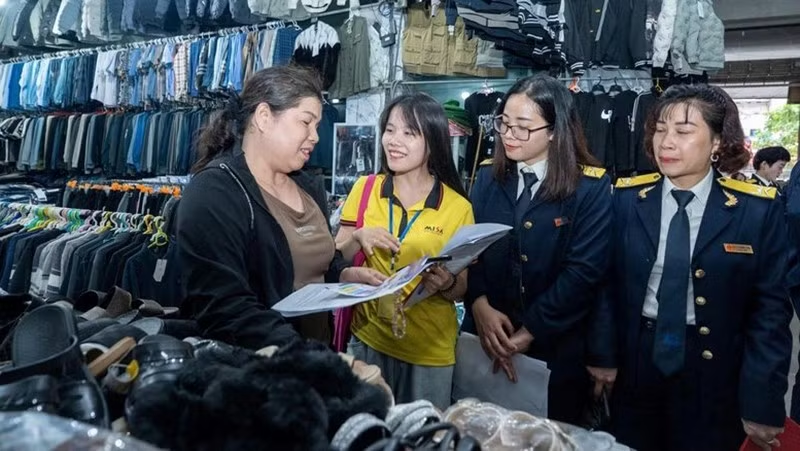
The 2026 Household Business Survey, conducted by the Vietnam Chamber of Commerce and Industry (VCCI) from February to April with responses from over 1,000 households in 34 provinces and cities, has revealed a truthful and detailed picture.
There's an image I particularly appreciate when talking about household businesses (HKD): the 6 million HKD in Vietnam are like water. They penetrate even the most remote corners, villages, small streets, and deep rural areas that even the smallest businesses struggle to reach. They create jobs, contribute to GDP, but most importantly, they bring flexibility and dynamism to the economy , while preserving many traditional cultural values that no other business model can replace.
The gap between regulations and enforcement capacity.
First, let's look at the numbers. In 2025, 73.7% of households reported only "minimal profit," 12.9% broke even, over 11% incurred losses, and only 1.9% achieved "profit as expected." Over 81% of households recorded a decrease in revenue, and approximately 75% experienced a reduction in customer base. Over the next two years, 33% of households are planning to downsize, and only 1.8% intend to expand.
Those numbers have put many people on edge. But looking closer, there's a positive message hidden within. The vast majority of households are still holding strong. Over 86% are profitable or breaking even, albeit with thin profit margins, and about 60% are proactively choosing to maintain their scale. This is a sign of a sector that is being cautious, managing risks, and waiting for clearer signals from the market and policies before moving forward.
The livelihood role of household businesses is undeniable. As many as 55.2% of surveyed households stated that household businesses were their sole source of income, and 41.5% considered them their primary source. Therefore, every policy shock and market fluctuation affects not just one household head, but an entire network of tens of millions of people. This highlights a clear policy requirement: to support this sector as a strategic social safety net, not just as an object of tax administration.
If we had to pinpoint the biggest bottleneck today, it wouldn't be demand or input costs, but rather the gap between increasingly comprehensive legal requirements and the enforcement capacity of a largely micro-sector. 73.3% of household businesses rated legal difficulties as having a significant or serious impact, higher than difficulties related to inputs (59.3%), markets (43.8%), and resources (32.6%).
Going into detail, 71.2% of households faced difficulties in collecting customer information to issue electronic invoices, 67.6% had difficulty accounting for deductible expenses, and 66.8% had difficulty tracking policy updates. When asked about the biggest cost pressure, 39.5% of households chose tax and accounting compliance costs, almost equal to the 43.8% who chose raw material and goods costs. In other words, the burden of compliance has now become a legitimate business expense, on par with traditional input costs.
It's important to note that the burden isn't just financial. 73% of households reported a significant or very significant impact from the time spent complying with regulations, 70% felt pressured by the time constraints of updating to new regulations, and 68% by the cost of hiring an accountant. For a small grocery store owner or an auto parts seller accustomed to traditional sales methods for 20 years, adapting to accounting software, electronic invoices, and new legal terminology is a considerable transition.
A positive sign from a timely decision.
In this context, the government's recent decree raising the tax threshold for household businesses from VND 500 million to VND 1 billion per year is a very timely and welcome decision. This is not just a technical adjustment, but an important policy signal.
Firstly, it demonstrates a willingness to listen. With 36.3% of micro and small households having revenue below VND 500 million and 51.4% falling between VND 500 million and under VND 3 billion, raising the threshold to VND 1 billion will help a significant portion of micro and small households reduce the pressure of direct compliance, giving them more room to accumulate capital, reinvest, and strengthen their resilience.
Secondly, it aligns with the reality of inflation and price levels. Currently, input costs, living expenses, and business prices have changed significantly. Raising the threshold helps the policy more accurately reflect the true economic scale of HKD.
Third, and most importantly, it demonstrates a more flexible policy approach, acknowledging that not all households need or should enter the compliance system at the same time. It's a tiered approach that respects the diverse characteristics of this sector. For households at the "moderately stable" threshold, reducing compliance pressure gives them time to learn, prepare, and gradually adapt to new business methods without being forced to downsize or withdraw from the market.
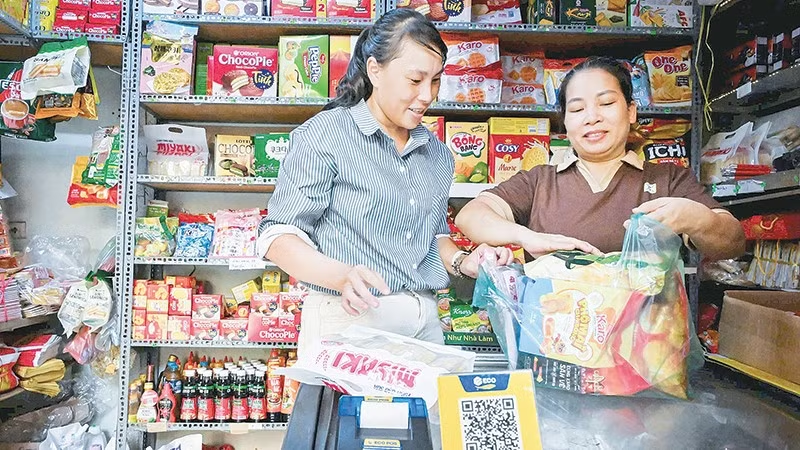
Understanding is the key.
Analysis by the VCCI research team revealed a very noteworthy result. Households with a good understanding of tax and accounting policies were approximately 14.1 percentage points more likely to plan to transition to a business than those without such understanding. Furthermore, the educational level of the household head also had a significant positive influence. Compared to the primary school group, groups with a high school education or higher were associated with a higher probability of transition, ranging from 12.7 to 18.8 percentage points.
This is good news, as it shows us that the biggest psychological barrier isn't the regulations themselves, but rather a lack of understanding of them. When small and medium-sized enterprises (SMEs) understand the rules of the game, they become more confident, as they can realistically assess costs and benefits, rather than just seeing vague risks. Knowledge of tax and accounting policies is both a condition for reducing compliance anxieties and a driving force for SMEs to consider innovative business models. This also means there's significant room for improvement if we invest wisely in communication and support.
Based on these findings, several directions for the next phase can be envisioned. First, it is necessary to continue simplifying tax, accounting, and electronic invoicing regulations to suit the practical capabilities of household businesses, especially micro-enterprises, those with low education levels, the elderly, and those in rural areas. Simple, free or low-cost accounting software should be available, along with instructions written in everyday language and direct local support.
The policy for converting household businesses into enterprises needs to follow a tiered approach, not a mass campaign. Larger household businesses with corporate clients and clear needs for contract signing and capital mobilization should be the primary target. These groups require specific tax incentives, streamlined administrative procedures, and a gradual increase in obligations, rather than a sudden surge in compliance pressure immediately after conversion.
The HKD (Household Business) sector needs to be repositioned in policy thinking as a sector that requires both effective management and support for sustainable development. Given that 96.7% of surveyed households depend entirely or largely on HKD activities for their livelihoods, enhancing the resilience of this sector is not just an economic goal, but also a policy option with far-reaching social implications.
A favorable business environment for HKD is not only one with few market barriers, but also one where compliance costs are simple, understandable, predictable, and commensurate with the capabilities of the enforcers. If we approach this sector with an educational, supportive, empathetic, and constructive spirit, rather than imposing and punishing, we can achieve transparency and digital transformation while maintaining the dynamism and flexibility that are the sector's most valuable assets.
The government's decision to raise the tax threshold from 500 million to 1 billion VND shows that the policy is on the right track. This provides a basis for believing that in the coming years, the household business sector will not only remain stable but also have the opportunity to thrive, gradually participating more deeply in the formal, transparent, and sustainable economy. Because ultimately, each stable household business means a secure family, a vibrant community, and a stronger economy from the grassroots.
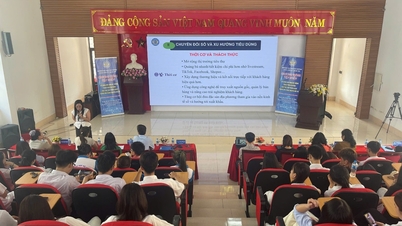
Currently, only 13.9% of households self-assess that they fully understand the new policy, while 49.8% only have a basic understanding and 33.9% have only heard about it. Approximately 83.6% of households indicated that acquaintances and the business community are useful channels, and 77.4% highly value social media. These are channels that tax authorities and related organizations can fully utilize to bring the policy closer to households in an understandable and friendly manner.
Source: https://nhandan.vn/ho-kinh-doanh-cho-mot-loi-di-rong-hon-post963664.html



![[Image] Hanoi's urban life under the challenge of a "scorching hot" environment](https://vphoto.vietnam.vn/thumb/1200x675/vietnam/resource/IMAGE/2026/05/25/1779706979265_nang-nong-t5-2026-minh-duy-7-4636-jpg.webp)









































































Comment (0)