

 |
Young people in Ho Chi Minh City on Metro Line 1. Photo: Quynh Danh . |
Ho Chi Minh City is entering a phase of accelerated infrastructure investment with a series of large-scale transportation projects such as the metro, the Thu Thiem - Long Thanh railway, and inter-regional connecting routes worth hundreds of trillions of VND.
Anticipating this trend, many universities have launched specialized training programs related to the railway sector, ranging from infrastructure construction, mechanical engineering, electrical and signaling to operation and management.
Where can I learn about urban rail systems?
In Ho Chi Minh City, the University of Transport of Ho Chi Minh City is one of the early training institutions to offer many programs related to high-speed rail and urban rail. The university currently enrolls students in majors such as: High-Speed Rail and Urban Rail Mechanics, High-Speed Rail Operations, High-Speed Rail and Urban Rail Construction, and High-Speed Rail Automatic Control and Signaling Engineering.
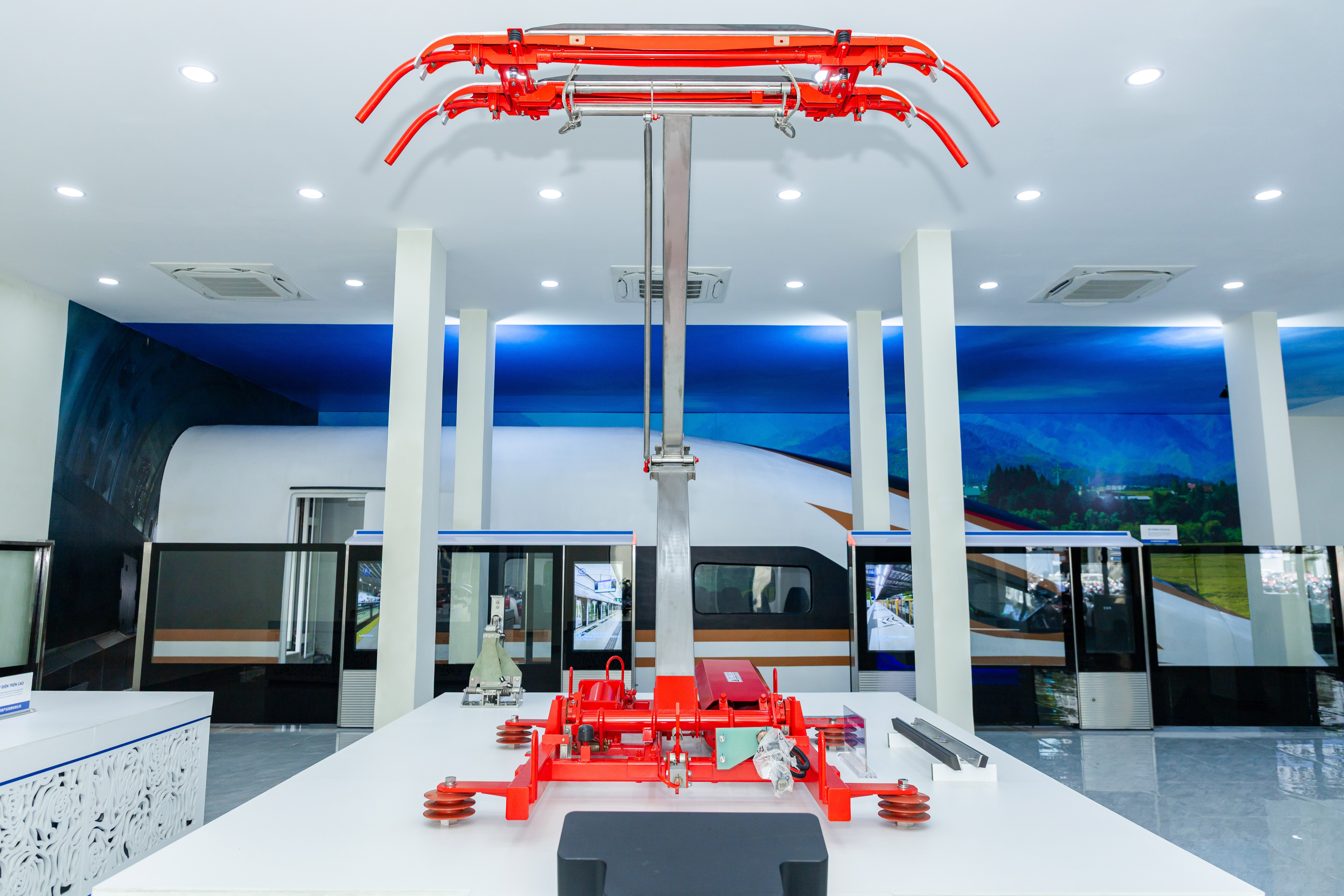 |
High-speed rail control and operation simulation room at Ho Chi Minh City University of Transport. Photo: UTH . |
Notably, in early 2026, the university officially inaugurated the first high-speed rail control and operation simulation room in Vietnam with an investment of approximately 50 billion VND . The university stated that the simulation room is not only a place where students, lecturers, and businesses can participate in the actual operation process of the future high-speed rail industry, but also a platform to support scientific research and technology transfer in the railway sector.
According to the 2026 regular university admission announcement of the University of Transport and Communications , the university will recruit a total of 300 students for majors related to the railway sector across 5 admission combinations: A00, A01, D01, C01, and X06.
Training programs include: Transportation Operations (specializing in High-Speed Rail Operations and Management, Urban Rail Operations and Management), Mechanical Engineering (specializing in High-Speed Rail Vehicle Engineering), Transportation Construction Engineering (specializing in High-Speed Rail), Electrical Engineering (specializing in High-Speed Rail Electrical Systems, Urban Rail), and Control and Automation Engineering (specializing in Modern Railway Control and Signaling).
Within this group of majors, in 2025 the university will enroll students in the Mechanical Engineering (specializing in High-Speed Rail Vehicle Engineering) and Electrical Engineering (specializing in High-Speed Rail and Urban Rail Electrical Systems) programs with admission scores based on high school graduation exam results of 22.63 and 23.39 points respectively. The remaining three programs will begin enrollment from 2026.
The University of Transport Technology has also announced its 2026 admissions plan with many training programs serving the high-speed rail and urban rail sectors. This is a group of majors that the university aims to train human resources for key national railway projects and major cities in the coming years.
According to the university, Vietnam will need approximately 14,000 university-level personnel in the railway sector by 2030, and this number is expected to increase to around 18,000 by 2035. Therefore, in 2026, the university will enroll 80 students in the High-Speed Railway program under the Transportation Engineering Technology major.
In addition, the school is also recruiting for the following programs: Urban Railway Construction and Management under the Transportation Engineering Technology major with 50 quotas; Mechanical Engineering Technology for Locomotives, Cars and Metro Trains under the Mechanical Engineering Technology major with 50 quotas; and High-Speed Rail Transport Management and Operation under the Transportation Operations major with 50 quotas.
At Hanoi University of Civil Engineering , the High-Speed Rail and Urban Railway specialization, under the Transportation Engineering major, is expected to enroll 50 students in 2026.
The school uses six admission methods, including considering high school graduation exam scores, academic transcripts, Hanoi University of Science and Technology's aptitude test scores, Hanoi University of Education's competency assessment scores, computer-based university entrance exam results, and direct admission according to the regulations of the Ministry of Education and Training.
Meanwhile, Hanoi University of Architecture is recruiting students for the High-Speed Railway and Urban Railway major within the Transportation Engineering field using two admission methods: considering high school graduation exam scores and direct admission according to the regulations of the Ministry of Education and Training. The expected enrollment quota for Transportation Engineering in 2026 is 80, with subject combinations A00, A01, C01, C02, and D01.
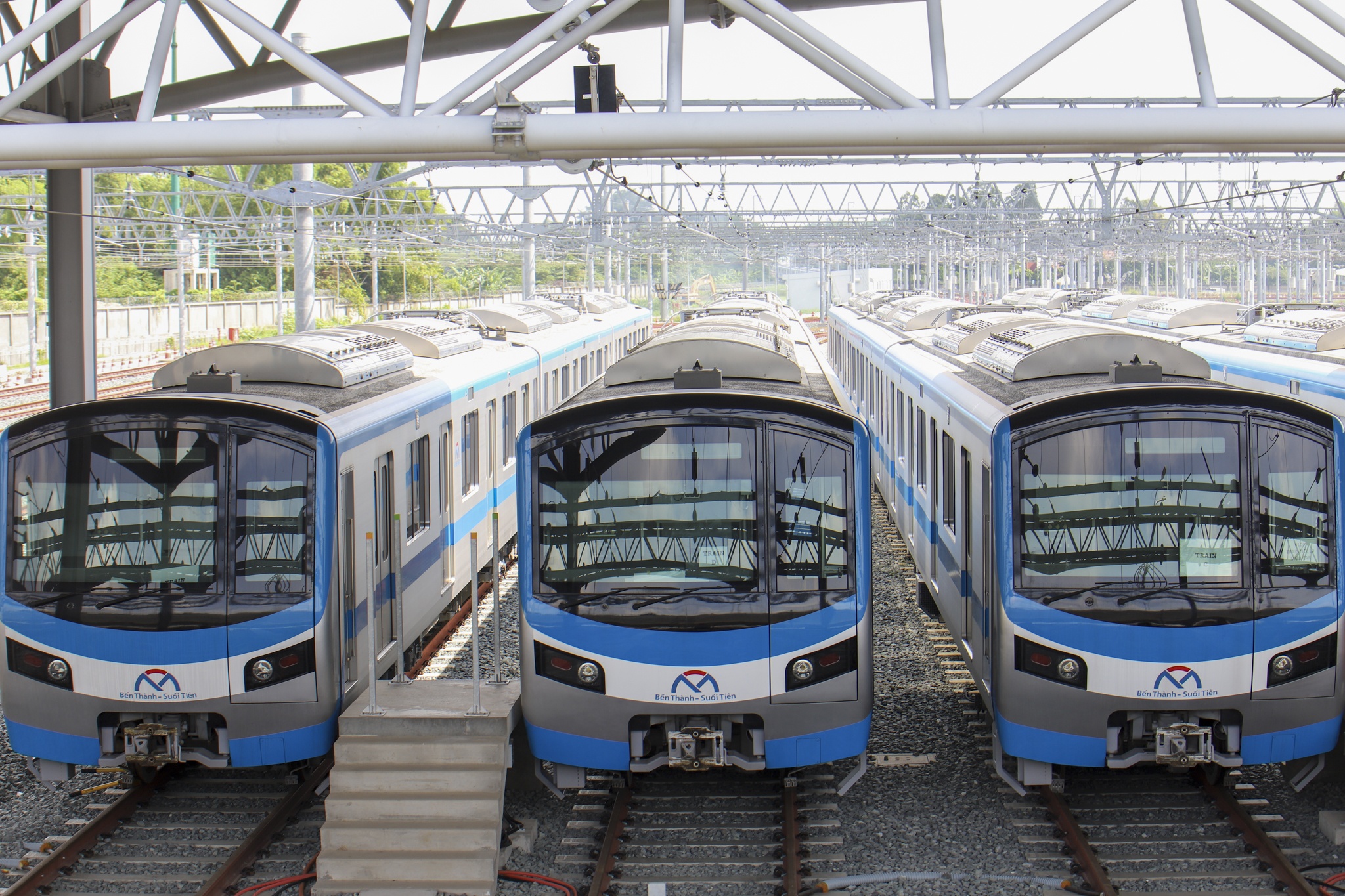 |
Metro Line 1 Ben Thanh - Suoi Tien in Ho Chi Minh City. Photo: Quynh Danh . |
Requirements for railway training programs
As a series of universities delved into training programs related to high-speed rail, the Ministry of Education and Training also issued a decision on the standards for undergraduate training programs in the railway field, setting minimum requirements for training human resources to serve the development of the railway industry in Vietnam.
The training program standards are built on the basis of current regulations on higher education , referencing the Vietnam National Qualifications Framework and the Government's orientation for the development of railway human resources until 2035, with a vision to 2045. The goal is to train a workforce capable of meeting the requirements of operating a modern railway system, while also adapting to the rapid development of science and technology and the trend of international integration.
According to the new regulations, the training program is divided into four main specialized groups: Construction and management of railway infrastructure; electrical, signaling and control systems; railway vehicles; and railway transport economics and operation.
The learning outcomes require students to be comprehensively equipped with knowledge, professional skills, autonomy, and responsibility. Notably, the program emphasizes the ability to apply modern technologies such as big data, artificial intelligence, information technology, and systems thinking in the railway sector.
The programs are designed with two training pathways: bachelor's degrees with a minimum of 120 credits and engineering degrees with a minimum of 150 credits. The program structure includes general education, foundational subjects, specialized subjects, supplementary knowledge, and practical training, as well as graduation projects. Specifically, the foreign language block accounts for a minimum of 8 credits; the mathematics, basic science, and information technology groups account for at least 20 credits for engineering programs and 15 credits for economics and transportation programs.
The Ministry of Education and Training also requires training institutions to innovate teaching methods towards a learner-centered approach, increasing the integration of digital technology, project-based learning, problem-based learning, and real-world simulations. Internships and practical training must account for at least 15% of the curriculum for bachelor's programs and 20% for engineering programs within the specialized knowledge area.
According to the Ministry of Education and Training, training programs must be developed with a focus on continuous improvement and regular updates to meet the practical needs of the railway industry and new technological trends. Universities involved in training in this field are responsible for reviewing and updating their programs and reporting to the Ministry of Education and Training before enrollment.
Source: https://znews.vn/hoc-gi-khi-tphcm-day-manh-xay-dung-duong-sat-do-thi-post1652707.html




![[Photo] Standing Committee member of the Party Central Committee Tran Cam Tu working with the Central Inspection Committee](https://vphoto.vietnam.vn/thumb/1200x675/vietnam/resource/IMAGE/2026/05/28/1779969579668_ndo_br_bnd-2495-jpg.webp)
















































































Comment (0)