


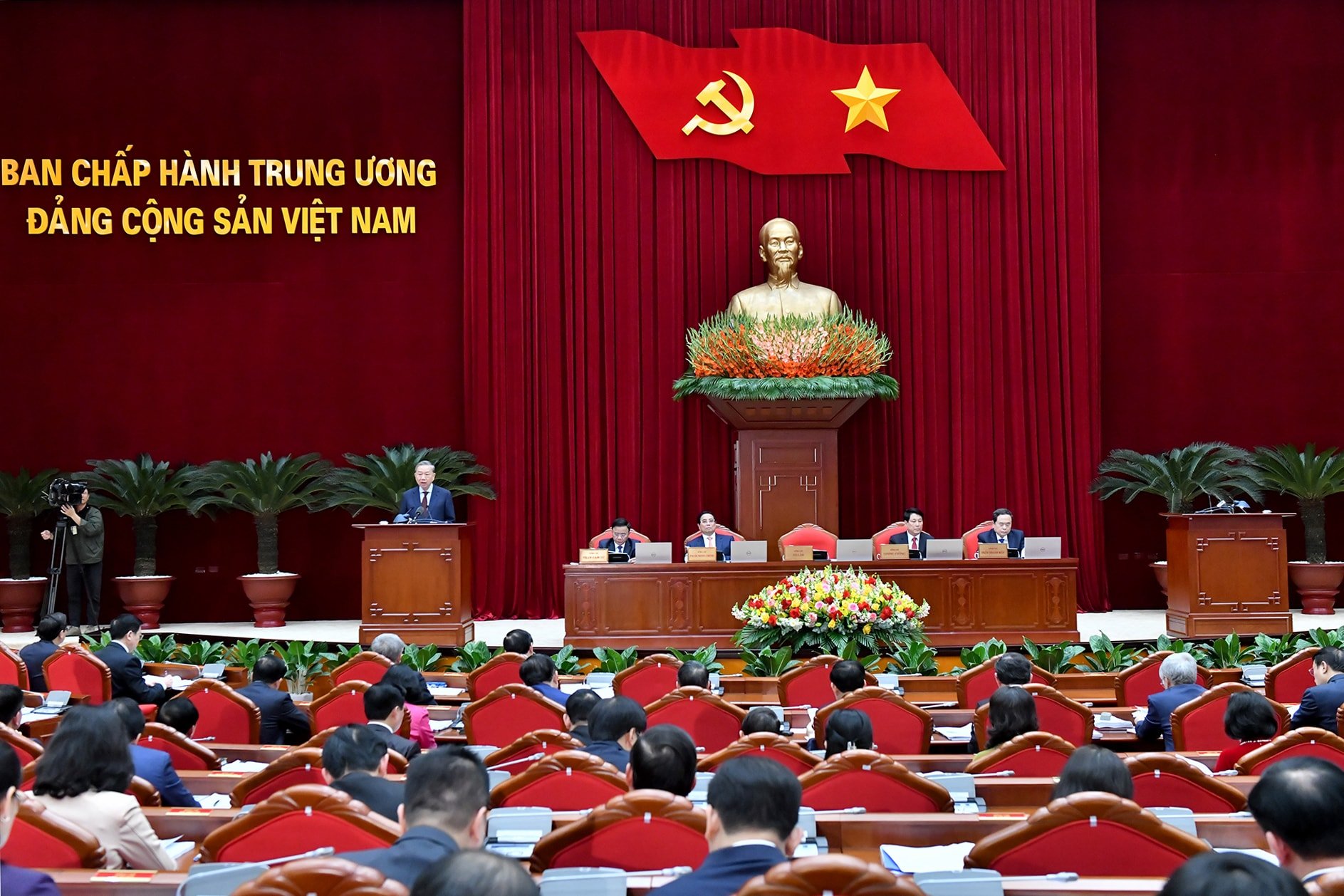
A major issue has been placed on the agenda.
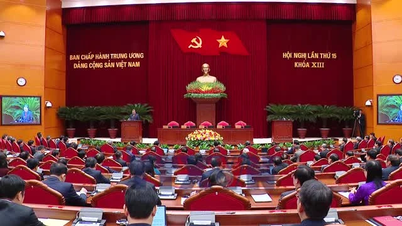
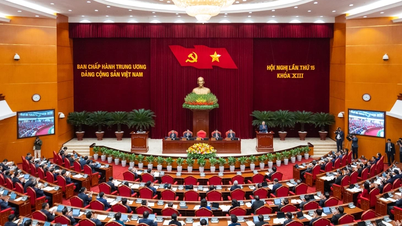
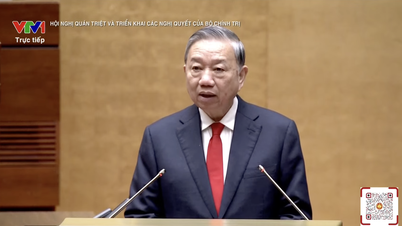
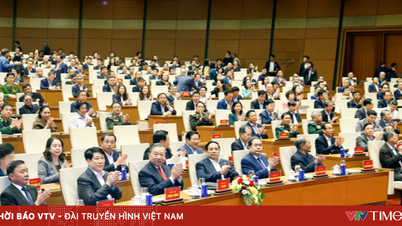
In Conclusion No. 127 on the implementation of research and proposals for further restructuring of the political system's organizational apparatus, the Politburo and the Secretariat requested the highest level of political determination and implementation according to the motto "running while queuing" to complete the work with a very large volume and high demands on quality and progress. And according to the Plan of the Central Steering Committee on summarizing the implementation of Resolution No. 18-NQ/TW, at this point, the projects have been refined and finalized to be reported at the 11th Conference of the 13th Central Committee of the Party.
Specifically, these include the Project to review, amend, and supplement certain articles of the Constitution and laws of the State; the Project to reorganize administrative units at all levels and build a two-tiered model of local government organization; the Project to reorganize and streamline the Vietnam Fatherland Front, political and social organizations, and mass associations assigned tasks by the Party and the State; and the Project on the system of courts and procuratorates at the local level, with the orientation of not organizing district-level courts…
Along with that are the draft plan and new directives to replace Directive No. 35-CT/TW and Conclusion No. 118-KL/TW dated January 18, 2025, of the Politburo of the 13th Party Congress on Party congresses at all levels leading up to the 14th National Congress of the Party, and the draft new regulations to replace Regulation No. 232-QĐ/TW dated January 20, 2025, of the Central Committee on the implementation of the Party Charter; there is also a report on the results of implementing Resolution No. 18-NQ/TW and Conclusion No. 127-KL/TW, and the orientation for the implementation of organizational restructuring in the coming period.
Another major issue is the direction of personnel work for the 14th Party Congress; the Politburo will also present to this Central Committee meeting the plan for the 14th term.
In addition, there is a thematic report on breakthroughs in science, technology, innovation, and digital transformation in accordance with Resolution No. 57 of the Politburo. Because, as Party and State leaders have repeatedly affirmed, developing science, technology, innovation, and digital transformation is a mandatory choice, the only path to national development…
With great aspirations, a long-term vision, innovative thinking, and a practical approach, the Central Committee has been considering and implementing many revolutionary and groundbreaking policies, creating a foundation for national development in the new era – which is defined as the 14th National Congress of the Party.
In accordance with its functions and authority, the National Assembly also works alongside the Government to institutionalize and implement the Party's policies to quickly bring them into practice, starting with the 9th Session of the 15th National Assembly, which opens on May 5th, half a month earlier than usual, divided into two phases and expected to last until June 28th, 2025.
The National Assembly Party Committee is directing the amendment and supplementation of several articles of the 2013 Constitution, focusing on issues related to the organizational structure of the political system. This includes amending and supplementing several articles of Chapter IX, which regulates local government, with the proposed abolition of district-level administrative units and the organization of local governments into only two levels (provincial level and sub-provincial level). Several related laws are also being reviewed and amended to ensure consistency, uniformity, and early implementation in practice.
Therefore, in the document convening the 9th Session, the Standing Committee of the National Assembly outlined the session's agenda to solicit opinions from National Assembly delegations and individual National Assembly deputies, and proposed adding content for the National Assembly to consider and decide on amending and supplementing several articles of the 2013 Constitution, as well as considering and approving 13 draft laws to further serve the work of reorganizing the political system's apparatus.
These include the Law on Organization of Local Government (amended); the Law on Inspection (amended); the Law on Election of National Assembly Deputies and People's Council Deputies (amended); the Law amending and supplementing a number of articles of the Law on the Vietnam Fatherland Front, and several laws related to the organization of people's courts, people's procuracies, criminal investigation agencies, as well as civil, administrative, and criminal proceedings…
The Standing Committee of the National Assembly also proposed adding to the National Assembly's consideration and decision the merger of provincial-level administrative units; the establishment of the National Election Council and the election of the Chairman of the National Election Council.
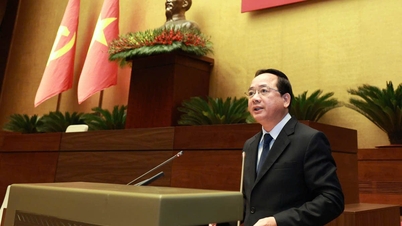
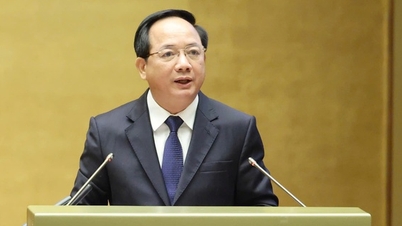
"The upcoming 9th session of the National Assembly is of great importance and historical significance for the country," National Assembly Chairman Tran Thanh Man emphasized, requesting relevant agencies to coordinate early and from afar, and to prepare thoroughly and with high quality so that the National Assembly and the Standing Committee of the National Assembly can make decisions within their authority.
The next step in the streamlining revolution.
In a short period of time, ministries, departments, and localities have streamlined their organizational structures, merged many units, and developed plans to further reorganize at the provincial and commune levels with the spirit of "saying is doing," "discussing and doing without hesitation," and "the central government sets the example, and localities respond."
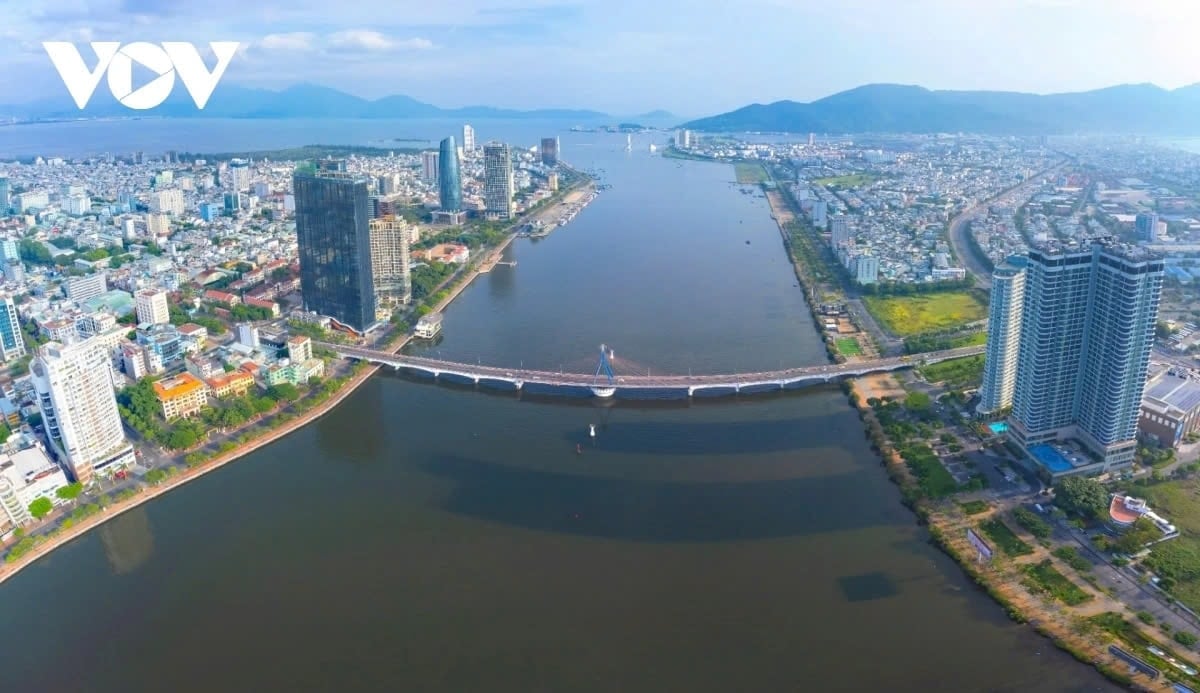
According to the plan, the restructured administrative apparatus will include: central level; provincial and city level; and commune and ward level. It is projected that the country will have approximately 34 provinces and cities based on the reorganization of the current 63 provinces and cities; administrative activities at the district level will be eliminated; and the total number of commune-level administrative units will be merged from 10,035 to approximately 5,000 units (a reduction of over 50%, lower than the initial projection of a 70-75% reduction).
According to information from the Ministry of Interior, starting May 1st, all 63 provinces and cities will submit their administrative unit reorganization plans to the Ministry of Interior for compilation and submission to the National Assembly Standing Committee and the National Assembly simultaneously. It is expected that the reorganization of all commune-level administrative units will be completed before June 30th and provincial-level units before August 30th, so that by July 1st and September 1st, 2025, the administrative units will operate under the new model.
To accomplish the above tasks, the immediate focus must be on perfecting the institutional framework. According to the draft Law on Organization of Local Government (amended), the Ministry of Interior has proposed regulations on the organization and operation of two levels of local government, stipulating that after the dissolution of the district level, the commune-level local government, in addition to performing its current duties and powers, will assume the additional duties and powers of the district-level local government.
This means that local governments at the commune level will be granted more authority. At the same time, the organizational structure and policies regarding civil servants and public service must also be reformed to ensure they can meet the requirements of the new tasks.
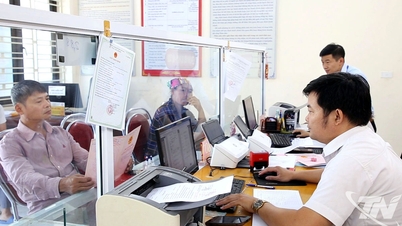
Previously, administrative procedures carried out by citizens and businesses at the district level will soon be transferred to the commune level. Communes will be encouraged to apply information technology to shorten processing times and better serve citizens and businesses.
Furthermore, there will be transitional regulations in the implementation of the tasks and powers of the new commune-level government after the dissolution of the district level, aiming to ensure seamless and continuous operation, avoiding overlap, duplication, or omission of tasks. In particular, this will not affect socio-economic development, given our determination to achieve GDP growth of 8% or higher in 2025, laying the groundwork for double-digit economic growth from 2026, ushering the country into an era of prosperity.
The principle is to organize local governments in a streamlined, efficient, effective, and effective manner, meeting the requirements of professional, modern, and transparent local governance, ensuring accountability coupled with mechanisms for controlling power. All matters within the jurisdiction of local governments must be decided, implemented, and the local authorities themselves held accountable for.
The policy of reorganizing commune-level administrative units, abolishing district-level units, and merging provinces is a major policy with a long-term strategic vision, aimed at the sustainable development of the country. The reorganization of administrative units at all levels is not only about adjusting administrative boundaries and streamlining administrative structures, but also about adjusting the development space and creating momentum for the nation. The revolution to streamline the organizational structure is entering a new phase, and a series of crucial issues are being considered.
Source: https://baohaiduong.vn/hoi-nghi-trung-uong-11-thoi-diem-lich-su-quyet-sach-dot-pha-409080.html




















![[Image] A dreamy "livable city" under pink clouds](https://vphoto.vietnam.vn/thumb/1200x675/vietnam/resource/IMAGE/2026/02/24/1771930060937_tp4-jpg.webp)
![[Photo] Head of the Central Propaganda and Mass Mobilization Department visits and congratulates the Ministry of Health and the Military Traditional Medicine Institute.](https://vphoto.vietnam.vn/thumb/1200x675/vietnam/resource/IMAGE/2026/02/24/1771938483290_img-2682-3562-jpg.webp)



















































Comment (0)