


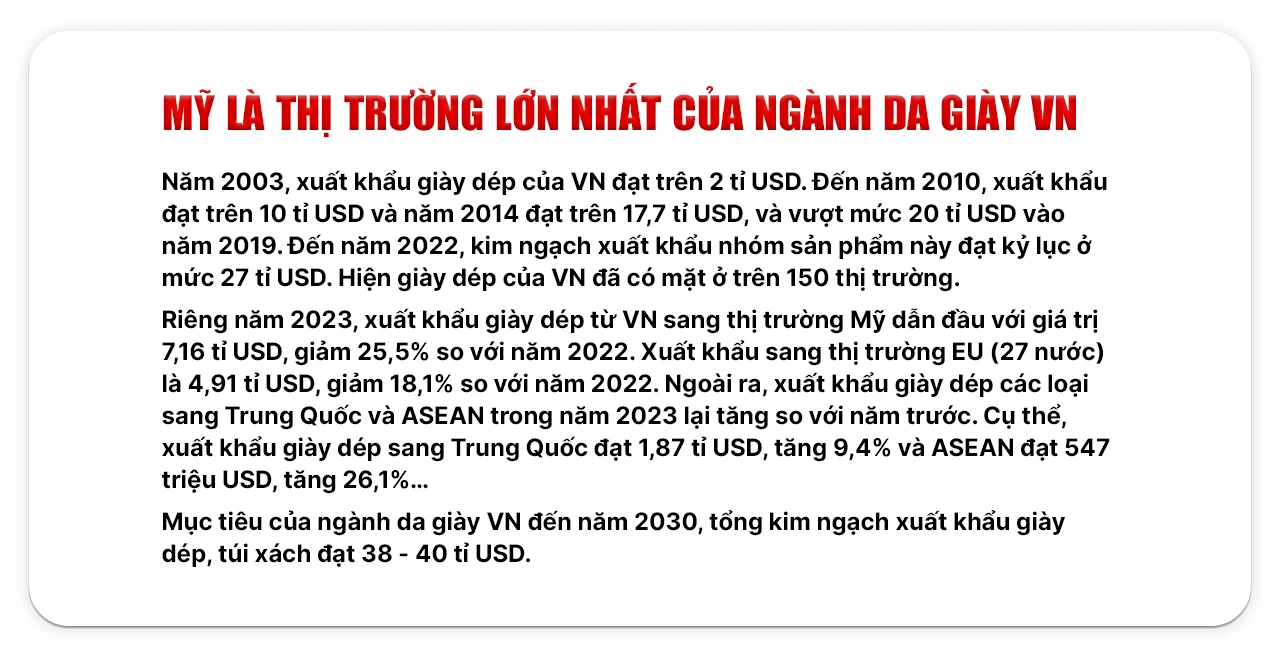
 According to the General Department of Customs, by the end of 2023, Vietnam's footwear exports brought in over US$20.24 billion. Although this represents a decrease of US$3.66 billion compared to the record high of 2022, footwear remains one of Vietnam's key export sectors. Looking back at history, except for 2020 due to the impact of the Covid-19 pandemic, Vietnam's footwear export value has continuously increased in recent years. Specifically, since 1998, footwear has joined the club of commodities with export values exceeding US$1 billion, and has consistently progressed towards US$10 billion and US$20 billion. According to the 2021 World Footwear Yearbook, for the first time, Vietnam accounted for over 10% of the global footwear export market share, with more than 1.23 billion pairs of shoes in 2020, ranking second in the world in footwear exports, after China. Regarding canvas shoes, Vietnam is the world's largest producer in terms of value, far surpassing China… Currently, "Made in Vietnam" footwear products are present in 150 markets such as the US, EU, China, Japan, and the UK… Of these, the US is the largest market, spending 7-10 billion USD annually on Vietnamese footwear.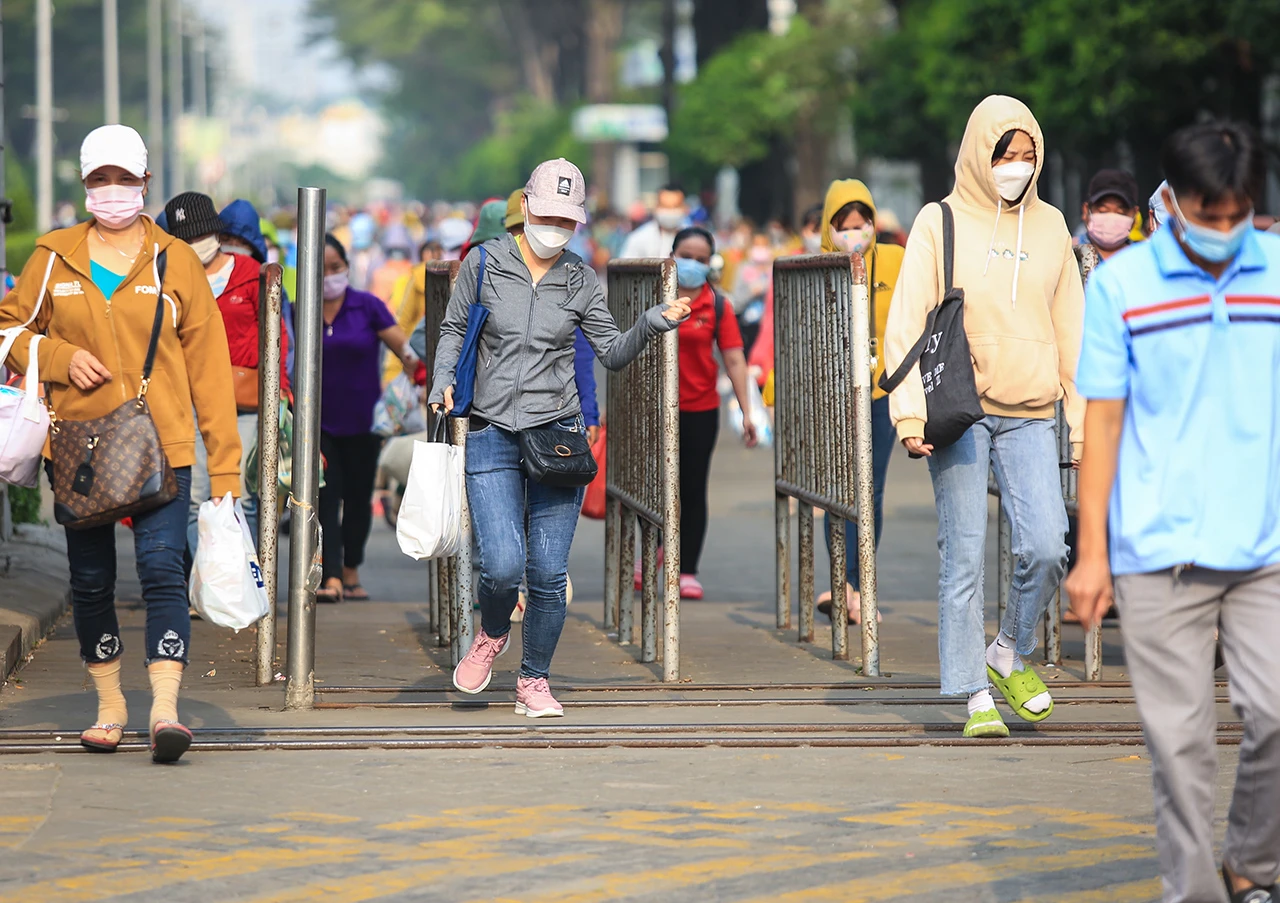
Vietnam's footwear industry has created jobs for more than 1.5 million workers. The photo shows workers leaving work at PouYuen Co., Ltd. (Binh Tan District, Ho Chi Minh City) on the afternoon of March 6th.
Nhat Thinh
 While Vietnam's footwear exports have made their mark on the global market, the domestic market remains quite sluggish. More than 12 years ago, when it was just a micro-enterprise with a few dozen workers, Vien Thinh Footwear Company managed to convince customers and gradually enter the domestic market, which was nearly 90% Chinese-made. Mr. Tran The Linh, Director of Vien Thinh Company, said that he personally went to the market to persuade each small trader to allow the company's products to be displayed on their stalls. Through persuasion of quality, price, design, after-sales service, and warranty, Vien Thinh's footwear products gradually conquered the domestic market. However, in recent years, the company has been unable to compete with the influx of low-priced products and has therefore focused solely on exports. According to Mr. Tran Thế Linh, low-priced Chinese goods still account for over 80% of the market share in Vietnam. The remaining market share belongs to foreign high-end brands and a few domestic manufacturers. The main reason is that goods from China are too cheap. Specifically, a pair of women's leather shoes from China sells for only about 220,000 - 250,000 VND because the production cost is only 150,000 VND. Meanwhile, domestic businesses have to produce a pair of leather shoes for about 200,000 - 220,000 VND and sell them for 350,000 VND to make a profit.
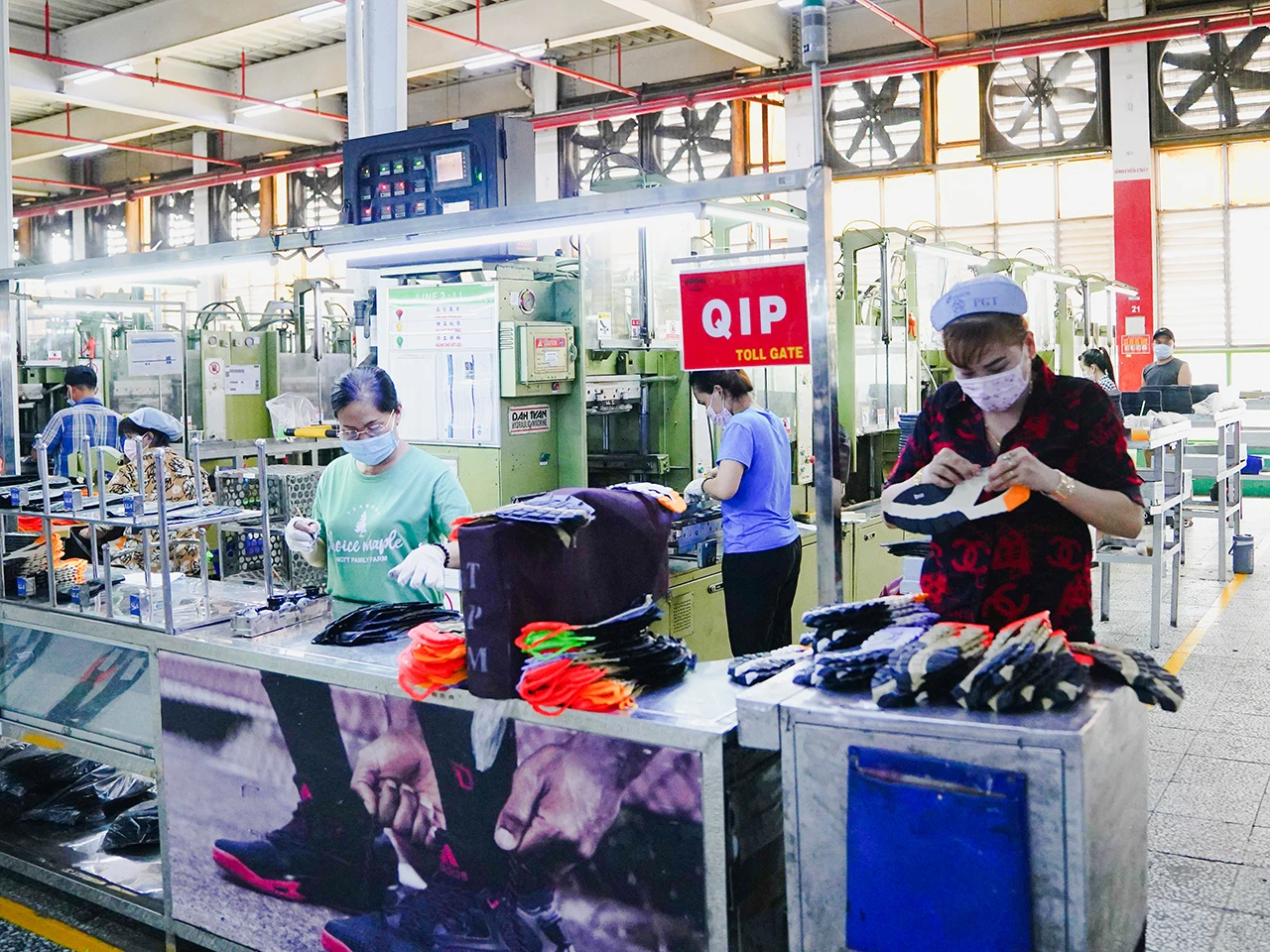
Workers at PouYuen Vietnam Co., Ltd.
Independence

 Mr. Diep Thanh Kiet, Vice Chairman of the Vietnam Leather and Footwear Association, said that the leather and footwear industry has created jobs for more than 1.5 million workers, holds the second position in footwear exports worldwide, and will continue to maintain this position, as Indonesia, currently ranked third, is still far behind Vietnam in terms of production. However, Vietnam is also far behind China, which holds the first position. In other words, the first and second positions in footwear exports worldwide are unlikely to change in the short term. Vietnam still has geopolitical advantages. At the same time, import taxes on footwear from Vietnam to many major markets such as the US, EU, and Canada have decreased significantly due to participation in many free trade agreements. However, achieving a significant breakthrough will be difficult as the industry still faces a series of issues that need to be addressed, and this has been discussed for many years. This requires developing supporting industries, applying technology and automation, and meeting the increasingly high demands of the market regarding origin of goods, ensuring environmental, social, and governance (ESG) standards, and green production. Currently, nearly 80% of Vietnam's footwear export value still belongs to foreign-invested corporations (FDI). Therefore, the most important thing is to increase the value of Vietnamese footwear in export activities without simply increasing quantity. To achieve higher-value products, investment is needed, along with increased application of technology, research and development of design, and a shift towards circular production and green production. Changing these aspects and driving stronger growth in Vietnam's footwear industry requires a comprehensive policy, not just individual businesses or a few isolated policies.
  Meanwhile, Dr. Nguyen Quoc Viet, Deputy Director of the Vietnam Institute for Economic and Policy Research (VEPR), University of Economics (Vietnam National University, Hanoi), believes that traditional industries such as textiles and footwear have experienced strong growth over the past nearly 10 years. This stems from favorable factors such as Vietnam being considered an attractive destination for international investors in the processing and manufacturing sector in general. Many large corporations in the footwear industry have placed Vietnam in their global supply chains, increasing production in Vietnam, such as Nike and Adidas. Simultaneously, Vietnam, as a member of ASEAN, is also actively participating in new-generation free trade agreements. As a result, tariff barriers have been reduced or removed, increasing the competitiveness of Vietnamese products. These factors have boosted the market for products manufactured in Vietnam, expanding their market share globally. At the same time, policies to reform the business environment, support domestic enterprises, promote supporting industries, and apply high technology... also contribute to promoting purely Vietnamese companies to increase their ability to connect and participate in global production chains.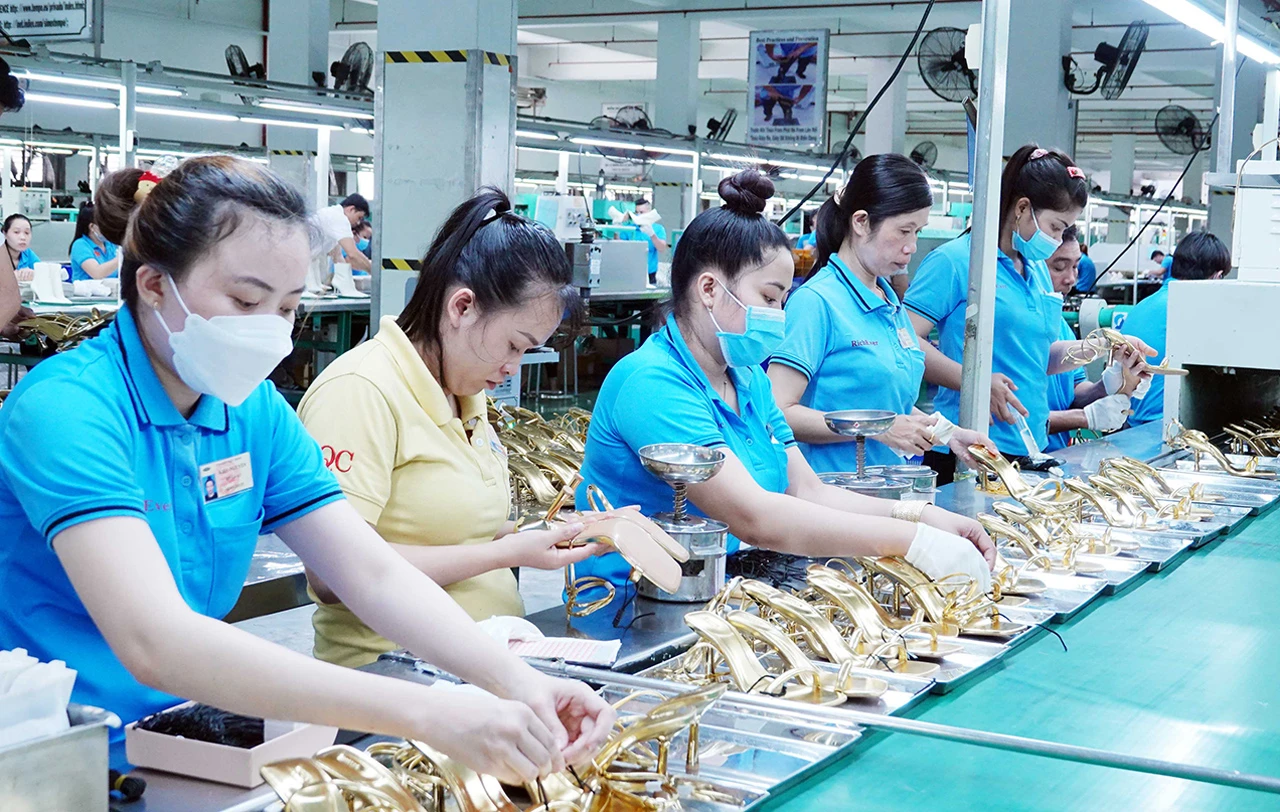
Manufactured by Vien Thinh Shoe Co., Ltd. (Long Hau Industrial Park, Can Giuoc District, Long An Province) - workers
DNT
However, since the Covid-19 pandemic, consumer demand has decreased and undergone many changes. For example, the demand for mass-produced products, which were once Vietnam's strengths, has decreased significantly; while the demand for specialized and unique products has increased. Furthermore, Vietnam's production costs have continuously risen, while countries producing similar goods have maintained low input costs. Another issue is Vietnam's slow transition to green production, which weakens the competitiveness of domestically produced goods. These are significant challenges for domestic businesses. "Vietnam's advantage of cheap labor is no longer a key factor for competitiveness. Therefore, it is necessary to increase technological innovation, improve management, the workforce, and connect to participate more in the supply chain and production with FDI companies right here in Vietnam. Some purely Vietnamese businesses are also striving to rise, but they still need to focus on input factors such as raw materials and design research. The government could consider supporting the development of supporting industries for the footwear industry to gradually reduce the amount purchased from China. Focus on promoting trade connections between domestic businesses and global manufacturing corporations right here in Vietnam, and then promote them abroad," Dr. Nguyen Quoc Viet further shared.
Thanhnien.vn
Source![[Image] Close-up view of the interchange connecting the two expressways and Long Thanh Airport.](https://vphoto.vietnam.vn/thumb/1200x675/vietnam/resource/IMAGE/2026/05/25/1779703378210_ndo_br_z7863716673926-224453a31600126cce10622af6290afd-4549-jpg.webp)


![[Image] Hanoi's urban life under the challenge of a "scorching hot" environment](https://vphoto.vietnam.vn/thumb/1200x675/vietnam/resource/IMAGE/2026/05/25/1779706979265_nang-nong-t5-2026-minh-duy-7-4636-jpg.webp)


























































































Comment (0)