

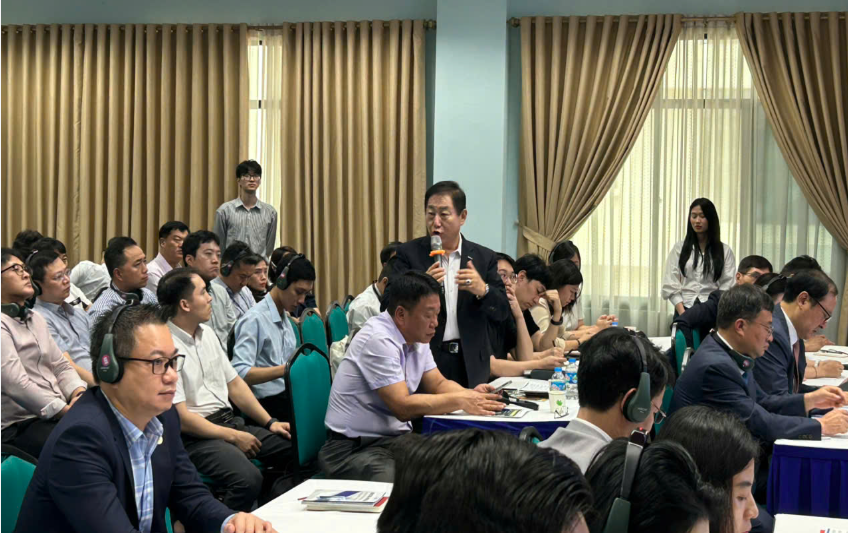
Mr. Vu Ba Phu, Director of the Trade Promotion Department ( Ministry of Industry and Trade ), stated that South Korea is currently Vietnam's third largest trading partner (after China and the United States) and the largest direct investor in Vietnam. The two countries aim to increase bilateral trade to US$150 billion by 2030, moving towards a more balanced relationship.
The electronics industry plays a key role in bilateral economic cooperation, accounting for a large proportion of import and export turnover and is one of the sectors attracting the most FDI from South Korea into Vietnam.
Leading corporations such as Samsung, LG, and SK Hynix have invested tens of billions of dollars in Vietnam, transforming it into a major global hub for electronics manufacturing and export.
Samsung currently accounts for approximately 20% of Vietnam's total export turnover, with factories in Bac Ninh, Thai Nguyen, and Ho Chi Minh City; LG focuses on manufacturing displays and home appliances in Hai Phong; and SK Hynix is expanding its investment in the semiconductor sector.
Korean electronics projects not only bring in significant FDI but also create jobs for hundreds of thousands of workers, making a crucial contribution to the development of the global electronics supply chain in Vietnam, promoting technology transfer, improving management skills, increasing the localization rate, and developing Vietnam's supporting industries.
Bok Dug Gyo, Head of the Korea Desk, noted that Vietnam is asserting its position as a key global manufacturing hub, attracting the attention of international investors in many high-tech sectors. This is clearly demonstrated in key industries such as household appliances, consumer electronics, renewable energy, and electric vehicles.
The consumer electronics and home appliance industry is booming with key products such as televisions, refrigerators, washing machines, and smartphones. The domestic home appliance market is estimated at $12.5-$13 billion and is expected to continue growing.
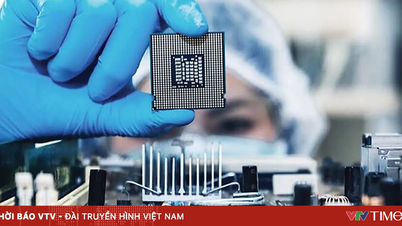
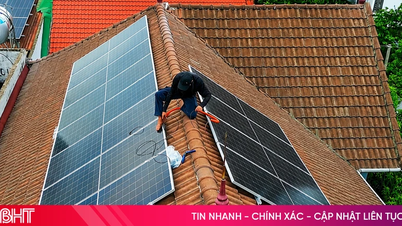
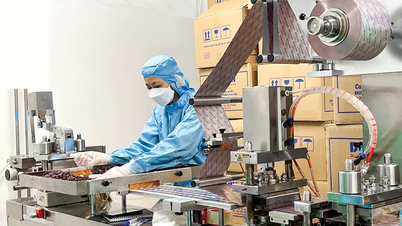
The semiconductor and components industry is also on the rise, although it remains dependent on imported raw materials. Electric vehicles, renewable energy, medical equipment, and lighting are emerging as promising new sectors.
To further enhance the effectiveness of the Vietnam-Korea electronics supply chain, participants in the seminar suggested that Korean businesses could cooperate with the Vietnam Electronics Business Association and domestic organizations to implement training programs and workshops on advanced technologies such as AI, IoT, and semiconductor chip manufacturing; and simultaneously establish a joint research center in Vietnam.
This also includes expanding joint venture projects and building factories to produce high-end electronic components, aiming to reduce import dependence and increase added value. Furthermore, it involves organizing joint trade fairs and exhibitions; establishing an online B2B platform; and collaborating on research and development of green products…
Source: https://hanoimoi.vn/hop-luc-xay-dung-chuoi-cung-ung-dien-tu-viet-han-712657.html






















![[Video] Sunset at Lap An Lagoon – Where the sun sets over the fishing nets](https://vphoto.vietnam.vn/thumb/340x192/vietnam/resource/IMAGE/2026/05/31/1780192137701_beach-landscape-sea-water-nature-grass-745871-pxhere-com.jpeg)





![[Image] A brilliant symphony and explosive power in the skies of Da Nang.](https://vphoto.vietnam.vn/thumb/1200x675/vietnam/resource/IMAGE/2026/05/31/1780196945787_anh-man-hinh-2026-05-31-luc-10-08-51.png)

































































Comment (0)