

On May 27, the Iranian Navy, part of the Islamic Revolutionary Guard Corps (IRGC), announced that 23 ships had passed through the Strait of Hormuz in the past 24 hours after receiving permission from the IRGC.
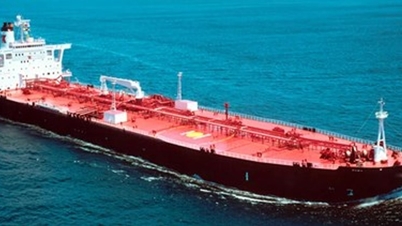
The official IRGC news agency, Sepah News, quoted a statement from the IRGC Navy stating that ships passing through the Strait of Hormuz, including oil tankers, as well as container ships and commercial vessels, have traversed this waterway under the coordination and protection of IRGC forces.
In addition, the IRGC Navy also asserted that Iran is in tight control of the Strait of Hormuz.
Previously, Iran tightened control over the strait starting on February 28, when it banned ships owned by or linked to Israel and the United States from passing through following coordinated attacks by the two countries on Iranian territory.
The U.S. has also imposed a naval blockade on the strait, preventing ships from reaching and leaving Iranian ports via this strategic waterway.
Meanwhile, on May 27, Ali Bagheri Kani, Deputy Secretary of Iran's Supreme National Security Council, announced that Iran and Oman are negotiating a new mechanism for maritime transport through the Strait of Hormuz, affirming that traffic through this strategic waterway will no longer be subject to previous mechanisms.
Speaking on the sidelines of the 14th International Security Forum in Moscow, Russia, Bagheri affirmed that Iran and Oman, as two countries bordering the Strait of Hormuz, are cooperating to build a new mechanism for maritime activity in the region.
On the same day, Ali Akbar Velayati, a senior advisor to Iran's Supreme Leader, declared the Strait of Hormuz to be "the real guarantee" for any future nuclear agreement, while also stating that "geography is the ultimate determining factor for any treaty."
The US President clarified his position on the negotiation process with Iran.
On May 27, US President Donald Trump said he would not rush to a deal with Iran due to political concerns related to the midterm elections, while warning that Washington remains prepared to resume military action if current negotiations fail to reach a deal the US desires.
Speaking at a cabinet meeting at the White House, President Trump said that Iran hoped political pressure related to the upcoming midterm elections would weaken his negotiating position. Trump asserted that he was not interested in the midterm elections.
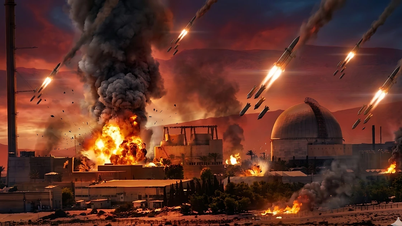
Regarding the ongoing negotiations, Trump said Washington was still not satisfied with the terms being discussed and remained prepared to resume military action if its demands were not met.
In addition, the American leader also emphasized that Iran is entering the negotiations from a weak position, as Tehran's military capabilities have been severely damaged.
Also on May 27, in an interview with PBS News, President Trump affirmed that he would not lift sanctions on Iran in exchange for Tehran abandoning its stockpiles of highly enriched uranium.
Earlier that day, the White House denied reports published by Iranian media about a draft framework agreement between the two sides aimed at ending the conflict, emphasizing that the information was "completely fabricated."
Iranian state media previously reported that, according to a draft memorandum of understanding between Iran and the United States, Washington committed to lifting the maritime blockade and withdrawing troops from the Gulf region.
However, in a social media post, the White House criticized the American media for publishing this information based on a statement from Iran.
Iran has not yet commented on the US position regarding the bilateral talks.
Source: https://www.vietnamplus.vn/iran-cho-phep-mot-so-tau-di-qua-eo-bien-hormuz-post1112990.vnp



![[Photo] Standing Committee member of the Party Central Committee Tran Cam Tu working with the Central Inspection Committee](https://vphoto.vietnam.vn/thumb/1200x675/vietnam/resource/IMAGE/2026/05/28/1779969579668_ndo_br_bnd-2495-jpg.webp)
















































































Comment (0)