

According to the Vietnam News Agency correspondent in the Middle East and North Africa, the official IRNA news agency quoted a statement from the Khatam al-Anbiya Central Command of the Iranian army on May 30 affirming that the country's armed forces are exercising full control over the Strait of Hormuz.
In its statement, the agency emphasized that all vessels wishing to pass through Hormuz – including commercial ships and oil tankers – must adhere to routes designated by Iran and must be licensed by the Navy of the Islamic Revolutionary Guard Corps (IRGC).
The Khatam al-Anbiya Central Command also warned it would retaliate against any actions by foreign military vessels aimed at interfering with the management of the Strait of Hormuz or obstructing traffic through it.
The IRGC Navy recorded 20 ships passing through Hormuz in the past 24 hours, in coordination with Iranian maritime forces and agencies. According to the semi-official Fars news agency, these ships were licensed to carry essential goods such as chemical fertilizers for their respective countries.
On the same day, Iran warned it could withdraw from the deal it is negotiating with the US if Washington does not lift the naval blockade and release Tehran's frozen assets abroad.
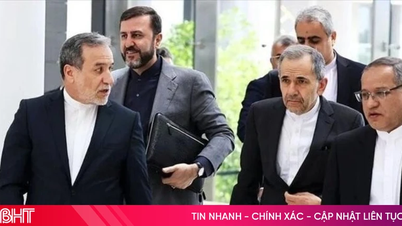
Speaking on Iranian state television, Saeed Ajorlou, a member of the Iranian negotiating team's Media Committee, confirmed that Tehran has not yet approved the final draft of the agreement, even though differences between the two sides are now relatively small. According to him, ending the blockade of Iran's ports and allowing the country access to frozen financial resources are key conditions for the agreement to be implemented.
Ajorlou said the current draft includes a mechanism allowing Tehran to withdraw from the agreement if key commitments are not fulfilled, including violations of the ceasefire, failure to release assets, or continued restrictions on Iranian maritime activity.
According to the plan, if the final document is approved, the two sides will enter a 60-day negotiation phase to finalize the annexes and implementation mechanisms.
Iran's statement comes as Tehran and Washington continue to exchange proposals aimed at reaching a comprehensive agreement after months of military confrontation.
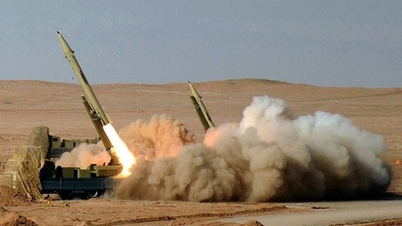
Tensions escalated from the end of February when the US and Israel launched an air campaign against Iran. In response, Tehran attacked Israeli and US-allied targets in the Gulf and blockaded the Strait of Hormuz.
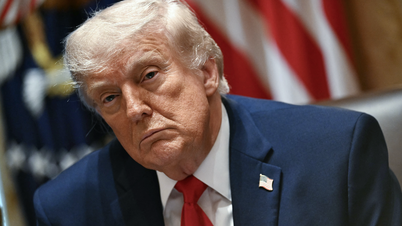
The ceasefire brokered by Pakistan took effect on April 8, but subsequent negotiations failed to yield a breakthrough. US President Donald Trump extended the ceasefire indefinitely, while Islamabad continued to play a mediating role.
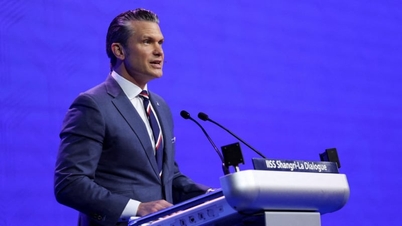
Also on May 30, US Secretary of War Pete Hegseth affirmed that Washington still maintains the ability to resume military operations if necessary, while emphasizing that any agreement must meet US requirements, including Iran permanently abandoning its nuclear weapons program, reopening the Strait of Hormuz, and accepting verification mechanisms.
Meanwhile, Tehran insists that no final agreement has been reached and that many issues remain to be negotiated.
In a related development, the U.S. Central Command (CENTCOM) announced on May 30 that it had neutralized the Gambian-flagged cargo ship Lian Star, which was attempting to reach an Iranian port, by firing missiles at the ship's engine room.
According to CENTCOM, the agency that oversees US forces in the Middle East, the attack was carried out on May 29 after the Lian Star failed to respond to more than 20 warnings. US military aircraft “neutralized the ship by firing a Hellfire missile into the engine room.” CENTCOM emphasized that “the ship is no longer en route to Iran.”
However, the CENTCOM statement did not provide information on casualties on board the Lian Star after the attack.
Source: https://www.vietnamplus.vn/iran-quyet-thuc-thi-quyen-quan-ly-eo-bien-hormuz-post1113620.vnp












![[Weekend Podcast] World Cup 2026: When the dream of playing football becomes a game for those with thick wallets](https://vphoto.vietnam.vn/thumb/402x226/vietnam/resource/IMAGE/2026/05/31/1780220467442_anh-thumb-podcast-2.png)







![[Video] Sunset at Lap An Lagoon – Where the sun sets over the fishing nets](https://vphoto.vietnam.vn/thumb/340x192/vietnam/resource/IMAGE/2026/05/31/1780192137701_beach-landscape-sea-water-nature-grass-745871-pxhere-com.jpeg)


![[Photo] The General Secretary, President and his wife lay flowers at the Ho Chi Minh Monument in Manila.](https://vphoto.vietnam.vn/thumb/1200x675/vietnam/resource/IMAGE/2026/05/31/1780219759477_anh-man-hinh-2026-05-31-luc-16-29-07.png)

































































Comment (0)