

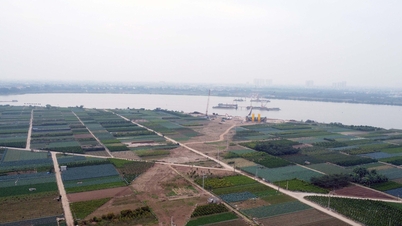
After the Lunar New Year, prices plummeted to only 2,000-2,500 VND/kg, and at times even dropped to 1,000-1,500 VND/kg. Currently, approximately 538 hectares are entering the peak harvesting season with an estimated total yield of 20,000 tons; this creates significant pressure on the consumer market.
In response to this situation, the Department of Industry and Trade quickly intervened, issuing a document requesting localities, distribution businesses, supermarket chains, and wholesale markets to support the connection and consumption of watermelons. Many retail businesses responded positively, contributing to "rescuing" a portion of the farmers' produce.
At GO! Quy Nhon Supermarket, Ms. Le Thi Thanh Thao - the supermarket director - said: "When exports faced difficulties, watermelons returned to the domestic market, creating great pressure on consumption. We proactively imported watermelons from Gia Lai and sold them at no profit, at a price of about 7,500-8,500 VND/kg, to support farmers."
According to Ms. Thao, supermarket sales have increased significantly thanks to the public's response, but the remaining inventory is still not fully cleared.
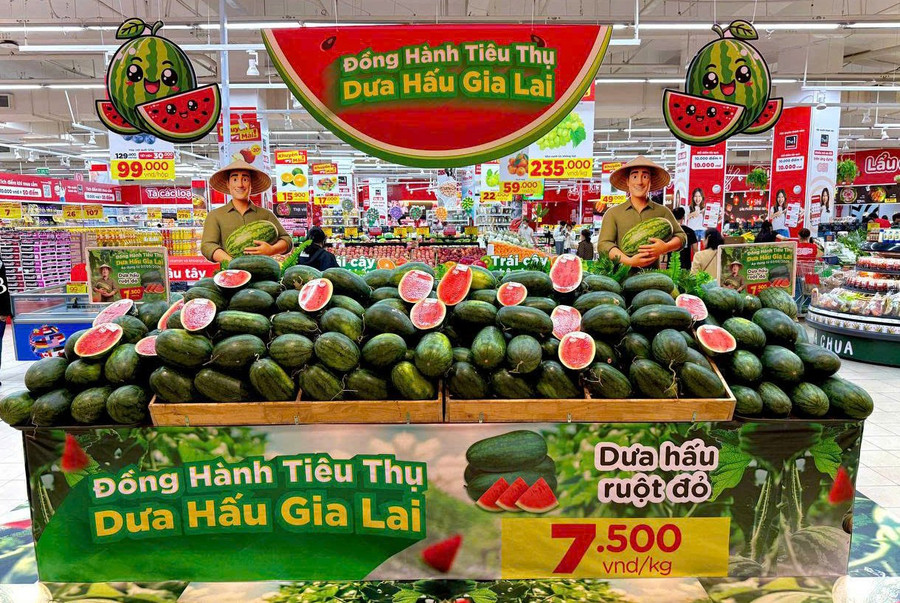
Similarly, the Bach Hoa Xanh supermarket chain has also implemented numerous programs to support the consumption of Gia Lai watermelons at its 2,900 stores nationwide. Mr. Dau Nhu Anh, Director of the fruit category at the company, shared: "Our goal is to consume over 1,000 tons of watermelons during this campaign to help farmers with their sales."
According to him, with a network of 62 Bach Hoa Xanh stores throughout the province, the company is focusing on boosting distribution, prioritizing display and sales at reasonable prices to stimulate consumer demand.
However, according to assessments by relevant authorities, current solutions are mostly temporary measures. "Rescuing" agricultural products is only a short-term solution and cannot be sustained without fundamental changes in production organization and consumer markets.
In the long term, the local agricultural sector needs to reorganize production in a planned manner, controlling acreage and output to match market demand.
At the same time, it is necessary to strengthen the links between farmers, cooperatives, and businesses to form sustainable value chains. Diversifying export markets, improving product quality, and meeting international standards are also urgent requirements.
Source: https://baogialai.com.vn/ket-noi-tieu-thu-dua-hau-post583226.html
















































































Comment (0)