Unlocking the potential of waterway transportation in Ho Chi Minh City.
Following the merger, Ho Chi Minh City focused on developing its waterway transportation system and seaports, with the aim of becoming a major waterway transportation hub in the region.
Báo Sài Gòn Giải phóng•15/09/2025
After the merger, Ho Chi Minh City has a rich network of waterways in both the inner city and outer areas, as well as the Con Dao Special Zone.
Development has not been commensurate.
This abundance, coupled with seaports capable of accommodating large ships, transportation and tourism routes, especially the Bach Dang - Vung Tau expressway and the Can Gio - Vung Tau ferry, has given Ho Chi Minh City many advantages in transportation and tourism, creating momentum for logistics development and reducing pressure on road traffic.
However, according to the Ho Chi Minh City Department of Construction, the port and dock infrastructure in the city has not developed in proportion to its potential. Specifically, there are very few large-scale seaports, insufficient to accommodate many mother ships simultaneously.
The system of inland waterway ports and wharves remains fragmented and incomplete compared to the plan, with many obstacles related to investment and land regulations. The figures of 37 operational inland waterway ports out of 108 planned ports; 354 operational inland waterway wharves out of 636 planned wharves; and 132 inland waterway routes spanning over 1,430 km are quite modest.
Furthermore, the multimodal connection encompassing road, rail, and waterway transport is not yet truly seamless. Many freight transport routes have not been fully effective due to limitations in waterways and clearance.
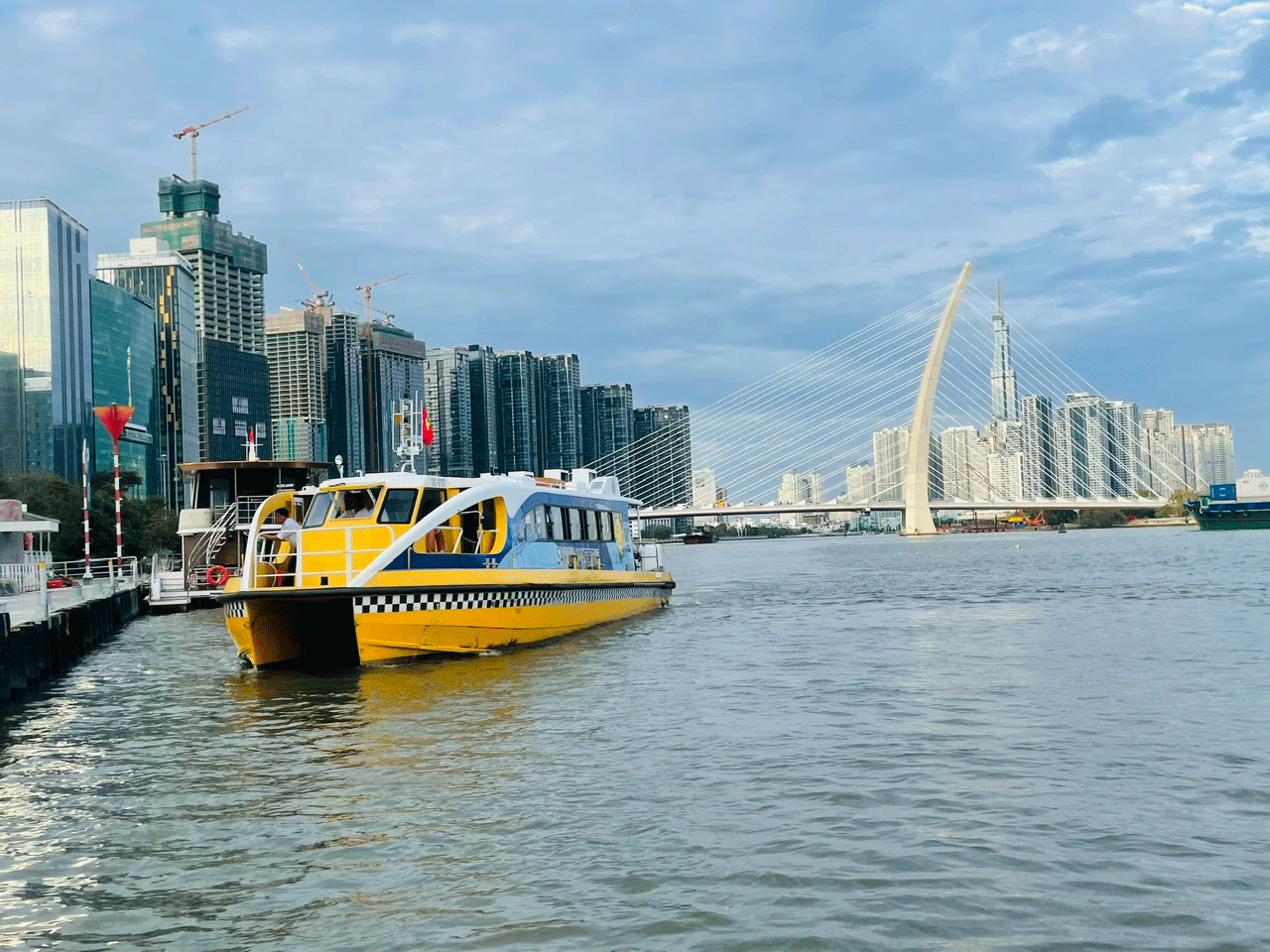
The entire city has 5 waterway passenger transport routes, including: river bus route No. 1 (Bach Dang - Linh Dong), high-speed boat from Bach Dang wharf to Vung Tau, sea ferry from Can Gio to Vung Tau, high-speed boat from Saigon Port to Ben Dam Port (Con Dao), and high-speed boat from Vung Tau to Ben Dam Port, which are not enough to meet demand.
Water transport in Ho Chi Minh City has many opportunities for breakthroughs.
Priority investment will be given to nearly 30 projects.
The Ho Chi Minh City Department of Construction has proposed including a series of projects to develop the waterway transport network, waterway infrastructure, and ports and wharves in the list of key priority investment projects for the period 2021-2030, with a vision to 2050.
The Department of Construction believes that for Ho Chi Minh City to unlock its potential in waterway transportation, become the leading waterway transport center in the country, with a scale comparable to that of Southeast Asia and Asia, and contribute to socio- economic development and national defense and security, it must invest appropriately according to the approved plan.
Initially, two main waterway transport corridors need to be established. Firstly, the North-Southeast corridor, encompassing northern Tay Ninh, Binh Duong, Dong Nai – the city center – Hiep Phuoc, Can Gio, Vung Tau, and Cai Mep-Thi Vai. Secondly, the East-West corridor, encompassing southwestern Vietnam, southern Tay Ninh – the city center – Hiep Phuoc, Can Gio, Vung Tau, and Cai Mep-Thi Vai. Along these two corridors, four key development axes connecting to the central area of Ho Chi Minh City will be prioritized.
More specifically, during the 2026-2030 period, Ho Chi Minh City will develop infrastructure for the central area, prioritizing investment in the Nha Rong - Khanh Hoi international passenger port system and the Ben Bach Dang park passenger port. Simultaneously, it will encourage investment in and the formation of inland waterway terminals to serve public passengers, and upgrade many important canal routes.
In the northern part of Ho Chi Minh City, at least one cargo port, one passenger port, and one inland port will be built, along with the formation of numerous inland waterway terminals. In the southern part, the Vung Tau international passenger port will be completed, and several international container terminals will be developed in the Can Gio - Cai Mep - Thi Vai area...
Overall, in the period 2021-2030, with a vision to 2050, Ho Chi Minh City has nearly 30 key projects included in the priority investment list, including waterway transport networks, ports, wharves, and dredging of waterways...
Initiating development
Emphasizing the crucial role of the waterway transport system, Dr. Pham Viet Thuan, Director of the Institute of Resource and Environmental Economics in Ho Chi Minh City, commented that waterway transport is not only a lifeline for transporting goods and developing logistics, sharing the burden with road transport, but also promotes the socio-economic development of the city.
According to Dr. Pham Viet Thuan, if Ho Chi Minh City invests appropriately, it will not only unlock the potential of waterway transportation, creating momentum for the development of the marine and riverine economy, but also preserve the riverine culture and create a unique identity for the city. Relevant authorities should promptly take measures to remove obstacles related to infrastructure, wharves, and planning of river and canal land corridors to facilitate socialized investment by businesses.
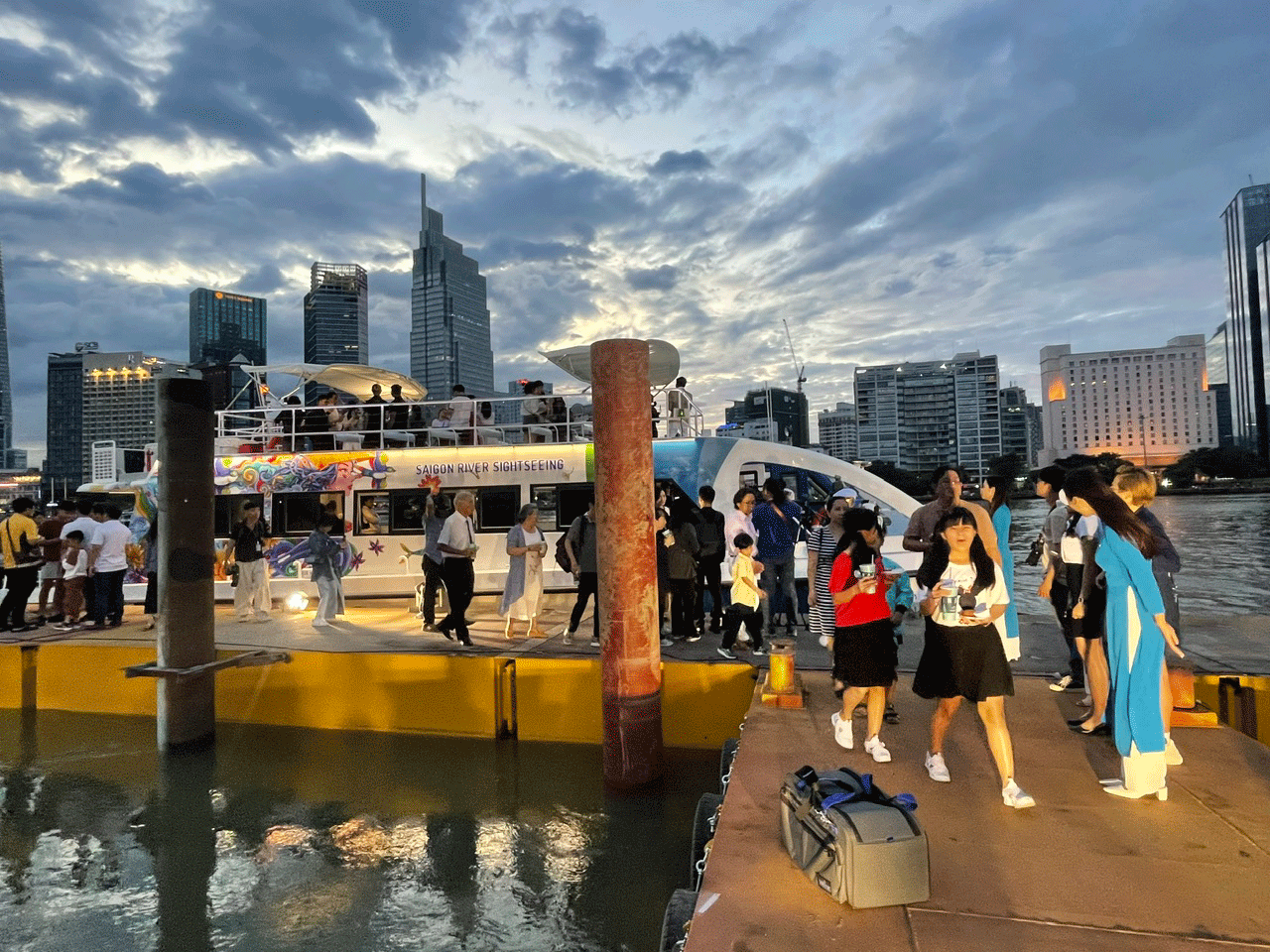
Passionate about river tourism and considering it an indispensable part of Ho Chi Minh City's identity, Mr. Nguyen Kim Toan, Director of Thuong Nhat Co., Ltd. - the operator of river bus route No. 1, believes that the city's development history is closely linked to the image of "boats on the docks and on the waterways," creating a unique culture that few other places possess. With its intricate and diverse network of canals and waterways, coupled with the advantage of integration with Binh Duong and Ba Ria - Vung Tau, developing the potential of waterway transportation in Ho Chi Minh City is absolutely the right decision.
Mr. Nguyen Kim Toan acknowledged that, in addition to investing in port and waterway infrastructure and expanding shipping routes, removing bottlenecks in land lease mechanisms and land use planning along river and canal corridors is also essential. "With the right mechanisms in place, businesses will be willing to bid and work together with the city to develop wharves and docks, expand tourism, and invest in river bus routes to serve the people," he asserted.
Mr. Phan Xuan Anh, Chairman of the Board of Directors of Viet Travel Company, also believes that the development of river tourism must be linked to the infrastructure of wharves and docks on the shore. Most of the riverside land in Ho Chi Minh City is publicly owned, and without a long-term lease policy, businesses will find it difficult to invest. Therefore, the city needs to establish a specialized task force to address this issue.
Leveraging advantages
At the recent workshop on developing waterway transport connecting passenger transport and tourism in Ho Chi Minh City in the period 2025-2030, organized by the Institute for Urban Development Research, Dr. Nguyen Thi Hau assessed that Ho Chi Minh City has a great advantage as it is both a riverine city and has a coastal orientation.
According to Dr. Nguyen Thi Hau, the rivers in Ho Chi Minh City not only have transportation value but are also linked to history, culture, beliefs, and traditional craft villages. Besides focusing on investing in wharves and waterways to develop water transport, Ho Chi Minh City needs to restore its riverine identity, including craft villages, markets, religious sites, and preserve stilt houses along the riverbanks to develop community tourism.
In Ho Chi Minh City, rivers serve more than just transportation purposes.



![[Image] Hanoi's urban life under the challenge of a "scorching hot" environment](https://vphoto.vietnam.vn/thumb/1200x675/vietnam/resource/IMAGE/2026/05/25/1779706979265_nang-nong-t5-2026-minh-duy-7-4636-jpg.webp)
![[Image] Close-up view of the interchange connecting the two expressways and Long Thanh Airport.](https://vphoto.vietnam.vn/thumb/1200x675/vietnam/resource/IMAGE/2026/05/25/1779703378210_ndo_br_z7863716673926-224453a31600126cce10622af6290afd-4549-jpg.webp)































































Comment (0)