

Typhoon No. 3, with its strong winds and heavy rain, severely impacted agricultural production. Thousands of hectares of rice and vegetable crops were flooded. Immediately after the storm subsided, local authorities and units focused on draining water to save the rice and vegetable crops.
On the morning of September 8th, the An Quoc pumping station (Kien Xuong district) operated all 8 pumps with a total capacity of 32,000 m3/hour.
Large areas of rice and other crops were damaged.
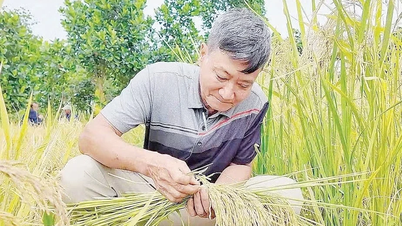
On the morning of September 8th, despite the rain, farmers in various localities were urgently heading to the fields to check on their rice crops. Observations in many areas showed that the water level in the fields was about two-thirds the height of the rice plants.
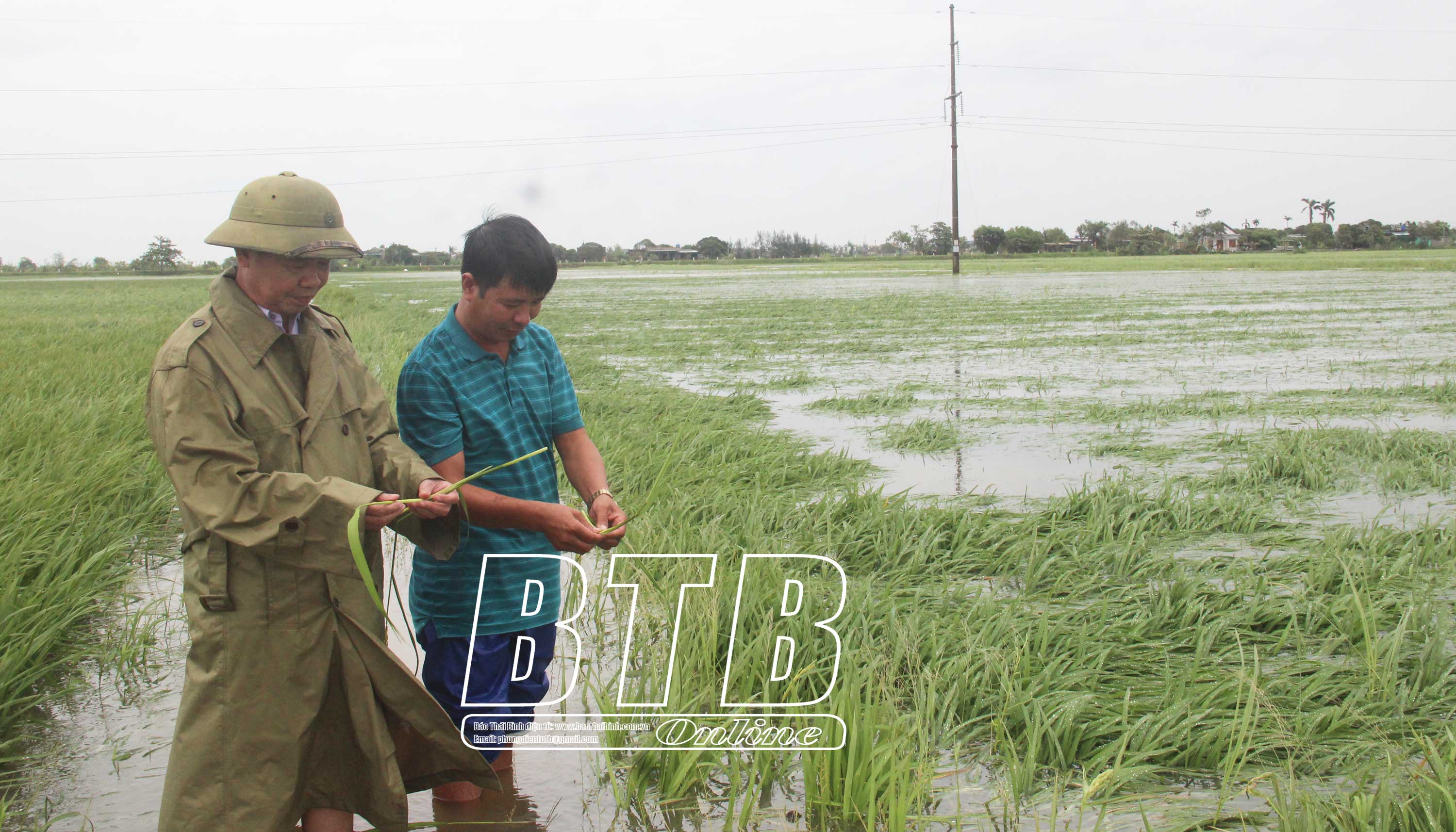
Officials in Thai Giang commune (Thai Thuy district) inspect the impact of the storm on the rice crop.
Ms. Le Thi Thanh, from Phat Loc Dong village, Thai Giang commune (Thai Thuy district), said: "Farming is like gambling with the weather. Before the storm, the rice was very good, with panicles about to bloom. Heavy rain and strong winds scorched the rice leaves, some areas had their panicles dislodged, and the panicles were completely submerged. If the water doesn't recede quickly, just 2-3 days of flooding can cause significant damage to yield due to panicle rot or the rice panicles turning black after blooming."
Mr. Nguyen Van Khuong, Chairman of the People's Committee of Thai Giang commune, said: 380 hectares of rice in the commune are growing and developing well, with expected to flower between September 10th and 15th. However, due to the impact of typhoon No. 3, 15 hectares of rice in the floodplain area of Phat Loc Dong and Phat Loc Trung villages were completely submerged, 50 hectares of rice were flattened, and the remaining area has very high water levels, submerging the rice panicles. Thai Giang does not have a drainage pumping station; water drainage mainly relies on two main rivers: Tien Hung River and Tra Ly River. Currently, the water level on the main river system is high, and the ability to drain by gravity is slow, thus posing a significant risk to rice yield.
In Dong Tan commune (Dong Hung district), Typhoon No. 3 also caused 30% of the rice crop that had already bloomed to be flattened. Mr. Lai Khac An, Director of the Dong Tan Agricultural Service Cooperative, said: In addition to the 30% of rice that was flattened, the remaining area was damaged by strong winds, causing leaf burn and panicle detachment. The cooperative is directing farmer groups to clear waterways to facilitate drainage; advising farmers not to apply single-nutrient nitrogen fertilizers or spray foliar stimulants to limit pests and diseases, while actively inspecting fields and paying attention to harmful agents such as brown spot disease and planthoppers.
Over the past few days, the province has experienced heavy to very heavy rainfall. The average rainfall across the province exceeded 200mm, with some areas receiving nearly 420mm. Widespread heavy rain, coupled with strong winds of force 9-10, gusting to force 12, has caused 30-70% damage to 6,000 hectares of rice fields, over 70% damage to 5,000 hectares, and flooding to 18,000 hectares of rice paddies. In addition, over 3,300 hectares of vegetables and nearly 1,400 hectares of fruit trees have been affected.
Focus on implementing timely drainage measures.
To mitigate the damage caused by Typhoon No. 3, the Provincial People's Committee directed the agricultural sector, localities, and units to open drainage gates and mobilize all available resources to clear waterways for rapid water drainage. From 8:45 AM on September 8th, the An Quoc pumping station in Quoc Tuan commune (Kien Xuong district) operated all 8 pumping units with a total capacity of 32,000 m³ /hour to drain water from 600 hectares of agricultural land in Quoc Tuan and An Binh communes.
Mr. Tran Hoai Nam, Head of the Tay Son cluster, Kien Xuong District Irrigation Works Exploitation Enterprise, said: "We have deployed 100% of our personnel to perform the task, taking turns continuously checking and monitoring the voltage and heat dissipation of the pump motors; removing weeds, garbage, and obstacles in front of the mesh screens to prevent blockages, ensuring that the pumps operate safely and efficiently, and drain water to the maximum extent."
In the Northern irrigation system, the unit put into operation two pumping stations: Ha Thanh (Hung Ha) and Hau Thuong (Dong Hung) from the morning of September 8th.
Mr. Bui Van Kha, Deputy Director of Bac Thai Binh Irrigation Works Exploitation Company Limited, said: In addition to operating two pumping stations, from 3:00 AM on September 8th, drainage through the river and sluice system has been possible. We opened the maximum of 10 sluice gates at Tra Linh, the Tra Ly riverbank opened for drainage from Quan Hoa sluice gate (Dong Hung) to the sea; and the Hoa riverbank opened from Dai Than sluice gate (Quynh Phu) to the sea. Due to power outages after the storm, some pumping stations are not yet operational. The company has assigned staff and workers to be on duty 24/7 at the works, ready to operate the pumps for drainage when power is restored.
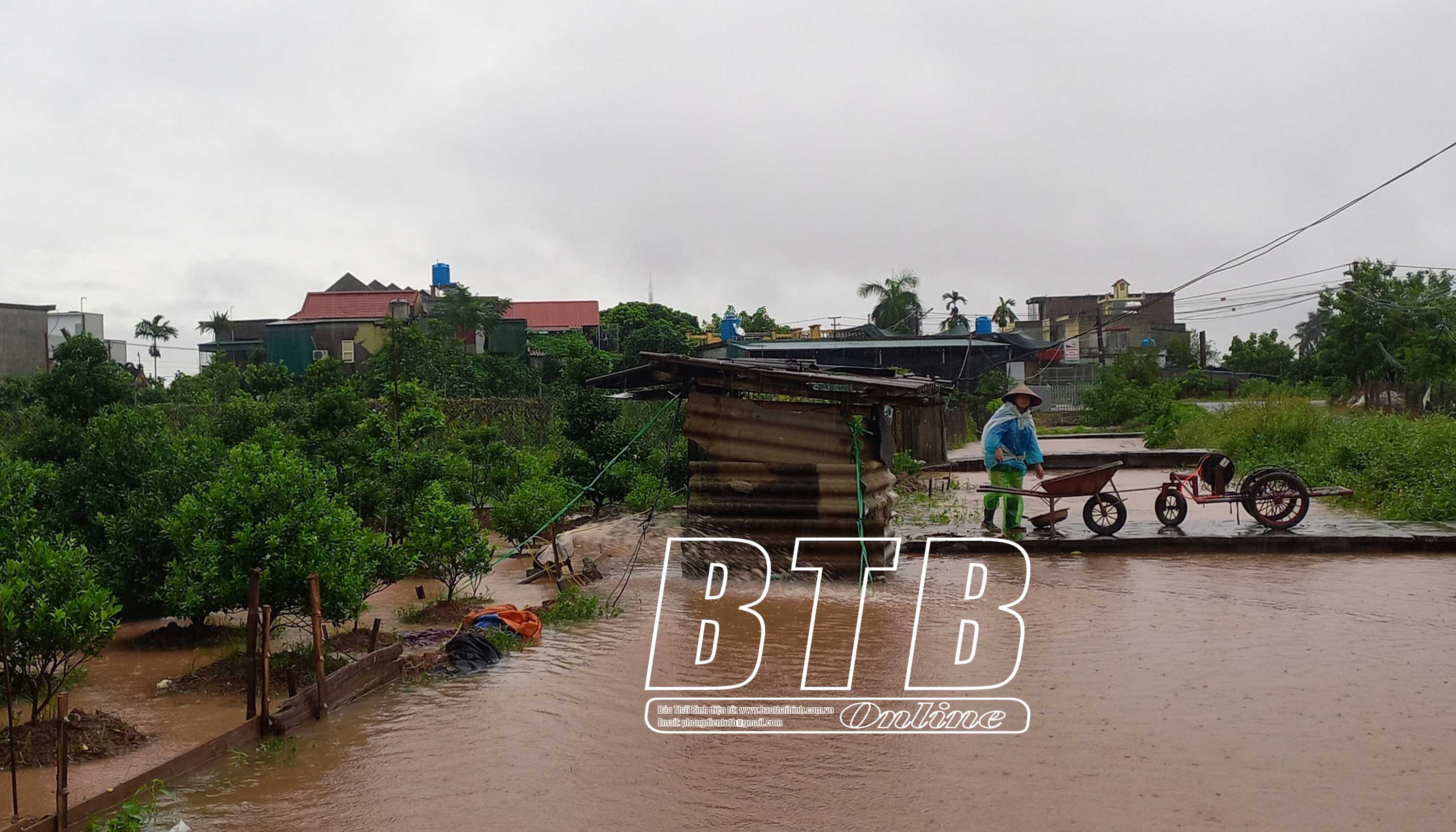
Farmers growing ornamental kumquats in Dong Hoa commune (Thai Binh city) are using small pumps to urgently drain water from their kumquat trees.
Quickly restore production.
To minimize damage caused by storms and heavy rains, the agricultural sector recommends that localities proactively implement technical solutions. For rice fields where the rice plants are already green and ripe, if they are flattened by storms and heavy rains, farmers should be guided to prop up and tie the rice plants to prevent the grains from germinating on the panicles; drain the water from the fields and spray pesticides to control rice planthoppers and brown spot disease that develop after heavy rains. In areas where the rice has not yet flowered, focus on draining water to prevent the rice panicles from being submerged, which will cause them to rot and significantly affect yield.
According to engineer Pham Thi Tuoi from the Agricultural Extension Center: After storms and heavy rains, rice plants are at high risk of pest and disease infestation, such as rice planthoppers, bacterial blight, and brown spot. Therefore, farmers need to spray to prevent these pests and diseases when the weather is favorable. For areas preparing to flower, additional spraying should be done to prevent black kernel disease. For other crops, it is necessary to quickly drain water and clear waterways to prevent prolonged flooding in the fields, which can cause root and stem rot. In areas that can still recover, remove damaged plants and leaves and spray to prevent root rot. When the weather is favorable, weed, break up the crust, and spray with KH and super phosphate fertilizers to stimulate root development, while also supplementing fertilizer to help the plants recover quickly.
The province requests the Government and central ministries and agencies to provide support for production losses in accordance with Government Decree No. 02/2017/ND-CP on mechanisms and policies to support agricultural production to restore production in areas damaged by natural disasters and epidemics; and to provide support for plant seeds to restore production.
Ngan Huyen
Source: https://baothaibinh.com.vn/tin-tuc/4/207447/khan-truong-tieu-thoat-nuoc-bao-ve-lua-rau-mau



![[Image] National Assembly discusses the implementation of the socio-economic development plan.](https://vphoto.vietnam.vn/thumb/1200x675/vietnam/resource/IMAGE/2026/04/20/1776696707422_ndo_br_img-20260420-185419-jpg.webp)
![[Photo] General Secretary and President To Lam meets with National Assembly delegates from ethnic minorities.](https://vphoto.vietnam.vn/thumb/1200x675/vietnam/resource/IMAGE/2026/04/20/1776696701056_a1-bnd-8331-3342-jpg.webp)



















































































Comment (0)