

I first visited Dong Nai in 2018, on the occasion of attending a literary writing camp organized by the Army Literature and Arts Magazine in collaboration with Dong Nai province, lasting 15 days in Bien Hoa city. While sitting on the bus from the Mekong Delta to the Eastern region, I gathered my indirect memories of this land, preparing myself with the first baggage for my emotions. I heard faintly in my ears the lullaby of my grandmother singing in her hammock on a summer afternoon: “The Nha Be River flows and divides in two / Whoever goes to Gia Dinh or Dong Nai, let them go,” “A man should be a man worthy of his name / Having experienced Phu Xuan, having been to Dong Nai”...
I had memorized those folk verses since I was a child, but as I grew older and became curious about the world around me, the first question I asked my grandmother was, "Where is Dong Nai, Grandma?"
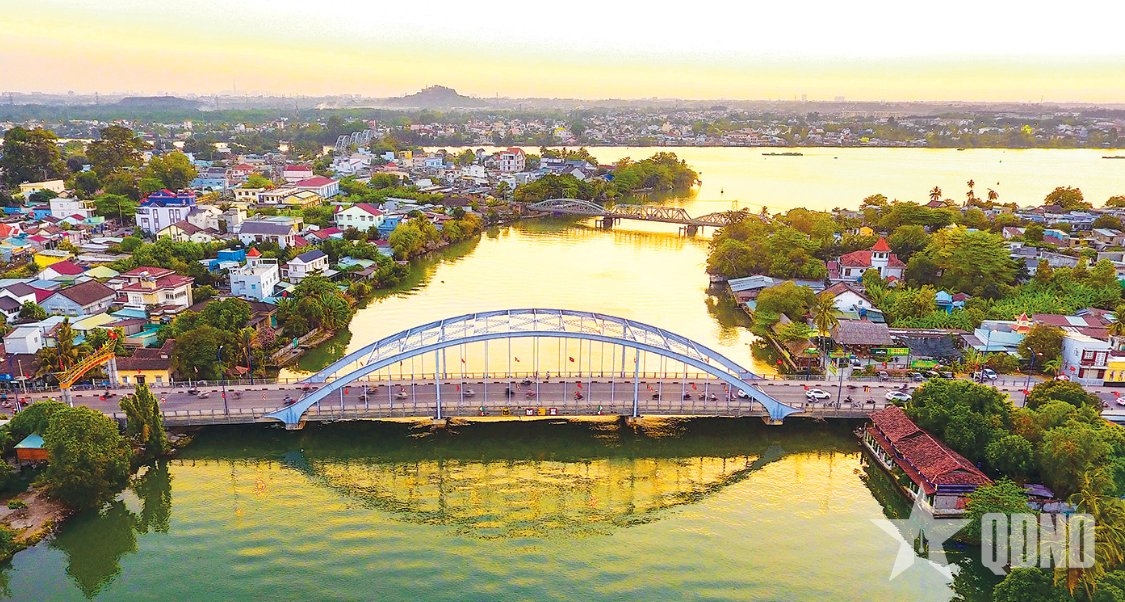 |
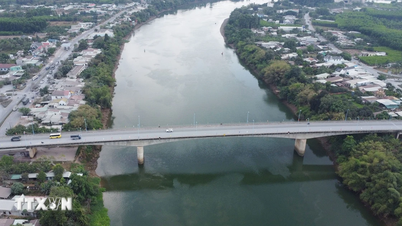
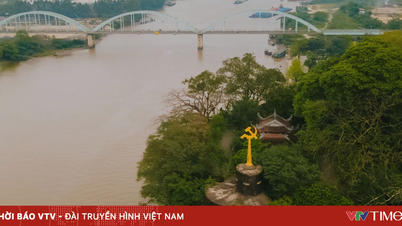
The Dong Nai River flows through Cu Lao Pho (Tran Bien Ward, Dong Nai City). Photo: Lo Van Hop |
Through fragmented images from the memories of many generations of her ancestors, she learns that her great-grandfather was a laborer who followed General Nguyen Huu Canh south to survey the Dong Nai region; her great-great-grandfather was a merchant who traveled to and from Dong Nai to buy and sell pottery; and her older brother, at eighteen, joined the resistance in the swamps and died in the Sac Forest.
Those images of a red basalt land in the far East made me—a young man from the West—less unfamiliar, and I saw somewhere in the fields where there were once many wild deer herds, now a fertile semi-mountainous region, the source of the flow of rivers, of life, and of people.
During my first days at the writing camp in Dong Nai, I was assigned to share a room with Nguyen Chi Ngoan from the U Minh Thuong area. Both of us were from the Mekong Delta, both were visiting Dong Nai for the first time, and we were also the youngest members of the camp, so we were always together. Perhaps the spirit of the delta, mixed with a connection to the land of Tran Bien, where Nguyen Huu Canh had brought laborers from Tran Bien to the Mekong Delta years ago, allowed us to settle and make a living, while still maintaining the mindset: "If you come here, stay here / When you take root and the tree turns green, then return home"...
It's hard to know if any of those laborers from the past have any connection to us, but it's certain that the Tien River, the Hau River, and the streams of the U Minh forest have been the paths our boats have taken to Dong Nai throughout history. And we are like two drops of water, returning to Dong Nai this time with very familiar feelings!
 |
| Tran Bien Temple of Literature. Photo: HUYNH NHI |
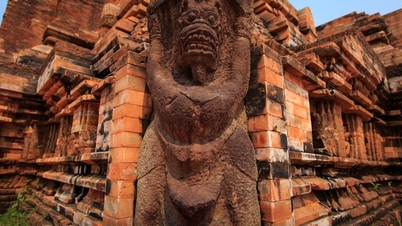
At the writing camp, after meals, when we weren't writing, the two of us would walk a few hundred meters to the house of poet Dam Chu Van, borrow his motorbike, and ride around Bien Hoa. Once, in a moment of exuberance, we even went to an archaeological site where they had unearthed a stone tomb dating back thousands of years, one of the typical relics of the once flourishing Dong Nai culture that encompassed the entire southeastern region of Vietnam today.
I remember visiting the ancient tomb and examining the archaeological sites. I realized that Dong Nai is not just a vibrant and modern young man; hidden within its strong development is a red thread connecting it to ancient cultures. These are remnants that not only shaped history but, despite being thousands of years old, still contribute to the cultural background, character, and driving force behind the development of this young land.
I remember that time, Ngoan told me that looking at the gourd vines growing by the fence of the archaeological site, he thought they resembled the land of Dong Nai so much. They were lush and vibrant, flourishing, but flourishing on the very soil that thousands of years ago our ancestors had tilled and created a civilization whose echoes still resonate today.
To truly hear those sounds of the past, we rode together to Tran Bien Temple of Literature—the first temple of literature built (in 1715) in the Southern region of Vietnam. That morning, the sky was thick with mist. Through the white veil of mist, I read the lines of the poem compiled by Labor Hero and Professor Vu Khieu. The heroic spirit of the poem, combined with the ancient atmosphere of the temple, made me imagine hearing the sound of oars splashing in the water along the river ahead, the distant neighing of horses, and the gentle murmur of the spring water. Our ancestors often said, "Dragons bow outside Hue , horses offer sacrifices in Dong Nai," and there must be a reason for that.
In the prosperous and flourishing Pho Island region at that time, the Tran Bien Temple of Literature was built to honor Confucius, Vietnamese cultural figures, and to train talented individuals to serve the country. The Tran Bien Temple of Literature has experienced many ups and downs, even being dismantled by the French colonialists, but with its long-standing spirit of learning and culture, it has been restored and preserved to this day. In the midst of a bustling city, it remains a place for people to find peace, to listen to the intertwining of culture and time, creating a soft power, a silent yet powerful driving force for this land of outstanding people and rich history. And somewhere, the Tomb of Trinh Hoai Duc (the tomb of the renowned figure Trinh Hoai Duc) still rests quietly, covered in moss, in a small alley in the heart of the bustling city.
During our time at the camp, every afternoon after dinner, Ngoan and I would often take a stroll along the road that passed by our "camp." The artists and writers from Dong Nai said that along this road, there were still many places where the remnants of war hadn't been completely "washed away." Looking at the bomb craters, now filled with stagnant water, I remembered the stories about the heroic Rung Sac forest that we had visited during our time at the camp. Not far from the city, where artillery fire still reached, lay a forest where thousands of soldiers had sacrificed their lives to achieve the resounding victory of the Rung Sac special forces. The rows of unidentified graves, the wounds of the forest after decades, still remain, stirring a pang in my heart.
In a heroic land, one of the most developed in the region, the history of this land still holds pages steeped in sorrow. Strangely, during my days in Rừng Sác, listening to the tour guide recite the poem by Colonel Lê Bá Ước, Hero of the People's Armed Forces and former Commander and Political Commissar of the 10th Rừng Sác Special Forces Regiment, I memorized it after just one reading. While walking along the roads in the rapidly developing city of Biên Hòa, the verses resonated deeply within me: “White bones bloom like flowers at the bottom of the river / The vast Rừng Sác forest is tinged with pink / Five hundred remains yet to be found / The boundless mangrove forest has achieved great feats…”
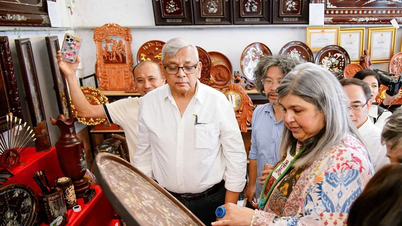
I remember visiting many places in Dong Nai during the 15-day camp. I enjoyed cocoa beans in the orchards, drank Tan Trieu pomelo wine, and gazed admiringly at the rocky landscapes of Buu Long stone carving village... Everything blended traditional and modern spaces, preserving cultural heritage while remaining an impressively developed region. They say that culture is always evolving and adapting to the times.
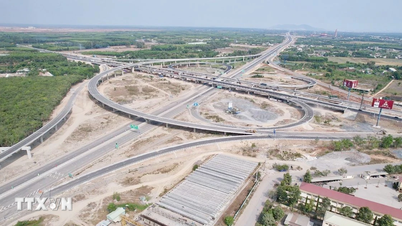
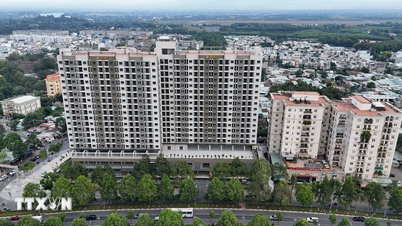
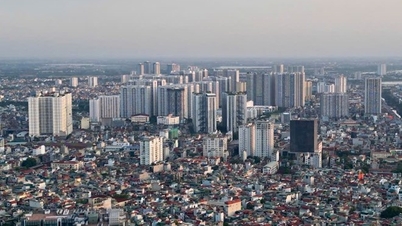
Looking at the backdrop of Dong Nai city today, it's impossible not to see that this is a land of promise and great potential. As I envisioned at the beginning of this article, Dong Nai is a young, modern, and vibrant city. But within that breath and vitality, there are always abundant cultural and historical layers of a semi-mountainous region full of character. In the flow of urban modernization, this "character" is what creates a unique backdrop when mentioning the name – a Dong Nai that is easy to remember but hard to forget!
Source: https://www.qdnd.vn/phong-su-dieu-tra/ky-su/khi-chat-dong-nai-1042091

![[Photo] General Secretary and President To Lam presides over a meeting on preparations for the review of one year of operation of the three-tiered government system.](https://vphoto.vietnam.vn/thumb/1200x675/vietnam/resource/IMAGE/2026/06/02/1780391821195_a1-bnd-4595-9717-jpg.webp)































































Comment (0)