

Multicultural school
We visited and experienced schools in the Northwest highlands, and what surprised and delighted everyone was not only the innocence and purity of the ethnic minority students and the diligence, dedication, and love for children shown by the teachers, but also the vibrant, creative, and effective models of "multicultural" and "schools connected to real life" implemented by the schools.
Upon further investigation into these activities, we learned that in the Northwest provinces such as Lao Cai, Son La, Dien Bien , and Lai Chau, schools from preschool to high school have been actively organizing experiential activities aimed at bringing students back to real life in the villages, where the indigenous cultural values of their homeland are formed, preserved, and passed down, through field trips within the local area.
The selection of content and organizational forms for career-oriented experiential activities aimed at connecting students with real-world situations has yielded high educational effectiveness. This is an effective approach for classroom lessons without chalk and blackboards in schools in the Northwest highlands today.
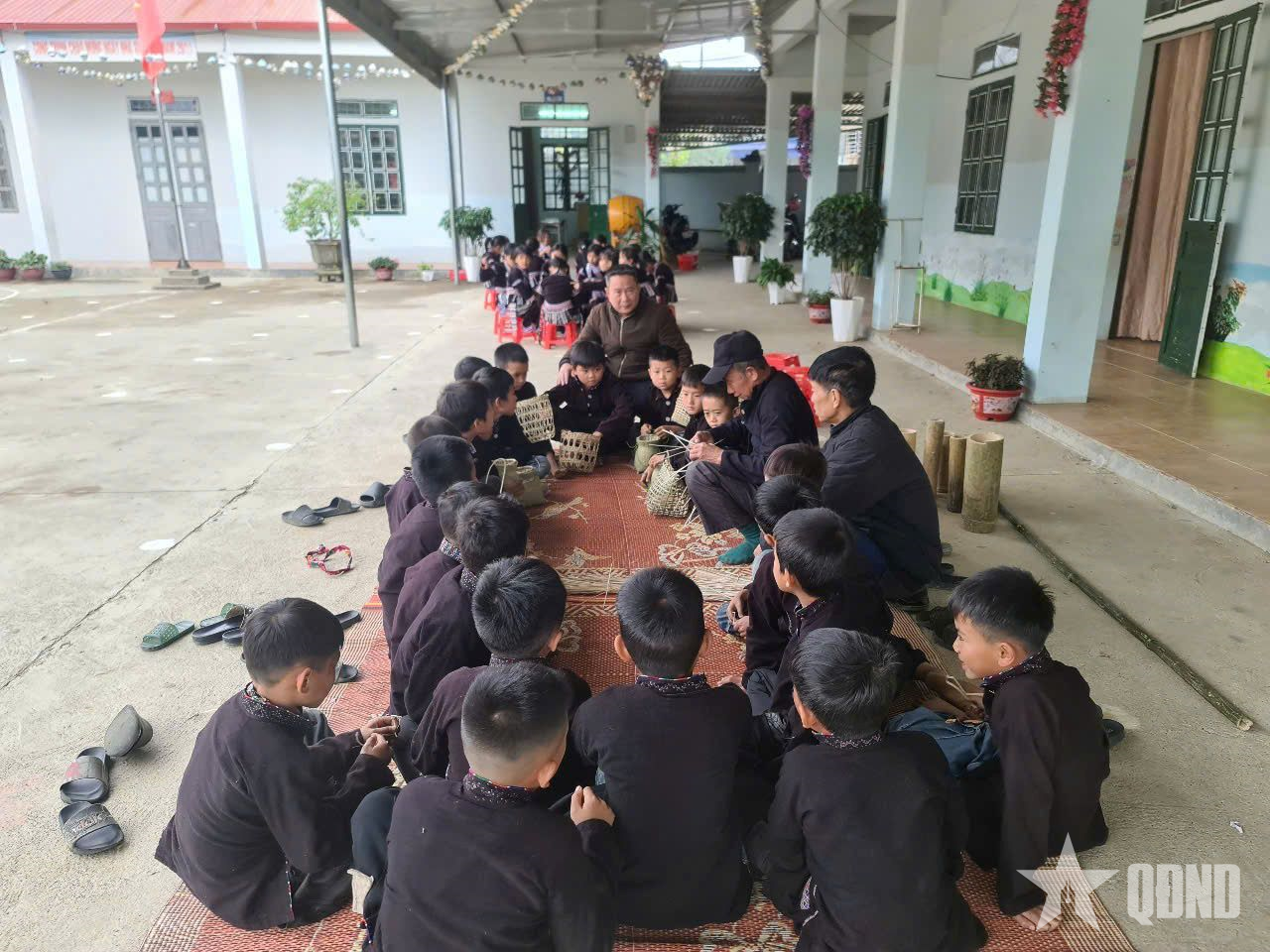 |
| Students at Na Tam Primary and Secondary School are being guided in the craft of weaving by elders and parents. |
Over the years, schools in the Northwest highlands have been actively promoting experiential activities tailored to the specific characteristics of the region and the local conditions. These activities are guided by flexible, creative, appropriate, and practical approaches. Instead of organizing field trips to historical sites or tourist destinations, schools in the Northwest highlands have proactively organized on-site experiential activities to make them more accessible to students and reduce costs.
Here, students have the opportunity to explore and learn about the rich cultural identity and customs of the ethnic groups. In particular, intangible cultural heritage and traditional crafts are introduced, guided, and performed by artisans and elders in the village.
Meeting his former Tay ethnic student from Bao Yen (Lao Cai), now the principal of a junior high school in Sa Pa, Mr. Nguyen Van Dai, Principal of Ban Khoang Ethnic Boarding Junior High School (Ngu Chi Son commune, Lao Cai province), shared with us: “With over 90% of our students being from ethnic minorities, the school has developed learning models that focus on preserving and experiencing local cultural identity through specific activities and events. The students are the main participants in these activities. This is a highlight of the school's annual experiential learning program.”
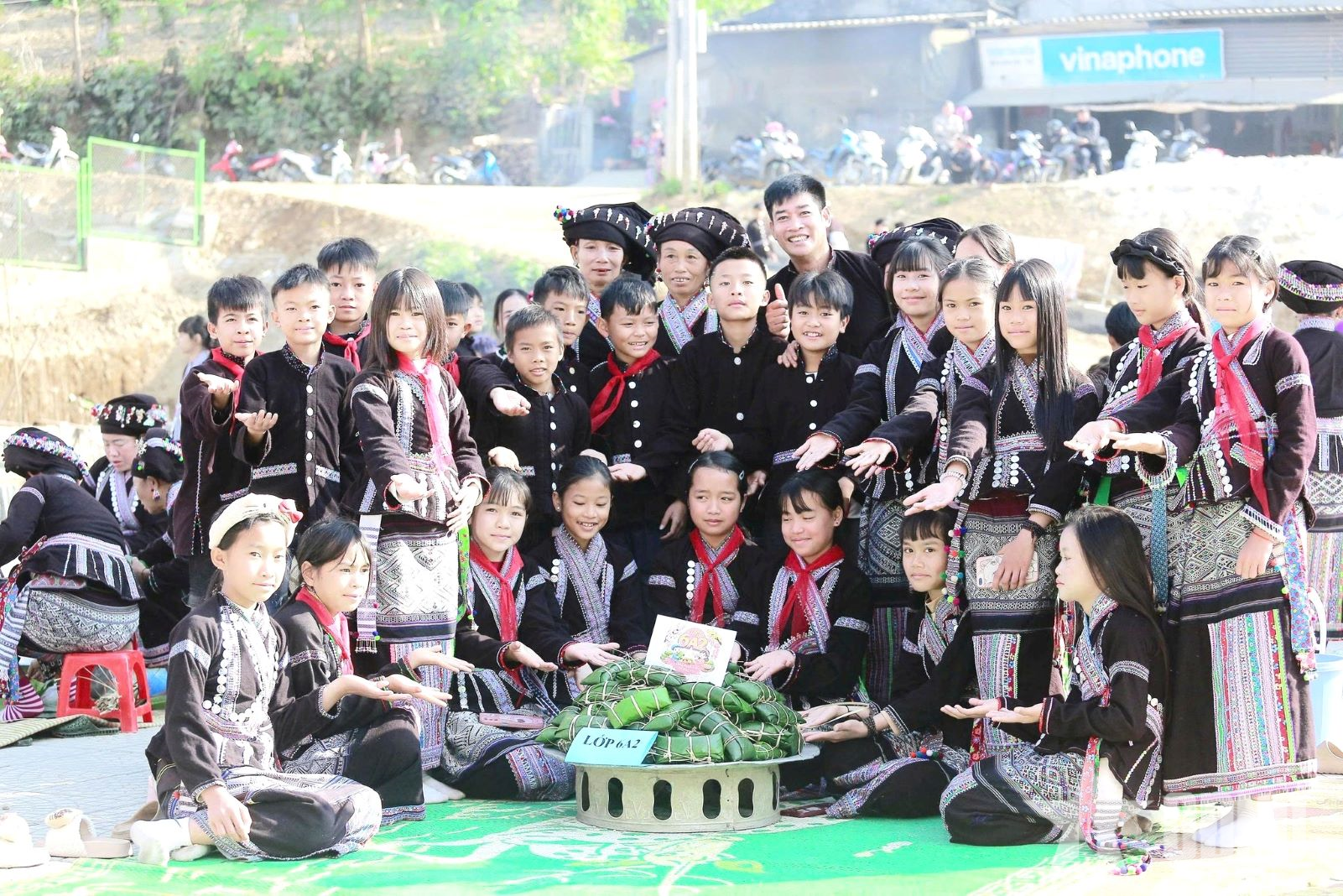 |
| The embroidery club has a large number of female students from the Lao ethnic group. |
In schoolyards, extracurricular activities, quizzes, and STEM education activities, schools have organized and created spaces showcasing traditional culture with the unique characteristics of the local area. Through cultural festivals, students participate in quizzes, practice performing, and introduce various cultural forms of their ethnic groups, such as: culinary culture, traditional costumes, folk games, folk songs, etc., helping students immerse themselves in the traditional culture of their ethnic groups.
Colorful Club
On our journey to Northwest Vietnam, we stopped in Tam Duong, a place with a large Lao ethnic minority population. Here, Na Tam Primary and Secondary School is a multi-level school located in Ban Bo commune, Lai Chau province. Over 97.5% of its students are from the Lao ethnic minority.
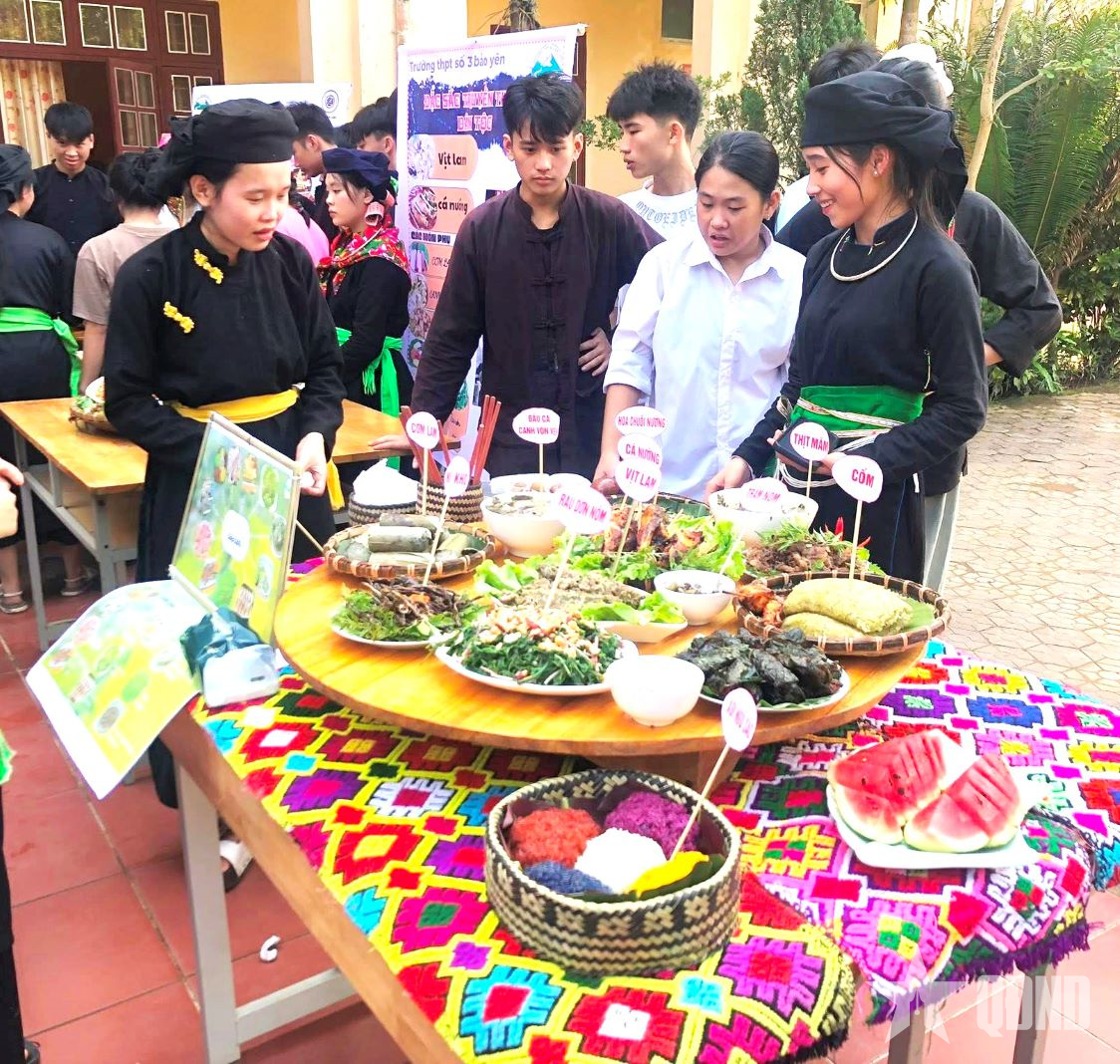 |
| The food platters from each class have been completed and are ready for the competition. |
In order to implement the local projects "Preserving and promoting the fine traditional cultural identity of ethnic groups associated with tourism development" and "Preserving and promoting the value of folk songs, folk dances, and folk music of ethnic minorities associated with tourism development in the period 2021-2030", the school has proactively established and developed a plan for the club's activities with the motto: Experiential education combined with the preservation and promotion of the cultural identity of Lao ethnic groups.
The Na Tam Primary and Secondary School's Club comprises various sub-clubs such as: Sports Club; Embroidery and Knitting Club; Music Club; and Fine Arts Club. The activities of these clubs are specifically defined by sports training, folk games, folk dances, embroidery, knitting, folk dances, painting, collage, etc., with themes focusing on the land and people; customs and traditions; clothing; and the unique cultural identity of the Lao people.
Based on the overall plan, the activities of the Na Tam Primary and Secondary School's clubs are organized weekly after school hours, combined with career guidance experiences within the school and in the villages, and extracurricular activities to celebrate major holidays throughout the school year. Notably, the majority of the students participating in the clubs are indigenous people, born and raised in a place steeped in cultural identity. Therefore, the cultural forms introduced into the clubs are not unfamiliar to them. Consequently, when activities are organized, the students show great enthusiasm, confidence, joy, and actively complete the assigned projects.
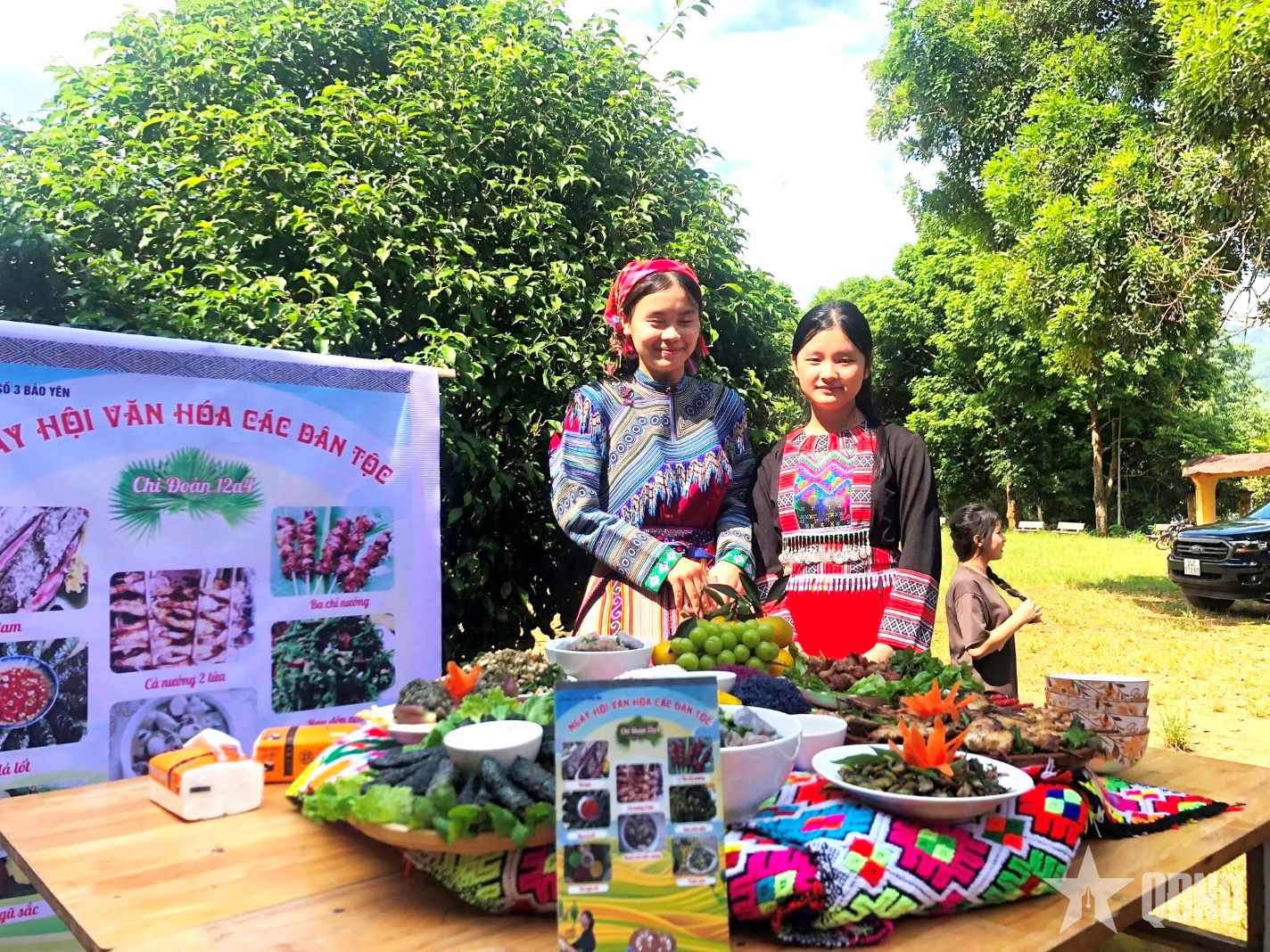 |
| The students, dressed in traditional costumes, confidently introduced the culinary culture of their ethnic group. |
Because the students were young, the teachers assigned to organize the activities proactively coordinated with parents and artisans in the Lao ethnic villages to guide the students in effectively participating in the activities. As a result, the products created by the students in each cultural experience were diverse and abundant. These included enthusiastic participation in traditional sports, skillfully hand-embroidered brocade fabrics with intricate patterns, and items such as baskets, bags, and containers woven from bamboo. The products created will be displayed in the school's Lao ethnic cultural space.
To create a vibrant visual space for students, Na Tam Primary and Secondary School has maintained the practice of wearing traditional Lao ethnic costumes every Monday, designed exhibition rooms showcasing Lao ethnic culture in 2 outdoor libraries, 1 book library, 3 school locations, and 28 display corners in 28 classrooms.
Therefore, the school grounds and classrooms are imbued with the colors of traditional culture. The school collaborates with all 8 villages to build a happy school environment, linked to the preservation and promotion of Lao ethnic cultural values. Every year, in February, the school organizes a festival to preserve and promote the cultural identity of the Lao ethnic group, with many activities such as traditional costume performances, culinary competitions, performances of traditional musical instruments, and folk games.
Teacher Do Duy Dong, head of the sports club, shared: “The club has created a beneficial and healthy playground for the school's students, especially the Lao ethnic minority students. They experience and create folk games, traditional dances, and cultural products.” The rich, vibrant, and effective activities organized by schools in the Northwest highlands demonstrate that career guidance experiences don't necessarily have to be fixed to flag-raising ceremonies, class activities, or the classroom. This requires the proactive, positive, and flexible approach of schools and teachers to allow students to connect with real-life situations through interesting and meaningful experiences.
Experience the cultural festival.
To create an experiential space showcasing traditional cultural identity, every year, in the first semester of the school year, Bao Yen No. 3 High School (Lao Cai) organizes an educational activity themed "Local Ethnic Groups' Cultural Festival". This is a creative experiential activity within the school's educational program, aiming to help students understand, appreciate, and promote the traditional cultural values of the ethnic groups in Lao Cai province in particular and Vietnam in general.
Bao Yen No. 3 High School, located in Na Khuong village, Nghia Do commune (Lao Cai province), is home to over 90% of the students from ethnic minority groups such as Tay, Dao, Mong, and Nung. In the 2025-2026 school year, the school will have 12 classes with 505 students. The "Local Ethnic Culture Festival" is an experiential activity organized annually in the first semester to provide students with an opportunity to experience local culture.
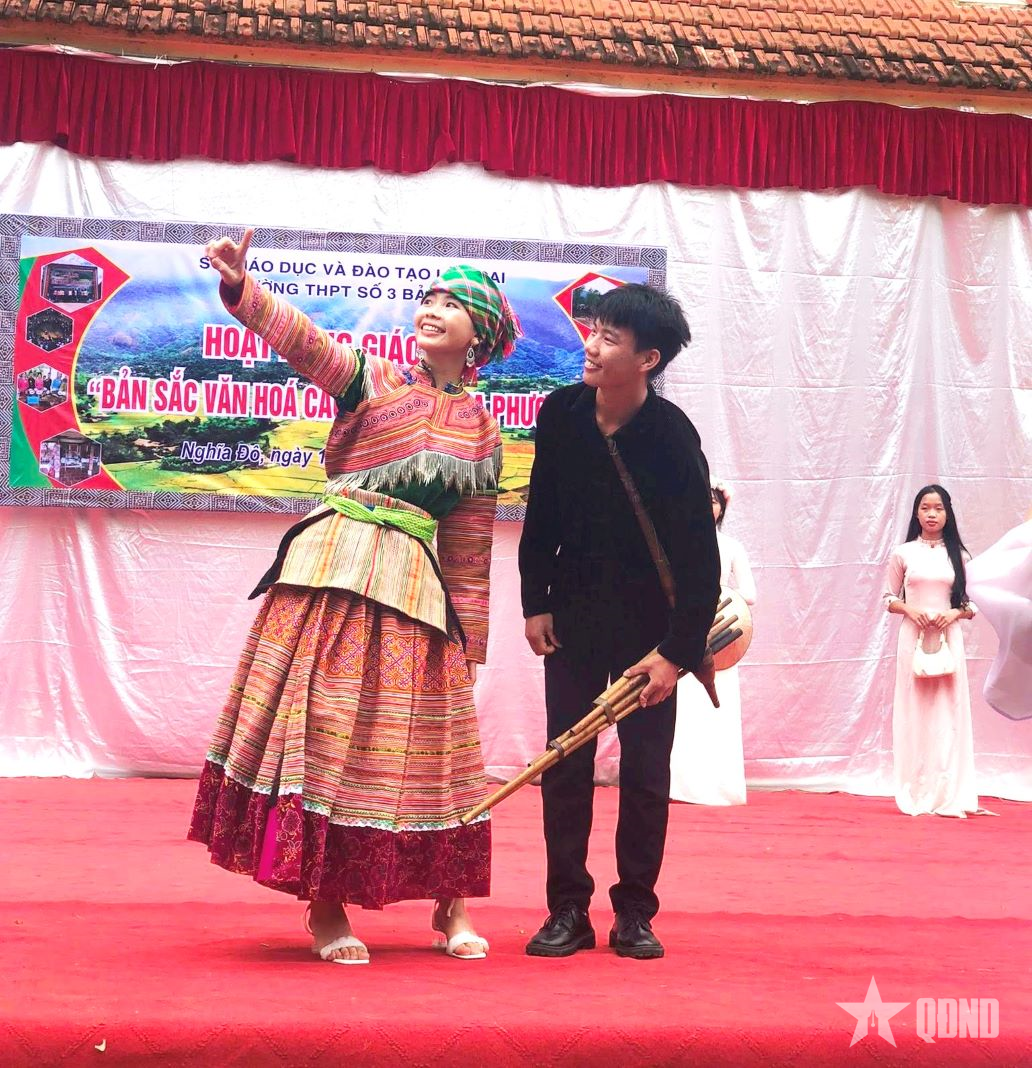 |
| The students performed cultural and artistic acts representing various ethnic groups. |
Teacher Quan Van Thuong, Vice Principal of Bao Yen No. 3 High School, shared: “During the festival, each class presented a unique performance of traditional costumes of ethnic groups such as Tay, Mong, Nung, Kinh, Dao, Thai, Muong, Phu La… The vibrant dresses and costumes, along with confident and lively presentations, helped students feel more proud of the beauty of their ethnic culture, while also contributing to spreading the spirit of solidarity, exchange, and understanding among ethnic groups.”
The highlight of the program was the cooking competition featuring traditional ethnic dishes. Students directly prepared, cooked, and presented traditional dishes such as braised duck, five-colored sticky rice, men men (a type of corn porridge), grilled stream fish, pickled pork, grilled buffalo meat, and wild vegetable salad. Through this, they gained a deeper understanding of culinary culture, honed their life skills, and developed teamwork skills.
The experiential activities also involved the active participation of parents, who accompanied the students in preparing materials and guiding them to learn about and accurately recreate their ethnic culture. The parents' involvement demonstrates the close cooperation between the school, family, and society, contributing to the effective implementation of the "Skilled Community Mobilization" model that Bao Yen No. 3 High School is currently implementing.
This is clear evidence of the spirit of unity, consensus, and collaborative effort in building a friendly, welcoming, and community-oriented educational environment. The activities are integrated with subjects such as Literature, History, Economics and Law Education, and experiential learning and career guidance, helping students apply interdisciplinary knowledge to practice while fostering love for their homeland and national pride.
The "Local Ethnic Culture Festival" is not only a beneficial playground but also a vivid lesson in love for national culture, solidarity, and respect for cultural diversity. Through this activity, Bao Yen No. 3 High School continues to affirm its comprehensive education orientation – where each student learns, experiences, develops their abilities and personality. The "Local Ethnic Culture Festival" is a practical activity with rich educational significance, contributing to fostering national pride, awareness of preserving cultural identity, and respect for cultural diversity in the community. Through this, Bao Yen No. 3 High School affirms its determination to build a comprehensive educational environment where each student not only excels academically but also knows how to "Live beautifully – live with identity – live responsibly towards their homeland and country."
As we bid farewell to the highland schools in Northwest Vietnam that we visited and experienced, what remains in our hearts are the lessons like colorful gardens of local culture, the image of students in traditional costumes happily arriving at school, and the confident presentations about their ethnic cultures by Tay, Dao, and Mong students… The indelible impression on each of us is the picture of the school environment, like a tapestry with intricate patterns being woven by teachers and students in each school from their life experiences, cultural knowledge, and above all, the song of love for their villages and homeland.
Each trip is a meaningful experience and a valuable lesson in education. Through these experiences, we deeply understand that learning from traditional culture and local traditions is a crucial foundation for each student to cultivate pride in their homeland and village, enhancing the effectiveness of life skills education and fostering an awareness of preserving and promoting the cultural values of their region.
Source: https://www.qdnd.vn/van-hoa/doi-song/hoc-tu-van-hoa-dia-phuong-1042469
![[Photo] General Secretary and President To Lam presides over a meeting on preparations for the review of one year of operation of the three-tiered government system.](https://vphoto.vietnam.vn/thumb/1200x675/vietnam/resource/IMAGE/2026/06/02/1780391821195_a1-bnd-4595-9717-jpg.webp)
![[Image] Affirming the aspirations and new standards of the Vietnamese real estate market in the new era.](https://vphoto.vietnam.vn/thumb/1200x675/vietnam/resource/IMAGE/2026/06/03/1780441948766_giai-thuong-bat-dong-san-2026-minh-duy-6-7364-jpg.webp)
















































Comment (0)