No longer just a place to display artifacts, the Hanoi Museum is gradually becoming a modern experiential space where technology is applied to bring the history and culture of Thang Long - Hanoi closer to the public, especially young people and families.
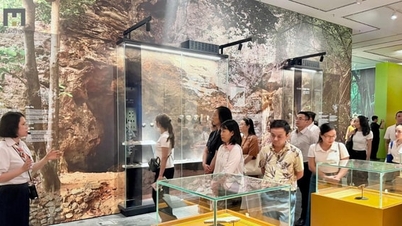
The museum's exhibition space is currently structured around 7 major themes with 35 sub-themes, reflecting the history and culture of Hanoi from the past to the present. It houses more than 70,000 artifacts and documents, along with 6 groups of national treasures.
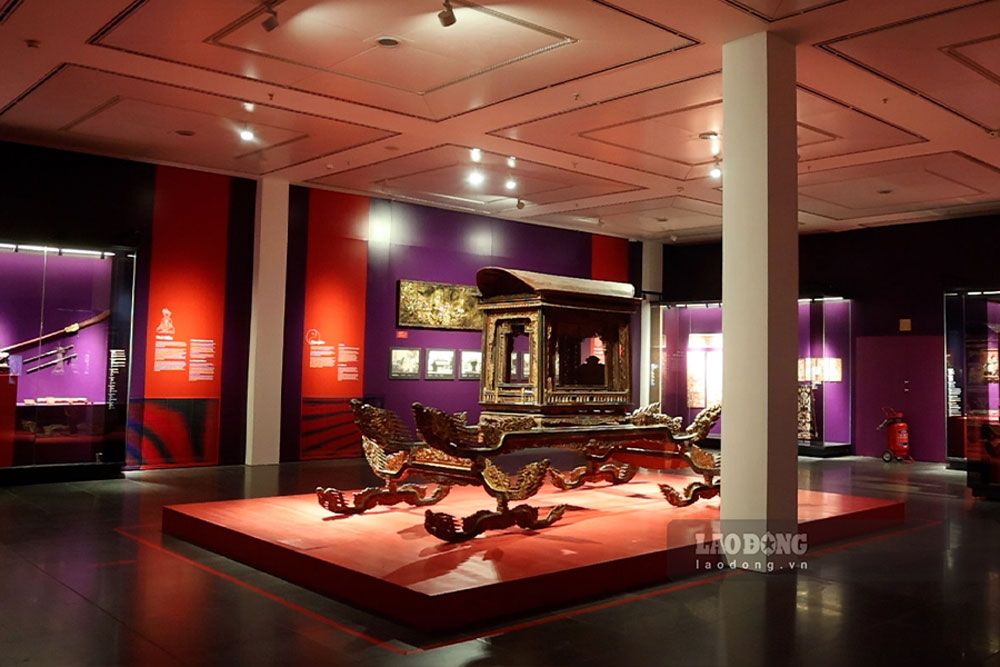
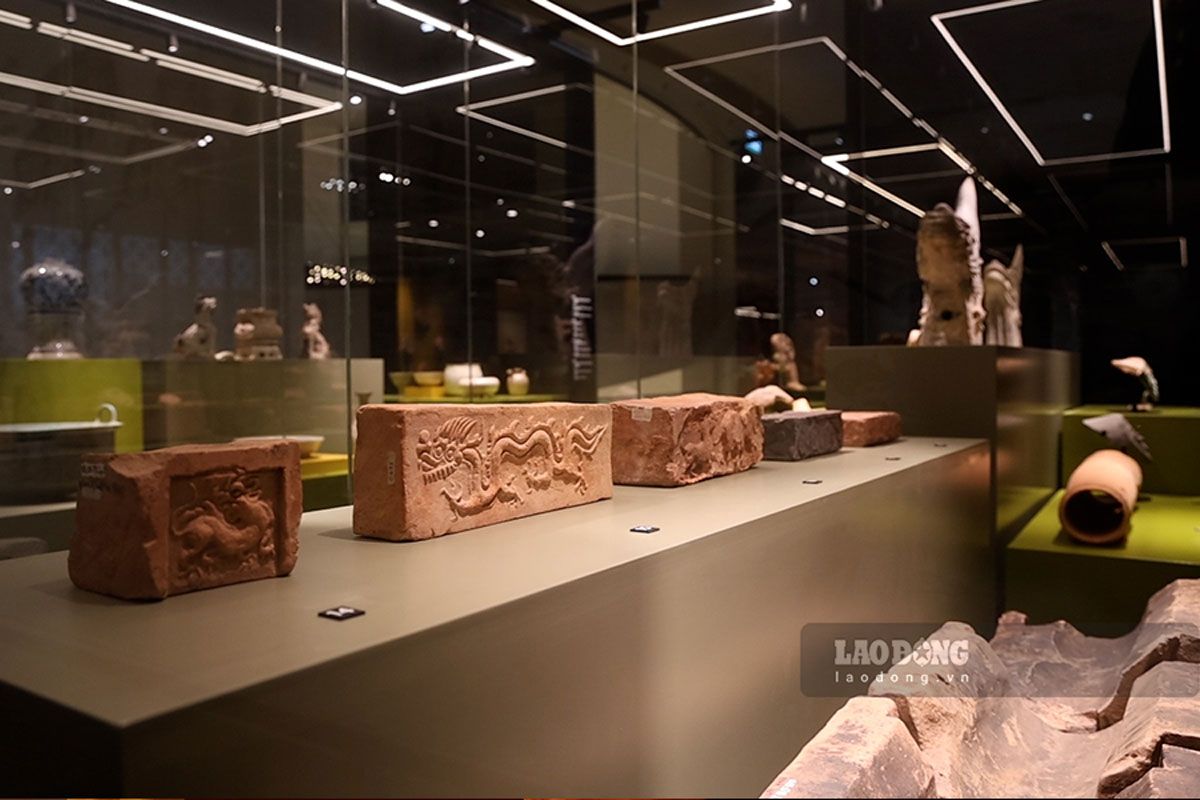
The artifacts are on display inside the Hanoi Museum. Photo: Duong Anh
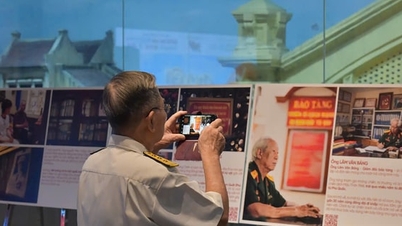
On weekends, many exhibition areas at the Hanoi Museum are always crowded with visitors. Instead of just reading the explanatory notes, visitors can interact with touch screens to learn more about the exhibits, view 3D models, videos , or listen to explanations directly on their personal devices.
Bringing his family and two young children to visit, Mr. Pham Ngoc Hoang (Hoang Liet ward, Hanoi) said that although he has lived in the capital for many years, due to busy work schedules, his family hasn't had many opportunities to explore famous cultural destinations. Taking advantage of the weekend, he decided to bring his children to the Hanoi Museum to both have fun and learn more about history.
"I was quite surprised that, in addition to the traditionally displayed artifacts, the museum also had many projection screens and touch boards so that children could learn in a more visual way. Thanks to this, the children were much more interested in the visit, which I initially thought would be quite dry for young children," Mr. Hoang shared.
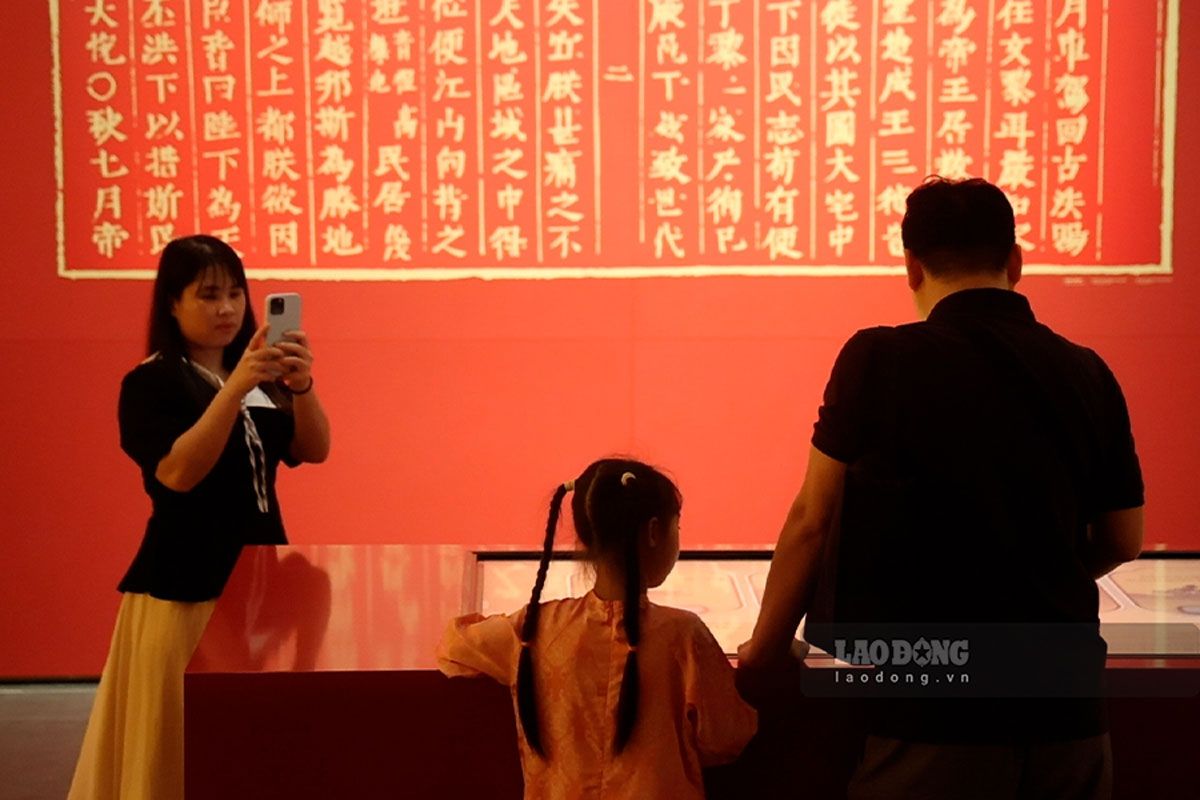
Hanoi Museums have become more attractive to tourists thanks to diverse digitalization initiatives. Photo: Duong Anh
According to Mr. Hoang, for children, especially young children, reading text-heavy informational materials is often difficult to understand and can be boring. However, when they directly see images, videos, models, and interact with a touchscreen, children will understand more easily, enjoy it more, and remember it longer.
Meanwhile, Nguyen Thi Thu Hien, a student at the Diplomatic Academy, believes that applying technology to exhibition activities is a suitable direction in the current context.
“In the digital age, most people have smartphones and need quick, intuitive access to information. Instead of worrying about technology making people dependent on devices, leveraging technology to enhance the visitor experience is essential. This helps museums become more accessible to young people,” said Hien.
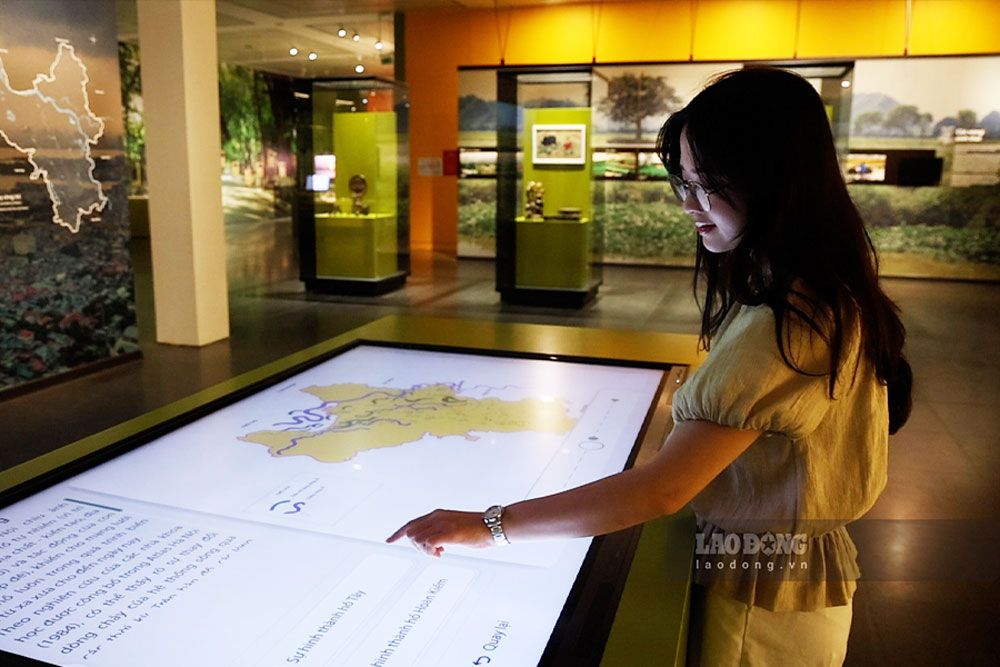
3D screens, multi-touch screens, digital data systems, and modern presentation methods make information about the exhibits more accessible to viewers. Photo: Duong Anh
Speaking to Lao Dong newspaper, Ms. Nguyen Thi Huong, Deputy Head of the Exhibition and Propaganda Department at the Hanoi Museum, said that incorporating digital technology into exhibition spaces is an inevitable trend.
"Besides viewing static artifacts in the traditional way, today's visitors want to learn more deeply and thoroughly about the story, value, and context of each artifact. Technology will help museums achieve this, giving viewers a more engaging experience and better retention," Ms. Huong emphasized.
Recently, the Hanoi People's Committee recognized the Hanoi Museum as a city-level tourist destination. This is considered an important milestone for the museum to strengthen links with travel businesses, develop experiential tours, heritage education tours, and cultural and artistic activities for tourists.
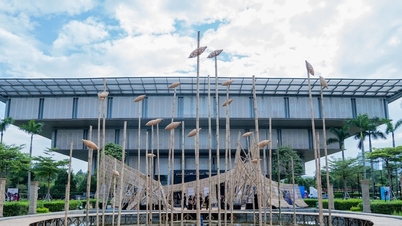
With its unique architecture, modern exhibition system, and technological support, the Hanoi Museum is demonstrating how a heritage space can "reinvent" itself to become more accessible and vibrant to the public. More than just a repository of the capital's memories, it is gradually becoming an attractive cultural destination for both locals and tourists.
Source: https://laodong.vn/du-lich/kham-pha/khi-cong-nghe-danh-thuc-khong-gian-bao-tang-ha-noi-1689184.html


![[Image] Pleasant weather helps students enter the 10th grade entrance exam with confidence.](https://vphoto.vietnam.vn/thumb/1200x675/vietnam/resource/IMAGE/2026/05/29/1780034401612_ngay-1-thi-lop-10-minh-duy-8-5009-jpg.webp)
![[Photo] Ba Lang An Lighthouse - the "eye of the sea" amidst the "rock museum" of Quang Ngai province.](https://vphoto.vietnam.vn/thumb/1200x675/vietnam/resource/IMAGE/2026/05/29/1780038698840_anh-man-hinh-2026-05-29-luc-14-10-42.png)







































































Comment (0)