

Tam Nông District has the ancient village of Dị Nậu, formerly known as Kẻ Núc, which was part of the Văn Lang tribal center during the Hùng Vương era. As an ancient Vietnamese village, its ancestors built many temples, pagodas, shrines, and public works on this land, which have now become a sacred system of historical and cultural heritage for the people of the region. The village is surrounded by a large lake, creating a beautiful, dreamy landscape every morning. This land is also the birthplace of the folk tale "Bách nghệ trình làng" (Hundred Crafts Presented in the Village) and the game "cướp kén" (Cocoon Stealing), a lucky game played at the beginning of the Lunar New Year.
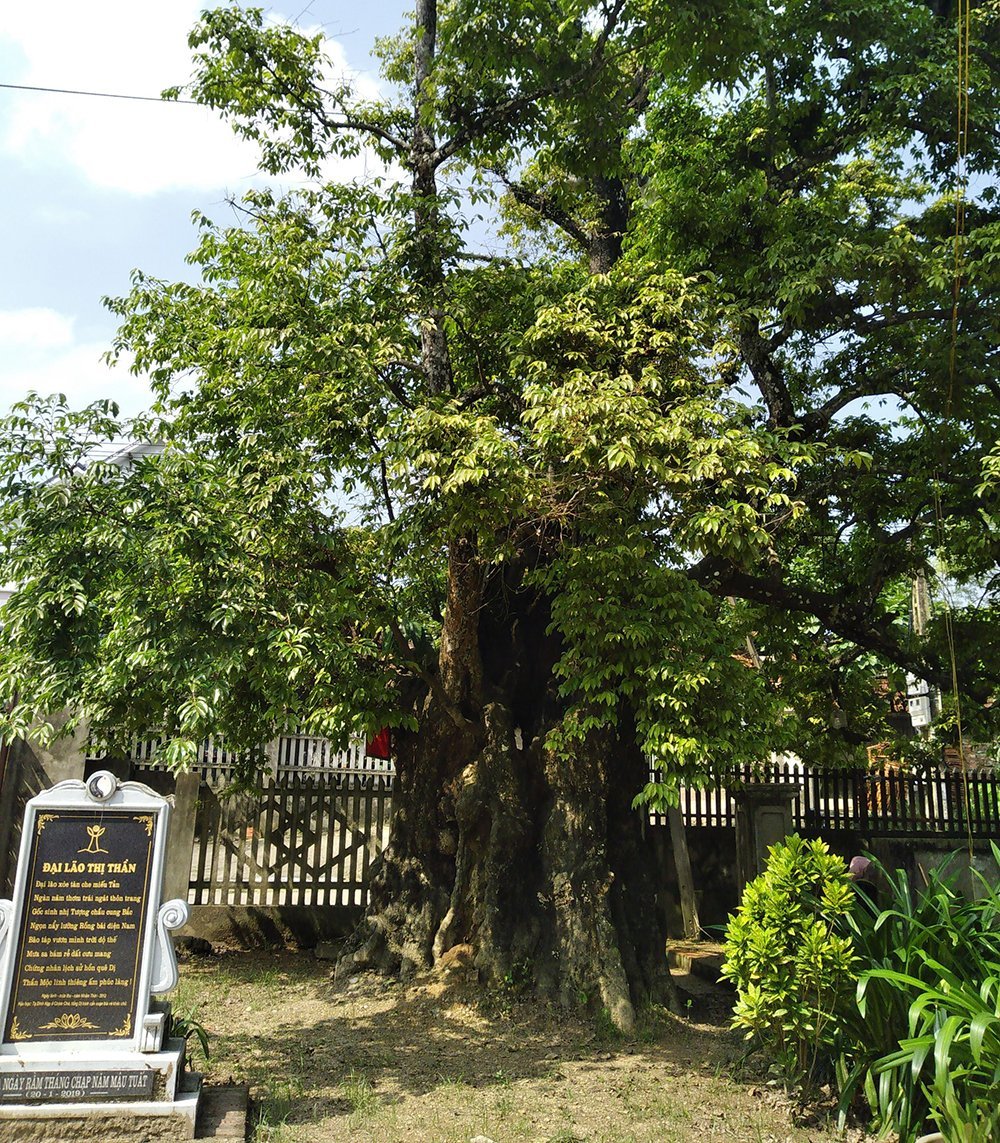
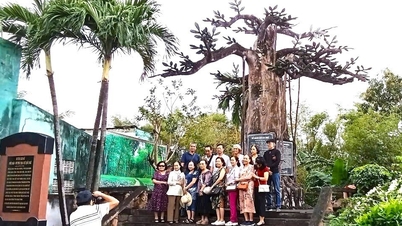
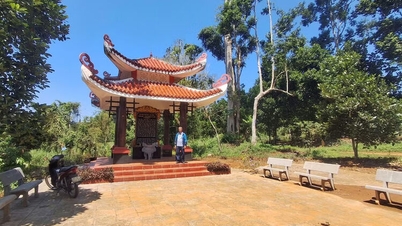
The shrine dedicated to Saint Tan Vien is shaded by a thousand-year-old persimmon tree.
Located in the midland region – a meeting point between mountains and plains – the village of Dị Nậu resembles a refreshing and harmonious painting, with its many hills, swamps, and forests. When the Vietnamese migrated from the highlands, the worship of mountain gods, water gods, and stone gods quickly emerged here, in the hope of a peaceful and prosperous life. According to the village's genealogical records, initially, six clans settled here to establish their lives: the Tạ, Nguyễn, Đinh, Đặng, Lê, and Trần clans. These clans jointly built temples, shrines, communal houses, and ten ancient wells. Each temple, pagoda, and shrine has its own legends and stories about the saints and great kings who made significant contributions to the people since the founding of the nation. Festivals are held with great solemnity, each associated with the legends of the saints and deities worshipped in the temples and communal houses.
According to Mr. Ta Dinh Hap, Deputy Head of the Management Board of Historical and Cultural Relics and Heritage Trees of the commune, visitors who have the opportunity to come to the ancient land of Di Nau, stopping by the more than 1,000-year-old persimmon tree that still provides shade in front of the temple of Saint Tan Vien, or gently strolling to the sound of the bells from Dam Nhan Pagoda, will feel the sacredness and experience a sense of peace and tranquility. Having endured countless ups and downs of time, including wars, the ancient persimmon tree remains steadfast, proudly spreading its shade, blossoming, and bearing fruit beside the temple of Saint Tan Vien. Along with the persimmon tree, seven frangipani trees, over 700 years old, also offer their fragrance daily at the temple. These frangipani trees, with their lush green branches and fragrant blossoms, cast shade over the temple grounds, enhancing the ancient and sacred atmosphere of Dam Nhan Pagoda, which is nearly a thousand years old.
Legend has it that during the Hung Kings era, Cao Son, a talented general, led his troops to Di Nau village. Seeing the winding river and towering mountains, he established a camp on Linh Nam mountain and built four towers: East, West, South, and North. After returning victorious from battle, the people built the Quoc Te Temple to worship Cao Son, the East Temple to worship Bach Thach, the West Temple to worship Uy Minh, the South Temple to worship Quy Minh, and the North Temple to worship Hieu Lang—all generals who fought alongside him to defend the country—along with an altar dedicated to Tan Vien mountain saint, so that incense could be offered for generations to come.
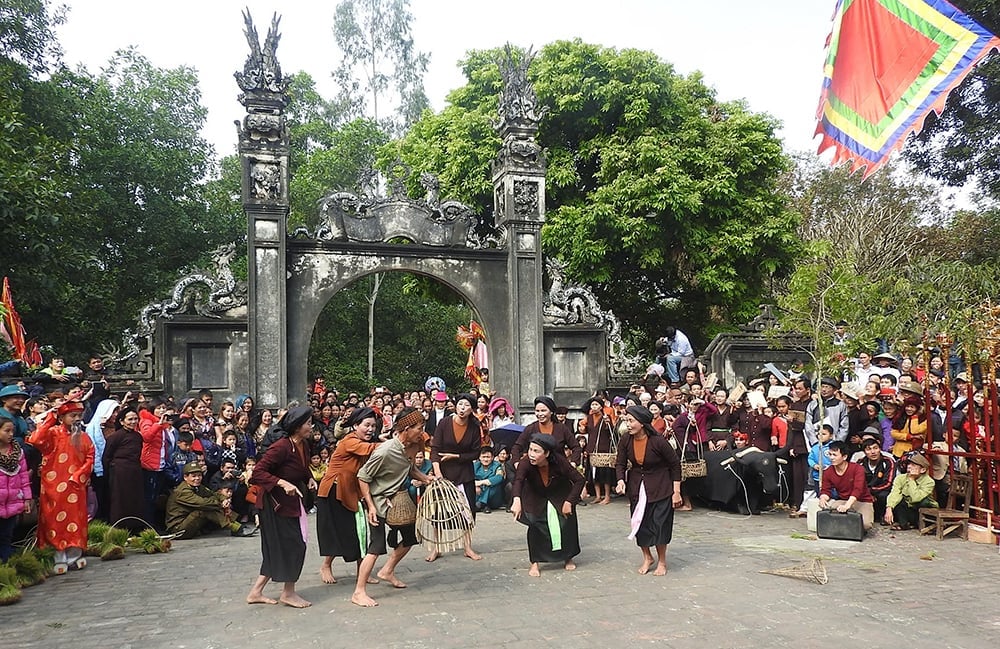
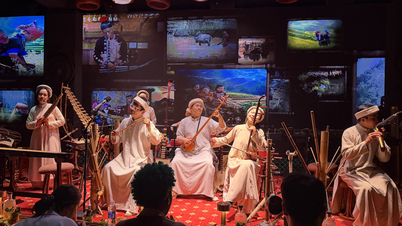
The villagers perform the traditional play "A Hundred Arts Presented to the Village" to entertain the community during the Spring Festival.
After navigating a winding, gently sloping road, we reached the summit of Tram Linh hill – where the Quoc Te Temple stands majestically, serene, and bathed in the spring sunshine. From the temple, one can gaze in all four directions, enjoying the peaceful village scenery, the rice fields, and the dreamy Di Nau lagoon. Legend has it that the Quoc Te Temple, as it stands today, dates back to the Later Le Dynasty (258 BC) and is a very important place for organizing the procession of the deity, along with the "Hundred Arts Presented to the Village" and "Cocoon Stealing" games on the 4th day of the first lunar month.
The play "Hundred Crafts Presented to the Village" is a humorous play dating back to the Hung Kings era, depicting many arduous but also joyful occupations such as plowing, rice planting, carpentry, painting, calligraphy, and students taking exams. After the play, the villagers also organize a "cocoon snatching" game. The cocoon tree is a young bamboo pole on which 18 phallic symbols and 18 female symbols are hung, representing the fertility beliefs of the agricultural community.
According to the elders in the village, the traditional folk games and performances had been fading away for a long time. It wasn't until 2013 that Dị Nậu successfully revived the "Hundred Arts Presented to the Village" performance, much to the delight of the people. The performance troupe, consisting of over 30 male and female actors, are all simple, down-to-earth farmers. The oldest performer is nearly 80 years old, while the youngest is over 40. Generations continue to follow each other, and on the fourth day of the Lunar New Year, the entire village flocks to watch the performance.
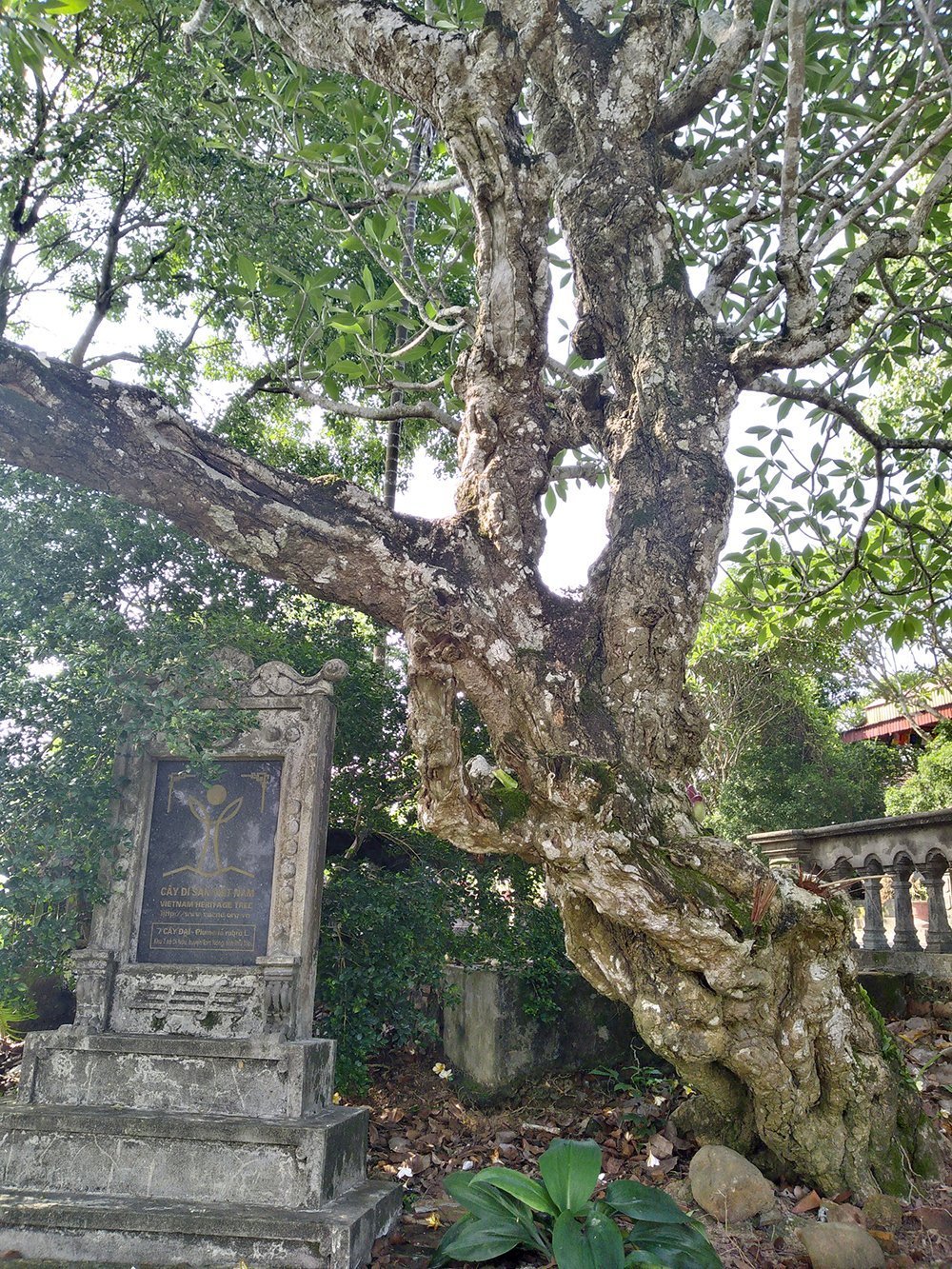
A corner of Dam Nhan Pagoda - where seven frangipani trees are located - is recognized as a Vietnamese Heritage Tree.
A new spring has arrived in the ancient land of Di Nau. The vibrant spring atmosphere fills the village lanes and alleys. Today, the village roads of Di Nau have donned a new look, a new vitality reflecting abundance, warmth, and happiness. Looking back at the system of historical relics, the ancient trees, the moss-covered old wells, and the folk tales that our ancestors painstakingly created, the people of Di Nau today are even more proud and appreciative of preserving and promoting these invaluable humanistic values. It is a place that anchors the soul of the homeland, carrying educational significance for present and future generations about the precious and beautiful traditions of the Vietnamese nation left by our forefathers, becoming a "treasure" – a spiritual anchor for the villagers, with the hope of welcoming a new spring that is joyful and radiant.
Hong Nhung
Source: https://baophutho.vn/kho-bau-di-nau-227061.htm
![[Photo] General Secretary and President To Lam presides over a meeting on assessing national development resources.](https://vphoto.vietnam.vn/thumb/1200x675/vietnam/resource/IMAGE/2026/05/20/1779253785852_a1-bnd-2943-8519-jpg.webp)
































































Comment (0)