

National Assembly representative Duong Khac Mai argued that if the budget is insufficient to implement high-speed rail, borrowing should be considered, but borrowing from the people is better than borrowing from abroad. This also aims to awaken a sense of national pride to contribute to national projects.
The 2035 completion target is entirely feasible.
On the afternoon of November 20th, speaking in the National Assembly hall about the investment policy for the high-speed railway project on the North-South axis, National Assembly representative Le Dao An Xuan (Phu Yen delegation) highly praised the proposal prepared by the Government and the Ministry of Transport .
Regarding the feasibility of investing in the entire route, Ms. Xuan stated that, unlike the previous plan which prioritized the Hanoi -Vinh and Ho Chi Minh City-Nha Trang sections first, the central provinces would be invested in later.
"I completely agree with the plan to build the entire line," Ms. Xuan said, adding that for distances under 800km, air travel would not be efficient, and the advantage would entirely belong to high-speed rail.
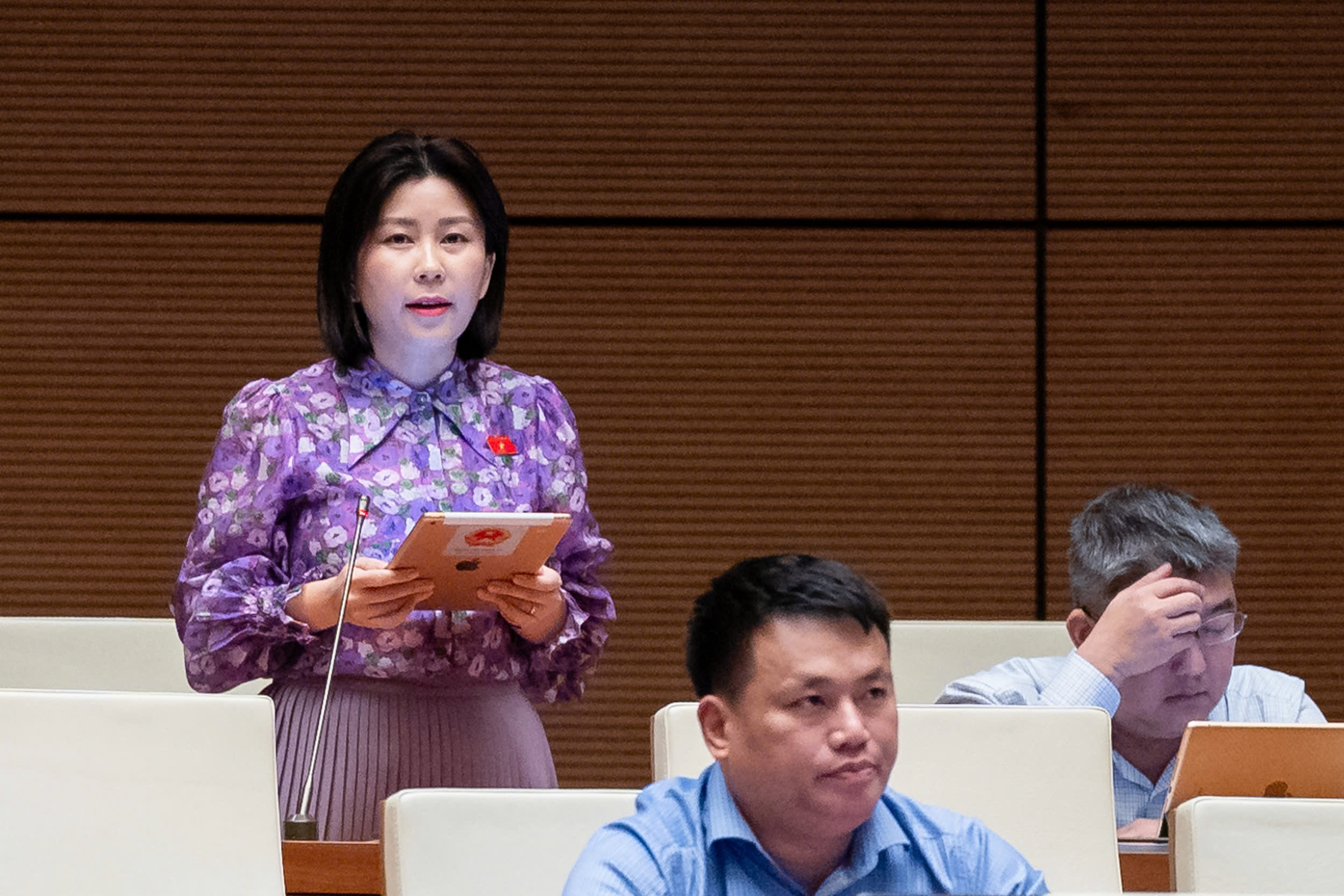
Delegate Le Dao An Xuan (Phu Yen delegation).
Considering that Phu Yen and other central provinces have identified tourism as a key economic sector, but people still face difficulties in traveling during the tourist season, the female delegate from Phu Yen remarked: "If we invest in a high-speed railway, it will solve all these transportation needs."
Based on the current economic scale and forecasts for 2027, with the project's proposed implementation schedule and capital allocation, coupled with the strong and decisive management approach of the past and the experience gained from directing key projects such as the North-South expressway and the 500KV power line project (circuit 3), Representative Xuan believes that completing the North-South high-speed railway by 2035 is feasible.
"Furthermore, the project, implemented using electric technology, will represent a major shift towards green transportation," Ms. Xuan said.
We only talk about moving forward, not backward.
Delegate Ta Van Ha (Quang Nam delegation) also agreed with the policy of investing in the North-South high-speed railway project, emphasizing the spirit of "we'll do it, not back down."
Mr. Ha believes that this is also the trend of national development, a preparatory step and a strategic breakthrough for our country to enter a new era, an era of development.
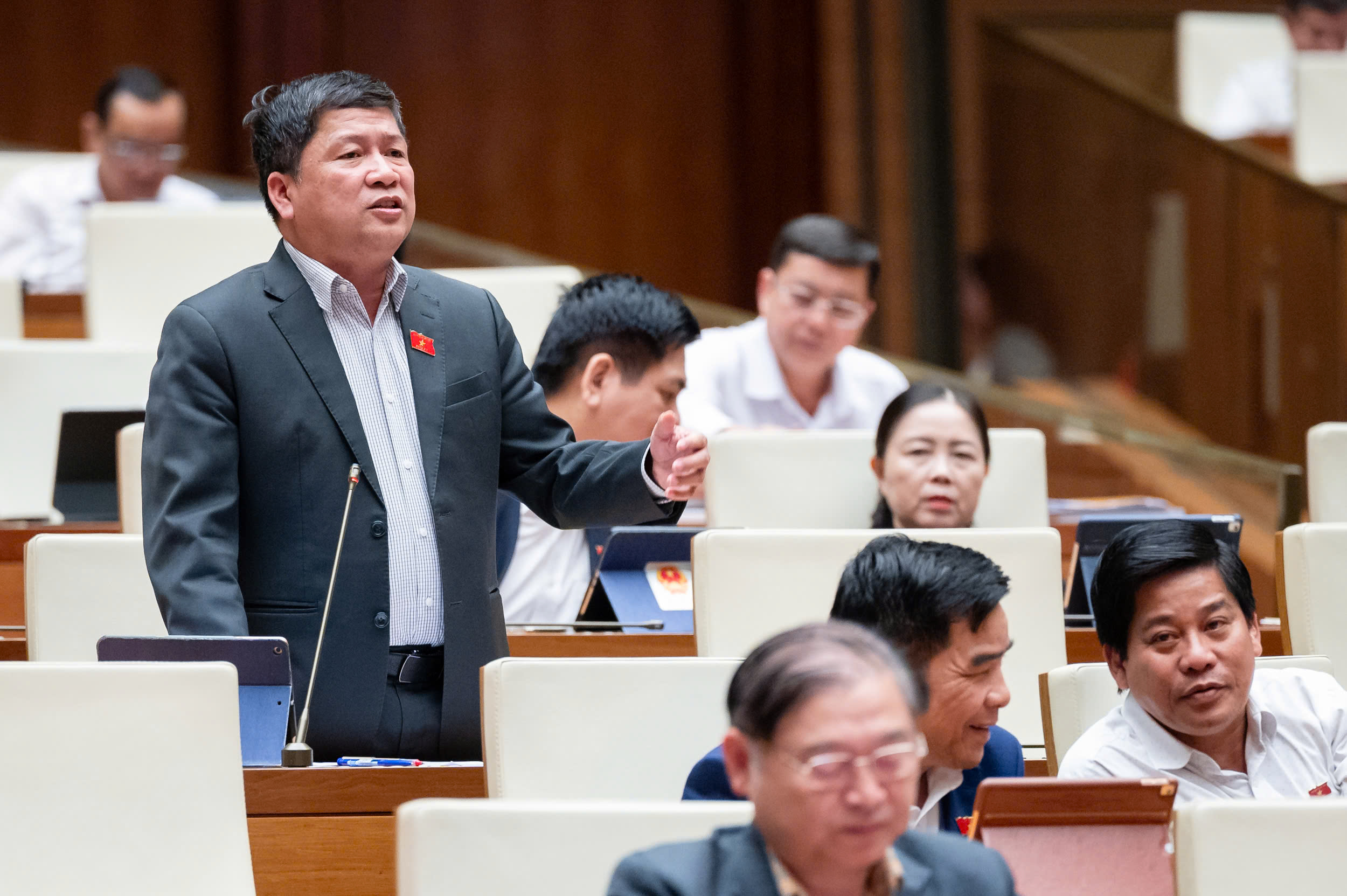
Delegate Ta Van Ha (Quang Nam delegation).
Regarding the overall planning, Representative Ha suggested a balance and harmony between different modes of transport: rail, air, water, and road. This is because currently, in some areas of the Central region, almost every province has an airport.
Therefore, it is necessary to calculate how to utilize airports, roads, and waterways in a way that avoids waste.
Regarding the ability to balance funding sources, the delegate stated that the project is being considered within the overall goal of establishing the Party by 2030 to become a modern, high-middle-income industrialized country. With only six years remaining, balancing funding to simultaneously develop the socio-economic sector, key projects, and national target programs is a difficult challenge.
Delegates also emphasized the need for truly effective implementation and exploitation plans, from technology selection to appropriate phasing.
"In particular, attention must be paid to the implementation phase to avoid cost overruns and losses later on; we must not have a situation where the investment is large but the exploitation is inefficient, requiring us to spend money to cover losses," Mr. Ha said.
Public investment does not mean the state will implement everything.
Representative Duong Khac Mai (Dak Nong delegation) requested the Government to provide more information on the ability to arrange and balance funding to meet the project's capital needs in order to assess the state budget's ability to pay and the economy's resilience.
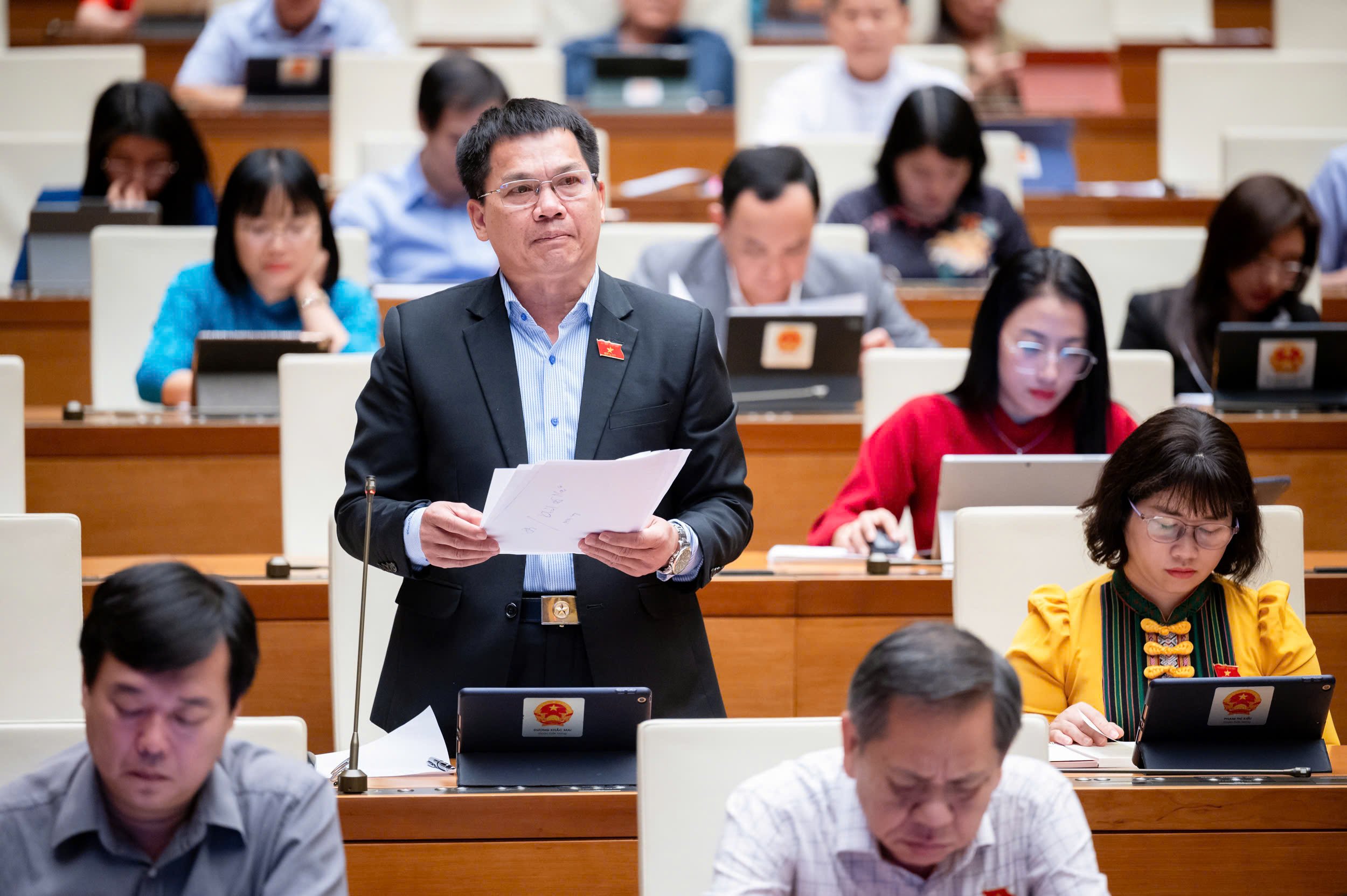
Delegate Duong Khac Mai (Dak Nong delegation).
According to the delegates from Dak Nong province, the state budget still has many expenditure items, in addition to development spending, there are also recurrent expenditures, annual expenditures according to the medium-term plan, and expenditures according to programs and projects.
Regarding implementation progress, delegates cited the fact that urban railway lines have faced many difficulties in the past, leading to increased costs and delays in completion compared to the initial approved schedule.
Recent national key projects have also shown that, despite the application of specific policies on material quarries and land compensation, the supply of raw materials remains insufficient, land clearance is slow, and projects fail to meet construction schedules.
Therefore, the delegates suggested that the Government should carefully study and evaluate each specific issue in order to find effective solutions and overcome these shortcomings, thereby completing the project on schedule.
Regarding attracting investment, delegates suggested focusing on attracting domestic private investment. This would both help businesses have the opportunity to grow stronger and to receive and transfer foreign technology, maximize localization, and reduce dependence on foreign countries.
According to Representative Mai, the project is 100% public investment, but that doesn't mean the state does all the work. The state commissions capable private investors in related industries.
In addition, private businesses should be encouraged to invest in the construction of terminals and other supporting services because they do this very well. This has already been done in the aviation, road, and waterway sectors.
Regarding the mobilization of investment resources for the project, the delegate suggested that consideration should be given to mobilizing public support, as the resources within the population are substantial. If bonds are issued with a sufficiently attractive interest rate, people will be willing to buy them.
"If the budget is insufficient, we can borrow, but borrowing from the people is better than borrowing from abroad because the people will benefit from the profits. More importantly, it also aims to awaken a sense of national pride to contribute to national projects," Representative Mai proposed.
Source: https://www.baogiaothong.vn/khoi-day-tinh-than-tu-hao-dan-toc-de-thuc-hien-du-an-duong-sat-toc-do-cao-192241120154835649.htm


![[Photo] Admire the coral "masterpiece" amidst the million-year-old heritage of Dak Lak province.](https://vphoto.vietnam.vn/thumb/1200x675/vietnam/resource/IMAGE/2026/05/31/1780221235105_anh-man-hinh-2026-05-31-luc-16-53-27.png)

![[Photo] Solemn bathing ceremony and Buddha procession in Hue](https://vphoto.vietnam.vn/thumb/1200x675/vietnam/resource/IMAGE/2026/05/31/1780228263543_1-jpg.webp)

















![[Video] Sunset at Lap An Lagoon – Where the sun sets over the fishing nets](https://vphoto.vietnam.vn/thumb/340x192/vietnam/resource/IMAGE/2026/05/31/1780192137701_beach-landscape-sea-water-nature-grass-745871-pxhere-com.jpeg)





























![[Photo] Admire the coral "masterpiece" amidst the million-year-old heritage of Dak Lak province.](https://vphoto.vietnam.vn/thumb/402x226/vietnam/resource/IMAGE/2026/05/31/1780221235105_anh-man-hinh-2026-05-31-luc-16-53-27.png)





























Comment (0)