

Amidst rising investment costs and the hardships faced by fishermen, what they need is a correct resolution that quickly reaches every boat and every individual. Because if implementation is delayed and procedures drag on, even the most sound policies will easily become unattainable in the face of the struggles of making a living at sea.
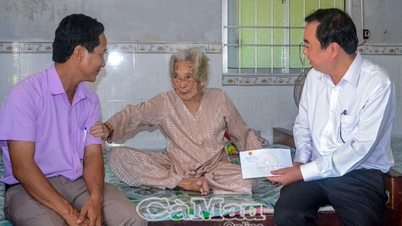
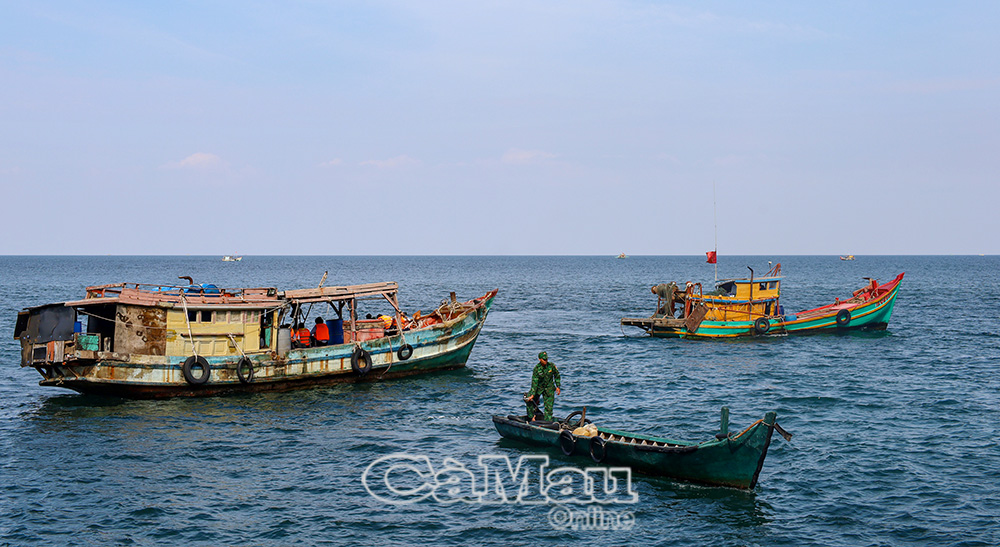 The lives of the people on Hon Chuoi Island are still full of difficulties, and they hope that more practical resolutions and policies will help improve infrastructure, livelihoods, and the quality of life for fishermen in this coastal and island region.
In Dat Mui commune, where every mangrove forest and alluvial plain embodies the aspiration to reach out to the open sea, the adjustment of the provincial planning not only opens up development directions but also ignites many hopes for a transformed future. This plan is seen as a major gateway for Dat Mui to unlock its potential for ecotourism, including marine, island, and mangrove forest tourism . However, for these hopes to become a reality, what the people desire most is comprehensive investment in transportation, service infrastructure, tourism products, and policies strong enough to attract investors to this still challenging region.
Mr. Nguyen Van Chao (65 years old, Rach Tho hamlet, Dat Mui commune) shared the genuine hope of the people of this coastal village: “The people hope that this planning will bring about real changes, especially in roads, transportation, and tourism. With convenient roads, more tourists will come, the economy will develop, and our children will have the opportunity to return home to work after finishing their studies, instead of having to leave. Right now, our small village is only inhabited by the elderly; the younger generation has all gone far away. If the Ca Mau - Dat Mui expressway and the Hon Khoai dual-use general port are invested in as expected, this rural area will certainly change a lot.”
It is clear that, for the people, a resolution is not measured by written words or plans on paper, but by tangible changes in daily life: wider roads, improved infrastructure, more opportunities for livelihood, and whether the homeland has the capacity to retain young people to build a future. Only when these things become reality will the resolution truly resonate with the people.
Grand planning must be accompanied by grand implementation capacity.
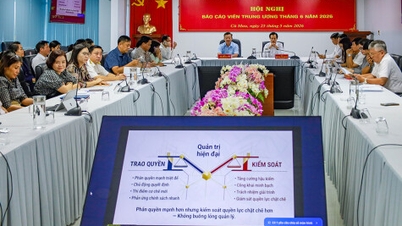
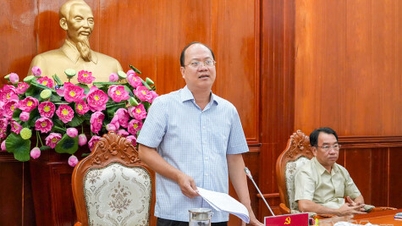
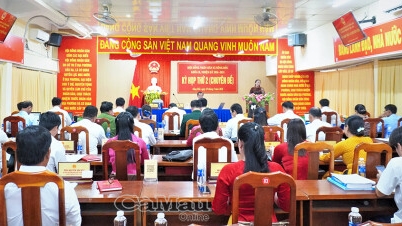
| At its second (special) session, the 11th Provincial People's Council passed 35 important resolutions on planning, public investment, social welfare, support for fishermen, budget decentralization, and organizational restructuring, continuing the stream of major policy decisions from the 16th National Assembly. |
Among the resolutions adopted, the adjustment of the Ca Mau Provincial Planning for the period 2021-2030, with a vision to 2050, holds special strategic significance. For the first time, Ca Mau clearly establishes a development model with: 1 driving axis, 2 development centers, 3 growth poles, 4 development zones, and 5 economic corridors. Simultaneously, it prioritizes 4 key sectors: agricultural and aquatic product processing; renewable energy and marine industry; port logistics; and specialized tourism. This represents a crucial shift from a fragmented development mindset to a clearer strategic structure, aiming to transform Ca Mau into a maritime economic hub in the Mekong Delta.
Planning is merely a foundation for direction; the decisive factor remains the feasibility of implementation. If key transportation projects continue to lag behind schedule, logistics lack connectivity, and key projects are hampered by land acquisition, procedures, or funding issues, then even the most ambitious plans will remain just blueprints.
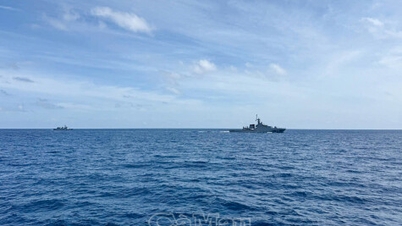
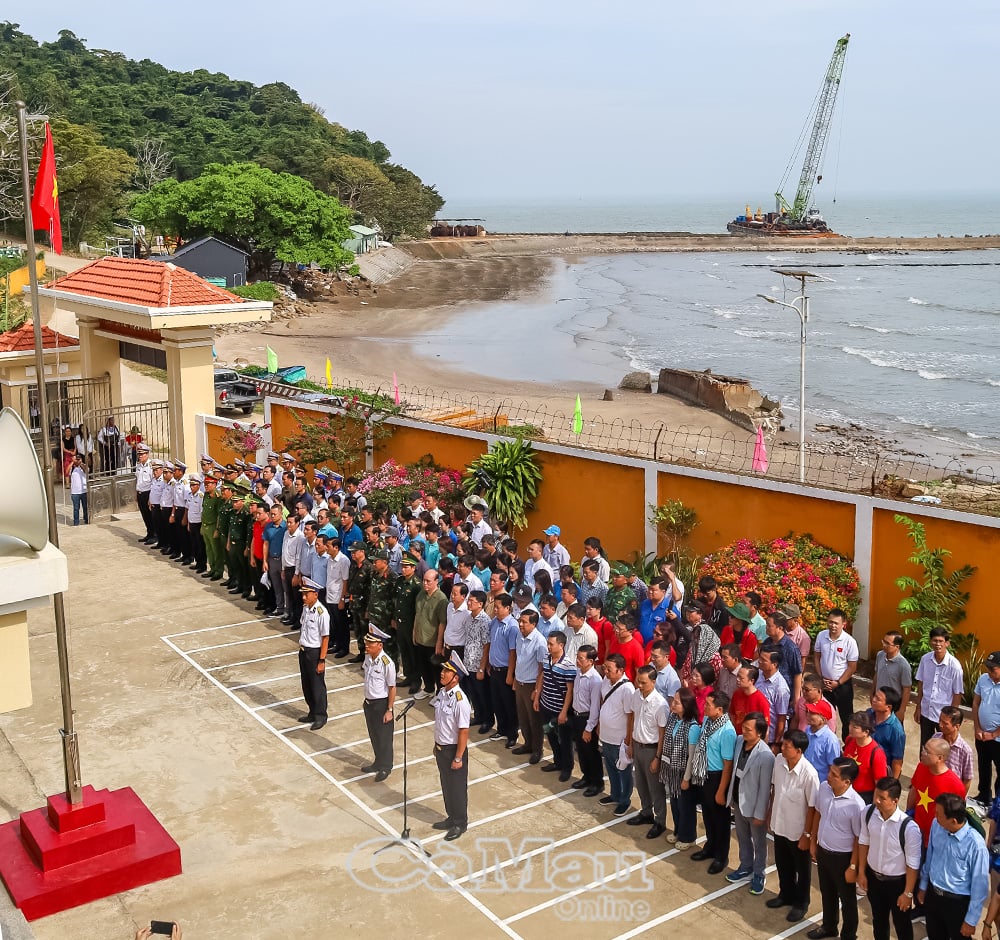 The delegation from the 5th Naval Region, along with representatives from various localities, participated in the flag-raising ceremony and took the oath of honor at the Hon Khoai Island Radar Station, where the aspiration to build a dual-use integrated port is gradually being realized, opening up access to the sea for Ca Mau.
Years of experience have shown that the biggest gap lies not in the policy itself, but in its implementation. Many resolutions have faced slow and inconsistent implementation, and some have even been "distorted" by the time they reach the grassroots level. The phenomenon of "enthusiasm at the top, apathy at the bottom" remains a bottleneck that needs to be addressed.
Therefore, for the resolution to truly be implemented, more correct and effective policies are needed that permeate every aspect of people's lives. This requires: an efficient implementation mechanism; clear assignment of responsibilities; strict inspection and supervision; specific timelines; guaranteed resources; and a mindset focused on serving the people and businesses.
Parliament is the starting point for policy, but the vitality of a resolution is only affirmed when it is present in every project, production model, ship sailing out to sea, and every change in the lives of the people. Because ultimately, what the people need is not policy promises but the tangible results of an active government.
Trinh Hong Nhi
Lesson 2: A mechanism for thorough monitoring is needed.
Source: https://baocamau.vn/khong-de-nghi-quyet-nam-tren-giay-a128924.html

![[Image] Hanoi's urban life under the challenge of a "scorching hot" environment](https://vphoto.vietnam.vn/thumb/1200x675/vietnam/resource/IMAGE/2026/05/25/1779706979265_nang-nong-t5-2026-minh-duy-7-4636-jpg.webp)
![[Image] Close-up view of the interchange connecting the two expressways and Long Thanh Airport.](https://vphoto.vietnam.vn/thumb/1200x675/vietnam/resource/IMAGE/2026/05/25/1779703378210_ndo_br_z7863716673926-224453a31600126cce10622af6290afd-4549-jpg.webp)



































































Comment (0)